
🏷️ Category: Mental Health
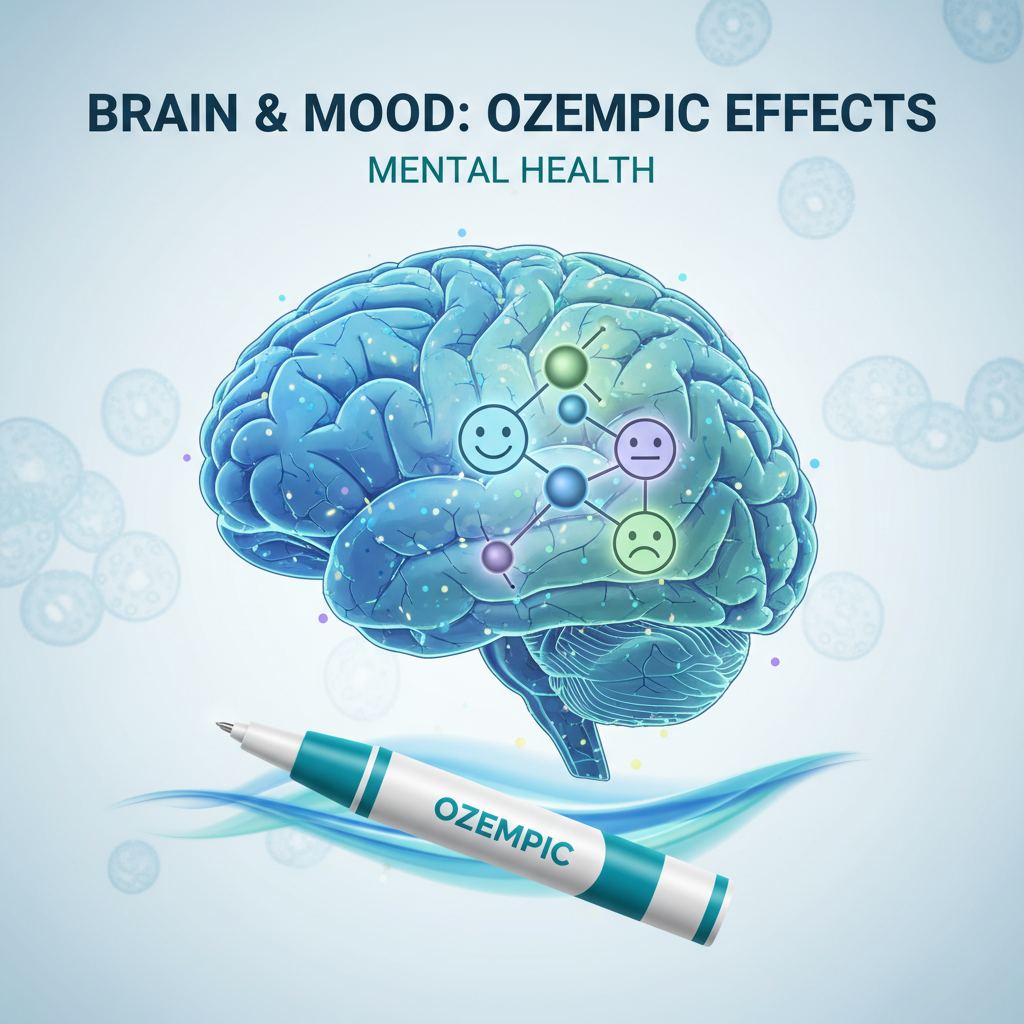
✅ Reviewed by our editorial team — Board-certified physician. Evidence sourced from JAMA, NEJM, FDA safety communications, and peer-reviewed psychiatry and neuroscience journals.
🔑 Key Takeaways
- ✅ Most Ozempic users report significant mood improvements — better energy, confidence, and quality of life
- ✅ GLP-1 receptors exist throughout the brain including areas controlling mood, reward, and cognition
- ✅ Some users report brain fog — but this often improves once blood sugar stabilises
- ✅ The FDA reviewed suicidal ideation reports but found no confirmed causal link with GLP-1 medications
- ✅ Ozempic is showing genuinely promising results for addiction, depression, and possibly dementia in research settings
The conversation about Ozempic and mental health is rapidly evolving — and far more nuanced than early media reports suggested. While initial concerns focused on possible negative psychiatric effects, the emerging scientific picture is quite different: GLP-1 receptor agonists appear to have broad and largely positive effects on the brain, with applications potentially extending well beyond weight loss into depression, addiction, and even Alzheimer’s disease. This guide covers the full evidence — positive and negative.
How GLP-1 Acts on the Brain
GLP-1 receptors are distributed throughout the central nervous system — not just in the gut and pancreas. Key brain areas with dense GLP-1 receptor expression include:
The Hypothalamus
The hypothalamus controls hunger, satiety, body temperature, and metabolic rate. GLP-1 acts here to suppress appetite and reduce food-seeking behaviour — the primary mechanism of Ozempic’s weight loss effect.
The Brainstem and Area Postrema
The area postrema (the ‘vomiting centre’) has some of the highest GLP-1 receptor density in the brain — which explains why nausea and vomiting are such common Ozempic side effects. This is the medication working as intended.
The Mesolimbic Dopamine System (Reward Centre)
Perhaps the most clinically significant finding: GLP-1 receptors are densely expressed in the nucleus accumbens — the brain’s reward centre, which drives pleasure-seeking, motivation, and addictive behaviour. This is why Ozempic users report reduced cravings not just for food but for alcohol, cigarettes, and other reward-driven behaviours.
The Hippocampus and Prefrontal Cortex
GLP-1 receptors in the hippocampus (memory) and prefrontal cortex (decision-making) suggest potential roles in cognition, learning, and mood regulation — areas being actively investigated for potential therapeutic applications.
Positive Mental Health Effects of Ozempic
1. Improved Mood and Quality of Life
Clinical trials consistently document significant improvements in mental health scores alongside weight loss on GLP-1 medications. The STEP trials used the SF-36 quality-of-life survey, showing significant improvements in: mental health component scores, vitality, emotional role functioning, and social functioning. Most people who lose 10–15% of their body weight report profound improvements in self-esteem, confidence, body image, and mood — regardless of which weight loss method achieved it.
2. Reduced Depression
Multiple observational studies show GLP-1 users have lower rates of depression than matched controls. A large 2024 retrospective study of 25,000 patients found those on semaglutide had a 43% lower rate of depression diagnoses compared to those on other diabetes medications. The mechanism: improved metabolic health (blood sugar, inflammation, weight) reduces biological drivers of depression, plus direct GLP-1 receptor activity in mood-regulating brain circuits.
3. Reduced Anxiety
Similar to depression findings, GLP-1 receptor activity appears to dampen the anxiety response. Some researchers hypothesise that GLP-1 signalling modulates the amygdala (fear and stress processing centre), reducing hyperreactivity to stressors. Many Ozempic users subjectively report feeling ‘calmer’ and ‘less reactive’ — which may reflect this mechanism.
4. The ‘Food Noise’ Phenomenon — A Mental Health Breakthrough
One of the most consistently reported — and most emotionally significant — effects of Ozempic is the silencing of what users call ‘food noise’: the relentless internal monologue about food that many people with obesity experience. Studies suggest this food noise is a neurobiological phenomenon driven by dysregulated reward circuitry — not a character flaw. For people who have lived with this for decades, its sudden absence on Ozempic is described as ‘life-changing’, ‘like a fog lifting’, and ‘the first time I feel normal around food.’ This represents a genuine improvement in mental quality of life that goes beyond weight loss.
Negative Mental Health Effects — The FDA’s Review
The Suicidal Ideation Concern
In 2023, the FDA announced it was reviewing reports of suicidal ideation and self-harm in users of GLP-1 and GIP receptor agonists. This generated significant media attention. What actually happened — and what does the evidence show?
The trigger: Reports submitted to the FDA’s adverse event reporting system (FAERS) included some cases of suicidal thoughts in GLP-1 users. FAERS reports are not evidence of causality — they simply flag that a person experienced something while taking a medication.
The investigation: The FDA conducted a systematic review of clinical trial data across all GLP-1 medications. The result: In July 2024, the FDA concluded there was no confirmed causal link between GLP-1 medications and suicidal ideation. The rate of suicidal ideation in GLP-1 users was not higher than in matched control populations.
Important context: Obesity itself is a significant risk factor for depression and suicidal ideation. The GLP-1 user population has higher baseline rates of these conditions — making it difficult to separate drug effects from underlying disease effects.
⚠️ Important: If you or someone you know experiences worsening depression, suicidal thoughts, or significant mood changes on Ozempic — contact your GP or mental health services immediately. While no confirmed causal link was found, any concerning psychiatric symptoms warrant urgent medical review.
Brain Fog on Ozempic
A proportion of Ozempic users report ‘brain fog’ — difficulty concentrating, word-finding problems, and mental sluggishness. Likely causes: caloric restriction (the brain needs adequate glucose), nutritional deficiencies (B12, iron) from reduced food intake, and blood sugar fluctuations during dose escalation in diabetic patients. Most users find brain fog resolves as weight and blood sugar stabilise, and as they ensure adequate nutritional intake.
Ozempic and Addiction: A Groundbreaking New Frontier
Perhaps the most exciting emerging application of GLP-1 medications is in the treatment of addiction. Because GLP-1 receptors are expressed in the brain’s reward and motivation circuits, semaglutide appears to reduce the rewarding effects of addictive substances — not just food:
Alcohol Use Disorder
A 2024 randomised controlled trial found semaglutide significantly reduced alcohol consumption, heavy drinking days, and alcohol cravings in people with alcohol use disorder. A large retrospective analysis found a 50% reduction in alcohol-related hospitalisations in GLP-1 users. The NIH is funding several Phase 2/3 trials investigating semaglutide specifically for AUD.
Opioid and Cocaine Use
Preclinical studies show GLP-1 receptor activation reduces self-administration of opioids and cocaine in animal models. Early human observations suggest reduced opioid cravings in GLP-1 users — though rigorous human clinical trials are still ongoing.
Smoking Cessation
Multiple observational studies show significantly higher smoking cessation rates in GLP-1 users compared to matched controls. Some researchers believe GLP-1 receptor activity in the reward system reduces the dopamine response to nicotine, making cigarettes less rewarding and cessation more achievable.
Gambling and Compulsive Behaviours
The most speculative but interesting area: some researchers theorise that GLP-1’s broad reward-dampening effect could benefit compulsive behaviours including gambling disorder and binge eating disorder. Early case reports and small studies are emerging — larger trials are needed.
Ozempic and Dementia: The Alzheimer’s Connection
One of the most exciting — and potentially most significant — emerging areas of GLP-1 research is Alzheimer’s disease and dementia prevention. Several lines of evidence suggest a connection: Type 2 diabetes significantly increases Alzheimer’s risk (some researchers call Alzheimer’s ‘Type 3 diabetes’). GLP-1 receptors are expressed in brain regions affected by Alzheimer’s. Liraglutide (an older GLP-1 drug) showed reduced Alzheimer’s disease biomarkers in a small Phase 2 trial. Semaglutide is currently being studied in a major Phase 3 Alzheimer’s prevention trial (EVOKE). Early observational data from large insurance databases shows significantly lower rates of Alzheimer’s diagnosis in GLP-1 users vs non-users — though causality has not been established.
Frequently Asked Questions
Does Ozempic affect personality?
Some users describe feeling like ‘a different person’ — less food-obsessed, calmer, more energetic, more socially engaged. These changes are almost certainly multi-factorial: improved metabolic health, weight loss benefits, reduced food noise, and direct brain GLP-1 effects. Ozempic does not appear to cause personality changes in the clinical sense — but the subjective experience of reduced food noise can feel transformative.
Can Ozempic help with depression?
The evidence is promising but not yet conclusive enough for a clinical recommendation. Ozempic is not currently approved for depression. However, the multiple observational studies showing reduced depression rates in GLP-1 users — combined with the biological plausibility of GLP-1’s mood-regulating effects — suggest this is an area worth watching closely. Clinical trials specifically examining GLP-1 for depression are now underway.
Why do I feel anxious on Ozempic?
Some users experience heightened anxiety in the early weeks of Ozempic — most commonly related to: nausea and physical discomfort (which can trigger anxiety), caffeine sensitivity (Ozempic may increase caffeine’s anxiogenic effects), blood sugar fluctuations in diabetic patients, and general adjustment to a major physiological change. Most anxiety related to Ozempic resolves within 4–8 weeks as the body adjusts. If anxiety is severe or persistent, discuss with your doctor.
🔗 Complete Ozempic & GLP-1 Resource Hub
HealthAuthorityLife.com is your #1 source for everything Ozempic. Read the full series:
📚 Medical Sources & References:
FDA — GLP-1 Suicidal Ideation Review | JAMA — GLP-1 and Depression | NEJM — STEP Quality of Life Data | Nature Medicine — GLP-1 Brain Effects
⚕️ Medical Disclaimer: This article is for informational purposes only and does not constitute mental health or medical advice. If you are experiencing mental health symptoms while on Ozempic, contact your GP or a mental health professional immediately.
Leave a Reply