
🏷️ Category: Nutrition
Reviewed by our editorial team — Evidence sourced from peer-reviewed endocrinology and nutrition journals including Cell Metabolism and the Journal of Clinical Endocrinology.
🔑 Key Takeaways:
✅ GLP-1 is a natural hormone your gut already produces — certain foods and habits dramatically increase its release
✅ Protein is the #1 dietary GLP-1 booster — especially whey protein, eggs, and fish
✅ Fibre-rich foods and resistant starch trigger sustained GLP-1 release from gut cells
✅ Exercise — particularly high-intensity exercise — significantly boosts GLP-1 levels
✅ While natural GLP-1 boosters cannot match the dramatic effects of medications, they meaningfully improve appetite control and metabolic health
The GLP-1 hormone revolution has made semaglutide (Ozempic, Wegovy) a household name — but GLP-1 is not just a drug. It is a natural hormone your body already produces, released from specialised cells in your gut after eating. The question is: can you naturally boost your own GLP-1 levels enough to meaningfully affect appetite, blood sugar, and weight? The answer, supported by growing research, is yes — not to the dramatic extent of Ozempic, but meaningfully enough to make a real difference, particularly if medication is not right for you.
What Is GLP-1 and Why Does It Matter?
GLP-1 (glucagon-like peptide-1) is an incretin hormone released by L-cells in your small intestine and colon in response to food — particularly protein and fibre. It acts on multiple organs simultaneously: Brain: Signals satiety, reduces appetite and food cravings. Pancreas: Stimulates insulin release and suppresses glucagon. Stomach: Slows gastric emptying — keeping you fuller longer. Liver: Reduces glucose production. The problem is that natural GLP-1 has a very short half-life — approximately 2 minutes before enzymes break it down. This is why Ozempic is so powerful — semaglutide is engineered to resist breakdown, lasting 7 days instead of 2 minutes.
Top Foods That Naturally Boost GLP-1
1. High-Protein Foods
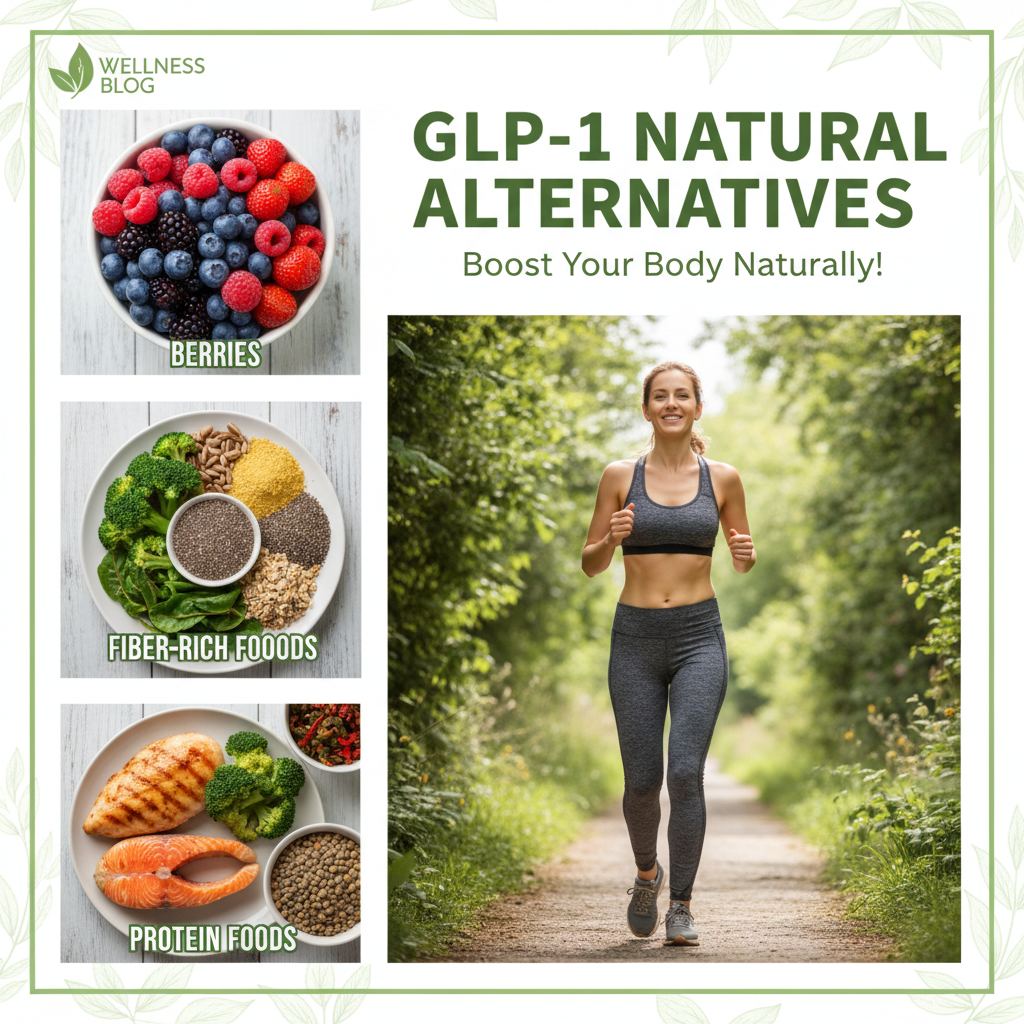
Protein is the most potent dietary trigger for GLP-1 release. Studies show protein increases GLP-1 secretion by up to 25% compared to carbohydrates. Best protein sources for GLP-1: Whey protein — the most studied; a whey protein shake before meals significantly increases GLP-1 and reduces calorie intake. Eggs — particularly egg whites, which trigger strong GLP-1 response. Fish — particularly fatty fish like salmon. Greek yoghurt and cottage cheese — casein protein has a sustained GLP-1 effect. Legumes — beans and lentils combine protein with fibre for a double GLP-1 boost.
2. Fibre-Rich Foods
Dietary fibre — particularly soluble fibre and resistant starch — reaches the lower gut where GLP-1-producing L-cells are densest, triggering sustained hormone release. Best fibre sources: Oats (beta-glucan fibre — most studied for GLP-1). Psyllium husk — shown in multiple studies to increase GLP-1 levels. Barley — rich in beta-glucan. Beans and lentils — high in both soluble fibre and resistant starch. Chicory root and Jerusalem artichoke — inulin-type fructans are powerful L-cell stimulators. Cooked and cooled potatoes or rice — cooling converts digestible starch to resistant starch.
3. Fermented Foods
A healthy gut microbiome increases GLP-1 production. Short-chain fatty acids (SCFAs) produced by gut bacteria — particularly butyrate from fibre fermentation — directly stimulate L-cell GLP-1 secretion. Best fermented foods: yoghurt with live cultures, kefir, kimchi, sauerkraut, miso, and tempeh.
4. Healthy Fats
Certain fats trigger GLP-1 release from the gut. Olive oil — oleic acid stimulates GLP-1 secretion. Avocado — monounsaturated fats plus fibre for a combined GLP-1 effect. Fish oil (omega-3) — EPA and DHA have been shown to increase GLP-1 in animal and some human studies.
5. Specific Nutrients and Compounds
Berberine — a plant compound that activates GLP-1 receptors and mimics some effects of GLP-1 medications. Studies show berberine (500mg 3x daily) reduces blood sugar and promotes modest weight loss. Sometimes called ‘nature’s Ozempic’ — though results are far less dramatic. Curcumin (turmeric) — shown to increase GLP-1 secretion in animal studies. Cinnamon — improves insulin sensitivity and may enhance GLP-1 activity. Green tea (EGCG) — catechins in green tea have been shown to increase GLP-1 response in human trials.
Exercise and GLP-1: A Powerful Combination
Exercise is one of the most underrated GLP-1 boosters. Studies show: Acute aerobic exercise (running, cycling) increases circulating GLP-1 by 20–50% during and immediately after exercise. HIIT (High-Intensity Interval Training) produces the strongest acute GLP-1 spike of all exercise types. Resistance training improves long-term insulin sensitivity and GLP-1 receptor sensitivity. Regular exercisers show significantly higher baseline GLP-1 levels than sedentary individuals. Aim for 150 minutes of moderate exercise or 75 minutes of vigorous exercise weekly for meaningful GLP-1 benefits.
Lifestyle Factors That Boost GLP-1
Sleep quality: Poor sleep reduces GLP-1 and increases ghrelin (the hunger hormone). Getting 7–9 hours significantly supports GLP-1 activity. Intermittent fasting: Time-restricted eating has been shown to increase GLP-1 sensitivity and receptor expression. Stress management: Chronic cortisol impairs GLP-1 signalling — meditation, yoga, and breathwork all help. Cold exposure: Cold showers and ice baths may activate brown fat and indirectly enhance GLP-1 signalling — early evidence, but promising.
Natural GLP-1 vs Medication: Honest Comparison
To be clear: no natural approach comes close to replicating the effects of pharmaceutical GLP-1 receptor agonists. Ozempic produces 15–22% body weight loss. Natural GLP-1 boosting approaches might produce 2–5% weight loss over 12–24 weeks — meaningful, but not transformative. However, natural approaches offer: no side effects, no prescription needed, long-term metabolic health benefits beyond weight loss, and synergistic benefits when combined with GLP-1 medications (many doctors now recommend this dual approach).
Frequently Asked Questions
Is berberine really ‘nature’s Ozempic’?
Berberine has real metabolic benefits — it activates AMPK (a key metabolic enzyme), reduces blood sugar, and may modestly boost GLP-1. But calling it ‘nature’s Ozempic’ massively overstates its effects. Clinical trials show berberine produces 2–3kg weight loss over 12 weeks — Ozempic produces 12–20kg. They are not comparable, but berberine is a legitimate supportive supplement.
Can you boost GLP-1 enough naturally to avoid medication?
For people with mild insulin resistance or pre-diabetes, natural GLP-1 optimisation combined with diet and exercise can produce meaningful metabolic improvements without medication. For those with obesity, Type 2 diabetes, or significant cardiovascular risk, medications offer benefits that natural approaches simply cannot match.
What supplement boosts GLP-1 the most?
Whey protein and psyllium husk have the strongest evidence for acutely boosting GLP-1 secretion. For long-term GLP-1 pathway support, berberine has the most clinical data. Always consult your doctor before adding new supplements, especially if you take medications.
Conclusion
Your body already makes GLP-1 — the question is how much and how effectively. By prioritising high-protein meals, fibre-rich whole foods, regular exercise, quality sleep, and a healthy gut microbiome, you can meaningfully enhance your natural GLP-1 response. While these approaches do not replicate the dramatic effects of Ozempic, they represent a powerful, side-effect-free foundation for metabolic health — whether you use medication or not.
📚 Medical Sources: Cell Metabolism — GLP-1 and Diet | Harvard Health — GLP-1 Hormones | NIH — Berberine and GLP-1 | PubMed — Exercise and GLP-1
Medical Disclaimer: This article is for informational purposes only. Natural supplements like berberine can interact with medications. Always consult your GP before changing your diet or supplement regimen, especially if you have diabetes or take prescription medications.
🔗 Complete GLP-1 & Ozempic Series
Read all articles in our comprehensive GLP-1 guide series:
Leave a Reply