
🏷️ Category: Sleep Health
HealthAuthorityLife Editorial Team — Last updated: July 2026. This article reflects mainstream medical consensus. Always consult your healthcare provider about sleep concerns.
Key Takeaways
- Sleep problems are the most common health concern searched on Google, with millions of Americans searching for sleep solutions every month according to Soliant’s 2026 health search data.
- Adults need 7-9 hours of sleep per night, but approximately one-third of American adults consistently get less than the minimum recommended amount.
- Your sleep schedule is controlled by your circadian rhythm — an internal biological clock that can be reset through strategic light exposure, meal timing, and consistent sleep-wake routines.
- Screen time before bed suppresses melatonin production by up to 50% in some studies, making it one of the most significant but easily fixable sleep disruptors.
- Caffeine has a half-life of 5-6 hours, meaning a 3 PM coffee still has half its sleep-disrupting power at 9 PM.
- Consistent sleep schedules — even on weekends — are more important for sleep quality than total time in bed.
- Chronic sleep deprivation is linked to increased risk of heart disease, diabetes, obesity, depression, and weakened immune function.
Why Your Sleep Schedule Matters More Than You Think
Sleep is not a luxury — it is a biological necessity that affects virtually every system in your body. When you sleep, your brain consolidates memories, clears metabolic waste products, and regulates hormones that control appetite, stress, and growth. Your body repairs tissues, strengthens the immune system, and regulates blood sugar. When sleep is disrupted, all of these processes suffer.
According to Soliant’s 2026 analysis of the most popular medical questions Americans Google, sleep issues rank as the top health concern in multiple states. The CDC reports that approximately one-third of American adults do not get enough sleep on a regular basis. This chronic sleep deprivation has been called a “public health epidemic” by health authorities.
Your sleep schedule — the pattern of when you go to sleep and when you wake up — is the foundation of sleep health. A consistent schedule keeps your circadian rhythm functioning properly, while an irregular schedule confuses your internal clock and makes it harder to both fall asleep and wake up at the right times.
Understanding Your Circadian Rhythm
Your circadian rhythm is your body’s internal 24-hour clock. It regulates not just sleep but also hormone production, body temperature, digestion, and heart rate. This clock is primarily set by light exposure — when light hits your eyes in the morning, it signals your brain to stop producing melatonin (the sleep hormone) and start producing cortisol (the wakefulness hormone). As light decreases in the evening, melatonin production increases, preparing your body for sleep.
This is why light exposure is the most powerful tool for resetting your sleep schedule. Getting bright light exposure within 30 minutes of waking helps anchor your circadian rhythm, while avoiding bright light (especially blue light from screens) in the hours before bed allows melatonin production to proceed naturally.
Your circadian rhythm can be disrupted by:
- Irregular sleep and wake times (including weekend sleep-ins)
- Exposure to bright light late at night
- Lack of morning light exposure
- Shift work or frequent time zone changes
- Late meals and late caffeine consumption
- Stress and anxiety
The 20 Science-Backed Strategies to Fix Your Sleep Schedule
1. Set a Consistent Wake Time — Even on Weekends
The single most important step you can take is to wake up at the same time every day, including weekends. Your wake time anchors your circadian rhythm — it tells your body when to start producing wakefulness hormones and when to stop producing melatonin. If you wake up at 6 AM on weekdays and 10 AM on weekends, you are essentially giving yourself jet lag every week. Aim for no more than a 30-minute variation between weekday and weekend wake times.
2. Get Morning Light Exposure
Within 30 minutes of waking up, get exposure to bright light — ideally sunlight. This signals your brain that it is daytime and helps stop melatonin production. Even 10-15 minutes of outdoor light can be effective. If natural light is not available (or during winter months), a light therapy lamp (10,000 lux) can provide similar benefits. Morning light exposure is one of the most researched and effective sleep interventions.
3. Gradually Adjust Your Schedule — Do Not Force It
If your sleep schedule is significantly off (for example, you are sleeping from 4 AM to noon), do not try to fix it all at once. Shift your sleep and wake times by 15-30 minutes per day until you reach your target schedule. This gradual approach allows your circadian rhythm to adjust without the stress of trying to force sleep when your body is not ready.
4. Create a Wind-Down Routine
Your brain needs time to transition from wakefulness to sleep. Create a 30-60 minute pre-sleep routine that signals to your body that sleep is coming. This might include dimming lights, reading a book, taking a warm shower, gentle stretching, or listening to calming music. The key is consistency — doing the same activities in the same order every night creates a conditioned response that helps you fall asleep faster.
5. Reduce Screen Time Before Bed
Blue light from phones, tablets, computers, and TVs suppresses melatonin production. Studies suggest that screen time before bed can reduce melatonin production by up to 50% in some individuals. Aim to stop using screens at least 60 minutes before bed. If screen use is unavoidable, use blue-light-blocking glasses or enable night mode on your devices — though these are not as effective as simply avoiding screens.
6. Limit Caffeine After 2 PM
Caffeine has a half-life of 5-6 hours, meaning that if you drink a coffee at 3 PM, approximately half the caffeine is still in your system at 9 PM. Caffeine blocks adenosine receptors in your brain — adenosine is a chemical that builds up during the day and makes you sleepy. By blocking it, caffeine prevents your body’s natural sleep signal from working. If you are sensitive to caffeine, consider cutting it off earlier — some people need to stop by noon.
7. Be Strategic About Naps
Short naps (15-20 minutes) in the early afternoon can be refreshing without disrupting nighttime sleep. However, long naps (over 30 minutes) or late naps (after 3 PM) can interfere with your ability to fall asleep at night. If you need to nap, set an alarm for 20 minutes and try to nap before 2 PM.
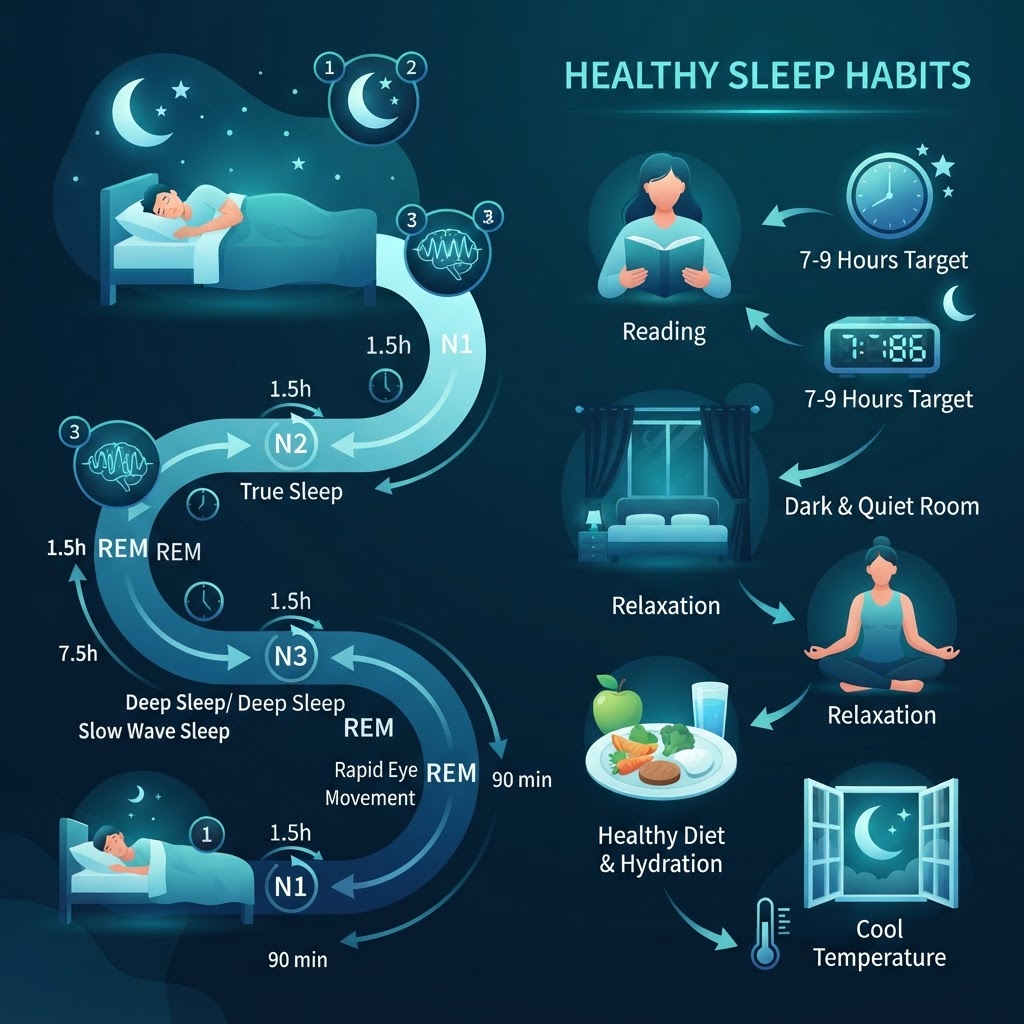
8. Keep Your Bedroom Dark, Cool, and Quiet
Your sleep environment significantly affects sleep quality. The ideal sleeping environment is:
- Dark: Use blackout curtains or a sleep mask. Even small amounts of light can disrupt melatonin production.
- Cool: The ideal sleeping temperature is approximately 65-68°F (18-20°C). Your body temperature naturally drops during sleep, and a cool room facilitates this process.
- Quiet: Use earplugs, a white noise machine, or a fan to mask disruptive sounds. If you live in a noisy environment, consistent background noise can be better than intermittent silence broken by sudden sounds.
9. Exercise Regularly — But Not Too Late
Regular exercise improves sleep quality, but the timing matters. Exercise raises your body temperature and heart rate, which can interfere with sleep if done too close to bedtime. Aim to finish moderate to vigorous exercise at least 3 hours before bed. Gentle exercise like yoga or stretching can be done closer to bedtime and may actually help with sleep.
10. Watch Your Evening Meals
Eating large meals close to bedtime can disrupt sleep. Digestion increases your body temperature and can cause discomfort, acid reflux, and other issues that make sleep difficult. Try to finish your last meal at least 3 hours before bed. If you need a snack, keep it small and avoid spicy, fatty, or acidic foods.
11. Limit Alcohol Before Bed
While alcohol may help you fall asleep faster, it significantly reduces sleep quality. Alcohol disrupts REM sleep (the stage associated with dreaming and memory consolidation) and can cause you to wake up during the night as it metabolizes. The net effect is that you sleep more poorly after drinking, even if you fall asleep quickly. If you drink, try to finish at least 3-4 hours before bed and drink water alongside alcohol.
12. Use Your Bed Only for Sleep and Intimacy
If you work, watch TV, or scroll your phone in bed, your brain associates your bed with wakefulness rather than sleep. By using your bed only for sleep, you strengthen the association between bed and sleepiness. If you cannot sleep after 20 minutes, get up and do a quiet, low-light activity in another room until you feel sleepy, then return to bed.
13. Try the 4-7-8 Breathing Technique
This simple breathing exercise can help calm your nervous system and prepare you for sleep: inhale through your nose for 4 seconds, hold your breath for 7 seconds, and exhale through your mouth for 8 seconds. Repeat 4 times. This technique activates the parasympathetic nervous system (the relaxation response) and can help reduce the racing thoughts that often interfere with falling asleep.
14. Keep a Sleep Diary
Tracking your sleep can help you identify patterns and triggers. Record your bedtime, wake time, how long it took to fall asleep, any nighttime awakenings, caffeine and alcohol consumption, exercise timing, and how you felt in the morning. After a few weeks, patterns will emerge that can help you identify what helps and what hurts your sleep.
15. Consider Melatonin Supplements — Carefully
Melatonin supplements can help reset your sleep schedule, particularly for jet lag or shift work. However, they are not a long-term solution. Low doses (0.3-1 mg) taken 30-60 minutes before your target bedtime are typically more effective than higher doses. Higher doses can actually disrupt sleep architecture. Always consult your healthcare provider before starting any supplement.
16. Avoid Clock-Watching
Checking the time when you cannot sleep increases anxiety and makes it harder to fall asleep. Knowing that it is 3 AM and you have to wake up in 3 hours creates stress that further prevents sleep. Turn your clock around or put your phone out of reach. If you need an alarm, keep it across the room so you cannot easily check the time.
17. Manage Stress and Anxiety
Stress is one of the most common causes of sleep problems. If racing thoughts keep you awake, try keeping a worry journal — write down your concerns before bed to get them out of your head. Cognitive behavioral therapy for insomnia (CBT-I) is a proven, non-medication treatment for chronic sleep problems that addresses the underlying thought patterns contributing to sleep difficulty.
18. Get Morning Exercise
Exercising in the morning, particularly outdoors, combines the benefits of physical activity and morning light exposure — both of which help anchor your circadian rhythm. Even a 15-minute morning walk outside can help regulate your sleep schedule. Morning exercise also increases daytime alertness and can help you feel sleepier in the evening.
19. Use the 20-Minute Rule
If you have not fallen asleep within approximately 20 minutes, do not lie in bed getting frustrated. Get up and go to a different room. Do a quiet, relaxing activity in dim light — read a book, listen to calm music, or do gentle stretching. Return to bed when you feel sleepy. This prevents your brain from associating your bed with the frustration of not sleeping.
20. Seek Professional Help When Needed
If you consistently have trouble falling asleep or staying asleep for more than 3 weeks despite trying these strategies, talk to your healthcare provider. You may have an underlying condition such as sleep apnea, restless legs syndrome, or chronic insomnia that requires medical treatment. Sleep disorders are medical conditions, not personal failings, and effective treatments are available.
Sleep Stages: What Happens While You Sleep
Understanding sleep stages can help you understand why sleep quality matters as much as sleep quantity:
| Stage | What Happens | Duration |
|---|---|---|
| N1 (Light sleep) | Transition from wake to sleep, easy to wake | 1-5 minutes |
| N2 (Deeper sleep) | Body temperature drops, heart rate slows | 10-25 minutes |
| N3 (Deep sleep) | Body repair, immune strengthening, growth hormone release | 20-40 minutes |
| REM (Dreaming) | Memory consolidation, emotional processing, brain activity similar to waking | 10-60 minutes |
You cycle through these stages every 90-120 minutes throughout the night, with REM periods getting longer in later cycles. This is why getting enough total sleep matters — the later cycles contain the most REM sleep, which is critical for cognitive function and emotional regulation.
Common Sleep Disorders
Insomnia
Difficulty falling asleep or staying asleep that lasts for more than 3 months is considered chronic insomnia. CBT-I (cognitive behavioral therapy for insomnia) is the first-line treatment recommended by sleep specialists, with better long-term results than sleep medication.
Sleep Apnea
Sleep apnea is a condition where breathing repeatedly stops and starts during sleep. The most common type, obstructive sleep apnea, occurs when throat muscles relax and block the airway. Symptoms include loud snoring, gasping or choking during sleep, morning headaches, and daytime sleepiness. Sleep apnea is a serious medical condition that requires diagnosis and treatment.
Restless Legs Syndrome
An irresistible urge to move the legs, often accompanied by uncomfortable sensations. Symptoms typically worsen in the evening and at night, making sleep difficult. Treatment options are available — consult your healthcare provider if you experience these symptoms.
Delayed Sleep Phase Syndrome
A circadian rhythm disorder where your sleep schedule is significantly delayed — for example, naturally falling asleep at 3 AM and waking at 11 AM. This is common in adolescents and young adults. Treatment involves gradually shifting the sleep schedule earlier and using morning light therapy.
The Health Risks of Chronic Sleep Deprivation
Chronic sleep deprivation is not just about feeling tired — it has serious health consequences:
- Cardiovascular disease: Chronic sleep deprivation is linked to increased risk of high blood pressure, heart attack, and stroke.
- Metabolic disorders: Lack of sleep disrupts blood sugar regulation and increases the risk of Type 2 diabetes. It also increases appetite by affecting hunger hormones, contributing to weight gain.
- Immune function: Sleep is essential for immune system function. Chronic sleep deprivation reduces your body’s ability to fight infections.
- Mental health: Sleep deprivation is strongly linked to depression, anxiety, and mood disorders. The relationship is bidirectional — poor sleep worsens mental health, and mental health problems worsen sleep.
- Cognitive decline: Chronic sleep deprivation impairs attention, memory, and decision-making. Long-term sleep problems may increase the risk of cognitive decline and dementia.
- Accident risk: Sleep deprivation impairs reaction time and judgment, significantly increasing the risk of motor vehicle accidents and workplace injuries.
Building a Sustainable Sleep Schedule
Fixing your sleep schedule is not a one-time event — it is an ongoing practice. Here is how to build a sustainable approach:
- Start with wake time: Pick your target wake time and stick to it every day, no matter how you slept the night before.
- Add morning light: Get 10-15 minutes of bright light exposure every morning.
- Build a bedtime routine: Create a 30-60 minute pre-sleep routine and follow it consistently.
- Optimize your environment: Make your bedroom dark, cool, and quiet.
- Track your progress: Keep a sleep diary for 2-4 weeks to identify what works and what does not.
- Be patient: It can take 2-4 weeks for your circadian rhythm to fully adjust to a new schedule.
- Do not let one bad night derail you: Everyone has occasional poor sleep. Get back on schedule the next day rather than compensating with late sleep.
Frequently Asked Questions
How long does it take to fix a sleep schedule?
It typically takes 2-4 weeks of consistency to fully reset your circadian rhythm. Some people may see improvements within a few days, but the full adjustment takes time. The key is consistency — sticking to your wake time even on days when you did not sleep well.
Is it true that you can catch up on lost sleep?
You can partially recover from acute sleep debt by sleeping longer on weekends, but chronic sleep deprivation cannot be fully reversed. Regular recovery sleep also does not fully restore cognitive function. The best approach is to maintain consistent, adequate sleep every night rather than trying to catch up.
What if I naturally prefer to stay up late and sleep late?
Some people have a naturally later chronotype (night owls). If your schedule allows for a later sleep-wake pattern and it does not cause problems, it may not need fixing. However, if your lifestyle requires an earlier schedule, the strategies above can help shift it gradually.
Do sleeping pills help fix a sleep schedule?
Sleeping pills can provide short-term relief but do not address the underlying circadian rhythm issues. They also carry risks of dependence, side effects, and reduced sleep quality. CBT-I is a more effective long-term solution. Always consult your healthcare provider before using sleep medications.
How does age affect sleep schedules?
Sleep patterns change with age. Adolescents naturally tend toward later sleep times, while older adults may find themselves waking earlier. These changes are normal but can be managed with the strategies outlined above. If sleep problems are affecting your quality of life, talk to your doctor.
Can supplements help with sleep?
Some supplements, including melatonin, magnesium, and chamomile, may help with sleep for some people. However, supplements are not a substitute for good sleep hygiene. Always discuss supplements with your healthcare provider, as they can interact with medications and have side effects.
Is it normal to wake up during the night?
Brief awakenings during the night are normal — most people wake up briefly several times per night between sleep cycles. However, if you have trouble falling back asleep or wake up for extended periods, this may indicate a sleep problem that warrants attention.
How does shift work affect sleep schedules?
Shift work disrupts the natural circadian rhythm, which can lead to chronic sleep problems. Shift workers should focus on consistent sleep times when possible, light management (bright light during shifts, darkness when sleeping during the day), and maintaining a sleep-conducive environment even during daytime sleep.
The Bottom Line
Your sleep schedule is the foundation of your sleep health, and sleep health is the foundation of your overall health. Fixing your sleep schedule is not complicated, but it requires consistency and patience. The two most powerful steps — waking up at the same time every day and getting morning light exposure — cost nothing and can transform your sleep within weeks.
If you have been struggling with sleep for more than a few weeks, do not hesitate to seek professional help. Sleep disorders are medical conditions with effective treatments. And if you are simply in a bad sleep pattern, the 20 strategies in this guide can help you reset your circadian rhythm and get the restorative sleep your body needs.
The Connection Between Sleep and Mental Health
The relationship between sleep and mental health is one of the most well-documented connections in medical research. Poor sleep does not just make you feel tired — it directly affects your emotional regulation, stress response, and cognitive function in ways that can significantly impact your mental wellbeing.
Sleep and Depression
Research has shown that insomnia significantly increases the risk of developing depression. One major study found that people with persistent insomnia were four times more likely to develop major depression within one year compared to those without sleep problems. The relationship is bidirectional — depression can cause sleep problems, and sleep problems can worsen depression. This is why treating sleep issues is increasingly recognized as a key component of depression treatment.
Sleep and Anxiety
Anxiety and sleep have a similarly circular relationship. Anxiety can prevent sleep by causing racing thoughts and physical tension, while sleep deprivation increases the brain’s reactivity to stress and makes anxiety symptoms worse. A single night of poor sleep can increase anxiety levels by up to 30% according to some research, making it harder to cope with everyday stressors.
Sleep and Emotional Regulation
REM sleep plays a critical role in emotional processing. During REM sleep, your brain processes emotional experiences from the day, helping you integrate and respond appropriately to them. When REM sleep is disrupted — through sleep deprivation, alcohol, or medications — emotional memories are not properly processed, which can lead to increased emotional reactivity and difficulty managing stress.
Sleep and Cognitive Behavioral Therapy
Cognitive Behavioral Therapy for Insomnia (CBT-I) has emerged as the gold standard treatment for chronic sleep problems. Unlike sleeping pills, which provide temporary relief without addressing underlying causes, CBT-I targets the thought patterns and behaviors that maintain insomnia. Research shows that CBT-I is more effective than medication in the long term, with improvements lasting well beyond the treatment period. The American College of Physicians recommends CBT-I as the first-line treatment for chronic insomnia.
How Technology Affects Your Sleep
Technology has become one of the most significant disruptors of human sleep. Understanding how technology affects sleep can help you make informed decisions about your habits:
Smartphone Use Before Bed
Using a smartphone before bed affects sleep in multiple ways: the blue light suppresses melatonin production, the content (social media, news, games) can be emotionally stimulating, and the interactive nature of the device keeps your brain engaged when it should be winding down. Studies show that people who use their phones before bed take longer to fall asleep, have poorer sleep quality, and feel more tired the next day.
The Two-Hour Rule
For optimal sleep, aim to avoid all screens for at least 60 minutes before bed, and ideally two hours. If this seems impossible, start with 30 minutes and gradually increase. Replace screen time with relaxing activities — reading a physical book, listening to music or a podcast, journaling, or gentle stretching. Many people who make this change report dramatic improvements in sleep quality within a week.
Smartphone Alarm Placement
If you use your phone as your alarm, buy a dedicated alarm clock and charge your phone in another room. This prevents late-night phone use and eliminates the temptation to check your phone if you wake up during the night. Having to physically get out of bed to turn off your alarm also helps you wake up more effectively.
Sleep Tracking Technology
Wearable sleep trackers and smartphone sleep apps can provide useful data about your sleep patterns, but they have limitations. Consumer sleep trackers are not as accurate as clinical sleep studies and can sometimes increase anxiety about sleep — a phenomenon called “orthosomnia,” where people become so focused on achieving perfect sleep metrics that their anxiety actually worsens their sleep. Use sleep tracking as a general guide, not an obsession.
Nutrition and Sleep: What You Eat Affects How You Sleep
Your diet plays a significant role in your sleep quality. Certain foods promote sleep, while others can disrupt it:
Sleep-Promoting Foods
- Tart cherries: One of the few natural food sources of melatonin. Studies show tart cherry juice can modestly improve sleep duration and quality.
- Kiwi: Research suggests eating kiwi before bed may improve sleep onset, duration, and efficiency, possibly due to its serotonin content.
- Almonds and walnuts: Rich in magnesium, which promotes relaxation. A small handful as an evening snack may support better sleep.
- Complex carbohydrates: Foods like oats, whole grain bread, and brown rice help your body produce serotonin, which is a precursor to melatonin.
- Chamomile tea: Contains apigenin, an antioxidant that binds to receptors in your brain that promote sleepiness. A cup before bed is a time-tested sleep aid.
Sleep-Disrupting Foods
- Caffeine: Found in coffee, tea, energy drinks, chocolate, and some medications. Be especially careful with hidden caffeine sources in the afternoon and evening.
- Spicy foods: Can cause acid reflux and raise body temperature, both of which interfere with sleep.
- High-sugar foods:
Cause blood sugar spikes and crashes that can wake you up during the night.
- Heavy, fatty meals: Take longer to digest and can cause discomfort and reflux, especially when eaten close to bedtime.
The Relationship Between Alcohol and Sleep
While alcohol can help you fall asleep initially, it significantly disrupts sleep quality. Alcohol suppresses REM sleep, causes more frequent nighttime awakenings, and can worsen snoring and sleep apnea. As alcohol is metabolized during the night, it can cause a rebound effect that leads to early awakening. If you drink alcohol, try to stop at least 3-4 hours before bed and alternate with water.
Creating Your Personal Sleep Plan
Putting all these strategies together into a personal sleep plan increases your chances of success. Here is a template you can adapt:
Wake Time: Choose a consistent wake time (for example, 6:30 AM) and commit to it every day.
Light Exposure: Get 15 minutes of bright light within 30 minutes of waking. Go outside if possible.
Caffeine Cutoff: Set a specific time (for example, 2 PM) after which you do not consume caffeine.
Wind-Down Start: Set a specific time (for example, 9:30 PM) to begin your wind-down routine.
Screens Off: Set a specific time (for example, 10 PM) to turn off all screens.
Bedtime Target: Set a target bedtime (for example, 10:30 PM) that allows for 7-9 hours before your wake time.
Bedroom Environment: Ensure your room is dark (blackout curtains or sleep mask), cool (65-68°F), and quiet (white noise if needed).
Tracking: Keep a sleep diary for 2-4 weeks, noting what helps and what does not, and adjust accordingly.
Remember that consistency over time is more important than perfection on any given night. Even following 70% of this plan consistently will produce better results than following it 100% for a few days and then giving up.
Disclaimer: This article is for informational purposes only and does not constitute medical advice. If you have persistent sleep problems, consult with a qualified healthcare provider. Sleep disorders are medical conditions that require proper diagnosis and treatment.
Written by the HealthAuthorityLife Editorial Team. We provide evidence-based health information reflecting current scientific consensus.