HealthAuthorityLife Editorial Team | August 2026
Medical Disclaimer: This article is for informational purposes only and does not constitute medical advice. Always consult your healthcare provider before making changes to your diet, exercise, or treatment plan.
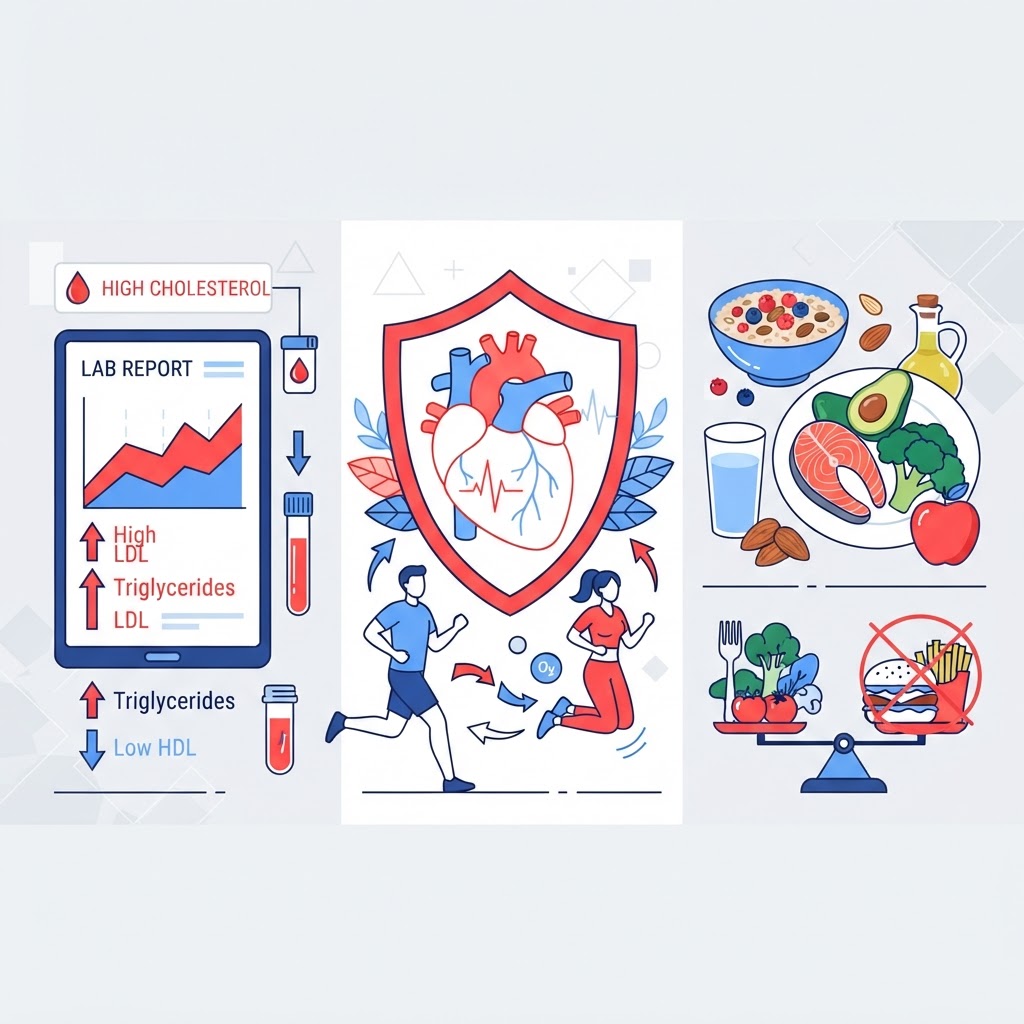
Key Takeaways
- Cholesterol is a waxy substance your body needs to build cells, but too much of the wrong type increases heart disease risk
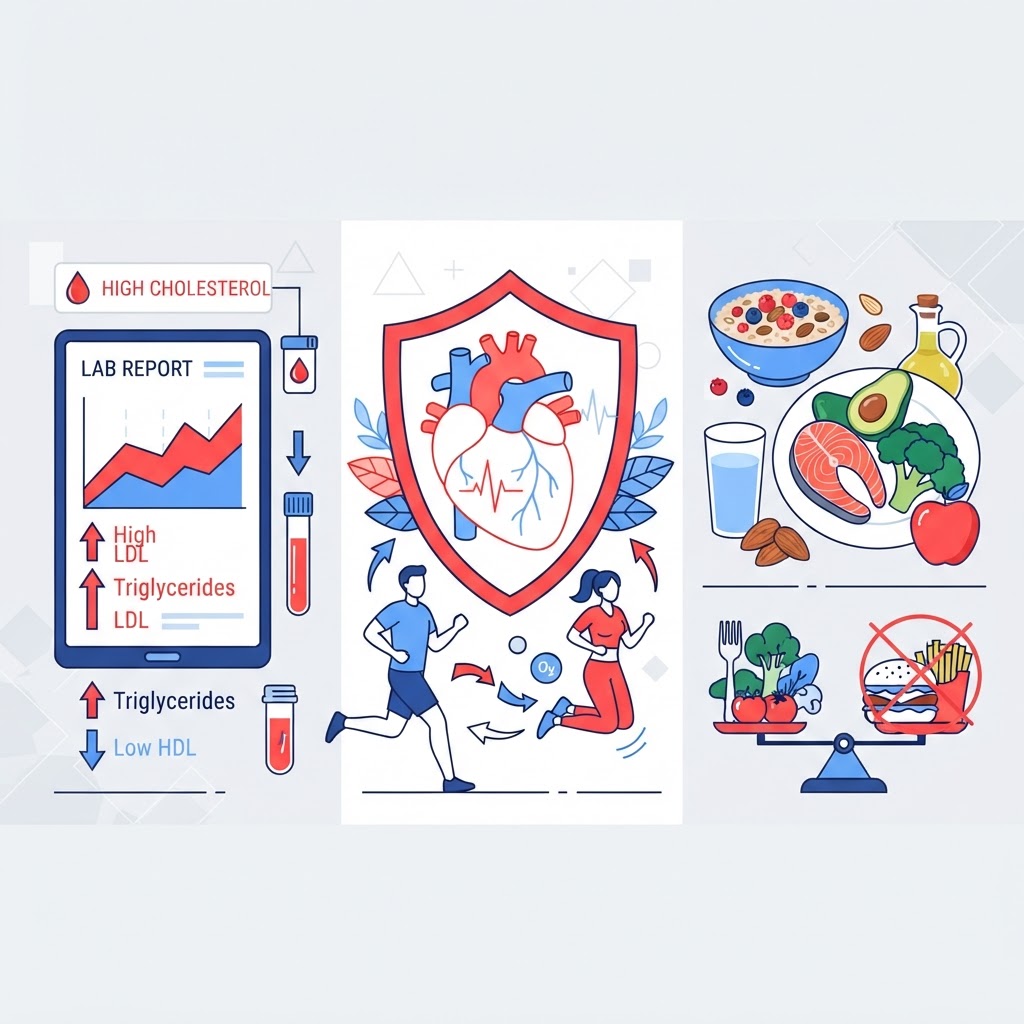
- A lipid panel measures four key numbers: total cholesterol, LDL, HDL, and triglycerides
- LDL (“bad”) cholesterol should be below 100 mg/dL; HDL (“good”) should be above 40 for men and 50 for women
- Diet, exercise, and lifestyle changes can improve cholesterol levels within 6-8 weeks
- Statins and other medications are effective when lifestyle changes aren’t enough
- Approximately 93 million American adults have cholesterol levels above healthy ranges
- High cholesterol typically has no symptoms — only a blood test can detect it
What Is Cholesterol and Why Does It Matter?
Cholesterol is a waxy, fat-like substance that travels through your bloodstream. Your body needs cholesterol to build cell membranes, produce hormones, and create vitamin D. Your liver produces about 80% of the cholesterol in your body, while the remaining 20% comes from your diet. When cholesterol levels are too high — particularly the wrong type — it builds up in your artery walls, forming plaque that narrows arteries and restricts blood flow. This process, called atherosclerosis, is the leading cause of heart attacks and strokes.
According to the CDC, approximately 93 million American adults have total cholesterol levels above 200 mg/dL, which is the threshold for elevated risk. Despite these numbers, many people don’t know their cholesterol levels because high cholesterol produces no symptoms until it causes a serious cardiovascular event. A simple blood test — called a lipid panel — is the only way to know where you stand.
The good news is that cholesterol is highly manageable. Diet, exercise, lifestyle changes, and medications can all effectively lower cholesterol and reduce cardiovascular risk. Understanding your cholesterol numbers is the first step toward protecting your heart health.
The Four Numbers: Understanding Your Lipid Panel
A standard lipid panel measures four components. Each tells a different part of the story about your cardiovascular health.
1. Total Cholesterol
Total cholesterol is the sum of all cholesterol in your blood. While it gives a general picture, it doesn’t tell you enough on its own because it includes both “good” and “bad” cholesterol. A healthy total cholesterol is below 200 mg/dL. Levels of 200-239 are borderline high, and 240+ is considered high.
2. LDL Cholesterol (Low-Density Lipoprotein)
LDL is often called “bad” cholesterol because it carries cholesterol to your arteries, where it can form plaque. The lower your LDL, the better. Optimal LDL is below 100 mg/dL. Near-optimal is 100-129. Borderline high is 130-159. High is 160-189. Very high is 190 or above. If you have existing heart disease or diabetes, your target may be below 70 mg/dL.
3. HDL Cholesterol (High-Density Lipoprotein)
HDL is called “good” cholesterol because it removes excess cholesterol from your bloodstream and carries it back to your liver for disposal. Higher HDL is better. For men, HDL should be 40 mg/dL or higher. For women, 50 or higher. HDL of 60 or above is considered protective against heart disease. Low HDL (below 40 for men, 50 for women) increases cardiovascular risk regardless of other numbers.
4. Triglycerides
Triglycerides are a type of fat in your blood, separate from cholesterol. High triglycerides often accompany low HDL and high LDL, creating a dangerous combination. Normal triglycerides are below 150 mg/dL. Borderline high is 150-199. High is 200-499. Very high is 500+. High triglycerides are strongly linked to obesity, diabetes, and metabolic syndrome.
| Lipid | Optimal | Borderline | High |
|---|---|---|---|
| Total Cholesterol | Below 200 | 200-239 | 240+ |
| LDL (Bad) | Below 100 | 130-159 | 160+ |
| HDL (Good) | 60+ (protective) | 40-59 | Below 40 (men) / 50 (women) |
| Triglycerides | Below 150 | 150-199 | 200+ |
What Causes High Cholesterol?
Dietary Factors
While dietary cholesterol has less impact on blood cholesterol than previously believed, saturated fats and trans fats significantly raise LDL levels. Saturated fats are found in red meat, full-fat dairy, butter, and tropical oils. Trans fats, found in some processed foods, are even worse — they raise LDL while lowering HDL. The American Heart Association recommends limiting saturated fat to 6% of total daily calories.
Genetics
Genetic factors play a significant role. Familial hypercholesterolemia is an inherited condition that causes very high LDL levels from birth, affecting approximately 1 in 250 people. Even without this condition, your genetic makeup influences how your body processes cholesterol. If your parents had high cholesterol, you’re more likely to have it too.
Lifestyle Factors
A sedentary lifestyle lowers HDL and raises LDL. Smoking damages blood vessel walls, making them more susceptible to plaque buildup, and also lowers HDL. Excess weight, particularly abdominal fat, increases LDL and triglycerides while reducing HDL. Excessive alcohol consumption raises triglycerides.
Medical Conditions
Certain medical conditions can raise cholesterol: diabetes (high blood sugar damages artery linings and alters cholesterol metabolism), hypothyroidism, kidney disease, and liver disease. Some medications, including beta blockers, diuretics, and steroids, can also affect cholesterol levels.
Age and Gender
Cholesterol tends to rise with age as the liver’s ability to clear LDL decreases. Before menopause, women typically have lower LDL than men. After menopause, women’s LDL often rises, and their risk of heart disease increases. This makes post-menopausal cholesterol screening particularly important.
How to Lower Cholesterol Naturally
1. Eat More Soluble Fiber
Soluble fiber binds to cholesterol in your digestive system and removes it from your body before it enters your bloodstream. Aim for 10-25 grams per day. Excellent sources include oats, barley, beans, lentils, apples, pears, berries, and Brussels sprouts. Studies show that adding 5-10 grams of soluble fiber daily can lower LDL by 5-11%.
2. Choose Healthy Fats
Replace saturated fats with unsaturated fats. Monounsaturated fats (olive oil, avocados, almonds, pecans) and polyunsaturated fats (walnuts, sunflower seeds, fatty fish) can lower LDL while maintaining HDL. Omega-3 fatty acids found in salmon, mackerel, sardines, and flaxseeds don’t lower LDL directly but reduce triglycerides and protect the heart.
3. Add Plant Sterols and Stanols
Plant sterols and stanols are compounds that block cholesterol absorption. Consuming 2 grams daily can lower LDL by 8-10%. They’re found in fortified foods (some margarines, orange juice, and yogurt) and as supplements. While fortified foods can help, getting sterols from whole plant foods is also beneficial.
4. Exercise Regularly
Regular exercise raises HDL while lowering LDL and triglycerides. Aim for at least 150 minutes of moderate aerobic exercise per week. Walking, cycling, swimming, and dancing all work. Resistance training twice weekly also improves cholesterol. Even a single exercise session can improve cholesterol levels for up to 24-48 hours.
5. Lose Excess Weight
Losing just 5-10% of body weight can significantly improve cholesterol. Weight loss reduces LDL by about 1 mg/dL for every kilogram (2.2 pounds) lost. It also raises HDL and lowers triglycerides. The combination of dietary changes and exercise is most effective for weight loss and cholesterol improvement.
6. Quit Smoking
Smoking lowers HDL and damages blood vessel walls. Quitting can raise HDL by up to 5 mg/dL within months and dramatically reduce cardiovascular risk. Within one year of quitting, your heart disease risk is half that of a smoker’s.
7. Limit Alcohol
While moderate alcohol (one drink for women, two for men) may slightly raise HDL, excessive drinking raises triglycerides and can damage the liver. If you don’t drink, don’t start for cholesterol purposes — the risks outweigh the small potential benefit.
Foods That Lower Cholesterol
| Food | Key Benefit | How Much |
|---|---|---|
| Oats and barley | Soluble fiber | 1 cup daily |
| Fatty fish (salmon) | Omega-3s | 2-3 servings/week |
| Almonds and walnuts | Healthy fats, sterols | 1 oz (handful) daily |
| Avocado | Monounsaturated fat | Half avocado daily |
| Beans and lentils | Soluble fiber, protein | 3-4 servings/week |
| Olive oil | Monounsaturated fat | 2 tbsp daily |
| Dark chocolate (70%+) | Flavanols | 1 oz occasionally |
| Green tea | Catechins | 2-3 cups daily |
| Soy products | Plant protein, sterols | 2-3 servings/week |
Foods to Avoid or Limit
- Red meat and processed meats — high in saturated fat
- Full-fat dairy — butter, whole milk, cheese, cream
- Tropical oils — coconut oil and palm oil are high in saturated fat
- Fried foods — often contain trans fats and unhealthy cooking oils
- Baked goods — pastries, cookies, crackers often contain trans fats
- Processed snacks — chips, microwave popcorn with butter
Medications for High Cholesterol
When lifestyle changes aren’t sufficient, several medication classes can help:
Statins
Statins (atorvastatin, rosuvastatin, simvastatin) are the most prescribed cholesterol medication. They work by blocking an enzyme your liver uses to make cholesterol, reducing LDL by 30-50%. Statins also have anti-inflammatory effects that benefit heart health. They’re generally well-tolerated, though some people experience muscle aches. Rare side effects include liver enzyme elevation and diabetes risk.
Bile Acid Sequestrants
These medications bind to bile acids in your intestine, forcing your liver to use cholesterol to make more bile. They lower LDL by 15-30% but can cause constipation and bloating.
Cholesterol Absorption Inhibitors
Ezetimibe reduces cholesterol absorption from food, lowering LDL by 15-20%. It’s often combined with statins for a greater effect.
PCSK9 Inhibitors
These newer injectable medications dramatically lower LDL by 50-60%. They’re typically prescribed for people with genetic high cholesterol or those who can’t tolerate statins.
Fibrates and Niacin
These medications primarily target triglycerides and HDL rather than LDL. They may be added when triglycerides are very high or HDL is very low.
How Often Should You Check Cholesterol?
The American Heart Association recommends cholesterol screening starting at age 20, repeated every 4-6 years for healthy adults. More frequent screening is recommended for:
- Men over 45 and women over 55
- People with a family history of heart disease or high cholesterol
- People who are overweight, have diabetes, or smoke
- People already diagnosed with high cholesterol or heart disease
- People taking cholesterol medications (to monitor effectiveness)
Lifestyle Changes That Work Fast
If you’ve just received high cholesterol results, here’s what you can do immediately:
- Start your day with oatmeal — one bowl provides about 4 grams of soluble fiber
- Swap butter for olive oil — every substitution helps
- Add a handful of nuts — walnuts or almonds as a daily snack
- Walk 30 minutes daily — start slow if needed, build gradually
- Replace red meat with fish twice weekly — salmon or mackerel are best
- Add beans to your diet — chili, salads, soups, or as a side dish
- Stop smoking — benefits begin within weeks
- Limit alcohol — stick to recommended guidelines
Most people see improvements in their cholesterol within 6-8 weeks of consistent lifestyle changes. Recheck your levels after 3 months to assess progress.
Frequently Asked Questions
Can high cholesterol be reversed?
Yes. Lifestyle changes can significantly reduce cholesterol levels within weeks. For some people, dietary and exercise changes alone are sufficient. Others may need medication. The key is consistent, sustainable changes rather than extreme diets.
Is all cholesterol bad?
No. Cholesterol is essential for life. It builds cell membranes, produces hormones, and helps create vitamin D. The problem is when LDL cholesterol is too high or HDL too low. The goal is balance, not elimination.
Can children have high cholesterol?
Yes. With rising childhood obesity, more children are being diagnosed with high cholesterol. The American Academy of Pediatrics recommends cholesterol screening for children with family history, overweight children, and those with other risk factors.
Do eggs raise cholesterol?
For most people, dietary cholesterol from eggs has minimal impact on blood cholesterol. One egg per day is safe for healthy adults. However, if you have diabetes or existing high cholesterol, limit eggs to 3-4 per week. The bigger concern is what you eat with eggs — bacon, sausage, and buttered toast contribute more to cholesterol than the eggs themselves.
How long does it take to lower cholesterol with diet?
Most people see improvements within 6-8 weeks of consistent dietary changes. The DASH diet and Mediterranean diet have shown the best results. Combining diet with exercise accelerates improvement.
Should I take cholesterol supplements?
Some supplements show modest benefits: fish oil (lowers triglycerides), plant sterols (lower LDL), and garlic extract (small LDL reduction). However, supplements are not as effective as statins or comprehensive lifestyle changes. Always discuss supplements with your doctor.
Can stress affect cholesterol?
Chronic stress may raise cholesterol levels by increasing cortisol and promoting unhealthy behaviors like overeating, smoking, and skipping exercise. Stress management through meditation, exercise, and adequate sleep may help improve cholesterol.
The Bottom Line
Cholesterol management is one of the most effective ways to reduce your risk of heart disease and stroke. Know your numbers — get a lipid panel, understand what they mean, and work with your healthcare provider to develop a plan. For most people, a combination of dietary changes, regular exercise, and healthy lifestyle habits can achieve significant improvements without medication. For those who need medication, today’s treatments are safe and effective.
The most important step is getting tested. If you haven’t had a cholesterol test in the past year, schedule one today. High cholesterol is silent — it doesn’t cause symptoms until it causes a heart attack or stroke. But when detected early, it’s one of the most manageable health conditions you can have.
HealthAuthorityLife Editorial Team. This article reflects current medical consensus as of 2026. Always consult your physician for personalized medical advice.
The Connection Between Cholesterol and Heart Disease
Understanding how cholesterol leads to heart disease helps you appreciate why managing it matters. When LDL cholesterol levels are too high, the excess LDL particles penetrate the inner lining of your arteries (the endothelium). Once inside, they undergo oxidation — a process similar to how butter turns rancid when exposed to air. Your immune system sees oxidized LDL as a threat and sends white blood cells to attack it.
The white blood cells consume the oxidized LDL and become engorged with fat, transforming into “foam cells” that accumulate in the artery wall. This accumulation forms the beginning of plaque. Over years and decades, the plaque grows, narrowing the artery and reducing blood flow. If the plaque ruptures, a blood clot forms that can completely block the artery — causing a heart attack if the blockage is in a coronary artery, or a stroke if it’s in an artery leading to the brain.
This process takes decades, which is why high cholesterol in your 30s and 40s can cause heart attacks in your 50s and 60s. The earlier you manage cholesterol, the more you reduce your lifetime risk. Research shows that every 1% reduction in LDL cholesterol reduces heart disease risk by approximately 1-2%.
The Mediterranean Diet for Cholesterol Management
The Mediterranean diet is one of the most studied and effective dietary approaches for cholesterol management. It emphasizes: olive oil as the primary fat source, daily vegetables and fruits, whole grains, beans and legumes, nuts and seeds, fish 2-3 times per week, moderate dairy, limited red meat, and optional moderate red wine with meals.
A landmark study called PREDIMED found that a Mediterranean diet reduced cardiovascular events by approximately 30% compared to a low-fat diet. For cholesterol specifically, the Mediterranean diet can lower LDL by 8-15% while raising HDL by 5-10% and reducing triglycerides by 10-20%. The diet works because it replaces saturated fats with unsaturated fats, increases fiber intake, and provides antioxidants that protect artery walls from inflammation.
Adopting a Mediterranean diet doesn’t require moving to the Mediterranean. Simply shift your eating pattern: use olive oil instead of butter, eat fish twice a week instead of red meat, add beans and vegetables to your meals, snack on nuts instead of chips, and choose whole grains over refined. These small changes, sustained over time, significantly improve cholesterol and heart health.
Understanding Cholesterol Ratios
Beyond individual numbers, the ratio between them also matters. The most commonly used ratio is total cholesterol divided by HDL. A ratio below 3.5 is ideal; 3.5-5.0 is acceptable; above 5.0 indicates increased risk. Another important ratio is LDL to HDL, which should ideally be below 2.0 for people with heart disease risk factors.
For example, if your total cholesterol is 180 and HDL is 60, your ratio is 3.0 — excellent. But if your total cholesterol is 180 and HDL is 30, your ratio is 6.0 — concerning, even though the total cholesterol looks fine. This is why looking at individual numbers alone can be misleading. Ask your doctor to interpret your full lipid panel, including ratios.
Cholesterol and Other Health Conditions
Diabetes
People with diabetes often have a particularly dangerous cholesterol pattern called “diabetic dyslipidemia” — high triglycerides, low HDL, and small dense LDL particles that are especially likely to form plaque. This is one reason diabetes dramatically increases heart disease risk. Managing blood sugar through diet, exercise, and medication also helps improve cholesterol patterns.
Metabolic Syndrome
Metabolic syndrome is a cluster of conditions — high blood pressure, high blood sugar, excess abdominal fat, high triglycerides, and low HDL — that together dramatically increase cardiovascular risk. If you have three or more of these, you have metabolic syndrome. Treatment involves comprehensive lifestyle changes addressing all components simultaneously.
Kidney Disease
Chronic kidney disease can alter cholesterol metabolism, leading to higher LDL and lower HDL. Conversely, high cholesterol can damage kidney blood vessels. Managing cholesterol is particularly important for people with kidney disease, who already face elevated cardiovascular risk.
When to Consider Medication
Lifestyle changes are the first line of treatment, but medication may be necessary when:
Your LDL remains above 190 despite lifestyle changes
You have existing heart disease or have had a heart attack or stroke
You have diabetes and your LDL is above 70-100
Your 10-year cardiovascular risk is calculated at 7.5% or higher
You have familial hypercholesterolemia (genetic high cholesterol)
If your doctor recommends statins, understand that they’re among the most studied and effective medications in history. Large clinical trials involving hundreds of thousands of patients show that statins reduce heart attacks by approximately 25-35% and strokes by 20-30%. For most people, statins are safe and well-tolerated. If you experience side effects, your doctor can adjust the dose or try a different medication.
Never stop taking cholesterol medication without consulting your doctor. Stopping statins suddenly can cause a rebound increase in cholesterol and increase cardiovascular risk. If side effects bother you, discuss alternatives with your doctor rather than stopping on your own.
Monitoring Progress: What to Expect
After starting lifestyle changes or medication, your doctor will likely recheck your cholesterol in 6-12 weeks. This allows enough time for changes to take effect. If using medication, your doctor checks liver enzymes and cholesterol levels to ensure the medication is working and not causing side effects.
Realistic expectations for lifestyle changes alone: LDL reduction of 10-20%, HDL increase of 5-15%, triglyceride reduction of 20-40%. With statin medication: LDL reduction of 30-50%. With combination therapy (statin plus ezetimibe): LDL reduction of 50-65%. With PCSK9 inhibitors: LDL reduction of 50-60% beyond statins.
Remember that cholesterol management is lifelong. The changes you make now need to be sustained for decades to provide maximum benefit. Focus on building sustainable habits rather than pursuing extreme short-term interventions that you can’t maintain.
Cholesterol Testing: What to Expect
A lipid panel is a simple blood test. Your doctor may ask you to fast (avoid food and drink, except water) for 9-12 hours before the test, though some newer guidelines allow non-fasting tests. The blood draw takes just a few minutes and is done at a lab, hospital, or doctor’s office. Results are typically available within 1-3 days.
In addition to the standard lipid panel, some doctors order advanced tests. These include: LDL particle size (small, dense particles are more dangerous), ApoB (a protein that carries LDL — more predictive than LDL alone), Lp(a) (a genetic variant of LDL that’s particularly dangerous), and hs-CRP (high-sensitivity C-reactive protein, a marker of inflammation). These advanced tests can provide a more complete picture of cardiovascular risk, particularly for people with borderline standard results or family history of heart disease.
Home cholesterol tests are available at pharmacies. These finger-prick tests provide results in minutes. While convenient, they’re generally less accurate than lab tests and may only measure total cholesterol. Use them for monitoring between lab tests, not as a replacement for professional testing.
Cholesterol Myths vs Facts
Myth: Eating eggs gives you high cholesterol
Fact: For most people, dietary cholesterol from eggs has minimal impact on blood cholesterol. Your liver adjusts its own cholesterol production based on dietary intake. One egg per day is safe for healthy adults. The bigger concern is what accompanies eggs — bacon, sausage, and buttered toast contribute more to cholesterol than eggs themselves.
Myth: Only overweight people have high cholesterol
Fact: Cholesterol is determined by genetics, diet, and lifestyle — not just weight. Thin people can have high cholesterol due to genetic factors, while some overweight people have normal cholesterol. Don’t assume your cholesterol is fine based on your weight alone.
Myth: If I exercise and eat well, I can’t have high cholesterol
Fact: Even with excellent lifestyle habits, genetic factors can cause high cholesterol. Familial hypercholesterolemia affects 1 in 250 people and causes very high LDL regardless of lifestyle. If your cholesterol is high despite good habits, genetics may be the cause, and medication may be necessary.
Myth: Statins are dangerous and should be avoided
Fact: Statins are among the most studied medications in history, with decades of safety data from trials involving millions of patients. Side effects occur in a small percentage of users and are usually reversible. The cardiovascular benefits of statins far outweigh the risks for people who need them. If you experience side effects, your doctor can adjust the dose or switch medications — don’t simply stop taking them.
Myth: Coconut oil is healthy and doesn’t raise cholesterol
Fact: Coconut oil is 82% saturated fat — more than butter. It raises LDL cholesterol. Despite marketing claims, the American Heart Association recommends avoiding coconut oil. Use olive oil instead.
Cholesterol and Diet: A Day-by-Day Approach
Rather than trying to overhaul your entire diet at once, make one change per day. Here’s a one-week plan:
| Day | Change | Impact |
|---|---|---|
| Monday | Swap butter for olive oil | Reduces saturated fat |
| Tuesday | Add oatmeal for breakfast | 4g soluble fiber |
| Wednesday | Snack on almonds instead of chips | Healthy fats, sterols |
| Thursday | Add a 30-minute walk | Raises HDL |
| Friday | Eat fish for dinner | Omega-3s reduce triglycerides |
| Saturday | Add beans to a meal | More soluble fiber |
| Sunday | Replace red meat with chicken or fish | Less saturated fat |
After one week, maintain these changes and add another set. Gradual changes are more sustainable than dramatic overhauls. After 6-8 weeks of consistent changes, recheck your cholesterol to measure progress.
Special Populations and Cholesterol
Children
The American Academy of Pediatrics recommends cholesterol screening for all children between ages 9-11 and again at 17-21. Earlier screening is recommended for children with family history of high cholesterol, early heart disease, or who are overweight. If high cholesterol is detected in childhood, lifestyle changes are the first treatment, with medication reserved for severe cases.
Pregnant Women
Cholesterol naturally rises during pregnancy as the body needs it for fetal development. This is normal and doesn’t require treatment. However, if you have pre-existing high cholesterol, discuss management with your obstetrician, as some medications shouldn’t be taken during pregnancy.
Older Adults
For adults over 75, cholesterol management decisions should consider overall health, life expectancy, and medication tolerance. Some studies suggest that aggressive cholesterol lowering may have diminishing returns in very elderly patients, while others show continued benefit. Discuss your specific situation with your doctor.
Final Thoughts on Cholesterol Management
Managing cholesterol is a lifelong commitment, not a one-time fix. The habits you build today — eating well, exercising regularly, not smoking, and getting regular checkups — protect your heart for decades. The key is consistency, not perfection. An occasional dessert or missed workout won’t undo months of healthy habits. What matters is your overall pattern over time.
Don’t let the complexity of cholesterol overwhelm you. Start with one change — whether it’s switching to olive oil, adding a daily walk, or scheduling a cholesterol test. Every positive choice moves you toward better heart health. Your cholesterol numbers are not a verdict — they’re information you can act on. Use that information to make changes that protect your heart and your future.