🏷️ Category: Nutrition
Reviewed by our editorial team — Evidence sourced from the American Diabetes Association, Academy of Nutrition and Dietetics, and clinical nutrition journals.
🔑 Key Takeaways:
✅ What you eat on Ozempic dramatically impacts both your results and your side effect experience
✅ High-protein foods preserve muscle mass — critical since 40% of Ozempic weight loss can be lean tissue
✅ Fatty, fried, and high-sugar foods massively worsen nausea and GI side effects
✅ Smaller, more frequent meals work far better than large meals due to slowed gastric emptying
✅ Staying hydrated is essential — Ozempic increases dehydration risk through nausea and reduced intake
What you eat while taking Ozempic or any GLP-1 medication makes an enormous difference — both to the results you achieve and to how well you tolerate the medication. Because Ozempic dramatically reduces your appetite and slows digestion, your food choices become more important than ever. Every bite needs to count. This guide from our editorial team tells you exactly what to eat, what to avoid, and how to structure your meals for maximum results.
Why Diet Matters More Than Ever on Ozempic
Ozempic works by suppressing your appetite — most users report eating 30–50% fewer calories without feeling deprived. But here is the challenge: when you eat significantly less, you must be far more strategic about what you eat to avoid nutritional deficiencies and muscle loss. The goal is nutrient-dense, high-protein, easy-to-digest foods that fuel your body, preserve muscle, and minimise GI side effects.
The Best Foods to Eat on Ozempic
1. Lean Proteins — Your Most Important Food Group
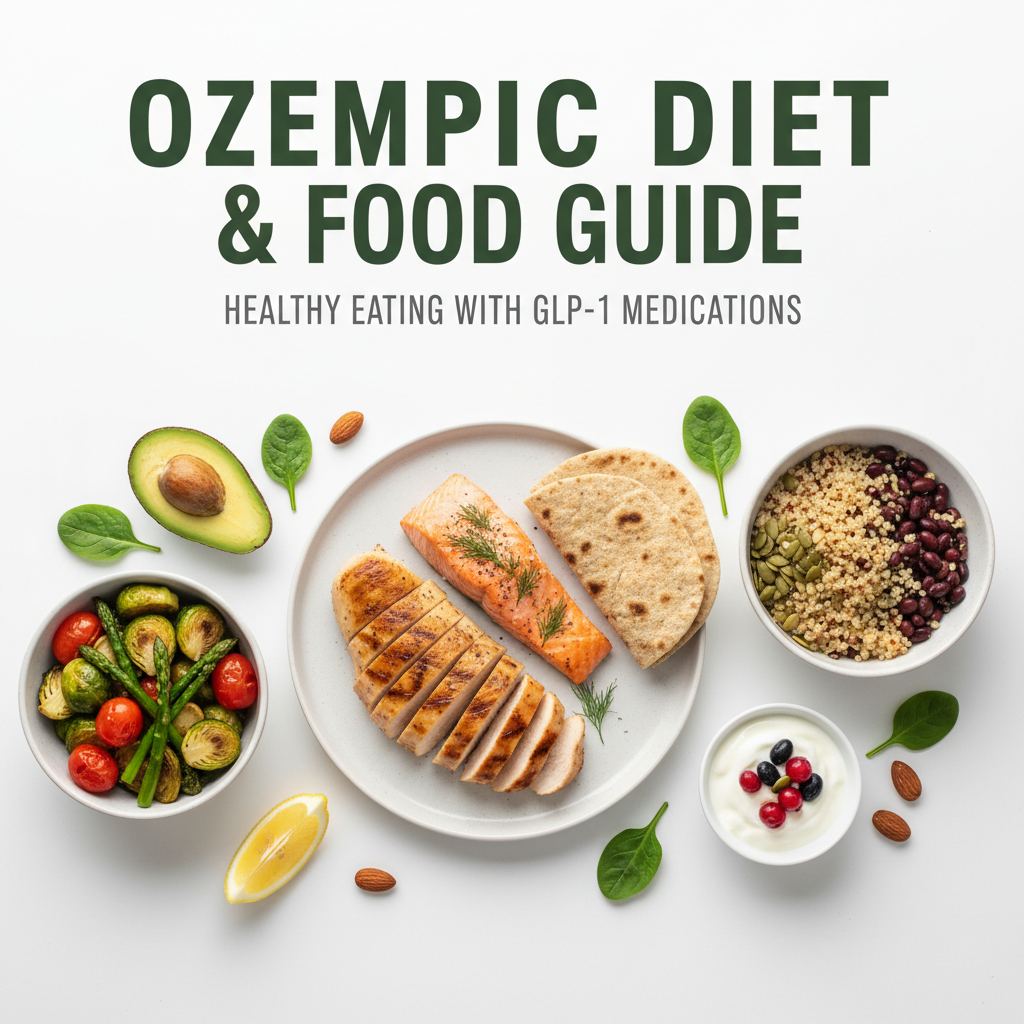
Protein is essential on Ozempic. It preserves muscle mass during weight loss, keeps you full longer, and has the highest thermic effect (burns more calories to digest). Aim for 1.2–1.6g of protein per kg of body weight daily. Best sources: Chicken breast and turkey — lean, versatile, easy to digest. Fish and seafood — salmon, cod, tuna, shrimp — excellent protein with anti-inflammatory omega-3s. Eggs — complete protein, nutrient-dense, easy on digestion. Greek yoghurt — high protein, probiotic-rich, gentle on the stomach. Cottage cheese — one of the highest protein-to-calorie foods available. Tofu and edamame — excellent plant-based options.
2. Non-Starchy Vegetables
Vegetables provide essential vitamins, minerals, and fibre while adding minimal calories — perfect for Ozempic users who are eating less overall. Best choices: spinach, kale, broccoli, cauliflower, zucchini, cucumber, bell peppers, asparagus, green beans. Tip: Cook your vegetables rather than eating them raw — cooked vegetables are easier to digest and less likely to cause bloating on Ozempic.
3. High-Fibre Complex Carbohydrates
Choose slow-digesting carbohydrates that stabilise blood sugar and provide sustained energy without spiking insulin. Best options: Oats (beta-glucan fibre supports gut health and cholesterol), quinoa (complete protein and complex carb), sweet potato (high in vitamins and resistant starch), brown rice (in small portions), lentils and beans (fibre-rich and protein-packed).
4. Healthy Fats
Despite what many think, healthy fats are important on Ozempic — they support vitamin absorption, hormone production, and satiety. The key is choosing the right fats and keeping portions small, as fat slows gastric emptying further. Best options: Avocado (small portions), olive oil (anti-inflammatory, heart-healthy), nuts and seeds (small handfuls — almonds, walnuts, flaxseeds), fatty fish (salmon, mackerel — omega-3 powerhouses).
Foods to Avoid on Ozempic
Fatty and fried foods — these significantly worsen nausea and delay gastric emptying even further. Avoid: fast food, deep-fried foods, fatty cuts of meat, heavy cream sauces. Ultra-processed foods — chips, biscuits, ready meals — nutritionally empty and hard to digest. Sugary foods and drinks — spike blood sugar and provide no nutritional value; worsen energy crashes. Carbonated drinks — cause bloating and discomfort due to slowed digestion. Alcohol — worsens nausea, disrupts blood sugar, and increases dehydration risk. Spicy foods — irritate the digestive system further on Ozempic. Large portion sizes — even healthy foods in large quantities cause nausea when gastric emptying is slowed.
The Ideal Ozempic Meal Plan Structure
Because Ozempic slows gastric emptying, traditional 3 large meals per day often leads to uncomfortable fullness, nausea, and bloating. Most GLP-1 users do best with: 4–5 small meals per day rather than 3 large ones. Meal size: Aim for approximately half your previous portion sizes — your appetite will guide you. Eating pace: Take at least 20 minutes per meal — eat slowly, chew thoroughly, stop at first fullness. Protein first: Eat your protein source before carbohydrates at every meal. Hydration: Drink water between meals rather than with meals (drinking during meals causes faster fullness and more nausea).
Sample Day of Eating on Ozempic
Breakfast: 2 scrambled eggs with spinach and 1 slice wholegrain toast | ~350 calories, 22g protein. Mid-morning snack: Small pot of Greek yoghurt with berries | ~150 calories, 15g protein. Lunch: Grilled chicken breast with roasted vegetables and quinoa (small portion) | ~400 calories, 35g protein. Afternoon snack: Small handful of almonds and a piece of fruit | ~150 calories, 5g protein. Dinner: Baked salmon with steamed broccoli and sweet potato | ~450 calories, 35g protein. Total: ~1,500 calories, ~112g protein — appropriate for most adults on a GLP-1 medication.
Hydration on Ozempic: Why It Is Critical
Dehydration is a serious risk on Ozempic — particularly if you are experiencing nausea or vomiting. Dehydration worsens nausea, causes headaches, impairs kidney function, and increases fatigue. Aim for: At least 8–10 glasses (2–2.5 litres) of water daily. If plain water triggers nausea: try sparkling water (in small sips), diluted herbal teas, or electrolyte drinks without added sugar. Warning signs of dehydration: dark urine, dizziness, rapid heartbeat, decreased urination — contact your doctor if severe.
Frequently Asked Questions
Can I drink coffee on Ozempic?
Yes — coffee is generally fine in moderation on Ozempic. However, black coffee on an empty stomach can worsen nausea. Drink it with food and avoid adding high-fat creamers that can trigger GI symptoms.
Can I eat sugar on Ozempic?
You can, but it is not recommended — especially if you have Type 2 diabetes. Sugary foods spike blood sugar rapidly and provide minimal nutritional value. Ozempic works best alongside a low-sugar, whole-food diet.
How much protein should I eat on Ozempic?
Aim for 1.2–1.6g of protein per kg of body weight. For a 80kg person, that is 96–128g of protein daily. Prioritise protein at every meal to prevent muscle loss.
Conclusion
Your diet on Ozempic is not just about what you avoid — it is about maximising every meal to protect your muscle mass, fuel your energy, and minimise side effects. Focus on lean proteins, non-starchy vegetables, complex carbohydrates, and healthy fats. Eat smaller and more frequently. Prioritise hydration. Done right, your diet amplifies the already powerful effects of GLP-1 medication and sets you up for lasting results.
📚 Medical Sources: ADA — Nutrition for Weight Management | NHS — Healthy Eating | Harvard Health — Protein and Weight Loss | Academy of Nutrition & Dietetics
Medical Disclaimer: This article is for informational purposes only. Always consult a registered dietitian or your prescribing doctor for personalised dietary advice while taking Ozempic or any GLP-1 medication.
🔗 Complete GLP-1 & Ozempic Series
Read all articles in our comprehensive GLP-1 guide series:
Leave a Reply