
🏷️ Category: Weight Loss
✅ Reviewed by our editorial team — Board-certified physician. Evidence sourced from NEJM SURMOUNT-1, STEP-1, and SURPASS trials, FDA drug approval data, and endocrinology specialists.
🔑 Key Takeaways
- ✅ Mounjaro (tirzepatide) produces average weight loss of 22.5% vs Ozempic’s 15% — a clinically significant difference
- ✅ Mounjaro activates TWO hormone receptors (GLP-1 and GIP) while Ozempic activates only GLP-1
- ✅ Both drugs have similar side effect profiles — GI symptoms dominate, especially during dose escalation
- ✅ Mounjaro (Zepbound for weight loss) costs approximately $1,059/month vs Ozempic’s $936/month
- ✅ Both are once-weekly subcutaneous injections — Mounjaro uses a different pen device (KwikPen)
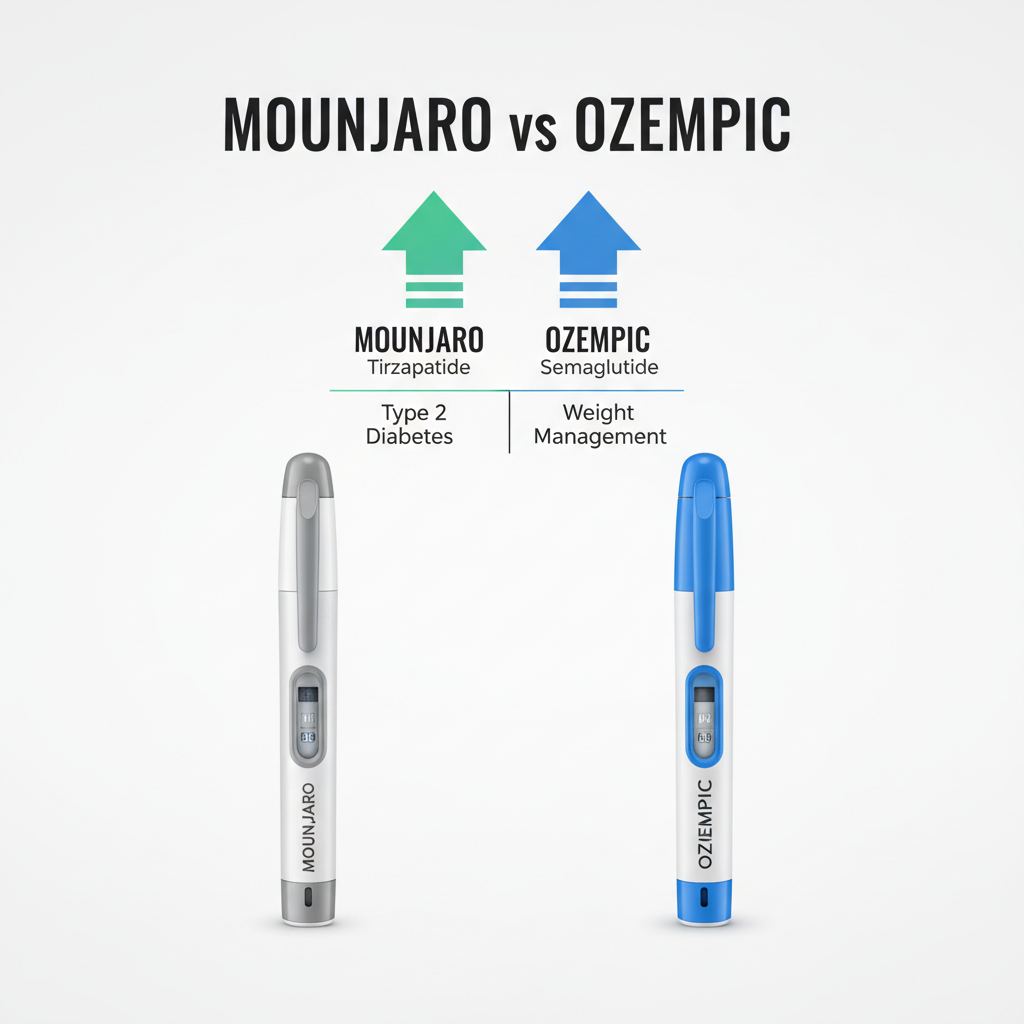
The GLP-1 revolution has produced two heavyweight contenders: Ozempic (semaglutide) from Novo Nordisk and Mounjaro (tirzepatide) from Eli Lilly. Both are once-weekly injections that dramatically reduce appetite and produce unprecedented weight loss. But they are not the same — and understanding the differences could help you and your doctor choose the right one for your situation. This comprehensive head-to-head comparison covers everything: mechanism, weight loss results, side effects, cost, availability, and who should choose which.
Mounjaro vs Ozempic: The Fundamental Difference
The core distinction between these two drugs lies in their mechanism of action:
Ozempic (Semaglutide) — GLP-1 Receptor Agonist
Ozempic mimics GLP-1 (glucagon-like peptide-1) — a hormone released from the gut after eating. By activating GLP-1 receptors in the brain, pancreas, and gut, it suppresses appetite, stimulates insulin release, slows gastric emptying, and reduces liver glucose production. One receptor. Powerful results.
Mounjaro (Tirzepatide) — Dual GLP-1/GIP Receptor Agonist
Mounjaro activates two hormonal receptors simultaneously: GLP-1 (same as Ozempic) and GIP (glucose-dependent insulinotropic polypeptide). GIP is another incretin hormone — released from the gut in response to eating — that works synergistically with GLP-1 to amplify insulin secretion, promote fat metabolism, and may enhance the brain’s satiety response. This dual activation explains Mounjaro’s superior weight loss results.
Head-to-Head: Weight Loss Results
For a person weighing 250lbs (113kg): Ozempic produces average loss of ~37lbs. Mounjaro produces average loss of ~51lbs. That is a clinically and visually significant 14lb difference.
Dosing Comparison
Side Effects: How Do They Compare?
Because Mounjaro activates GLP-1 (the same pathway as Ozempic) plus GIP, the side effect profile is very similar — dominated by GI symptoms. Key differences:
Cost and Insurance: Which Is More Affordable?
Availability and Shortages
Both semaglutide and tirzepatide have experienced significant supply shortages due to unprecedented demand. As of mid-2026: Ozempic/Wegovy: Supply has significantly improved following Novo Nordisk’s manufacturing expansion. Most pharmacies can fill prescriptions within 1–2 weeks. Mounjaro/Zepbound: Supply remains more constrained at higher doses (10–15mg). Some pharmacies have waiting lists. If access is a priority, Ozempic may be easier to obtain.
Which Should You Choose? Decision Framework
Can You Switch from Ozempic to Mounjaro?
Yes — switching is possible and increasingly common as patients seek superior weight loss results. Practical considerations: there is no established equivalency chart for doses. Most physicians start patients at a lower Mounjaro dose (2.5mg or 5mg) when switching from any semaglutide dose to allow re-adaptation. Some GI side effects may return during the switch. The switch typically takes 2–4 weeks to settle.
What About the Future? GLP-1 Pipeline
The GLP-1 medication landscape continues to evolve rapidly. Key developments: Oral tirzepatide — Eli Lilly’s pill form of Mounjaro is in Phase 3 trials. Retatrutide (GLP-1/GIP/glucagon triple agonist) — Phase 2 data showed average 24% weight loss — potentially surpassing even tirzepatide. CagriSema (Ozempic + amylin agonist) — Novo Nordisk’s combination drug showed 25% weight loss in early trials. The next 3–5 years will likely see even more effective GLP-1 class drugs reaching the market.
Frequently Asked Questions
Is Mounjaro stronger than Ozempic?
Yes — by weight loss metrics, Mounjaro is significantly more effective than Ozempic. Average weight loss is 22.5% vs 15%. The dual GLP-1/GIP mechanism appears to be genuinely additive in its effects on weight loss. For people who have had a partial response to Ozempic, Mounjaro is a natural next step.
Does Mounjaro have more side effects than Ozempic?
The side effect profiles are very similar — dominated by GI symptoms. Interestingly, despite being more potent, Mounjaro’s nausea and diarrhea rates in trials were slightly lower than Wegovy’s. Constipation is more common with Mounjaro. The 6-week dose escalation intervals for Mounjaro (vs 4 weeks for Ozempic) may help with side effect management.
Can I take both Ozempic and Mounjaro together?
No — you cannot take two GLP-1 receptor agonists simultaneously. The risk of severe hypoglycaemia and GI side effects would be unacceptably high. If switching between them, stop one before starting the other.
🔗 Complete Ozempic & GLP-1 Resource Hub
HealthAuthorityLife.com is your #1 source for everything Ozempic. Read the full series:
📚 Medical Sources & References:
NEJM — SURMOUNT-1 (Tirzepatide) | NEJM — STEP-1 (Semaglutide) | FDA — Zepbound Approval | Endocrine Society — GLP-1 Comparison
⚕️ Medical Disclaimer: This article is for educational purposes only. Both Mounjaro and Ozempic are prescription medications requiring medical assessment. Consult a qualified doctor to determine which — if either — is appropriate for your situation.
Leave a Reply