🏷️ Category: Diabetes
✅ Reviewed by our editorial team — Board-certified physician. Evidence sourced from the American Diabetes Association, NICE guidelines, NEJM SUSTAIN trials, and SELECT trial data.
🔑 Key Takeaways
- ✅ Ozempic (semaglutide) was FDA-approved for Type 2 diabetes in 2017 — its original and primary indication
- ✅ It reduces HbA1c by an average of 1.5–1.8% — one of the most effective blood sugar medications available
- ✅ Ozempic does not cause hypoglycaemia (dangerously low blood sugar) when used without insulin or sulfonylureas
- ✅ The SELECT trial showed Ozempic reduces cardiovascular death, heart attack, and stroke by 26% in T2D patients
- ✅ It is now recommended by ADA and NICE guidelines as a preferred second-line agent after metformin for most T2D patients with cardiovascular risk
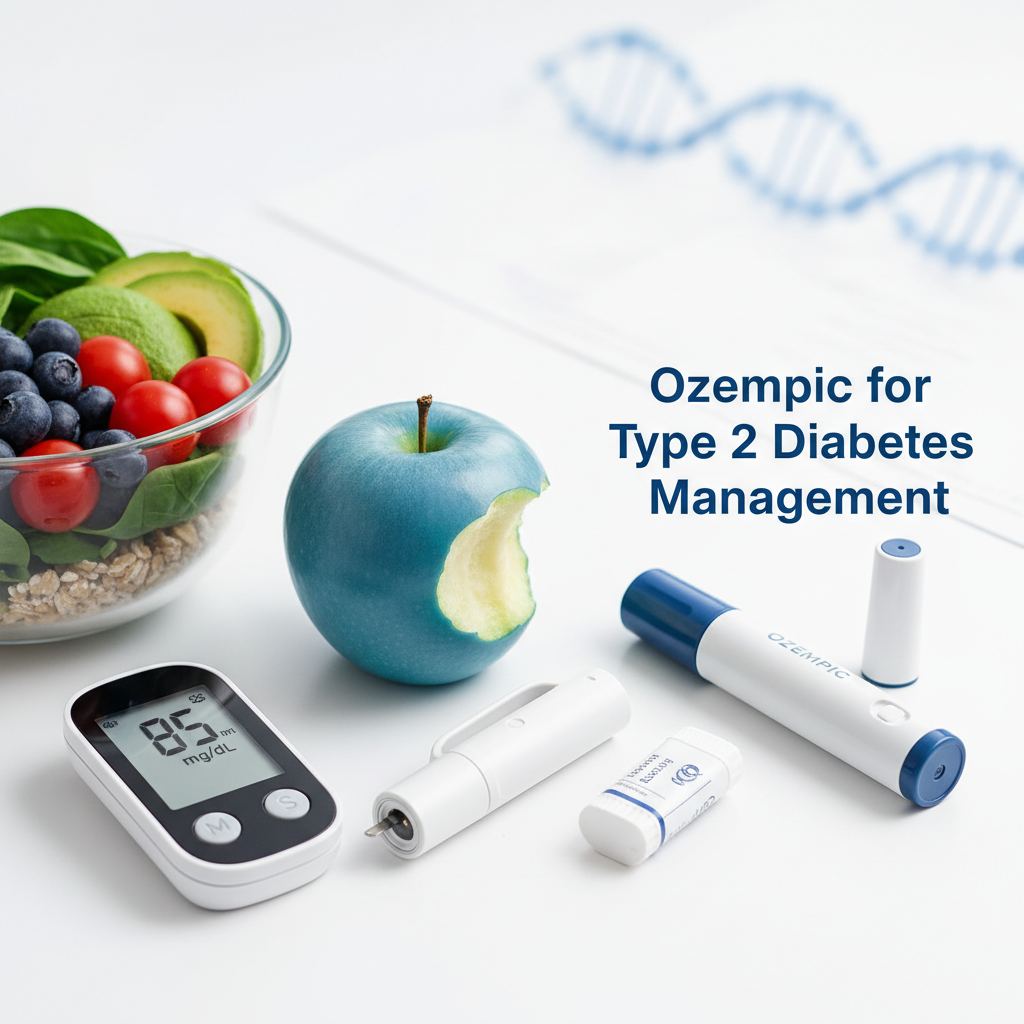
While Ozempic has become globally famous for weight loss, it is important to remember its origins and its most robust evidence base: the treatment of Type 2 diabetes. Ozempic was FDA-approved for T2D in December 2017 — years before its weight loss properties made it a household name. For people living with Type 2 diabetes, it remains one of the most effective, well-studied, and clinically recommended medications available.
How Ozempic Works in Type 2 Diabetes
Type 2 diabetes is characterised by progressive insulin resistance and eventual loss of pancreatic beta cell function. Ozempic addresses multiple dysfunctional pathways simultaneously — which is why it is so effective:
1. Glucose-Dependent Insulin Stimulation
Ozempic stimulates insulin release from pancreatic beta cells — but only when blood glucose is elevated. This is critically important: because insulin secretion is glucose-dependent, Ozempic does not cause hypoglycaemia when used alone. This is a major safety advantage over older diabetes medications like sulfonylureas.
2. Glucagon Suppression
Glucagon is a hormone that signals the liver to release stored glucose into the bloodstream. In T2D, glucagon levels are inappropriately elevated, contributing to high fasting blood sugar. Ozempic suppresses glucagon — particularly after meals — directly reducing excess liver glucose output.
3. Slowed Gastric Emptying
By slowing how quickly food passes from the stomach to the small intestine, Ozempic blunts the post-meal blood sugar spike — one of the most damaging aspects of poorly controlled T2D.
4. Weight Loss — An Additional Metabolic Benefit
The 5–15% weight loss achieved on Ozempic is independently beneficial in T2D — weight loss improves insulin sensitivity, reduces inflammation, and in some cases allows reduction or elimination of other diabetes medications.
Clinical Results: What Does the Evidence Show for T2D?
The SUSTAIN clinical trial programme — eight major global studies — established Ozempic’s remarkable effectiveness in Type 2 diabetes:
Ozempic vs Other Type 2 Diabetes Medications
Ozempic stands out for combining excellent HbA1c reduction with significant weight loss, low hypoglycaemia risk, and proven cardiovascular protection — a combination no other diabetes drug class fully matches.
ADA and NICE Guidelines: What Do They Recommend?
Both the American Diabetes Association (ADA) and the UK’s NICE (National Institute for Health and Care Excellence) now recommend GLP-1 receptor agonists including Ozempic as a preferred second-line agent in T2D:
ADA 2026 Standards of Care
GLP-1 receptor agonists are recommended as second-line therapy (after metformin) for patients who: need weight loss alongside blood sugar control, have established cardiovascular disease or high CV risk, need low hypoglycaemia risk, or have non-alcoholic fatty liver disease (NAFLD).
NICE Guidelines (UK)
NICE recommends semaglutide (Ozempic) for T2D when: HbA1c is above target despite metformin, the patient has BMI ≥35 (or lower in certain ethnic groups), and/or there is significant cardiovascular risk. It is approved for NHS prescription for eligible T2D patients.
Ozempic Dosing for Type 2 Diabetes
The T2D dosing schedule for Ozempic is identical to the weight loss titration — gradual increases to minimise GI side effects:
💡 Doctor’s Tip: Many T2D patients achieve excellent blood sugar control at 0.5mg or 1mg without needing the full 2mg dose. Your HbA1c at the 3-month mark will guide your prescriber’s dose decision.
Ozempic and Cardiovascular Disease in Diabetes
The most clinically significant finding in Ozempic’s T2D evidence base is its cardiovascular protective effect. Two landmark trials established this:
SUSTAIN-6 Trial (2016)
3,297 patients with T2D and high cardiovascular risk. Ozempic reduced major adverse cardiovascular events (MACE — cardiovascular death, non-fatal heart attack, non-fatal stroke) by 26% vs placebo. This trial led to Ozempic’s additional FDA approval for reducing cardiovascular risk in T2D patients with established heart disease.
SELECT Trial (2023)
17,604 participants — the largest cardiovascular outcomes trial for a GLP-1 drug. 26% reduction in cardiovascular events over 4 years in patients with obesity and cardiovascular disease. This extended the cardiovascular benefit finding to patients without diabetes — a landmark result.
Managing Type 2 Diabetes on Ozempic: Practical Tips
Blood Sugar Monitoring
If you are on Ozempic alone (without insulin), home blood sugar monitoring frequency depends on your individual circumstances — discuss with your GP. HbA1c should be checked every 3 months initially, then every 6 months once stable.
Hypoglycaemia Risk
Ozempic alone carries minimal hypoglycaemia risk. However, combining Ozempic with insulin or sulfonylureas significantly raises the risk. If you take these medications together, your doctor will typically reduce insulin or sulfonylurea doses when starting Ozempic.
Sick Day Rules
If you are unwell and not eating, contact your diabetes team. Ozempic should generally be continued during illness — but nausea and vomiting may make this difficult. Significant dehydration during illness is the main concern.
What About Alcohol?
Alcohol can cause blood sugar to drop (hypoglycaemia) or spike depending on quantity and what you eat. On Ozempic, alcohol also worsens nausea significantly. Moderate alcohol intake is generally acceptable — excessive drinking is not recommended.
Ozempic and Kidney Disease in T2D
Diabetic kidney disease (diabetic nephropathy) is the leading cause of kidney failure worldwide. Emerging evidence suggests semaglutide has kidney-protective effects in T2D: slowing the decline in eGFR (kidney filtration rate), reducing albuminuria (protein in urine — a marker of kidney damage), and reducing the risk of kidney disease progression in the FLOW trial (2024). This makes Ozempic particularly valuable in T2D patients with early kidney disease.
Frequently Asked Questions
Is Ozempic better than metformin for Type 2 diabetes?
Ozempic produces greater HbA1c reductions, significant weight loss, and proven cardiovascular benefits that metformin does not offer at the same magnitude. However, metformin is safer, far cheaper, has 60+ years of safety data, and remains the first-line recommendation. Most guidelines recommend metformin first, with Ozempic added when more control or weight loss is needed.
Can Ozempic cure Type 2 diabetes?
Ozempic cannot cure T2D, but it can help achieve remission — defined as HbA1c below 6.5% without diabetes medication — particularly when combined with significant weight loss. Studies show that people who lose 15%+ body weight on GLP-1 therapy can achieve sustained T2D remission. If Ozempic is stopped without maintaining lifestyle changes, blood sugar typically rises again.
How long does Ozempic take to lower blood sugar?
Most people see meaningful HbA1c reduction within 4–8 weeks of reaching a therapeutic dose (0.5mg). Full effect on HbA1c is typically seen at the 3-month mark. Fasting blood glucose often improves within the first 1–2 weeks.
🔗 Complete Ozempic & GLP-1 Resource Hub
HealthAuthorityLife.com is your #1 source for everything Ozempic. Read the full series:
📚 Medical Sources & References:
ADA — Standards of Care 2026 | NEJM — SUSTAIN-6 Trial | NEJM — SELECT Trial | NICE — Semaglutide for T2D
⚕️ Medical Disclaimer: This article is for educational purposes only. Type 2 diabetes management is highly individual. Always consult your GP, endocrinologist, or diabetes specialist before starting, changing, or stopping any diabetes medication.
Leave a Reply