🏷️ Category: Weight Loss
Reviewed by our editorial team — Evidence sourced from NEJM STEP Extension trial and Diabetes Obesity and Metabolism journal.
🔑 Key Takeaways:
✅ People regain an average of 2/3 of lost weight within 12 months of stopping Ozempic
✅ All cardiometabolic improvements largely reverse after stopping
✅ Weight regain is not a personal failure — it reflects the biology of obesity as a chronic disease
✅ Tapering to a maintenance dose reduces regain significantly vs stopping abruptly
✅ Building muscle and sustainable habits during treatment is the best long-term protection
The question everyone asks before starting Ozempic: what happens when you stop? The answer — backed by landmark clinical data — is sobering: most of the weight comes back. But understanding why, and what you can do about it, makes all the difference.
The Clinical Evidence: How Much Weight Do You Regain?
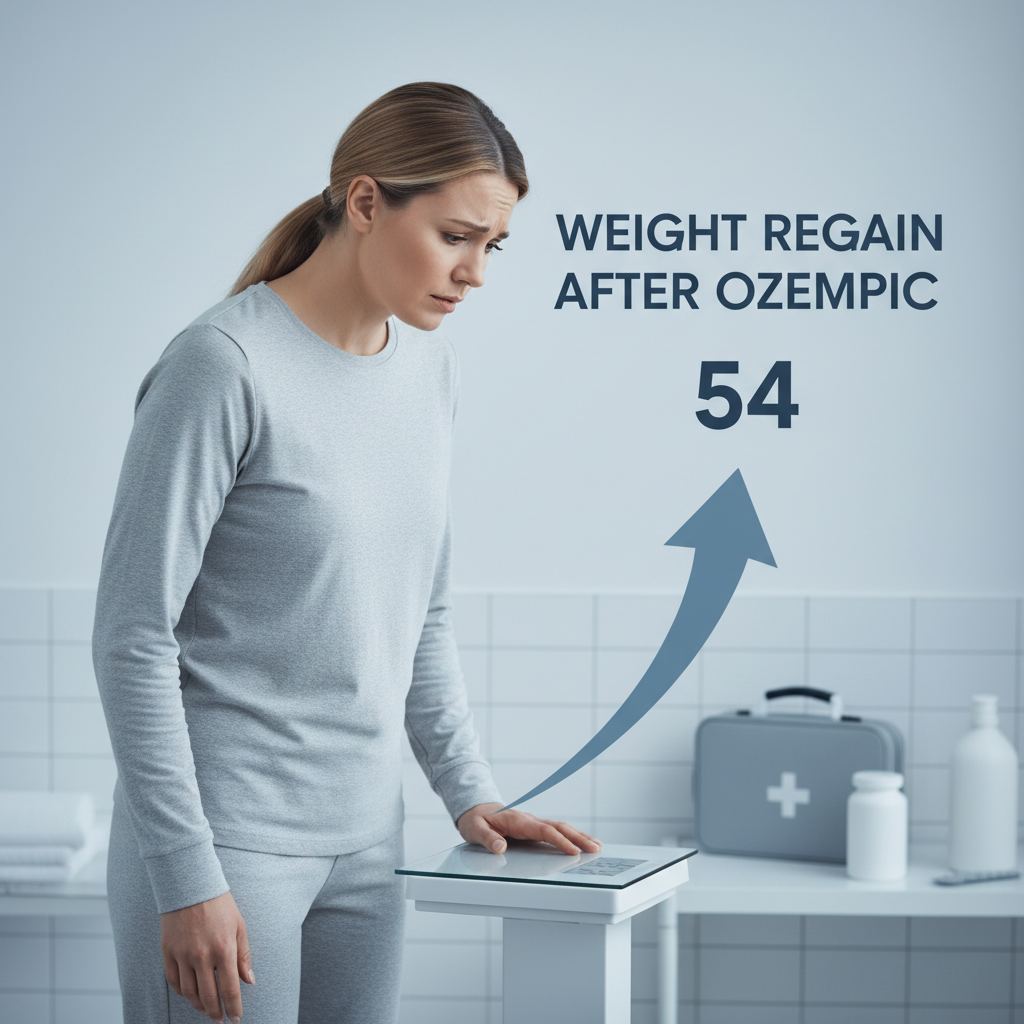
The STEP 1 Extension trial (2022) is the definitive study. After 68 weeks of Wegovy with 17.3% average weight loss, participants stopped and were followed 52 more weeks. Result: they regained an average of 11.6 percentage points — retaining only one-third of their weight loss. Net maintained loss: just 5.6%. Virtually all cardiometabolic improvements reversed.
Why the Weight Comes Back
1. Appetite Hormones Reset Immediately
Ozempic suppresses appetite by mimicking GLP-1. Stop the drug and these effects vanish within days. Hunger hormones like ghrelin return to — or above — pre-treatment levels as the body aggressively compensates for perceived caloric deficit.
2. Metabolic Rate Has Slowed
Weight loss from any cause reduces basal metabolic rate. When you stop Ozempic and appetite rebounds, you eat more into a slower-burning system — rapid regain follows even if eating less than before treatment.
3. Obesity Is a Chronic Disease
Medical consensus: obesity is a chronic, relapsing biological disease — not a lifestyle choice. Just as stopping blood pressure medication raises pressure, stopping Ozempic allows underlying biology to reassert itself. The drug manages the condition; it does not cure it.
4. Muscle Loss Worsens Rebound
Up to 40% of Ozempic weight loss is lean muscle. Weight returning after stopping comes back predominantly as fat — worsening body composition even if the scale returns to pre-treatment levels.
Strategies to Minimise Weight Regain
1. Taper to a Maintenance Dose
Many endocrinologists recommend tapering to a lower dose (0.5–1mg weekly) rather than stopping completely. This maintains results at significantly lower cost and side effect burden.
2. Build Sustainable Habits During Treatment
Use the reduced appetite window: establish high-protein eating, build resistance training habits, learn hunger and fullness cues. These create a metabolic foundation that persists after stopping.
3. Maximise Muscle Before Stopping
Start resistance training at least 3 months before planned discontinuation. More muscle = higher resting metabolic rate = slower and more manageable regain.
4. Intensive Dietary Intervention Immediately After Stopping
Transition immediately to Mediterranean diet, low-carb, or a supervised programme. The first 3 months after stopping are the highest-risk window for regain.
Is Ozempic a Lifelong Medication?
Leading obesity specialists increasingly view GLP-1 medications as potentially lifelong treatments — analogous to statins for cholesterol. The challenge: few health systems currently fund indefinite GLP-1 therapy for weight management.
🔗 Complete Ozempic Truth Series
- Ozempic Disadvantages: The Complete Honest Guide
- Ozempic and Muscle Loss: How to Protect Yourself
- Ozempic and Hair Loss: Why It Happens and How to Fix It
- Ozempic Long-Term Dangers: What Science Really Shows
- Who Should NOT Take Ozempic: Full Contraindications Guide
- Best Ozempic Alternatives in 2026: Ranked by Effectiveness
Also see our GLP-1 Basics Series:
Frequently Asked Questions
How quickly does weight come back after stopping Ozempic?
Regain begins within weeks and is most rapid in the first 3–6 months. Most regain occurs within the first 20 weeks of discontinuation.
Can you restart Ozempic after stopping?
Yes — many people do. Your doctor will typically restart at 0.25mg and re-titrate slowly. The medication works as effectively when restarted as initially.
📚 Medical Sources: NEJM — STEP 1 Extension Trial | Diabetes Obesity Metabolism | NHS — Stopping Weight Loss Medicines | Harvard Health — Ozempic Long Term
Medical Disclaimer: Never stop a prescription medication without consulting your doctor.
The STEP 4 and STEP 8 Trials: What Maintenance Looks Like
Beyond the famous STEP 1 Extension, two other trials provide crucial data on what happens at different doses and timeframes. The STEP 4 trial showed that patients who continued on semaglutide 2.4mg maintained their weight loss significantly better than those switched to placebo — 7.9% further loss vs 6.9% regain. The STEP 8 trial demonstrated that even a lower maintenance dose (1.0mg, the diabetes dose) can help preserve some weight loss, though not as effectively as the full 2.4mg weight management dose.
Together, these trials paint a clear picture: semaglutide is not a cure but a chronic treatment. The weight loss it produces is maintained only while the medication is active in the body. This is consistent with the modern medical understanding of obesity as a chronic, relapsing disease — similar to hypertension or high cholesterol, where stopping treatment typically leads to the return of the condition.
The Biological Defence Mechanism: Why Your Body Fights to Regain Weight
To understand weight regain after stopping Ozempic, you need to understand the body’s weight regulation system. The hypothalamus maintains a “set point” — a weight range it considers normal. When you lose significant weight, your brain interprets this as a threat to survival and activates multiple compensatory mechanisms:
Hormonal Compensation
Weight loss triggers a cascade of hormonal changes that persist for years:
- Leptin drops by 50–65% after significant weight loss, signalling to the brain that energy stores are low. This increases hunger and decreases satiety.
- Ghrelin (the hunger hormone) increases by 20–30%, making you feel hungrier than before weight loss.
- GLP-1, PYY, and CCK (satiety hormones) decrease, meaning you feel less full after eating the same amount of food.
- Insulin sensitivity improves but this also means your body becomes more efficient at storing calories.
These changes were documented in a landmark 2016 study published in Obesity, which followed contestants from The Biggest Loser for 6 years. Even 6 years after weight loss, their resting metabolism was 500 calories lower than expected and their hunger hormones remained elevated. The body’s defence of its original weight is relentless and long-lasting.
Metabolic Adaptation
When you lose weight, your resting metabolic rate (RMR) drops more than would be expected from the reduction in body size alone. This phenomenon — called “adaptive thermogenesis” — means your body burns fewer calories at rest than a person of the same weight who was never overweight. Studies show this metabolic adaptation can persist for 12–24 months or longer after weight loss.
Ozempic partially counteracts this by slowing gastric emptying and reducing appetite. When you stop, the metabolic adaptation is unmasked — your body is burning fewer calories while simultaneously increasing hunger signals. This creates a caloric surplus that drives weight regain.
Changes in Body Composition
During semaglutide treatment, approximately 30–40% of the weight lost is lean muscle mass, not fat. This matters because muscle is metabolically active tissue — it burns calories even at rest. Losing muscle reduces your metabolic rate and makes it harder to maintain weight loss. When weight is regained after stopping, it comes back predominantly as fat, not muscle — leaving you with a worse body composition (higher fat-to-muscle ratio) than before treatment.
This is why resistance training during Ozempic treatment is critical. Multiple studies show that patients who combine GLP-1 agonists with resistance training preserve significantly more muscle mass — sometimes 80–90% more — compared to those who don’t exercise. The muscle you keep during treatment is your metabolic insurance policy for when you stop.
Timeline of Weight Regain After Stopping
Understanding the timeline helps set realistic expectations. Based on clinical data and patient reports, here’s what typically happens:
| Timeframe | What Happens | Typical Weight Change |
|---|---|---|
| Week 1–2 | Drug washout period. Appetite returns. Food noise resumes. | +1–3 lbs (water + glycogen) |
| Week 3–8 | Hunger hormones surge. Portion sizes naturally increase. Cravings intensify. | +3–8 lbs |
| Month 3–6 | Steady regain. Metabolic rate remains suppressed. Most regain happens here. | +5–15% of total lost |
| Month 6–12 | Regain rate slows but continues. Many reach ~2/3 of lost weight regained. | +10–20% of total lost |
| Year 1–2 | Weight typically stabilises at or near pre-treatment level for most patients. | Total: ~65% of lost weight regained |
Note: Individual outcomes vary significantly. Some patients maintain 50%+ of their weight loss through disciplined lifestyle habits, while others regain all of it plus additional weight. The difference comes down to what habits were established during treatment.
Strategies to Minimise Weight Regain After Stopping
While statistics show most people regain significant weight, that doesn’t mean it’s inevitable. Patients who successfully maintain weight loss after stopping GLP-1 medications share several evidence-based strategies:
1. Taper Gradually — Don’t Stop Cold Turkey
Instead of abruptly stopping, work with your doctor to taper the dose over 8–12 weeks. This allows your body to adjust to gradually increasing appetite and gives you time to strengthen lifestyle habits. Some doctors recommend a maintenance dose (e.g., 0.25mg or 0.5mg weekly instead of the full 1.0mg or 2.4mg) for several months after reaching your goal weight.
2. Build and Maintain Muscle Mass
Resistance training is the single most effective strategy for post-Ozempic weight maintenance. Aim for 3–4 sessions per week focusing on compound movements (squats, deadlifts, presses, rows). Each kilogram of muscle you build burns approximately 13–15 additional calories per day at rest — modest per kilo, but significant when you build and maintain several kilograms. More importantly, resistance training improves insulin sensitivity and metabolic health independently of weight.
3. Prioritise Protein
After stopping, increase your protein intake to 1.2–1.6g per kg of body weight per day. Protein is the most satiating macronutrient — it suppresses hunger hormones more effectively than carbohydrates or fats. It also supports muscle preservation and has the highest thermic effect of food (your body burns 20–30% of protein calories just digesting it, compared to 5–10% for carbs and 0–3% for fats).
4. Adopt a Maintenance-Phase Eating Pattern
You can’t eat the same way you did before Ozempic and expect to maintain weight loss. The eating pattern that got you to your highest weight will return you there. Focus on:
- Mediterranean diet principles: Olive oil, fish, vegetables, whole grains, nuts, legumes
- High fibre intake: 30–40g per day from vegetables, legumes, and whole grains. Fibre slows digestion, reduces glucose spikes, and promotes satiety
- Eliminate liquid calories: Sugary drinks, alcohol, and high-calorie coffees are the #1 source of unintended weight regain
- Time-restricted eating: A 10–12 hour eating window (e.g., 8am–6pm) may help control total caloric intake without counting calories
5. Regular Weigh-Ins and Early Intervention
Research from the National Weight Control Registry shows that people who maintain weight loss long-term weigh themselves at least weekly. The goal isn’t to obsess over the number but to catch weight creep early — if you gain more than 2–3 lbs, you can adjust your habits immediately rather than waiting until you’ve gained 15 lbs. Consider this “self-weighing as an early warning system.”
6. Address Emotional and Psychological Factors
Many people use food as a coping mechanism for stress, anxiety, or boredom. Ozempic suppresses this by reducing appetite, but when you stop, the emotional drivers of eating return. If emotional eating was a factor before treatment, address it during treatment with therapy, mindfulness practice, or support groups. Cognitive behavioural therapy (CBT) has strong evidence for treating emotional eating and binge eating disorder.
7. Consider a Transition to a Different Medication
Some patients transition from GLP-1 agonists to other medications that support weight maintenance. Options include:
- Metformin: Modest weight-neutral or weight-loss effect, may help with insulin sensitivity
- Bupropion-naltrexone (Contrave): Targets the brain’s reward pathways to reduce cravings
- Phentermine-topiramate (Qsymia): Appetite suppressant, typically used short-term
- Low-dose GLP-1 maintenance: Some doctors keep patients on a very low dose of semaglutide long-term
Discuss these options with your doctor 2–3 months before you plan to stop, not after you’ve already regained weight.
The “Food Noise” Phenomenon
One of the most striking patient-reported effects of GLP-1 agonists is the elimination of “food noise” — the constant, intrusive thoughts about food, eating, cravings, and meal planning that many people with obesity experience. Patients describe this as life-changing, saying they finally understand what it feels like to “not think about food all the time.”
When you stop Ozempic, food noise typically returns within 1–2 weeks. This is one of the most distressing aspects of discontinuation for many patients. Understanding that this is a neurobiological phenomenon — not a personal failing or lack of willpower — is crucial. The same brain circuits that GLP-1 agonists quiet down become active again when the drug is removed.
Strategies that help manage returning food noise include: regular meals at consistent times (prevents the hunger that triggers obsessive food thoughts), adequate protein at each meal, stress management (cortisol increases food cravings), and mindfulness-based eating practices.
Cardiometabolic Changes After Stopping
Weight regain isn’t just about appearance or the number on the scale. The STEP 1 Extension trial documented exactly what happens to cardiometabolic health when semaglutide is stopped:
| Metric | Improved During Treatment | After 1 Year Off |
|---|---|---|
| Waist circumference | -13.2 cm | -3.6 cm (most reversed) |
| Systolic blood pressure | -5.9 mmHg | -1.2 mmHg (mostly reversed) |
| HbA1c | -0.6% | -0.1% (mostly reversed) |
| C-reactive protein (inflammation) | -43% | -6% (mostly reversed) |
| Triglycerides | -19% | -3% (mostly reversed) |
| HDL cholesterol | +9% | +1% (mostly reversed) |
These reversals underscore that the cardiometabolic benefits of semaglutide are largely dependent on ongoing treatment. This is consistent with the drug’s mechanism — it directly improves blood pressure, reduces inflammation, and improves lipid profiles through GLP-1 receptor activity in the heart, blood vessels, and kidneys, not just through weight loss.
Should You Stay on Ozempic Long-Term?
The question of whether to stay on GLP-1 medications indefinitely is increasingly common. Arguments for long-term use:
- Obesity is a chronic disease — chronic diseases require chronic treatment
- We don’t stop blood pressure medication when BP normalises; we continue it to maintain the benefit
- Long-term GLP-1 use has now been studied for 15+ years with a generally acceptable safety profile
- Cardiovascular and kidney protection benefits are cumulative with continued use
Arguments against:
- Cost — £160–£300/month without insurance coverage
- Side effects — nausea, GI issues, and potential long-term risks like muscle loss
- Injection burden — weekly injections for life may be undesirable
- Unknown effects of decades-long use, especially on pancreatic and thyroid health
There’s no single right answer. This is a personal decision that should be made with your doctor based on your health history, risk factors, financial situation, and quality of life priorities. Some patients choose to stay on a maintenance dose long-term; others prefer to cycle on and off; others use the drug as a tool to establish habits and then transition off.
Frequently Asked Questions
Q: If I know I’ll regain the weight, is it even worth taking Ozempic?
A: Yes, for several reasons. Even temporary weight loss can reset your metabolic baseline, improve insulin sensitivity, reduce liver fat, and lower cardiovascular risk. The weight loss period also gives you a window to establish healthier habits without fighting constant hunger. Some benefit is better than none.
Q: How quickly does appetite return after stopping?
A: Most people notice increased appetite within 5–10 days of their last injection. Semaglutide has a half-life of approximately 1 week, so it takes 4–5 weeks for the drug to fully clear your system. The return of appetite is gradual but noticeable.
Q: Will I gain back more than I lost?
A: On average, people regain about two-thirds of their lost weight, not more. However, individual outcomes vary. Those who don’t make lifestyle changes during treatment are at highest risk of full regain. A small percentage do exceed their pre-treatment weight.
Q: Can I go back on Ozempic if I start regaining?
A: Yes. Re-treatment is an option and many patients cycle on and off. However, insurance coverage for re-treatment may be more difficult to obtain. Some doctors recommend a low maintenance dose rather than completely stopping and restarting.
Q: Does microdosing Ozempic work for maintenance?
A: Anecdotal evidence suggests that very low doses (e.g., 0.05–0.25mg weekly) may help control appetite with fewer side effects. However, there is no robust clinical trial data on microdosing for maintenance. This should only be attempted under medical supervision.
Q: What’s the best exercise to prevent weight regain?
A: Resistance training combined with regular walking. Aim for 3–4 strength sessions per week plus 8,000–10,000 daily steps. Avoid excessive cardio without strength training, as this can further reduce muscle mass.
Q: Are there any supplements that help with post-Ozempic weight maintenance?
A: No supplement replaces the effects of GLP-1. However, protein supplements (whey or plant-based) can help meet protein targets, and fibre supplements (psyllium, inulin) can support satiety. Always discuss supplements with your doctor.
Q: How do I talk to my doctor about stopping?
A: Be honest about your reasons — cost, side effects, or simply feeling ready. Ask about a tapering plan, maintenance options, and what monitoring you’ll need. A good doctor will help you transition safely rather than simply saying “stop and see what happens.”
The Mental Health Impact of Weight Regain
Weight regain after stopping Ozempic can be psychologically devastating. Many patients report feeling like they’ve “failed” or that the treatment was “pointless.” This is a harmful framing. The weight regain reflects the chronic nature of obesity, not a personal failure.
If you experience depression, anxiety, or eating disorder symptoms after stopping, seek professional help. A therapist who specialises in body image and weight management can help you process the emotional impact and develop healthier coping strategies. Support groups — both in-person and online — can also be invaluable for connecting with others going through the same experience.
Remember: your worth is not determined by your weight. The health improvements you experienced during treatment — better blood sugar, lower blood pressure, reduced liver fat — were real and beneficial, even if they were temporary. Use that experience as evidence that your body can be healthier, and work with your healthcare team on the next chapter of your health journey.
⚠️ Important: This article is for educational purposes only and does not constitute medical advice. Never stop or change any medication without consulting your doctor. Abruptly stopping GLP-1 medications can cause rapid blood sugar changes. Always work with your healthcare provider on a discontinuation or transition plan.
This article was written by the HealthAuthorityLife Editorial Team and reviewed for accuracy. It is based on clinical trial data from NEJM, Diabetes Obesity and Metabolism, and the Obesity journal.
What Successful Post-Ozempic Patients Do Differently
Research on long-term weight loss maintainers — regardless of how they lost the weight — reveals consistent patterns. The National Weight Control Registry (NWCR), which tracks over 10,000 people who have maintained 30+ lb weight loss for at least 1 year, identifies these shared behaviours:
- 78% eat breakfast every day — skipping breakfast is associated with higher weight regain rates
- 75% weigh themselves at least weekly — self-monitoring catches weight creep early
- 90% exercise for about 1 hour per day — primarily walking and other moderate activities
- 62% watch less than 10 hours of TV per week — reduced sedentary time is crucial
- Most consume a consistent diet — they don’t “cheat” on weekends or holidays to the same degree as regainers
These habits must be established during Ozempic treatment, not after stopping. The medication period is your training ground — use the reduced appetite and food noise to build habits that will carry you when the drug is gone. Patients who simply take the medication without making lifestyle changes are the most likely to regain everything.
Comparing Different GLP-1 Medications: Discontinuation Outcomes
Ozempic (semaglutide) is just one of several GLP-1 receptor agonists. Each has slightly different discontinuation profiles:
| Medication | Avg Weight Loss | Regain After Stopping | Half-Life |
|---|---|---|---|
| Semaglutide (Ozempic/Wegovy) | 15–17% | ~65% within 1 year | ~1 week |
| Liraglutide (Saxenda) | 8–10% | ~60% within 1 year | ~13 hours (daily injection) |
| Tirzepatide (Mounjaro/Zepbound) | 20–22% | Data limited, expected similar | ~5 days |
| Dulaglutide (Trulicity) | 5–8% | Less data available | ~5 days |
Tirzepatide (Mounjaro/Zepbound) is a dual GIP/GLP-1 agonist that achieves greater weight loss than semaglutide. Early discontinuation data suggests a similar regain pattern, though the larger initial loss may mean more absolute weight regained. The SURMOUNT trials are still collecting long-term maintenance data, so we’ll know more about tirzepatide’s post-discontinuation profile in the coming years.
The Economic Reality of Long-Term GLP-1 Use
Cost is one of the most common reasons people stop taking Ozempic. In the UK, private prescriptions cost £160–£300 per month. In the US, the list price exceeds $900/month, though insurance may cover it for diabetes (Ozempic) but not for weight loss (Wegovy). This creates a cruel paradox: the people who benefit most from GLP-1 medications — those with severe obesity and metabolic complications — are often those least able to afford lifelong treatment.
Generic semaglutide won’t be available until at least 2031 in most markets. In the meantime, some patients are exploring compounding pharmacy alternatives (though the FDA has raised concerns about quality control) or switching to older, less expensive weight-loss medications for maintenance. This is a healthcare system problem, not a personal one — and it’s one that policymakers will need to address as GLP-1 medications become increasingly central to obesity treatment.
Working With Your Healthcare Team on a Stop Plan
If you’re planning to stop Ozempic, the ideal time to start planning is 3 months before your last dose. Here’s a structured approach:
3 Months Before Stopping
- Schedule a comprehensive metabolic panel (HbA1c, lipids, liver function, kidney function)
- Increase resistance training to 3–4 sessions/week if not already doing so
- Start tracking food intake to understand your current eating patterns
- Discuss transition medications with your doctor
1 Month Before Stopping
- Begin tapering dose (reduce by 25% per week with doctor’s guidance)
- Establish your maintenance eating plan — test it while still on medication
- Set up a weekly weigh-in schedule
- Plan for increased hunger and have protein-rich snacks ready
After Stopping
- First 2 weeks: expect water weight gain (1–3 lbs), don’t panic
- Month 1: focus on maintaining eating patterns, daily walks, strength training
- Month 3: reassess with doctor, check metabolic markers
- Month 6: full metabolic panel to compare with pre-treatment and during-treatment values
The key insight: stopping Ozempic should be a planned transition, not an abrupt event. Your body spent months adjusting to the medication — give it time to adjust away from it.
Bariatric Surgery vs GLP-1: Which Has Better Long-Term Maintenance?
An important comparison for patients considering their long-term options: bariatric surgery (gastric bypass, sleeve gastrectomy) produces durable weight loss in 60–70% of patients at 10+ years, significantly better than GLP-1 discontinuation outcomes. The reasons are mechanical and hormonal — surgery permanently alters gut anatomy and produces sustained changes in ghrelin, GLP-1, PYY, and bile acid signalling.
However, surgery carries risks: surgical complications (~2–4% major complication rate), lifelong nutritional deficiencies requiring supplementation, dumping syndrome, and the need for permanent dietary modification. It’s also not reversible for gastric bypass.
For patients who regain weight after stopping Ozempic and are struggling with severe obesity (BMI 35+), bariatric surgery may be worth discussing with their doctor. Some patients use GLP-1 medications as a bridge to prepare for surgery (losing weight pre-operatively reduces surgical risks), while others use them after surgery if weight regain occurs.
Key Takeaway: Plan Your Exit Before You Start
The single most important message from all the research: if you’re considering Ozempic, think about your exit strategy from day one. The medication is a powerful tool, but it’s not a permanent solution. Use the treatment period to:
- Build muscle through resistance training
- Establish sustainable eating patterns you can maintain without the drug
- Address emotional eating with therapy or counselling
- Create a maintenance plan with your doctor before you reach your goal weight
- Build a support system — friends, family, support group, or healthcare team
The patients who maintain the most weight loss after stopping are those who treated Ozempic as a training period, not a permanent fix. They used the reduced appetite and food noise as a window to rewire their habits. When the medication ended, their habits carried them forward.
Leave a Reply