
🏷️ Category: Nutrition
Reviewed by our editorial team — Evidence sourced from the NHS, NIH, American Journal of Clinical Nutrition, and peer-reviewed journals.
🔑 Key Takeaways: Magnesium is involved in over 300 biochemical reactions in the human body. Up to 50% of adults in Western countries are estimated to be magnesium deficient. Symptoms include muscle cramps, fatigue, anxiety, sleep problems, and heart palpitations. The best food sources are dark leafy greens, nuts, seeds, dark chocolate, and whole grains. Magnesium glycinate and magnesium citrate are the most bioavailable supplement forms.
Magnesium deficiency is one of the most common nutritional shortfalls in the modern world — yet it is rarely tested for or discussed. This essential mineral is involved in over 300 enzymatic reactions in the human body, including energy production, protein synthesis, muscle and nerve function, blood sugar regulation, and blood pressure control. Without enough of it, virtually every system in your body suffers.
Why Is Magnesium Deficiency So Common?
Modern diets have become severely depleted in magnesium. Several factors drive this widespread deficiency: Soil depletion — intensive farming has stripped magnesium from agricultural soil by up to 80% over the past century. Processed food consumption — refining wheat into white flour removes 80% of its magnesium. Low fruit and vegetable intake — most people don’t eat the recommended daily portions. Medications — proton pump inhibitors (PPIs like omeprazole), diuretics, and antibiotics all deplete magnesium. Alcohol — increases magnesium excretion through the kidneys. Chronic stress — cortisol depletes magnesium, and low magnesium worsens the stress response — a vicious cycle.
10 Signs and Symptoms of Magnesium Deficiency
1. Muscle Cramps and Spasms
Magnesium acts as a natural calcium channel blocker — it regulates calcium entry into muscle cells. Without adequate magnesium, muscles contract excessively, causing cramps and spasms, particularly in the legs and at night. This is the most classic sign of deficiency.
2. Fatigue and Weakness
Magnesium is essential for ATP (adenosine triphosphate) production — the molecule that powers every cell in your body. Without sufficient magnesium, your cells literally cannot produce energy efficiently, leading to persistent fatigue that doesn’t resolve with rest.
3. Anxiety and Depression
Magnesium regulates the NMDA receptor (linked to learning and memory) and the GABA receptor (the brain’s main calming neurotransmitter). Low magnesium means less GABA activity — resulting in an overactive, anxious brain. Several studies have shown magnesium supplementation reduces anxiety and depression scores, sometimes comparably to prescription medications.
4. Sleep Problems and Insomnia
Magnesium regulates melatonin production and activates the parasympathetic nervous system — your body’s “rest and digest” mode. It binds to GABA receptors to quiet neural activity before sleep. Low magnesium is strongly associated with insomnia, restless leg syndrome, and poor sleep quality. Many people report significantly improved sleep within 1–2 weeks of magnesium supplementation.
5. Heart Palpitations
Magnesium is essential for healthy heart rhythm. It regulates the electrical signals that control heartbeat. Deficiency can cause irregular heartbeats, palpitations, and in severe cases, dangerous cardiac arrhythmias. IV magnesium is used in hospitals to treat certain life-threatening arrhythmias.
6–10. Other Key Symptoms
Migraines and headaches — magnesium deficiency is found in 50% of people who suffer from migraines; IV magnesium is used as emergency migraine treatment. High blood pressure — magnesium relaxes blood vessel walls; deficiency causes arterial stiffness. Constipation — magnesium draws water into the intestine and promotes bowel movement. Numbness and tingling — nerve function depends on adequate magnesium. Bone loss — 60% of the body’s magnesium is stored in bones; deficiency accelerates osteoporosis.
Top 10 Magnesium-Rich Foods
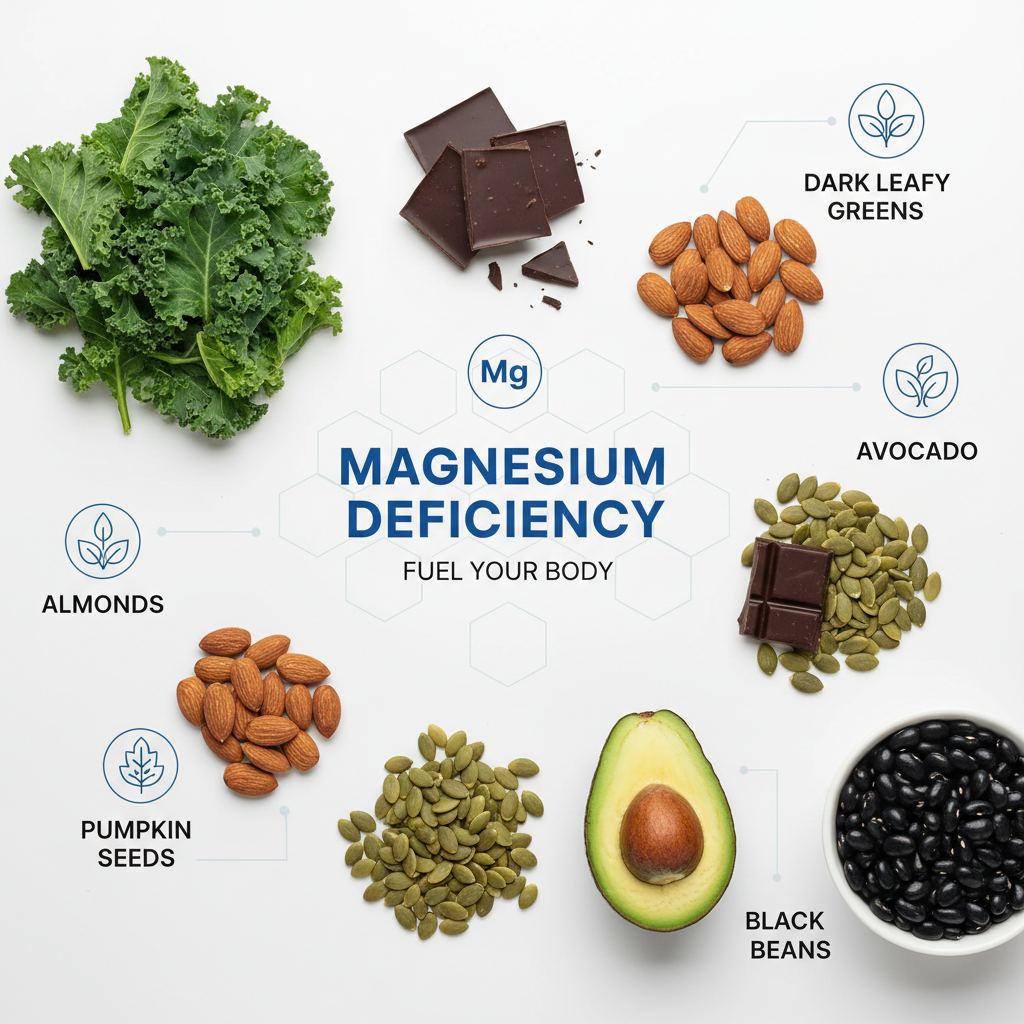
The best way to increase magnesium is through whole foods. Here are the top sources per serving: Pumpkin seeds (28g): 168mg (40% RDA) | Dark chocolate (28g, 70%+): 64mg (15% RDA) | Almonds (28g): 80mg (19% RDA) | Spinach (cooked, 180g): 157mg (37% RDA) | Black beans (172g): 120mg (29% RDA) | Avocado (1 medium): 58mg (14% RDA) | Salmon (85g): 26mg | Whole wheat bread (2 slices): 46mg | Banana (1 medium): 32mg | Tofu (85g): 37mg. The adult RDA for magnesium is 310–420mg per day depending on age and sex.
Best Magnesium Supplements: Which Form Should You Take?
Not all magnesium supplements are equal. The form dramatically affects absorption and effects:
Magnesium glycinate — Best for anxiety, sleep, and general deficiency. Highly bioavailable, gentle on the stomach. The #1 recommended form by most nutritionists. Magnesium citrate — Good bioavailability. Also relieves constipation. May cause loose stools at high doses. Magnesium malate — Best for energy and fibromyalgia/muscle pain. Magnesium threonate — Crosses the blood-brain barrier — best for cognitive function and brain health. Most expensive form. Magnesium oxide — Cheapest and most common in supplements, but very poorly absorbed (~4%). Avoid unless specifically for constipation relief. Avoid: Magnesium oxide for correcting deficiency — it has very low bioavailability.
Recommended Dosage and Safety
For general health maintenance: 200–400mg of elemental magnesium daily, taken with food to reduce the risk of stomach upset. For sleep and anxiety: take at night, 30–60 minutes before bed. The tolerable upper intake level (UL) from supplements is 350mg/day for adults — above this, digestive side effects (loose stools) become common. Note: this limit applies to supplements only; dietary magnesium from food has no upper limit. People with kidney disease should consult their GP before supplementing, as impaired kidneys cannot excrete excess magnesium.
How to Test for Magnesium Deficiency
Standard serum magnesium blood tests are notoriously unreliable — only 1% of the body’s magnesium is in the blood; 99% is stored in bones, muscles, and soft tissue. This means you can have severely depleted magnesium stores while still showing a “normal” blood test. A better test is RBC (red blood cell) magnesium, which measures magnesium inside cells. However, the most practical approach for most people is simply trialling magnesium supplementation for 4–8 weeks and monitoring symptom improvement.
Frequently Asked Questions
How long does it take magnesium supplements to work?
Most people notice improvements in muscle cramps, sleep, and anxiety within 1–4 weeks of consistent supplementation. Full replenishment of tissue magnesium stores takes approximately 3–6 months of consistent daily supplementation.
Can you take magnesium every day?
Yes — daily supplementation is safe and recommended for most adults. Unlike some fat-soluble vitamins, excess dietary and supplemental magnesium is excreted by healthy kidneys. Daily intake up to 350mg from supplements is well within safe limits.
Does magnesium help with sleep?
Yes — multiple clinical trials confirm magnesium improves sleep quality, sleep onset time, and sleep duration, particularly in older adults and those with insomnia. Magnesium glycinate taken 30–60 minutes before bed is the most commonly recommended approach.
What foods block magnesium absorption?
High-dose zinc supplements, excessive calcium, phytates (in unsoaked grains and legumes), and tannins (in tea and coffee) can reduce magnesium absorption. Soaking and cooking beans and grains reduces phytate content significantly.
Conclusion
Magnesium deficiency is widespread, underdiagnosed, and underlies a remarkable number of common health complaints — from fatigue and anxiety to insomnia, muscle cramps, and high blood pressure. The solution is straightforward: eat more magnesium-rich whole foods and consider supplementing with a high-quality magnesium glycinate or citrate. For the cost of a few pounds a month, you may find that one of your most persistent health problems resolves completely.
📚 Medical Sources: NHS — Vitamins and Minerals | NIH — Magnesium Fact Sheet | Mayo Clinic — Magnesium | Harvard Health — Magnesium
Medical Disclaimer: This article is for informational purposes only. Consult your GP before starting magnesium supplementation, especially if you have kidney disease, take medications, or have a diagnosed health condition.
Leave a Reply