🏷️ Category: Mental Health
Reviewed by our editorial team — Evidence sourced from the NHS, American Psychological Association, Harvard Medical School, and peer-reviewed journals.
🔑 Key Takeaways: Caffeine directly stimulates the body’s stress response by blocking adenosine receptors and increasing adrenaline. Even moderate caffeine intake (200mg+) can trigger or worsen anxiety symptoms. People with anxiety disorders are significantly more sensitive to caffeine’s effects. Switching to half-caff, green tea, or cutting off caffeine after 12pm can dramatically reduce anxiety. Caffeine withdrawal itself causes anxiety — taper slowly rather than quitting cold turkey.
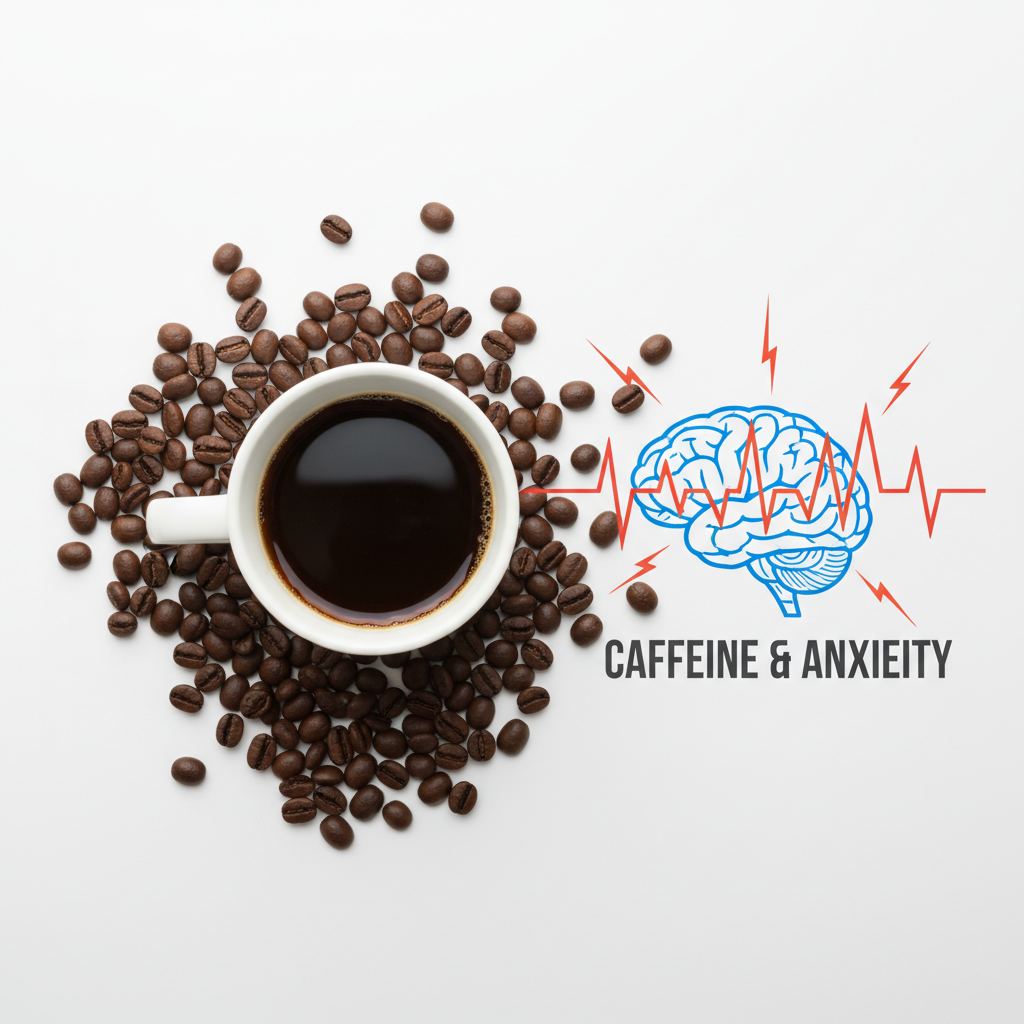
Caffeine and anxiety have a powerful, well-documented relationship that most people overlook. Your morning coffee might be the hidden driver behind your racing heart, restless nights, and constant sense of unease. Caffeine is the world’s most widely consumed psychoactive substance — and for the estimated 284 million people worldwide living with anxiety disorders, it may be making things significantly worse.
How Caffeine Affects Your Brain and Body
Caffeine works primarily by blocking adenosine receptors in the brain. Adenosine is a chemical that builds up throughout the day and promotes drowsiness — by blocking it, caffeine keeps you alert. But it also triggers a cascade of stress-related effects:
Adrenaline surge: Caffeine stimulates the adrenal glands to release adrenaline (epinephrine) — the same hormone released during a panic attack. This causes a faster heart rate, increased blood pressure, and heightened alertness. Cortisol increase: Caffeine raises cortisol (the stress hormone) by up to 30% when taken in the morning. Chronic elevation of cortisol is directly linked to anxiety, sleep disruption, and weight gain. Nervous system activation: It activates the sympathetic “fight or flight” system — the exact same physiological state as anxiety.
Caffeine Anxiety Symptoms: Is Coffee Causing Your Panic?
The DSM-5 (the diagnostic manual used by psychiatrists) actually lists “Caffeine-Induced Anxiety Disorder” as a recognised condition. Symptoms of caffeine-induced anxiety mirror those of generalised anxiety disorder and even panic attacks:
Common symptoms include: racing heart or palpitations, restlessness and inability to sit still, muscle tension and trembling, rapid breathing, insomnia and disrupted sleep, irritability and mood swings, upset stomach and nausea, dizziness and light-headedness, and difficulty concentrating (despite the stimulant effect).
How Much Caffeine Is Too Much?
The FDA considers 400mg of caffeine daily (roughly 4 cups of coffee) safe for most healthy adults. However, people with anxiety disorders — or a genetic predisposition to caffeine sensitivity — may experience significant anxiety symptoms at much lower doses. Research shows that just 200mg of caffeine (2 cups of coffee) can induce panic attacks in people with panic disorder. People with GAD (Generalised Anxiety Disorder) are advised to keep intake below 100mg/day or eliminate it entirely.
Caffeine Content in Common Drinks
Espresso (single shot): 63mg | Filter coffee (8oz): 95–200mg | Energy drink (250ml): 80mg | Black tea (8oz): 47mg | Green tea (8oz): 28mg | Cola (12oz): 34mg | Dark chocolate (40g): 24mg | Matcha (1 tsp): 70mg. Note: caffeine content varies widely by brand and brew method — always check labels.
The Caffeine-Sleep-Anxiety Cycle
Caffeine has a half-life of 5–7 hours. This means half of a 3pm coffee is still in your system at 10pm. Poor sleep caused by caffeine creates a vicious cycle: you feel tired, drink more caffeine, feel more anxious, sleep worse, and wake up more fatigued — requiring yet more caffeine. Breaking this cycle by cutting caffeine after midday is one of the most effective interventions for both anxiety and insomnia.
Who Is Most Sensitive to Caffeine’s Anxiety Effects?
Caffeine sensitivity is largely genetic. People with variants in the CYP1A2 gene metabolise caffeine slowly — meaning it stays in their system longer and has stronger effects. Beyond genetics, higher sensitivity is found in: people with existing anxiety disorders (GAD, panic disorder, social anxiety), those taking SSRIs or SNRIs (caffeine can interact with serotonin systems), people who are sleep-deprived, teenagers and young adults whose brains are still developing, and those who are not regular caffeine consumers (tolerance reduces sensitivity over time).
How to Reduce Caffeine Anxiety: 8 Evidence-Based Strategies
1. Set a Caffeine Cutoff Time
Stop all caffeine by 12pm–1pm. This gives your body 8–10 hours to metabolise most of it before bedtime, dramatically improving sleep quality and reducing the anxiety-fatigue cycle.
2. Taper Gradually — Don’t Quit Cold Turkey
Caffeine withdrawal is real and causes significant anxiety, headaches, and fatigue. Reduce your intake by 25mg every 2–3 days to minimise withdrawal symptoms.
3. Switch to Lower-Caffeine Alternatives
Green tea contains L-theanine — an amino acid that promotes calm alertness and directly counteracts caffeine’s anxiety-producing effects. Matcha provides a sustained energy boost without the jittery spike. Half-caff coffee is a simple intermediate step.
4. Delay Your Morning Coffee
Cortisol peaks naturally within 30–45 minutes of waking. Adding caffeine during this cortisol spike amplifies the stress response. Waiting 90 minutes before your first coffee reduces anxiety and actually makes the caffeine more effective.
5. Stay Well Hydrated
Caffeine is a mild diuretic. Dehydration amplifies anxiety symptoms including heart palpitations and dizziness. Drink a full glass of water with every caffeinated drink.
6. Eat Before Drinking Coffee
Drinking coffee on an empty stomach dramatically increases cortisol release and causes faster caffeine absorption — both of which worsen anxiety. Always eat first.
7. Track Your Symptoms
Keep a simple diary noting your caffeine intake, timing, anxiety levels (1–10), and sleep quality for 2 weeks. Patterns often become strikingly clear and provide powerful motivation to reduce intake.
8. Consider an Elimination Trial
Eliminate all caffeine for 30 days. Many people with anxiety report dramatic improvements in their baseline anxiety levels within 2–3 weeks of going caffeine-free. This is the gold-standard way to determine if caffeine is a significant driver of your anxiety.
Frequently Asked Questions
Can caffeine cause panic attacks?
Yes — studies show caffeine can induce full panic attacks in people with panic disorder at doses as low as 200mg (2 cups of coffee). Even in people without diagnosed panic disorder, high doses can cause symptoms identical to a panic attack.
Does decaf coffee cause anxiety?
Decaf still contains 2–15mg of caffeine per cup — far less than regular coffee but still enough to affect highly sensitive individuals. For most people with anxiety, decaf is a safe and effective alternative.
How long until caffeine anxiety goes away after quitting?
Most people see significant reduction in baseline anxiety within 7–14 days of eliminating caffeine. Sleep quality typically improves within the first week. Full benefit is usually felt at the 3–4 week mark once withdrawal has completely resolved.
Conclusion
The connection between caffeine and anxiety is real, well-researched, and often underestimated. If you struggle with anxiety, your daily coffee habit may be silently fuelling the fire. The good news: reducing or eliminating caffeine is one of the simplest, cheapest, and most effective lifestyle changes you can make for your mental health. Try a 30-day elimination trial — the results may surprise you.
📚 Medical Sources: NHS — Anxiety | Harvard Health — Caffeine and Anxiety | Mayo Clinic — Anxiety Disorders | American Psychological Association — Anxiety
Medical Disclaimer: This article is for informational purposes only. If you have an anxiety disorder, speak with your GP or a mental health professional before making significant dietary changes.
Leave a Reply