
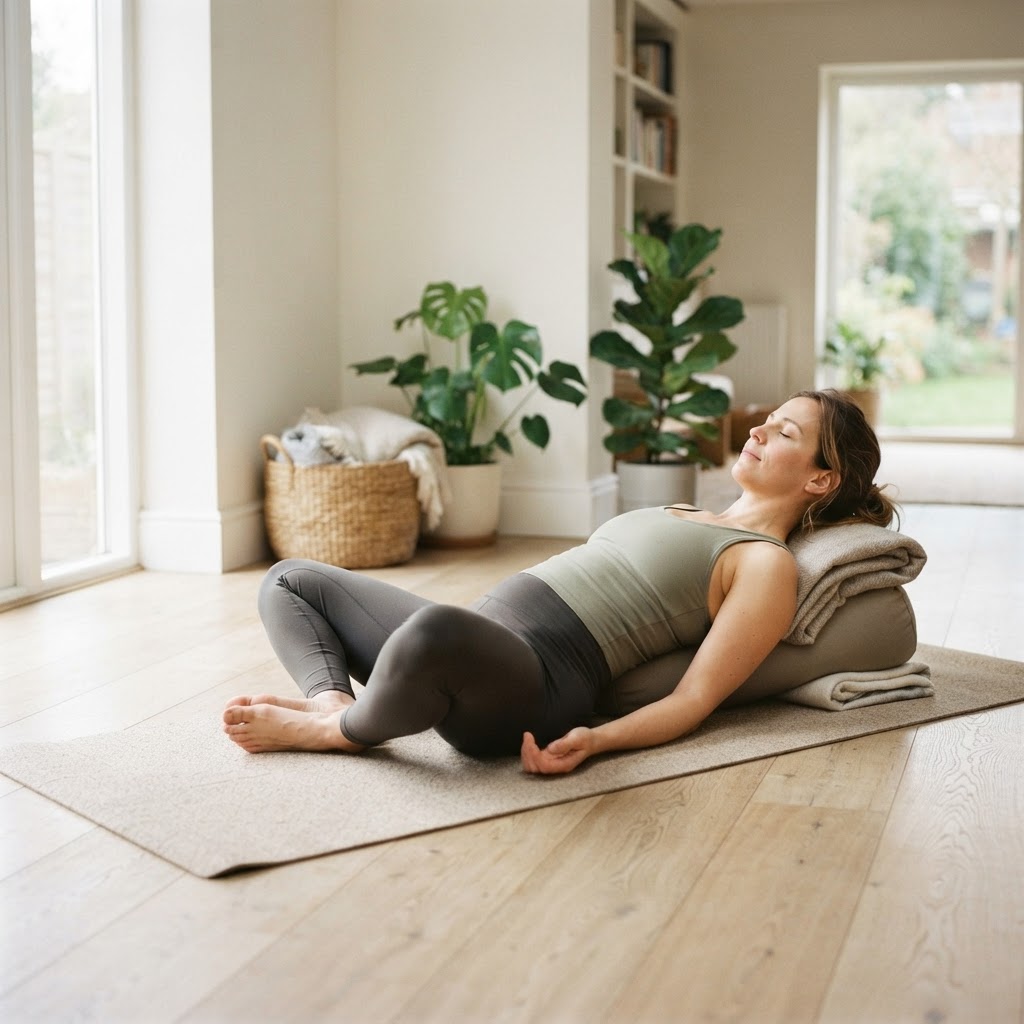
- Pelvic floor dysfunction involves a complex network of muscles that can become either too tight or too weak, affecting daily quality of life.
- Identifying pelvic floor dysfunction symptoms early is crucial, as chronic pain often mimics other digestive or urinary tract conditions.
- While pregnancy and childbirth are well-known triggers, physical trauma, chronic stress, and poor posture are equally significant contributors.
- Nervous system regulation plays a vital role in pelvic health, as the pelvic floor muscles often physically store the body’s psychological tension.
- Long-term pelvic floor relief is best achieved through a multi-modal approach combining targeted movement, breathing techniques, and professional pelvic floor therapy.
The pelvic floor is often referred to as the hidden foundation of the human body. Serving as a muscular bowl at the base of the pelvis, it supports vital organs including the bladder, bowels, and reproductive system while playing a critical role in core stability and sexual function. Despite its central importance, many individuals remain unaware of their pelvic health until something goes wrong. When the muscles in this region fail to coordinate correctly—either by failing to relax or failing to contract with enough strength—it results in a condition broadly categorized as pelvic floor dysfunction. This condition affects people of all genders and ages, yet it is frequently misdiagnosed due to the nuanced, internal nature of the discomfort. By understanding the underlying mechanisms of these muscles and how they respond to our lifestyle, environment, and stress levels, you can begin the journey toward lasting comfort and improved pelvic floor health.
What Is Pelvic Floor Dysfunction?
At its core, pelvic floor dysfunction is a diagnostic umbrella term describing the inability to correctly coordinate the muscles of the pelvic floor. These muscles operate much like a hammock, spanning from the pubic bone to the tailbone. They must be dynamic, capable of contracting to maintain continence and relaxing to allow for normal bowel movements, urination, and sexual activity. Dysfunction occurs when this “hammock” loses its functional rhythm. This generally manifests in two distinct states: hypertonic pelvic floor muscles, which are perpetually tight, shortened, or in a state of spasm, and hypotonic pelvic floor muscles, which are too weak or loose to provide necessary support.
The pelvic floor does not function in isolation. It is deeply connected to the diaphragm, the transverse abdominis, and the multifidus muscles along the spine. When these systems are out of sync, the pelvic floor often compensates for weakness or instability in surrounding areas. For example, if the core is not adequately stabilized, the pelvic floor may “over-work” to maintain trunk stability, leading to exhaustion and chronic tension. Understanding this dysfunction requires shifting the perspective from viewing these muscles as separate entities to seeing them as part of a highly integrated “inner core” canister. Dysfunction is not merely a muscular issue; it is a neurological and systemic coordination failure that requires a holistic lens to treat effectively.
Clinically, the condition often presents as a lack of “pelvic floor awareness.” Many people go through life without ever consciously engaging or releasing these muscles. When dysfunction develops, the brain’s map of this area may become fuzzy, leading to poor motor control. Because the pelvic floor is largely governed by the autonomic nervous system, it often responds involuntarily to stress. If the body is stuck in a “fight or flight” loop, the pelvic floor muscles may habitually tighten as a protective mechanism, eventually leading to structural changes in how the tissue functions. Addressing this requires more than just traditional “kegels”—which can sometimes be counterproductive if the floor is already hypertonic—and instead calls for a comprehensive strategy involving muscle lengthening, nervous system down-regulation, and specialized physical therapy.
Common Symptoms of Pelvic Floor Issues
Recognizing the symptoms of pelvic floor dysfunction can be difficult because the sensations often overlap with urinary tract infections, irritable bowel syndrome (IBS), or reproductive system ailments. Because the nerves serving the pelvic floor also innervate the bladder and bowel, the brain often struggles to pinpoint exactly where the distress is originating. This leads to what many experts describe as “referred sensation,” where pain in the pelvic floor is perceived as pain in the lower back, hip joints, or even the abdomen.
One of the most frequent pelvic floor dysfunction symptoms is chronic pelvic pain, which can be constant or triggered by specific activities. Individuals often describe this as an aching, burning, or throbbing sensation deep in the pelvis. For those with a hypertonic pelvic floor, this pain is often exacerbated by sitting for long periods, wearing tight clothing, or engaging in intercourse. Other common indicators include urinary urgency or frequency; you might feel the need to visit the bathroom constantly, even when the bladder is not full, because the tight pelvic muscles are pushing against the bladder, creating a false sensation of fullness.
Bowel-related issues are also hallmark indicators. Chronic constipation, straining during bowel movements, or the sensation that you are unable to fully empty the bowel are common, as the pelvic floor muscles must relax to allow for normal elimination. When they fail to relax, the process becomes laborious, which creates a negative cycle of increased pelvic floor tension and further constipation. Below is a comparison table outlining common management approaches for these varied symptoms.
| Approach | Mechanism | Best For |
|---|---|---|
| Pelvic Floor Therapy | Guided internal/external manual release | Chronic hypertonic pain |
| Diaphragmatic Breathing | Regulating vagal tone and pelvic descent | Daily tension management |
| Targeted Exercises | Lengthening vs. strengthening cues | Specific muscle imbalances |
| Biofeedback Devices | Visualizing muscle activity in real-time | Improving mind-muscle connection |
Furthermore, sexual dysfunction is a significant and often under-discussed symptom. For some, the muscle tightness makes penetration physically painful, while for others, it may lead to difficulties with arousal or orgasm due to poor blood flow and nerve entrapment. If you find yourself avoiding activities because of “leaks,” pain, or general discomfort, these are not just nuisances—they are clinical symptoms that warrant investigation by a qualified practitioner.
Primary Causes and Risk Factors
The causes of pelvic floor pain are rarely singular. Instead, dysfunction usually emerges from a perfect storm of biomechanical stress, historical injury, and lifestyle factors. While pregnancy and childbirth are frequently cited as the primary contributors—due to the intense pressure exerted on the pelvic basin and the potential for tissue tearing—they are by no means the only culprits. Many people who have never been pregnant experience severe dysfunction, proving that the roots of the issue are diverse.
Physical trauma is a leading cause. This includes direct injury to the pelvis from falls, accidents, or surgeries like hysterectomies or hernia repairs. Even minor, repetitive stressors like chronic coughing or heavy lifting with poor form can weaken the pelvic support structures over time. When the body undergoes surgery, the resulting scar tissue can cause internal “adhesions.” Think of these adhesions like internal duct tape that restricts the natural sliding and gliding of tissues, preventing the pelvic floor from moving through its full range of motion. This localized restriction is a common precursor to chronic, unexplained pelvic pain.
Another major factor is the chronic holding of the abdominal muscles. Many people are taught to “suck in” their stomachs for aesthetic reasons. This habit essentially locks the core, preventing the natural, subtle expansion of the belly that occurs during diaphragmatic breathing. When the abdomen is held tight, the pressure has nowhere to go but down, placing constant, unnatural strain on the pelvic floor. Over years, this habit can lead to a hypertonic state where the muscles “forget” how to hang loose and provide support, choosing instead to stay rigid as a defense mechanism. Furthermore, sedentary lifestyles play a massive role. Prolonged sitting causes the hip flexors to become chronically shortened, which pulls on the pelvis and alters the mechanical alignment of the pelvic floor, often leading to secondary dysfunction.
The Role of Stress and Nervous System Regulation
To truly understand pelvic floor relief, one must look beyond the muscles themselves and into the central nervous system. The pelvic floor is a highly innervated area, rich in nerve endings that respond instantaneously to our emotional and psychological state. When we experience chronic stress, anxiety, or trauma, the body enters a state of persistent high alert. The primitive, instinctual response to danger is to brace—essentially to “tuck the tail” and tighten the core to protect the vital organs. The pelvic floor is often the first place this tension is deposited.
This is why individuals with generalized anxiety disorders often report pelvic pain or urinary urgency. When the nervous system remains in a “sympathetic” state (the fight-or-flight mode), the pelvic floor muscles are signaled to remain partially contracted. Over time, this constant low-grade muscle engagement leads to ischemia—a reduction in blood flow to the tissue. When muscles are deprived of oxygen-rich blood, they become acidic, inflamed, and hyper-sensitive to pain. This creates a feedback loop: the pain causes more anxiety, which leads to more bracing, which in turn causes more pain.
Nervous system regulation is the antidote to this cycle. Techniques such as deep, diaphragmatic breathing are not just for relaxation; they are mechanical tools that physically massage the pelvic floor from the inside. When you inhale deeply, the diaphragm moves downward, increasing intra-abdominal pressure and naturally encouraging the pelvic floor to expand and release. This is the physiological “reset button” for the pelvic region. Integrating practices that soothe the nervous system—such as mindfulness, gentle restorative yoga, or somatic tracking—can be just as essential for healing as physical exercise. You cannot simply “stretch” your way out of a hypertonic pelvic floor if your nervous system is constantly triggering the muscles to contract again five minutes later.
How Posture Impacts Pelvic Health
Posture is the physical architecture upon which our pelvic floor operates. The pelvis serves as the base of the spine, and its orientation dictates the tension placed on the internal muscular bowl. If the pelvis is tilted too far forward (an anterior tilt) or too far backward (a posterior tilt), the pelvic floor muscles are forced into a non-neutral position. In an anterior tilt, often characterized by a deep arch in the lower back, the pelvic floor is stretched tight in the front and potentially bunched in the back. This constant tension prevents the floor from functioning as an effective shock absorber.
Conversely, a posterior tilt—often seen in those who “slouch” or sit with a rounded lower back—leaves the pelvic floor in a weakened, over-lengthened state. When the muscles are chronically over-lengthened, they lose their ability to generate the force required to control bladder or bowel function, leading to symptoms like incontinence. The ideal position for the pelvis is “neutral,” where the pubic bone and the two bony points of the hips (the ASIS) are vertically aligned. This neutral alignment allows the pelvic floor to rest in its optimal length, meaning it has the best mechanical advantage to respond to internal pressures.
Everyday habits such as how we sit at our desks or stand while waiting in line can exacerbate these postural deviations. For example, standing with all your weight on one leg creates an asymmetrical pelvic alignment, which over time can lead to unilateral pelvic floor pain. Similarly, crossing your legs consistently while sitting changes the angle of the hip joint, affecting how the pelvic floor muscles connect to the skeletal structure. Improving pelvic health often starts with “postural hygiene.” This involves becoming aware of how you hold your body during daily tasks and making small, incremental adjustments to ensure that the pelvis is supported correctly. By stabilizing the skeleton, you remove unnecessary demand from the pelvic floor, allowing the tissues to heal and eventually regain their natural, healthy tone.
Natural Breathing Techniques for Pelvic Relaxation
The pelvic floor is not an isolated unit; it functions as part of a complex system synchronized with your respiratory diaphragm. When you breathe shallowly—often due to stress or chronic postural habits—you may inadvertently hold tension in your pelvic floor muscles. Learning to coordinate your breath with pelvic movement is one of the most effective ways to address a hypertonic pelvic floor.
Diaphragmatic breathing, or belly breathing, is the cornerstone of pelvic floor regulation. When you inhale deeply into your abdomen, your diaphragm descends, which creates downward pressure in the abdominal cavity. A healthy, responsive pelvic floor naturally lengthens and relaxes to accommodate this pressure. When you exhale, the diaphragm rises, and the pelvic floor gently recoils.
To practice this, place one hand on your chest and the other on your abdomen. Sit in a comfortable, upright position or lie on your back with your knees bent. As you inhale slowly through your nose, aim to move only the hand on your abdomen. Imagine the breath traveling all the way down to your pelvic bowl. As you inhale, consciously visualize your pelvic floor muscles widening and softening, like a flower blooming. On the exhale, simply allow the air to leave naturally without forcefully contracting the muscles. By repeating this for five to ten minutes daily, you train the nervous system to shift out of “fight or flight” mode, which is often where pelvic floor pain finds its roots.
Gentle Stretches to Release Pelvic Tension
When dealing with pelvic floor dysfunction symptoms, the goal is not always to strengthen the muscles, but rather to lengthen and mobilize them. Many people who suffer from chronic pelvic pain are inadvertently “clenching” their pelvic floor throughout the day. The following stretches focus on the hips, inner thighs, and lower back—areas that share fascia and neurological pathways with the pelvic floor.
- Child’s Pose (Modified): Kneel on the floor, bring your big toes together, and spread your knees wide. Lean forward and rest your forehead on the ground. This position encourages the pelvic floor to widen and relax under the influence of gravity.
- Happy Baby Pose: Lying on your back, bring your knees toward your chest. Grip the outsides of your feet or shins and gently pull your knees toward your armpits. This pose opens the hips and directly stretches the deeper musculature of the pelvic floor.
- Butterfly Stretch: Sit with the soles of your feet together and let your knees drop open to the sides. Keep your spine tall. This targets the adductors, which, when tight, can pull on the pelvis and increase pelvic floor tension.
- Deep Squat (Malasana): If your mobility allows, lower yourself into a deep squat. Keep your heels on the ground if possible. This is arguably the most functional stretch for the pelvic floor, as it forces the muscles to release fully.
Consistency is more important than intensity. Aim for gentle, sustained holds of 60 to 90 seconds rather than aggressive, bouncy movements. If any stretch triggers sharp pain, immediately back out of the position.
| Technique | Target Area | Best For |
|---|---|---|
| Diaphragmatic Breathing | Respiratory Diaphragm | Reducing overall system stress and pelvic hypertonicity |
| Child’s Pose | Lower Back and Hips | Gentle, passive lengthening of the pelvic floor |
| Butterfly Stretch | Inner Thighs/Adductors | Releasing tension that contributes to pelvic misalignment |
| Happy Baby | Pelvic Outlet | Active release of the deeper pelvic floor muscles |
When to Seek Professional Pelvic Floor Therapy
While home-based exercises and breathing techniques provide a solid foundation for relief, there are instances where professional intervention is necessary. Pelvic floor therapy is a specialized branch of physical therapy performed by practitioners trained in internal and external assessment of the pelvic musculature.
You should consider seeking professional pelvic floor therapy if you experience persistent pain during intercourse, chronic constipation that does not respond to dietary changes, or a feeling of heaviness or “dropping” in the pelvis that interferes with your daily life. Additionally, if you have tried self-care measures for several weeks with no improvement, a therapist can provide a personalized evaluation.
A therapist will typically conduct a comprehensive assessment to determine if your dysfunction stems from weakness, tightness, or nerve involvement. They use various techniques, including biofeedback, manual trigger point release, and personalized neuromuscular re-education. Biofeedback is particularly helpful; it uses sensors to provide real-time data on your screen, showing you exactly when you are contracting or relaxing your pelvic floor muscles, which can be difficult to perceive on your own. Do not wait for symptoms to become debilitating; early intervention often leads to a faster and more complete recovery.
Lifestyle Habits to Prevent Future Dysfunction
Prevention is fundamentally about creating an environment where the pelvic floor does not need to compensate for other systemic issues. The way you sit, how you use the bathroom, and how you manage internal pressure all play a role.
First, address your toileting posture. Using a stool to elevate your knees higher than your hips while sitting on the toilet allows the puborectalis muscle to fully relax, facilitating a straighter rectal path. Avoid “hovering” over public toilets, as this forces the pelvic floor to remain contracted rather than relaxed, which can lead to dysfunction over time.
Second, monitor your “bracing” habits. Many people habitually tuck their tailbone or grip their abdominals throughout the day to look flatter or manage stress. This creates constant downward pressure on the pelvic floor. Practice “soft belly” habits where you allow your abdomen to move freely with your breath. Furthermore, ensure you are staying hydrated and consuming adequate fiber. Chronic straining due to constipation is one of the most common causes of pelvic floor pain and prolapse, as it places repetitive, excessive strain on the connective tissues of the pelvic basin.
Finally, incorporate regular movement that promotes pelvic health. Walking, gentle yoga, and swimming are excellent, whereas high-impact activities like heavy jumping or excessive heavy lifting should be moderated if you feel any symptoms of weakness or pressure. Listen to your body’s signals; if a specific activity leaves you feeling sore or heavy in the pelvis, modify the intensity or take a break to allow for recovery.
Frequently Asked Questions
Can stress really cause pelvic floor dysfunction?
Yes, stress is a major contributor to pelvic floor dysfunction. When the body experiences chronic stress, the nervous system often triggers a “fight or flight” response, which includes tightening the core and pelvic floor muscles. Over time, this becomes a habit, leading to a hypertonic pelvic floor that cannot easily relax, causing pain and dysfunction.
Are Kegels always the right solution for pelvic floor pain?
No. In fact, for individuals with a hypertonic pelvic floor, performing traditional Kegels (squeezing) can worsen symptoms. If your muscles are already too tight or “locked,” you need to focus on lengthening and relaxation techniques first. Strengthening is only beneficial if the pelvic floor is objectively weak and non-painful.
How long does it take to see results from pelvic floor therapy?
Recovery time varies significantly depending on the individual, the root cause of the dysfunction, and how long the symptoms have been present. Many people start to notice subtle improvements in pain or function within a few weeks of consistent therapy, but a full recovery or long-term management strategy may take several months.
Can pelvic floor dysfunction affect my posture?
Absolutely. The pelvic floor is a critical component of the body’s core support system. If the pelvic floor is tight or weak, the body often compensates through changes in hip, lower back, and abdominal alignment. This can lead to chronic lower back pain, hip issues, and rounded or slumped shoulders as the body tries to stabilize itself.
Is it normal to have pelvic floor symptoms during or after pregnancy?
While many people experience pelvic floor changes during pregnancy due to hormonal shifts and increased weight, it is not “normal” to live with chronic pain or incontinence. If you are experiencing symptoms, seek the guidance of a pelvic floor physical therapist, as many conditions are highly treatable with targeted, safe exercises designed for pregnancy and postpartum recovery.
How can I tell if my pelvic floor is too tight?
Symptoms of a hypertonic (too tight) pelvic floor often include painful intercourse, difficulty with bowel movements or urination, a feeling of “holding” tension, or pelvic pain that worsens after sitting for long periods. If you suspect your muscles are too tight, avoid aggressive strengthening exercises and consult a professional for an assessment.
Conclusion
Pelvic floor dysfunction is a complex issue that touches many aspects of physical and emotional well-being, but it is rarely a life sentence. By recognizing the specific symptoms—whether they manifest as pain, pressure, or functional struggles—you have already taken the first crucial step toward healing. Understanding that your pelvic floor is a dynamic system requiring both strength and the ability to release is key to long-term health.
Whether you begin with the simple act of intentional diaphragmatic breathing, incorporate gentle stretching, or decide to seek the expertise of a pelvic floor therapist, the path to relief is paved with patience and consistency. Listen to your body, move away from habits that encourage tension, and advocate for your health by seeking professional support when you need it. You have the power to regain comfort and restore the natural balance of your body. Start small, stay consistent, and prioritize your well-being today. If you are struggling, reach out to a local certified pelvic floor physical therapist to schedule an assessment and build a plan tailored specifically to your needs.
By healthauthoritylife Editorial Team
This article is for informational purposes only and is not a substitute for professional medical advice. Always consult your doctor before making changes to your diet, exercise routine, or treatment plan.
Leave a Reply