
🔑 Key Takeaways — HIIT Workouts
- ✅ HIIT burns 25–30% more calories than equivalent steady-state cardio sessions
- ✅ HIIT increases metabolic rate for up to 24 hours after exercise (afterburn effect)
- ✅ Just 15–20 minutes of HIIT delivers equivalent cardiovascular benefits to 45 min jogging
- ✅ HIIT improves insulin sensitivity more effectively than moderate-intensity exercise
- ✅ Not recommended for complete beginners — build a base fitness level first
🏷️ Category: Fitness
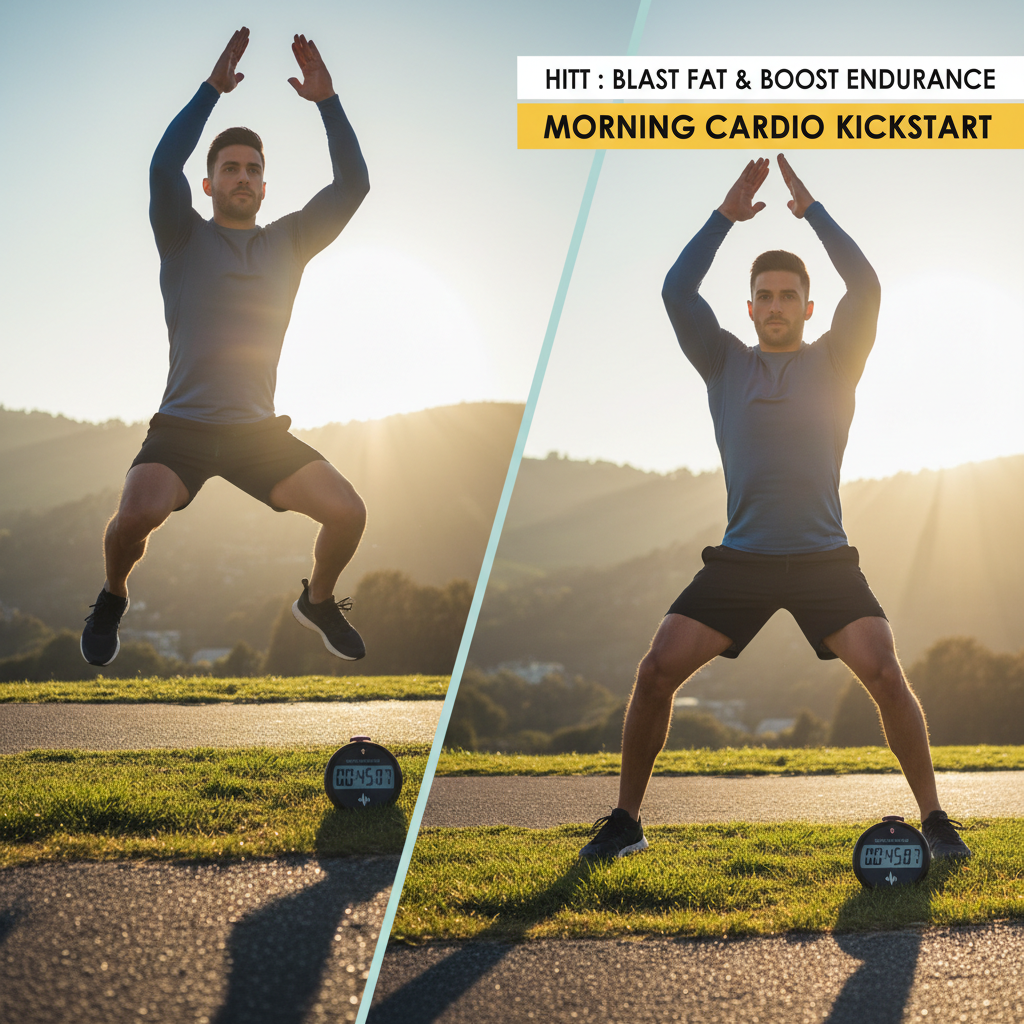
Reviewed by our Editorial Team — Evidence from the British Journal of Sports Medicine and ACSM HIIT research guidelines.
High-Intensity Interval Training (HIIT) has revolutionised how we think about cardio. Research proves you can achieve greater cardiovascular and metabolic benefits in 20–25 minutes of HIIT than in 45–60 minutes of steady-state cardio. A landmark meta-analysis in the British Journal of Sports Medicine found HIIT burns 28.5% more fat than moderate continuous exercise. It is time-efficient, equipment-free, and backed by an overwhelming body of scientific evidence. This guide gives you the full science, beginner-to-advanced workouts, and everything you need to start.
What Is HIIT and How Does It Work?
HIIT alternates short bursts of near-maximum effort exercise with brief recovery periods. A typical structure might be 40 seconds of intense work followed by 20 seconds of rest, repeated for 20 minutes. During the intense intervals, you push to 80–95% of your maximum heart rate — which triggers a cascade of metabolic responses that regular cardio cannot replicate. The key mechanism is EPOC — Excess Post-Exercise Oxygen Consumption (the “afterburn effect”): your body continues burning significantly more calories for 12–24 hours after HIIT as it works to restore oxygen levels, clear lactate, repair muscle, and cool down.
6 Science-Backed Benefits of HIIT
1. Burns More Fat in Less Time
HIIT is significantly more effective at burning fat — particularly stubborn visceral abdominal fat — than steady-state cardio. A 2018 review of 39 studies found HIIT reduced total body fat by 1.3% more than moderate continuous exercise. The combination of calorie burn during exercise plus EPOC afterburn makes HIIT uniquely efficient for fat loss.
2. Dramatically Improves Cardiovascular Fitness
HIIT improves VO2 max (the gold standard measure of cardiovascular fitness) more effectively than any other exercise modality. A 2015 review found HIIT improved VO2 max by 0.51 L/min — nearly double the improvement from continuous aerobic exercise. This translates to a stronger, more efficient heart, lower resting heart rate, and reduced cardiovascular disease risk.
3. Preserves Muscle Mass
Unlike traditional long-duration cardio, which can promote muscle breakdown through cortisol elevation, HIIT has been shown to preserve and even increase lean muscle mass — particularly in the lower body. This makes it the preferred cardio modality for people doing strength training.
4. Improves Insulin Sensitivity
Just two weeks of HIIT has been shown to improve insulin sensitivity by 35% in people with insulin resistance — making it one of the fastest dietary and exercise interventions for type 2 diabetes management and prevention.
5. Boosts Mental Health
HIIT produces a significantly greater release of endorphins, BDNF, and serotonin than moderate exercise, resulting in larger improvements in mood, anxiety, and depression symptoms. Multiple studies show HIIT is as effective as antidepressant medication for mild-to-moderate depression.
6. No Equipment Necessary
One of HIIT’s greatest advantages is that world-class workouts require zero equipment. Burpees, jump squats, mountain climbers, and sprints produce the same or better results as expensive gym machines.
Complete HIIT Workouts: Beginner to Advanced
Beginner HIIT (15 minutes, no equipment)
Structure: 30 sec work / 30 sec rest — 3 rounds
1. Marching in place | 2. Bodyweight squats | 3. Modified push-ups | 4. Step touches | 5. Glute bridges
Intermediate HIIT (20 minutes)
Structure: 40 sec work / 20 sec rest — 4 rounds
1. Jump squats | 2. Push-ups | 3. Mountain climbers | 4. Reverse lunges | 5. High knees
Advanced HIIT (25 minutes)
Structure: 45 sec work / 15 sec rest — 5 rounds
1. Burpees | 2. Plyometric push-ups | 3. Jump lunges | 4. Tuck jumps | 5. Sprint intervals
How Often Should You Do HIIT?
Because of its intensity, HIIT requires adequate recovery. Most experts recommend 2–3 HIIT sessions per week maximum, with at least 48 hours between sessions. More is not better — overtraining leads to injury, elevated cortisol, and diminishing returns. Combine HIIT with strength training and lower-intensity activity (walking, yoga) for an optimal weekly programme.
Frequently Asked Questions
Is HIIT safe for beginners?
Yes — when intensity is appropriate. Beginners should start at 60–70% max effort and choose low-impact exercises (no jumping). Build a base of fitness first before progressing to high-impact versions. If you have heart conditions, consult your doctor first.
How soon will I see HIIT results?
Cardiovascular improvements are measurable within 2 weeks. Visible fat loss changes typically appear after 4–6 weeks of consistent 3x/week training combined with a caloric deficit. Body composition changes are most dramatic at 8–12 weeks.
HIIT vs running — which is better?
For fat loss and time efficiency, HIIT wins. For long-distance endurance and mental wellbeing, steady running has advantages. Ideally, combine both for optimal cardiovascular health.
Conclusion
HIIT is the most time-efficient exercise modality ever studied. Whether you have 15 minutes or 30, HIIT delivers cardiovascular, metabolic, and body composition benefits that far exceed traditional cardio. Start with the beginner workout above and progress over 6–8 weeks. Consistency beats intensity every time — 2 sessions per week for a year will transform your health.
Medical Disclaimer: Consult your healthcare provider before beginning high-intensity exercise, especially if you have cardiovascular conditions.
📚 Medical Sources & References
This article is based on evidence from the following authoritative medical sources:
Leave a Reply