
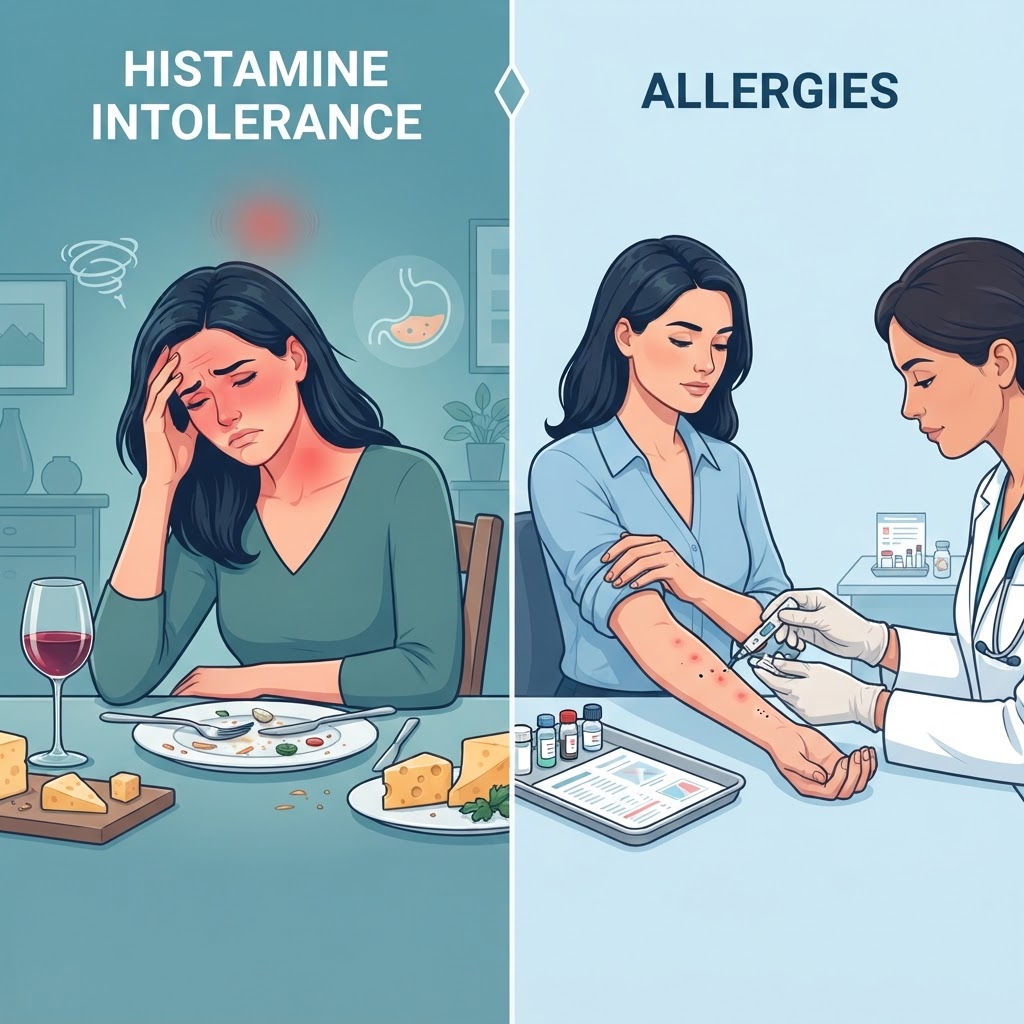
- Histamine intolerance is a metabolic issue involving the buildup of histamine, whereas allergies are immune system malfunctions.
- Symptoms of histamine intolerance often appear delayed, whereas allergic reaction symptoms usually manifest rapidly after exposure.
- DAO enzyme deficiency is the primary physiological driver behind the inability to break down ingested histamine.
- Food histamine triggers include fermented, aged, and cured items that do not necessarily provoke an IgE immune response.
- Proper diagnosis requires ruling out standard allergies and tracking symptoms alongside a low-histamine diet protocol.
For millions of individuals, sitting down to a meal—even one considered “healthy”—can trigger a confusing array of physical complaints. From unexplained hives and digestive distress to chronic headaches and heart palpitations, these recurring issues often send patients on a long, winding journey through the medical system. Frequently, these symptoms are labeled as an allergy, yet standard allergy testing repeatedly comes back negative. This frustrating disconnect is where the conversation regarding histamine intolerance vs. allergies becomes vital. Unlike a true immune-mediated allergy, histamine intolerance acts more like a “bucket” that overflows; when your body consumes more histamine than it can effectively degrade, the resulting chemical accumulation triggers symptoms that mimic allergic reactions. Understanding the nuances of this metabolic process is the first step toward reclaiming your quality of life.
Understanding the Biological Mechanism of Histamine Intolerance
Histamine is a naturally occurring biogenic amine that performs essential functions within the human body. It acts as a neurotransmitter, signaling the brain to stay awake and alert, and it plays a critical role in gastric acid secretion, which is necessary for the proper digestion of proteins. Under normal physiological conditions, histamine is kept in balance. When the body produces it or takes it in through food, specialized enzymes break it down to ensure it does not reach toxic concentrations. However, when this degradation system falters, histamine levels rise, leading to a state often referred to as chronic histamine intolerance.
The mechanism behind this intolerance is rooted in an imbalance between intake and degradation. In a healthy system, histamine is processed primarily by two enzymes: diamine oxidase (DAO) in the gut and histamine N-methyltransferase (HNMT) in the tissues. DAO is the primary enzyme responsible for breaking down histamine consumed through the diet, acting as a gatekeeper at the intestinal wall. If DAO activity is insufficient, histamine from food—found in high concentrations in aged cheeses, cured meats, fermented vegetables, and red wine—enters the bloodstream largely intact. Once in the systemic circulation, this excess histamine binds to histamine receptors (H1, H2, H3, and H4) scattered throughout the body.
Because these receptors are found in virtually every major organ system, the manifestations of histamine intolerance are remarkably systemic. In the gut, high histamine may stimulate increased gastric acid and alter motility, leading to bloating, diarrhea, or cramping. In the vascular system, it can cause vasodilation, resulting in flushing, headaches, or even a drop in blood pressure. Because this process is not an immune system failure, it does not fit the traditional “all-or-nothing” criteria of an allergy. Instead, it is a cumulative issue; your body may be able to handle a small amount of histamine, but once the “bucket” of histamine is full, any additional input causes the overflow of symptoms. This explains why some people experience symptoms only after a meal that contains several high-histamine items, or why symptoms might seem inconsistent from day to day.
Furthermore, lifestyle factors and internal stressors can exacerbate this biological mechanism. When the body is under chronic stress, the adrenal glands release substances that may further tax the digestive system’s efficiency. Similarly, the use of certain medications, such as non-steroidal anti-inflammatory drugs (NSAIDs) or certain antidepressants, can inhibit DAO production or compete for enzyme activity, further reducing the body’s capacity to clear histamine. Recognizing that this is a biochemical overload rather than an immune-mediated attack is essential for patients to understand why antihistamines might provide temporary relief, but addressing the underlying metabolic imbalance is required for long-term management.
What Are True Food Allergies and How Do They Work?
To understand histamine intolerance vs. allergies, one must first look at the immune system’s role in a true food allergy. A true food allergy is a specific, IgE-mediated immune response. When a person with a food allergy consumes a trigger—such as peanuts, shellfish, or eggs—their immune system misidentifies these typically harmless proteins as dangerous invaders. In response, the body produces specific antibodies known as Immunoglobulin E (IgE). These antibodies are designed to recognize that specific protein every time it enters the body.
Upon subsequent exposure, the IgE antibodies signal the immune system to release a surge of chemical mediators, including histamine, from mast cells and basophils. This massive, sudden release is what causes the classic allergic reaction symptoms. Because this involves a direct and specific immune system attack, the reaction is often very rapid, occurring within minutes or up to two hours after consumption. The symptoms are generally consistent for the individual; if you are allergic to peanuts, you will have a reaction every time you consume even a small trace of them.
The clinical presentation of an IgE-mediated allergy is often more severe and immediate than histamine intolerance. It can manifest as anaphylaxis—a life-threatening systemic reaction involving airway constriction, swelling of the tongue and throat, and a rapid drop in blood pressure. Even in non-anaphylactic reactions, the systemic nature is intense, often involving widespread hives (urticaria), intense itching, swelling (angioedema), and vomiting. Because the mechanism is immune-driven, these conditions are diagnosed through standardized skin-prick testing or blood tests that measure the presence of specific IgE antibodies.
It is important to note that while food allergies involve histamine, the histamine is the *result* of the immune response, not the *source* of the problem. In an allergic reaction, the mast cells are forced to dump their histamine stores. In contrast, in histamine intolerance, the histamine is ingested or produced internally without the immune system ever being “tricked.” This distinction is the bedrock of clinical differentiation. A person with a true allergy is reacting to a protein; a person with histamine intolerance is reacting to the chemical makeup of the food itself and their body’s failure to clear it. Managing an allergy requires strict avoidance of the allergen to prevent immediate danger, whereas managing histamine intolerance requires balancing the total load of histamine in the diet and supporting the body’s natural degradation pathways.
Comparing Histamine Intolerance Symptoms vs. Allergic Reactions
When patients present with clinical complaints, the overlap between histamine intolerance symptoms and allergic reaction symptoms often creates a diagnostic gray area. Because both conditions involve histamine acting on the same receptors, the physical signs are often indistinguishable at first glance. However, by examining the onset, consistency, and duration of these symptoms, health practitioners can better discern the underlying cause.
| Feature | Histamine Intolerance | True Food Allergy | Best For |
|---|---|---|---|
| Onset of Symptoms | Delayed (can be hours later) | Rapid (minutes to 2 hours) | Distinguishing timelines |
| Trigger Consistency | Cumulative/Threshold-based | Always triggers reaction | Identifying triggers |
| Primary Mechanism | Enzyme (DAO) deficiency | IgE immune response | Targeting treatments |
| Common Symptoms | Headache, fatigue, bloating | Hives, swelling, anaphylaxis | Symptom analysis |
Histamine intolerance is characterized by a “threshold” effect. Imagine a container that holds a certain amount of liquid. If you eat a small amount of low-histamine food, you are well below the rim. If you eat a high-histamine meal, you may reach the threshold and experience symptoms. Alternatively, you might eat several “medium-histamine” foods throughout the day, and by dinner, the container overflows. This variability is why patients often report that a food they ate on Tuesday didn’t bother them, but that same food caused a severe migraine on Thursday. This inconsistency is almost never seen in true IgE-mediated food allergies, where the response is consistently tied to the presence of the specific allergen, regardless of what else was eaten that day.
Symptoms of histamine intolerance are also more frequently systemic and neurological in nature. While itching and flushing occur, it is very common for these patients to report chronic “brain fog,” anxiety, palpitations, and sleep disturbances, particularly insomnia. Gastrointestinal symptoms, such as chronic bloating or alternating bowel habits, are also hallmarks of histamine intolerance. These are often labeled as Irritable Bowel Syndrome (IBS) because they are digestive in nature, but they frequently respond to a low-histamine diet in ways that traditional IBS treatments do not.
Allergic reactions, conversely, are more “localized” to the immune system’s standard battlegrounds: skin (hives, rash), respiratory tract (wheezing, tightness), and the gastrointestinal tract (rapid vomiting or diarrhea). While there is crossover, the sheer intensity and speed of an allergic reaction are the primary differentiators. If a patient experiences a reaction within 15 minutes of eating, they should always be evaluated for an IgE allergy first. If the testing is negative and the reactions are sporadic, delayed, and tied to total food volume rather than a specific food item, the suspicion shifts toward the enzymatic pathways of histamine clearance.
The Role of DAO Enzymes in Managing Histamine Levels
At the heart of the histamine intolerance narrative lies the diamine oxidase (DAO) enzyme. As previously mentioned, DAO is the primary enzyme responsible for the degradation of exogenous histamine—that is, the histamine we ingest via food. The enzyme is synthesized in the intestinal epithelial cells and then secreted into the gut lumen to neutralize histamine before it reaches the bloodstream. When an individual has a DAO enzyme deficiency, this protective barrier is compromised, allowing histamine to enter systemic circulation with much higher bioavailability.
Experts generally agree that DAO activity levels can be influenced by a variety of genetic and environmental factors. Some individuals are born with lower-than-average genetic expression of the AOC1 gene, which encodes for the production of DAO. These individuals may have had a lifelong struggle with “sensitive stomachs” or reactions to common foods. Others may acquire a DAO deficiency due to gut inflammation or damage. Conditions such as Crohn’s disease, celiac disease, or chronic small intestinal bacterial overgrowth (SIBO) can impair the lining of the gut where DAO is produced, leading to secondary histamine intolerance.
Managing histamine levels through the lens of DAO involves two distinct approaches: minimizing input and supplementing output. Minimizing input requires a strict adherence to a low-histamine diet. This is not about avoiding “healthy” foods, but rather about avoiding foods that undergo bacterial fermentation during their processing or ripening. For example, fresh meat is typically low in histamine, but aged, processed, or smoked meats are high because the bacterial growth involved in aging the meat produces significant amounts of histamine. Similarly, fermented vegetables like sauerkraut, while generally considered healthy for the gut microbiome, are high-histamine triggers for those with compromised DAO function.
Supplementing output involves the use of exogenous DAO enzymes. These are oral supplements taken just before a meal to provide the body with the enzymes it is lacking. When taken correctly, these supplements can help break down the histamine in the food before it is absorbed, potentially preventing the “overflow” effect. While this is a highly effective tool, it is not a cure-all; it is a management strategy that must be paired with dietary awareness. Many people find that by using DAO supplements strategically—perhaps when dining out or eating foods they know are higher in histamine—they can enjoy a more varied diet without triggering their symptoms. However, it is crucial to address the underlying reasons for the deficiency, such as healing the gut lining or managing inflammatory conditions, to reduce the total reliance on external supplementation.
Diagnostic Challenges: Why Histamine Issues Are Often Misdiagnosed
The diagnostic pathway for histamine intolerance is notoriously difficult, largely because there is no “gold standard” medical test that is universally accepted for routine clinical use. Unlike the clear blood tests and skin-prick protocols used to identify IgE-mediated allergies, histamine intolerance is often a diagnosis of exclusion. This means that a clinician must first systematically rule out everything else—true food allergies, celiac disease, inflammatory bowel disease, mast cell activation syndrome (MCAS), and even certain endocrine disorders—before settling on a diagnosis of histamine intolerance.
One of the primary challenges is that blood tests for DAO levels are not always representative of the total functional activity in the gut. A laboratory might show “normal” DAO levels in the serum, yet the patient may still suffer from a localized gut-based deficiency that leads to symptoms. Furthermore, the symptoms of histamine intolerance are so broad that they mimic a dozen other common ailments. A patient with histamine-induced palpitations may be sent to a cardiologist; a patient with brain fog and headaches may be sent to a neurologist; a patient with abdominal pain may be sent to a gastroenterologist. Rarely are these symptoms synthesized into a single metabolic picture.
Another major complication is the presence of Mast Cell Activation Syndrome (MCAS). MCAS is a condition where the patient’s own mast cells are hyper-responsive and release too much histamine *internally*, regardless of what is eaten. While histamine intolerance is about the inability to *process* incoming histamine, MCAS is about the *excessive production* of internal histamine. Distinguishing between the two requires a specialized approach, as the management strategies overlap but have distinct differences. Misdiagnosis is common because many practitioners are trained to look for an “external” cause (an allergy) but are less equipped to look for a “metabolic” cause (an enzymatic or cellular regulation issue).
To improve diagnostic accuracy, the current trend among specialists is to advocate for a formal food and symptom diary combined with a monitored elimination and reintroduction diet. By tracking specific foods alongside the timing and severity of symptoms, patients can often identify their personal threshold. The “histamine load” of a meal is a useful concept here; rather than looking for a single culprit food, one looks for the cumulative total. If a patient feels fine after a low-histamine breakfast and lunch but suffers after a high-histamine dinner, it is a strong clinical indicator of a threshold-based metabolic issue. In the absence of a simple blood test, this patient-led data collection remains one of the most reliable tools for identifying histamine intolerance, serving as a roadmap for both the patient and the healthcare team to confirm that they are indeed dealing with an issue of histamine clearance rather than an immune-system allergy.
When to See an Allergist: Differentiating Triggers
Deciphering whether your body is reacting to an external allergen or an internal inability to process histamine requires a nuanced approach. While the clinical symptoms of histamine intolerance vs. allergies often overlap, the mechanism of action is vastly different. An allergist is specifically trained to identify Immunoglobulin E (IgE)-mediated responses—the hallmark of true food allergies. When you consume a food you are truly allergic to, such as peanuts, shellfish, or eggs, your immune system perceives these proteins as a direct threat, launching a rapid and sometimes life-threatening response.
You should prioritize an appointment with an allergist if your symptoms include immediate, severe reactions such as throat tightening, significant difficulty breathing, hives appearing within minutes, or sudden fainting. These are classic allergic reaction symptoms that indicate an IgE response rather than a slow-building intolerance. Allergists utilize skin-prick testing or specific blood panels to confirm these immune-mediated responses. If these tests come back negative, yet you continue to experience chronic, miserable symptoms after eating, it shifts the focus toward metabolic issues, such as DAO enzyme deficiency or gastrointestinal inflammation.
The “trigger” distinction is critical here. In true allergies, the trigger is a specific protein structure. In histamine intolerance, the trigger is the chemical load of the food itself. If you find that your symptoms are dose-dependent—meaning you can eat a small amount of aged cheese without issue, but a large portion triggers a migraine or digestive distress—this points toward a metabolic bottleneck rather than an allergy. Allergists can provide the crucial “rule-out” step, allowing you and your primary care physician to investigate other potential causes, such as Small Intestinal Bacterial Overgrowth (SIBO), dysbiosis, or chronic mast cell hyperactivity.
How Mast Cell Activation Syndrome Complicates the Picture
For those navigating the complexities of chronic histamine intolerance, Mast Cell Activation Syndrome (MCAS) is frequently the “hidden” player. Mast cells are the sentinels of your immune system, responsible for releasing histamine and other chemical mediators in response to injury or infection. In patients with MCAS, these cells become hyper-vigilant, discharging their contents far too easily or inappropriately in response to triggers that should be benign, such as heat, stress, odors, or dietary histamine.
MCAS can make a diagnosis feel like a moving target. Unlike histamine intolerance, which is primarily a problem of “clearing” the histamine (often due to DAO deficiency), MCAS is a problem of “excessive production and release.” If you are managing your diet strictly but still experiencing systemic, unpredictable flares—such as flushing, tachycardia, or sudden bouts of anxiety—you may be dealing with a mast cell issue rather than a simple food intolerance. Because mast cells exist in every organ system, MCAS symptoms can involve the neurological, gastrointestinal, cardiovascular, and integumentary systems all at once.
Managing this requires a broader lens. While low-histamine diets remain a cornerstone, individuals with MCAS often require more specialized medical intervention, including mast cell stabilizers or H1/H2 receptor blockers as prescribed by a specialist. Understanding this distinction is vital; if you treat MCAS solely as a food intolerance, you may find yourself becoming increasingly restrictive with your diet without achieving the relief you seek, because your mast cells are reacting to factors far beyond your dinner plate.
| Condition | Primary Cause | Reaction Speed | Best For |
|---|---|---|---|
| True Food Allergy | IgE-mediated immune attack | Rapid (seconds to minutes) | Identifying life-threatening threats |
| Histamine Intolerance | DAO Enzyme Deficiency | Delayed (hours or next day) | Managing food-related migraines/bloating |
| MCAS | Hyperactive Mast Cell degranulation | Variable/Episodic | Systemic, unpredictable inflammatory flares |
Dietary Management Strategies for Histamine Sensitivity
Dietary management is rarely about “giving up everything you love” and more about finding a sustainable, nutrient-dense equilibrium. The most effective approach for those struggling with food histamine triggers is the “elimination-reintroduction” method. Start by removing high-histamine items for a strictly defined period—typically two to four weeks—to allow your bucket of total body histamine to lower. During this time, focus on eating only the freshest ingredients possible, as histamine levels increase significantly in many foods as they age, ferment, or are stored in the refrigerator.
Key categories to minimize during the initial phase include fermented products (sauerkraut, kombucha, aged cheeses), processed meats (salami, deli slices), and specific produce known for high histamine content, such as spinach, eggplant, and tomatoes. Alcohol, especially red wine and champagne, is a common trigger because it inhibits the DAO enzyme in the gut, effectively closing the “drain” in your sink while the “faucet” of histamine-rich food remains open.
When you begin reintroducing foods, do so in isolation. Introduce one single food at a time, in a small quantity, and monitor your symptoms over the following 24 to 48 hours. Many people find they do not need to be on a perfectly “histamine-free” diet for life; instead, they learn their individual “tolerance threshold.” This strategy empowers you to consume more variety while staying within a safety zone that prevents the overflow of histamine-related symptoms.
Safe Testing Methods to Identify Your Underlying Triggers
Obtaining a histamine intolerance diagnosis can be challenging because there is no single, standardized test accepted by every medical board. However, several safe, diagnostic steps can help build a clinical picture. The first is a DAO (diamine oxidase) activity test, which measures the level of the enzyme responsible for breaking down histamine in your digestive tract. Low DAO levels provide a concrete, measurable explanation for why your body struggles to handle high-histamine meals.
Another common and effective diagnostic strategy is the use of a comprehensive symptom-food journal. Because histamine sensitivity is cumulative, symptoms often appear hours after ingestion, making it difficult to link a migraine or skin flare to lunch. Using a journal to track not just foods, but stress levels, weather, and menstrual cycles (if applicable), can provide your doctor with the data needed to distinguish between periodic intolerances and chronic conditions. Additionally, testing for SIBO (Small Intestinal Bacterial Overgrowth) is often recommended, as an overgrowth of bacteria in the small intestine can produce excessive histamine locally, overwhelming your internal resources.
Finally, blood work can be useful to rule out other metabolic or inflammatory conditions. While your doctor may not be able to “test” for histamine intolerance via a standard allergy panel, they can check for baseline inflammation markers and nutritional deficiencies that impact DAO production, such as Vitamin B6, Copper, and Magnesium levels. By combining targeted enzyme testing with a broad clinical review, you can move from guesswork toward a structured, evidence-based management plan.
Frequently Asked Questions
Can histamine intolerance go away on its own?
Histamine intolerance is often secondary to another issue, such as gut inflammation, SIBO, or nutritional deficiencies. If you address the underlying cause—such as healing the gut lining or restoring proper microbiome balance—many people find that their tolerance for histamine-containing foods increases significantly over time.
Is it possible to have an allergy and histamine intolerance simultaneously?
Yes, it is entirely possible to have a specific IgE-mediated allergy to a food (like tree nuts) while also suffering from histamine intolerance. Having one does not protect you from the other; in fact, having a hyper-reactive immune system can sometimes make it more difficult to distinguish between the two, necessitating careful testing for both.
What are the most common physical signs of histamine overload?
The symptoms of histamine intolerance are systemic, meaning they affect the whole body. Common signs include chronic headaches or migraines, skin flushing or hives, digestive upset (bloating, diarrhea, abdominal pain), nasal congestion, rapid heart rate, and brain fog. Because these symptoms mirror other conditions, they are often misdiagnosed.
How long should I follow a low-histamine diet?
The elimination phase is typically used as a short-term diagnostic tool, lasting between two to four weeks. The goal is not to stay on a restrictive diet indefinitely, but to reach a “baseline” where symptoms subside. Once you identify your triggers, you can gradually reintroduce foods to find your individual daily tolerance level.
Do antihistamines cure histamine intolerance?
Over-the-counter antihistamines can provide temporary relief from symptoms by blocking H1 or H2 receptors, but they do not treat the underlying cause of the intolerance. Relying solely on medication without adjusting your diet or addressing the root cause, such as DAO deficiency, is generally considered an incomplete long-term strategy.
Are supplements effective for managing this condition?
Many individuals find success with DAO enzyme supplements taken just before meals. These supplements mimic the naturally occurring enzyme in your gut, helping to break down histamine in food before it enters your bloodstream. However, these should be used in conjunction with a medical plan rather than as a primary treatment for uncontrolled symptoms.
Conclusion
Navigating the terrain between histamine intolerance and allergies is a process of refinement, patience, and investigative health management. While the symptoms of histamine intolerance—ranging from debilitating brain fog and migraines to persistent digestive distress—can significantly diminish your quality of life, understanding the mechanics of your own body is the first step toward reclaiming your health. By differentiating between a true immunological allergy and a metabolic inability to process histamine, you gain the clarity needed to choose the right interventions, whether that involves dietary shifts, professional medical testing for DAO levels, or exploring the role of mast cell activation.
Remember that you do not have to navigate these symptoms in silence. If you are experiencing persistent reactions to your meals, document your patterns, consult with your healthcare provider, and advocate for investigations into potential root causes like SIBO or gut dysbiosis. You have the power to lower your systemic histamine load and foster a more balanced internal environment. Start by focusing on the freshness of your food, tracking your responses, and seeking expert guidance to refine your path forward. Your journey toward symptom relief is personal, but with the right information, it is entirely possible to regain control of your wellness.
By healthauthoritylife Editorial Team
This article is for informational purposes only and is not a substitute for professional medical advice. Always consult your doctor before making changes to your diet, exercise routine, or treatment plan.
Leave a Reply