
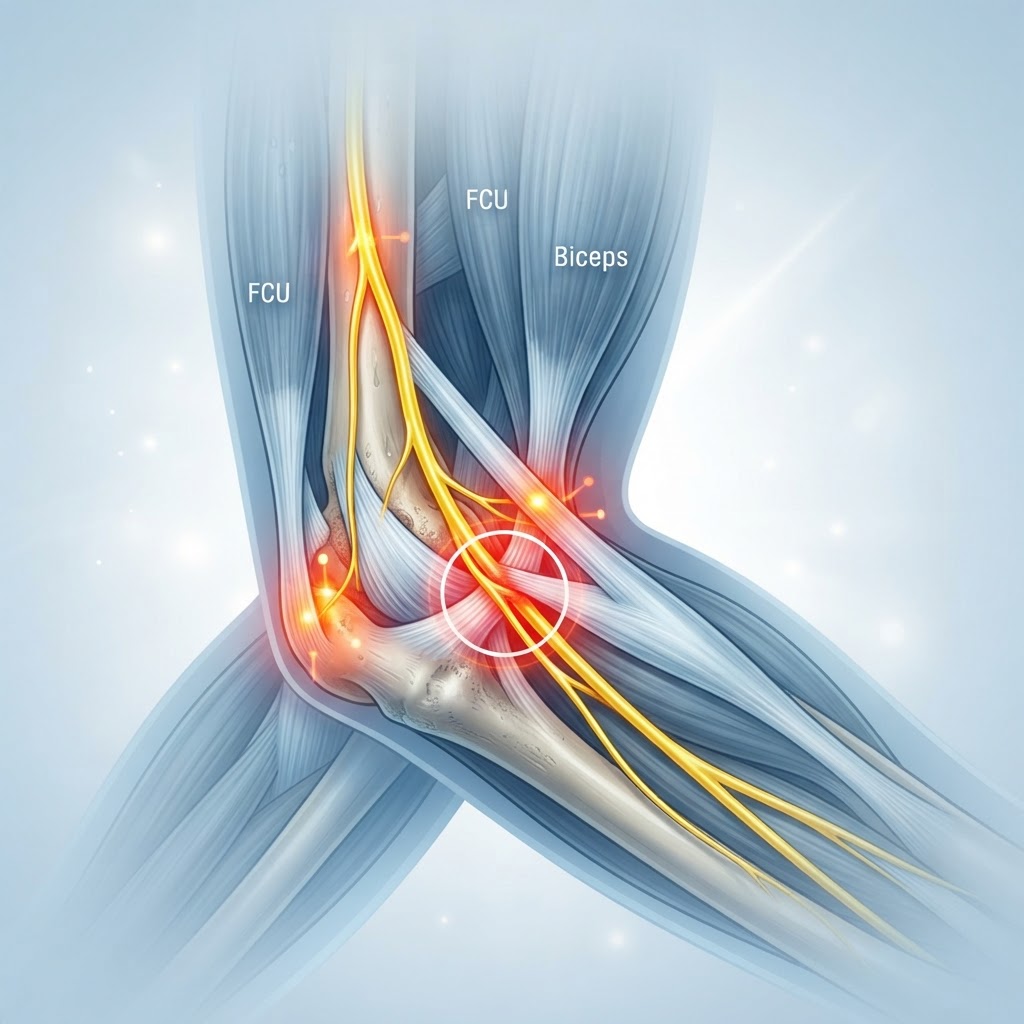
- Ulnar nerve entrapment is most frequently caused by prolonged pressure on the elbow, often leading to cubital tunnel syndrome symptoms.
- Chronic elbow nerve pain is frequently linked to repetitive occupational activities and poor static posture.
- Early intervention through ergonomic adjustments and posture correction can significantly improve nerve compression relief outcomes.
- Tingling in fingers, particularly the ring and small fingers, serves as a primary indicator of ulnar nerve involvement.
- Natural nerve healing begins with reducing mechanical stress on the nerve pathway and restoring healthy circulation to the arm.
If you have ever experienced a sudden, sharp shock radiating through your arm after bumping your elbow, you are familiar with the “funny bone” sensation. While that jolt is usually fleeting, for millions of people, that same area becomes the site of chronic, persistent discomfort. Ulnar nerve entrapment is a condition that, when left unaddressed, can evolve from an occasional annoyance into a debilitating obstacle that hinders sleep, work, and simple daily tasks. Because the ulnar nerve travels through a narrow path known as the cubital tunnel, it is particularly susceptible to mechanical stress and inflammation. Understanding the root causes of this nerve compression—and learning how to fix ulnar nerve pain through conservative, natural, and ergonomic strategies—is the first step toward regaining comfort in your extremities. In this comprehensive guide, the healthauthoritylife Editorial Team explores the mechanics of this condition and actionable paths toward recovery.
Understanding Ulnar Nerve Entrapment and Cubital Tunnel Syndrome
To truly grasp the nature of ulnar nerve entrapment, one must first visualize the journey of the ulnar nerve itself. Originating from the neck, this major nerve bundle travels down the arm, passing behind the medial epicondyle—the bony bump on the inner side of your elbow. This specific anatomical corridor is known as the cubital tunnel. When the nerve passes through this tunnel, it is relatively superficial, meaning it sits close to the skin and is protected by little more than a thin layer of connective tissue. When this tunnel becomes narrowed or the nerve is subjected to repeated friction, the result is cubital tunnel syndrome.
The syndrome occurs when the nerve is compressed, stretched, or restricted. Think of the ulnar nerve as a power cable transmitting signals between your brain and your hand. If that cable is pinched or bent at a sharp angle for extended periods, the signal transmission becomes compromised. Unlike other nerves in the arm, the ulnar nerve does not have a high degree of “slack” to move around, making it highly sensitive to the position of the elbow. When the elbow is flexed (bent) for long durations, the ulnar nerve is physically stretched around the elbow bone, which naturally increases the internal pressure within the cubital tunnel. Over time, this repetitive stretching or compression leads to inflammation and the onset of discomfort.
Many people mistake these sensations for general muscle soreness or localized injury. However, the distinction is vital: muscle pain usually resides in the fleshy parts of the limb, whereas nerve pain follows a specific sensory map. In the case of the ulnar nerve, that map covers the ring finger and the pinky finger. When the nerve is consistently agitated, the body reacts with protective mechanisms that can actually exacerbate the problem, such as localized swelling or muscle tightening around the elbow. Recognizing that this is a neurological issue rather than a muscular one is the critical turning point for anyone seeking nerve compression relief.
As the condition progresses, the nerve may become scarred or thickened due to persistent irritation. This is often described as chronic entrapment. While the body possesses an innate capacity for natural nerve healing, it cannot achieve this if the offending pressure remains constant. The goal, therefore, is to identify the mechanical triggers—whether they are sleeping habits, work desk setups, or specific recreational activities—that keep the ulnar nerve in a state of high tension. By lowering this mechanical load, we provide the environment necessary for the nerve to decompress and for the associated tingling and pain to subside naturally.
Common Symptoms of Ulnar Nerve Compression
The clinical presentation of cubital tunnel syndrome is often subtle at first. Many individuals report noticing a faint, intermittent “buzzing” or tingling in fingers, specifically the ring and little fingers. It is common for these cubital tunnel syndrome symptoms to fluctuate based on activity levels. For instance, you might notice the sensations flare up while you are driving with your arms draped over the steering wheel or while speaking on a cell phone for long periods with your elbow bent.
As the compression persists, the sensations tend to move from intermittent to more constant. You may experience a pins-and-needles sensation that becomes more pronounced during the night. Because many of us naturally sleep with our elbows flexed, the nerve remains under tension for hours at a time during rest. This explains why many patients report waking up with a numb or “asleep” hand. If you find yourself frequently waking up to shake your hand out in an attempt to restore sensation, this is a classic hallmark of ulnar nerve entrapment.
Beyond the tingling and numbness, the physical sensation of elbow nerve pain can manifest as a deep, aching discomfort on the inner side of the elbow. This ache can sometimes radiate upward toward the shoulder or downward into the forearm. It is important to note that if you are experiencing severe weakness in your grip or a tendency to drop objects, these are signs that the nerve is significantly affected and the motor signals are being interrupted. At this stage, the fine motor skills of the hand—such as typing, buttoning a shirt, or playing an instrument—may become difficult.
Another often-overlooked symptom is the gradual thinning of the small muscles of the hand. Because the ulnar nerve provides the electrical stimulation for these delicate muscles, chronic entrapment can lead to atrophy. You might notice the area between your thumb and index finger appears slightly sunken, or that the palm of your hand looks different compared to your unaffected side. These symptoms should be treated as a signal that the nerve requires immediate attention. Monitoring the frequency, duration, and intensity of these symptoms is a valuable practice, as it provides a baseline to see if your efforts to fix ulnar nerve pain are moving you in the right direction.
| Strategy | Mechanism | Best For |
|---|---|---|
| Nighttime Splinting | Keeps elbow in a neutral, extended position. | Reducing nocturnal numbness. |
| Ergonomic Mouse Pads | Supports the wrist and forearm alignment. | Desktop computer users. |
| Gentle Nerve Gliding | Promotes movement of the nerve through the tunnel. | Early-stage stiffness/discomfort. |
| Hot/Cold Compresses | Reduces local inflammation and increases blood flow. | Acute pain flare-ups. |
Primary Causes and Risk Factors for Nerve Entrapment
The development of ulnar nerve entrapment is rarely the result of a single event; instead, it is typically the culmination of chronic mechanical stressors. The most common cause is prolonged pressure, often resulting from habits that seem innocuous. For example, the habit of leaning on your elbows while working at a desk or while reading creates direct external pressure on the cubital tunnel. Over time, this pressure forces the nerve against the bone, causing localized irritation. This is particularly problematic for those who work in environments where hard surfaces (like glass or metal desks) are the primary contact point for their elbows.
Beyond external pressure, internal anatomy plays a significant role. Some individuals have a naturally shallow cubital tunnel, or they may possess an extra muscle or band of tissue that crosses the tunnel, leaving the nerve with less “room to breathe.” When these anatomical predispositions meet repetitive flexion, the nerve becomes trapped. Occupations that require repetitive bending of the elbows—such as assembly line work, carpentry, or even excessive smartphone usage—are high-risk activities. In these scenarios, the constant bending and straightening of the arm acts like a seesaw, grinding the nerve against the bony prominences of the elbow.
Lifestyle factors also contribute to the risk profile. Health experts often point to the link between metabolic health and nerve vulnerability. Conditions that cause systemic inflammation, such as diabetes or chronic thyroid issues, can make nerves more susceptible to compression. When the body is in a state of high systemic inflammation, nerve tissues are less resilient to mechanical stress. This is why natural nerve healing often involves a holistic approach that includes anti-inflammatory nutrition and hydration, in addition to physical changes. If your body is already struggling to manage systemic inflammation, a minor nerve pinch can quickly turn into a chronic, symptomatic issue.
Additionally, athletes and those who engage in high-impact physical hobbies are not immune. Sports that involve throwing, such as baseball or tennis, involve powerful, repetitive elbow movements that can put significant strain on the ulnar nerve. Even strength training, if done with improper form, can lead to muscle imbalances that tighten the tissues around the elbow, further narrowing the space for the nerve. Understanding your specific risk factors is paramount. By identifying which activities, habits, or systemic conditions are contributing to your nerve compression, you can create a targeted plan to mitigate those triggers and give your body the best chance to recover.
The Connection Between Posture and Nerve Health
Posture is not merely about having a straight back; it is the fundamental framework upon which your entire nervous system hangs. When we discuss nerve health, particularly in the upper extremities, we must look at the “nerve chain” that starts in the cervical spine (the neck) and extends all the way to the fingertips. Poor posture often leads to a phenomenon known as “forward head carriage” or “rounded shoulders.” When the shoulders slump forward, the space in the collarbone area and the chest can become compressed, which affects the flow of signals and blood supply down the entire length of the arm.
Consider the “chain reaction” of poor posture: when you slump at your desk, your shoulders rotate inward. This changes the angle of your arms and places more of your body weight on your elbows when you finally do rest them on the desk. Furthermore, if the muscles in your chest (the pectorals) become tight from this slumped position, they can pull on the nerves that originate in your neck, which can heighten your sensitivity to compression at the elbow. In essence, the ulnar nerve is not working in isolation. If it is being stretched or pinched at the neck, the shoulder, and the elbow, the aggregate tension becomes significantly higher than if it were only being pinched in one location.
Improving your posture is one of the most effective ways to facilitate natural nerve healing. By keeping the chest open and the head aligned with the spine, you reduce the structural strain on the nervous system. When you sit with an upright spine, your shoulders naturally retract to a neutral position. This, in turn, takes the tension off the nerve pathway in the arm. It is important to emphasize that this change does not need to be forced or rigid. Instead, it should be a mindful adjustment of your baseline position throughout the day.
Many people find success by implementing “posture resets” every thirty minutes. These are simple micro-movements: rolling the shoulders back, gently tucking the chin, and straightening the spine. These resets serve two purposes: they physically break the cycle of static, slumped posture, and they increase circulation to the tissues surrounding the nerves. When you combine these postural corrections with an awareness of how you hold your elbows, you are actively addressing the “tension architecture” of your body. This is a foundational step in learning how to fix ulnar nerve pain, as it removes the postural stressors that might be perpetuating the compression even while you are resting.
Ergonomic Adjustments to Reduce Elbow Nerve Pressure
The workspace is often the primary battleground for individuals suffering from cubital tunnel syndrome. Because we spend so many hours of our day interacting with computers, keyboards, and mobile devices, optimizing our environment is not a luxury—it is a medical necessity. The main goal of ergonomic adjustments is to keep the elbow in a state of gentle extension, avoiding prolonged flexion beyond 90 degrees. When the elbow is bent at a sharp angle for long periods, the ulnar nerve is stretched to its limit. By adjusting your desk height, chair position, and hardware placement, you can dramatically lower this tension.
Start with your chair. Your elbow should be approximately at the same height as your keyboard, allowing your forearms to rest comfortably without having to reach up or down. If your chair is too low, you are forced to flex your wrists and elbows awkwardly. If it is too high, you might end up leaning heavily on your elbows to compensate. Invest in a chair with adjustable armrests that are padded. If your current armrests are hard plastic, consider adding a soft foam or gel pad to distribute the pressure more evenly across the forearm rather than focusing it on the bony elbow point.
Next, evaluate your peripheral devices. If you are using a standard mouse, consider switching to an ergonomic vertical mouse. A vertical mouse allows your hand to rest in a “handshake” position, which naturally aligns the forearm and reduces the twisting stress that travels through the elbow. Furthermore, the placement of your keyboard and mouse matters. They should be close enough to your body that you do not have to stretch your arms forward, but far enough away that your elbows remain at an open angle. Avoid the “desk lean,” where you plant your elbows on the desk and support the weight of your head with your hands.
If you find that your work requires long hours of typing, try to integrate frequent breaks where you let your arms hang loosely at your sides. This simple action allows the nerve to return to its resting length. Additionally, consider the use of an ergonomic forearm support—a contoured pad that runs the length of the desk edge. This spreads the weight of your arms across a larger surface area, preventing the localized pressure on the cubital tunnel. By transforming your workspace into a nerve-friendly environment, you are effectively removing the mechanical irritant that keeps the condition chronic, allowing your body the necessary room to pursue its own natural recovery process.
Natural Anti-Inflammatory Strategies for Nerve Healing
When dealing with chronic ulnar nerve entrapment, the body often exists in a state of localized systemic inflammation. Because the nerve is housed within the tight confines of the cubital tunnel, even minor swelling can significantly increase pressure, leading to the hallmark tingling in fingers and elbow nerve pain that patients report. To foster natural nerve healing, one must adopt a multi-faceted approach to reducing inflammation without relying solely on pharmaceuticals.
Topical applications are among the most immediate ways to soothe inflammation around the medial epicondyle. Many practitioners recommend the use of high-quality arnica montana or capsaicin-based creams. While capsaicin provides a sensation of heat, it is believed to deplete substance P, a neurotransmitter involved in transmitting pain signals, which can be highly effective for chronic nerve discomfort. Furthermore, cold and heat therapy—often referred to as contrast therapy—can encourage blood flow while simultaneously dampening the inflammatory response. Applying a cold pack for 15 minutes to reduce acute swelling, followed by a gentle warm compress to stimulate circulation, can help loosen the tissues surrounding the compressed nerve.
Lifestyle modifications, such as managing stress, are equally critical. Chronic stress elevates cortisol levels, which, over time, can exacerbate inflammatory pathways throughout the body. Techniques such as mindfulness meditation, deep breathing exercises, and restorative sleep play a massive role in how the nervous system recovers from compression. When the body is in a state of “fight or flight,” nerve sensitivity is often heightened; by engaging the parasympathetic nervous system, you create an environment where the nerve can heal more efficiently.
Ergonomics also serve as a foundational anti-inflammatory tool. If your daily environment includes repetitive tasks that force the elbow into prolonged flexion—such as typing or holding a smartphone—you are essentially keeping the ulnar nerve under constant mechanical tension. Utilizing desk chair adjustments to keep the elbow at an open angle (greater than 90 degrees) or using a headset to avoid holding a phone against the ear can prevent the repetitive irritation that keeps inflammation trapped in the cubital tunnel.
Effective Nerve Gliding Exercises for Relief
Nerve gliding, also known as nerve flossing, is a specialized physical therapy technique designed to help the ulnar nerve move freely through the cubital tunnel. Unlike traditional stretching, which pulls on the nerve, gliding encourages the nerve to slide through the surrounding tissues, breaking up adhesions and minimizing the mechanical tension that causes cubital tunnel syndrome symptoms.
A classic ulnar nerve glide, often called the “waiter’s tip” maneuver, is a staple for nerve compression relief. To perform this, start by extending your arm out to the side with your elbow straight and palm facing the ceiling. Gradually bring your hand toward your head, bending at the elbow and turning your palm toward your face, as if you are trying to frame your ear with your hand. It is vital to move slowly; if you feel an sharp increase in tingling, you have likely pushed the nerve too far. The goal is to feel a gentle, sustained tension, not pain.
Consistency is more important than intensity when it comes to nerve health. Rather than doing one long session, experts generally suggest performing these glides in shorter, more frequent intervals throughout the day. This prevents the nerve from becoming stagnant and stuck in a compressed position for long hours. Below is a comparison table outlining different approaches to nerve mobility to help you identify which might be most suitable for your current level of mobility.
| Technique | Primary Focus | Best For |
|---|---|---|
| Ulnar Nerve Flossing | Longitudinal mobility | Breaking adhesions in the cubital tunnel |
| Soft Tissue Mobilization | Reducing myofascial trigger points | Relieving tension in the forearm flexors |
| Postural Retraining | Scapular stabilization | Addressing upstream nerve compression (Thoracic Outlet) |
| Myofascial Release (Rolling) | Fascial fluidity | Reducing general arm stiffness |
It is important to remember that these exercises should not cause numbness. If you find that your symptoms worsen after performing these movements, you may be over-mobilizing the nerve. In such cases, pause the exercises and focus on static rest and icing until the nerve sensitivity settles down. Always ensure you are not clenching your jaw or shrugging your shoulders during these glides, as muscular tension elsewhere can manifest as radiating discomfort down the arm.
Nutritional Support for Nerve Regeneration
Nerve health is deeply tied to the intake of specific micronutrients that support myelin sheath integrity and axonal repair. When you are looking for how to fix ulnar nerve pain through diet, you are primarily looking to provide the building blocks necessary for the body to repair damaged neural pathways. Chronic compression often leads to a localized deficiency in key vitamins required for nerve conduction.
B-vitamins, particularly B12, B6, and B1 (thiamine), are the gold standard for nerve health. Vitamin B12 is essential for the production of myelin, the protective coating that insulates your nerves and ensures clear signal transmission. A deficiency here can mimic or exacerbate symptoms of nerve entrapment, such as tingling and numbness. Integrating foods like leafy greens, wild-caught fish, eggs, and fortified nutritional yeast can provide these vital nutrients in a bioavailable form.
Omega-3 fatty acids are another cornerstone of neurological recovery. These healthy fats are potent anti-inflammatories that help reduce the edema (swelling) around the ulnar nerve. Sources such as chia seeds, flaxseeds, walnuts, and fatty fish provide the EPA and DHA required to lower systemic inflammation. Many people also find benefit in adding turmeric (specifically with black pepper for absorption) to their diet, as its active compound, curcumin, has been shown in various studies to support nerve recovery and reduce oxidative stress.
Finally, hydration must not be overlooked. The nervous system is highly sensitive to the electrolyte balance within the body. Proper hydration ensures that the tissues surrounding the ulnar nerve remain supple rather than dehydrated and tight. If you are consuming significant amounts of caffeine or processed sugar, you may be leaching minerals like magnesium, which is crucial for muscle relaxation and preventing the forearm cramping that often accompanies chronic elbow nerve pain.
When to See a Specialist for Ulnar Nerve Issues
While natural interventions are excellent for managing symptoms and promoting healing, there are specific “red flags” that indicate your ulnar nerve entrapment has progressed beyond the stage where home management is sufficient. Ignoring these signs can lead to permanent nerve damage, characterized by muscle wasting (atrophy) in the hand.
The most pressing reason to see a specialist is the onset of motor weakness. If you notice that you are dropping objects frequently, have trouble buttoning a shirt, or feel as though your hand is becoming clumsy, this suggests that the nerve compression is severe enough to affect your motor signals, not just sensory feedback. Atrophy, or the visible thinning of the muscles between the thumb and index finger or on the palm side of the hand, is a clear sign that the nerve signal is severely interrupted and requires medical evaluation.
If your tingling in fingers has become constant rather than intermittent, this is another signal that the nerve is under sustained, high-pressure compression. When the sensation never goes away, the nerve may be developing scar tissue (fibrosis) within the tunnel. A specialist, such as a neurologist or an orthopedic surgeon, can perform tests like an Electromyography (EMG) or Nerve Conduction Velocity (NCV) test to objectively measure how well your nerve is conducting electrical impulses. These tests are the only way to know the exact severity of the entrapment.
Lastly, if you have diligently applied natural strategies—such as ergonomic changes, nerve gliding, and anti-inflammatory support—for six to eight weeks without any measurable improvement, it is time to consult a professional. They may suggest bracing (specifically for nighttime to prevent full elbow flexion), corticosteroid injections, or in persistent cases, a surgical decompression procedure to create more room for the nerve. Prompt medical intervention is often the difference between a full recovery and long-term, irreversible nerve dysfunction.
Frequently Asked Questions
Is it normal for ulnar nerve pain to be worse at night?
Yes, it is very common for symptoms to worsen at night. Many people sleep with their elbows bent, which puts the ulnar nerve under constant stretch and increases pressure within the cubital tunnel. Additionally, the lack of movement during sleep can cause tissues to stiffen, making the morning period particularly uncomfortable.
Can ulnar nerve entrapment lead to permanent damage?
If left untreated for an extended period, chronic compression can lead to permanent damage. This typically manifests as muscle wasting, known as atrophy, in the hand and loss of grip strength. Early intervention is key to preventing these irreversible changes to the nerve and the muscles it controls.
How long does it take for the ulnar nerve to heal naturally?
Healing timelines vary significantly based on the severity of the compression and the individual’s dedication to lifestyle changes. Generally, mild cases may show improvement within four to eight weeks of consistent ergonomic adjustments and nerve gliding. More chronic cases require patience and a sustained approach to avoid relapse.
Should I avoid all physical activity if I have elbow nerve pain?
You do not need to avoid all physical activity, but you must avoid movements that aggravate the nerve. High-impact activities or those requiring heavy, repetitive lifting with bent elbows should be modified. Low-impact movement is actually encouraged, as it keeps the surrounding muscles healthy and promotes blood flow, provided it does not trigger sharp pain.
Are there specific pillows or braces that help with cubital tunnel syndrome?
Many individuals find success with nighttime elbow splints or braces that prevent the elbow from bending past a certain angle while sleeping. Keeping the elbow in a more neutral, extended position at night can significantly reduce morning symptoms. There are no specific “pillows” designed to heal the nerve, but using pillows to prop up the arm or ensure neutral alignment can be very beneficial.
Can stress really affect nerve compression in the elbow?
Yes, stress plays a major role in nerve sensitivity. Chronic stress keeps the body in a state of inflammation and can increase muscle tension in the shoulders and neck. If your neck and shoulders are tight, it can alter your posture, which in turn shifts the load on your arms and can worsen the compression of the ulnar nerve at the elbow.
Conclusion
Managing chronic ulnar nerve entrapment is an ongoing process that requires patience, consistency, and a proactive stance toward your own health. By addressing the root causes of the compression—whether through ergonomic desk setups, intentional nerve gliding exercises, or targeted nutritional support—you can significantly alleviate the painful tingling in fingers and elbow nerve pain that often disrupt daily life. Remember that the body has an incredible capacity for healing when provided with the right environment, but it is equally vital to recognize when the complexity of your symptoms requires the expertise of a medical professional.
Take the first step today by auditing your workspace and starting a gentle, consistent nerve-gliding routine. Listen to your body, prioritize anti-inflammatory habits, and do not hesitate to seek help if your condition does not improve. You have the power to reclaim your comfort and restore the health of your nervous system.
By healthauthoritylife Editorial Team
This article is for informational purposes only and is not a substitute for professional medical advice. Always consult your doctor before making changes to your diet, exercise routine, or treatment plan.
Leave a Reply