
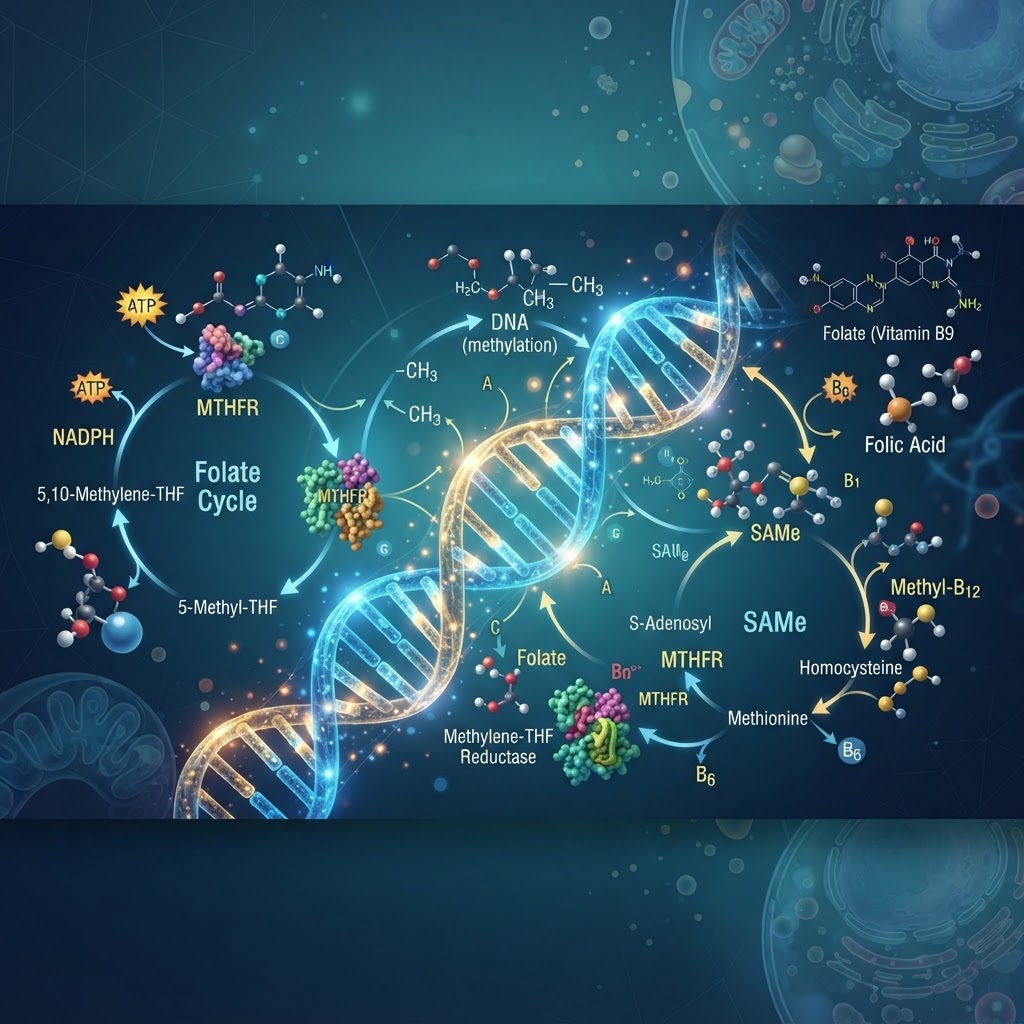
- The MTHFR mutation affects the body’s ability to convert dietary folate into its active, usable form.
- Methylation is a fundamental biochemical process necessary for DNA repair, detoxification, and hormone balance.
- Symptoms associated with this genetic variant are wide-ranging, often including fatigue, mood imbalances, and digestive issues.
- Individuals with MTHFR variations can often thrive by focusing on nutrient-dense foods and avoiding synthetic folic acid.
- Supporting your methylation pathway is a personalized process that prioritizes systemic wellness over quick fixes.
In recent years, the conversation surrounding genetics and personal health has shifted from distant academic curiosity to actionable daily wellness. At the center of this movement is the MTHFR gene. For many, discovering they have an MTHFR mutation acts as a missing piece of the health puzzle, explaining long-standing struggles with energy, mood, and detoxification. While the scientific community is still uncovering the full complexity of these genetic variants, understanding how they influence your internal biochemistry can empower you to make informed decisions about your nutrition, supplementation, and lifestyle. The healthauthoritylife Editorial Team has compiled this comprehensive guide to help you navigate the nuances of the methylation pathway and reclaim your vitality.
What Is the MTHFR Gene Mutation?
The MTHFR gene—technically known as methylenetetrahydrofolate reductase—is a critical piece of your genetic blueprint. Its primary job is to provide the instructions for creating an enzyme that shares its name. This enzyme is the master key that unlocks a vital chemical reaction in your body: the conversion of dietary folate (Vitamin B9) into its active form, 5-methyltetrahydrofolate (5-MTHF). This active form of folate is not merely a vitamin; it is a fundamental fuel source that drives essential cellular functions throughout your entire system.
When someone is referred to as having an “MTHFR mutation,” they are describing a variation or polymorphism in the genetic sequence. These variations occur when a single nucleotide—the building blocks of DNA—is swapped for another, which can alter how efficiently the MTHFR enzyme functions. It is important to clarify that having a variation is not a disease. In many cases, it is a common genetic trait that billions of people carry. These variations are often categorized by where they occur on the gene, with the most commonly discussed variants being C677T and A1298C. Depending on whether you inherited a variation from one parent (heterozygous) or both (homozygous), the efficiency of your enzyme may be reduced by varying degrees.
The MTHFR gene does not work in isolation. It operates as part of a complex “methylation pathway,” a series of biochemical hand-offs that happen billions of times every second within your cells. When the MTHFR enzyme is less efficient, the downstream effects can ripple throughout the body. Think of it like a bottleneck in a manufacturing plant; if the primary raw material—active folate—is not being processed quickly enough, the entire assembly line slows down. This does not mean the assembly line stops, but it may require more resources, better quality inputs, and more strategic support to function at peak performance. By understanding this, we move away from viewing the mutation as a “defect” and toward seeing it as a unique biochemical requirement that necessitates a more intentional approach to daily health and nutrition.
Understanding the Methylation Cycle and Why It Matters
To truly support your health, you must view the methylation cycle as your body’s internal administrative system. At its core, methylation is the addition of a methyl group—a small chemical structure consisting of one carbon and three hydrogen atoms—to various molecules. It sounds simple, but this “carbon-sharing” process is the engine behind nearly every biological function. From repairing damaged DNA to managing how your body handles environmental toxins, methylation is the process that keeps your physiology organized and resilient.
The methylation cycle is responsible for several high-stakes tasks. First, it regulates gene expression. By “tagging” certain parts of your DNA, it tells your cells which genes should be turned on or off. Second, it is essential for the production of neurotransmitters like serotonin, dopamine, and norepinephrine. If your methylation cycle is sluggish, you may experience fluctuations in mood or cognitive clarity because the body is not effectively synthesizing the chemical messengers required for emotional regulation. Third, it is vital for detoxification. Methylation helps the liver process toxins, heavy metals, and excess hormones, converting them into substances that can be safely excreted from the body.
When the methylation pathway is compromised, often due to an MTHFR variant, the body may struggle to recycle homocysteine—an amino acid that, in high amounts, can be hard on the cardiovascular system. Healthy methylation ensures that homocysteine is converted back into methionine, an essential amino acid. Without efficient methylation support, this recycling process falters, potentially leading to systemic stress. This is why individuals with methylation challenges are often advised to look at their total health picture, rather than focusing on a single vitamin. It is about supporting a cycle that is constantly spinning. When you provide your body with the necessary “co-factors”—such as methylated B vitamins, magnesium, and specific amino acids—you are essentially lubricating the gears of this cycle, allowing it to move with greater ease regardless of the genetic baseline you were born with.
Common Symptoms of MTHFR Gene Variations
Because the MTHFR gene influences processes that occur in every cell of the body, the symptoms associated with methylation imbalances are notoriously non-specific. This is why it often takes years for individuals to connect their physical complaints back to their genetics. However, when we look at the patterns across the population, several consistent themes emerge. Many people with MTHFR mutations report an underlying sense of being “tired but wired.” This describes a state of chronic fatigue that exists alongside an inability to mentally relax, often stemming from an imbalance in the neurotransmitters mentioned earlier.
Digestive issues are another frequently cited concern. The gut lining requires rapid cell turnover and repair, a process that is heavily dependent on methylation. When this cycle is suboptimal, the gut may struggle to maintain its integrity, leading to sensitivities or general discomfort. Furthermore, because methylation is crucial for detoxification, people with these variants often report increased sensitivity to environmental triggers, such as household chemicals, perfumes, or even certain medications. The body’s inability to efficiently “tag” and eliminate these substances can lead to a sense of being overwhelmed or having a lower threshold for physical stress.
Mood-related symptoms are perhaps the most discussed aspect of MTHFR. Many report frequent brain fog, irritability, or difficulty with focus. Since methylation is required to process and clear neurotransmitters, a backup in the system can mean that chemicals like dopamine hang around too long or aren’t produced in sufficient quantities, leading to a roller coaster of mental states. While it is essential to emphasize that these symptoms are not diagnostic, they act as “yellow flags.” If you find yourself struggling with a combination of persistent fatigue, digestive distress, and difficulty maintaining a balanced mood, it may be time to investigate your methylation pathway. Below is a comparison of different approaches to managing these types of systemic symptoms.
| Approach | Primary Focus | Best For |
|---|---|---|
| Nutrient-Dense Diet | Whole food folate (leafy greens, legumes) | Foundational daily support |
| Methylated Supplementation | B12 (methylcobalamin) and B9 (5-MTHF) | Targeted support for known variants |
| Lifestyle Stress Management | Reducing environmental toxin exposure | Reducing overall demand on the system |
How MTHFR Impacts Your Ability to Process Folate
The primary role of the MTHFR enzyme is to act as a bridge. It converts dietary folate (B9) from its inactive state, which we consume in vegetables and grains, into its active, “ready-to-use” form known as 5-MTHF. In a person without an MTHFR variant, this conversion happens smoothly and efficiently. However, if you possess an MTHFR mutation, the “bridge” is effectively narrowed. The enzyme works more slowly, which leads to a decrease in the amount of active folate available for the body’s essential tasks.
This is where the distinction between “folate” and “folic acid” becomes critical. Folic acid is a synthetic, oxidized form of Vitamin B9. It is not the same as the natural folate found in leafy greens. For someone with an MTHFR mutation, consuming folic acid can actually be counterproductive. Because the MTHFR enzyme is already struggling to process natural folate, it hits a roadblock when forced to handle the synthetic form. Folic acid can build up in the bloodstream, occupying the receptor sites and effectively blocking the uptake of the natural folate that the body actually needs. This “unmetabolized folic acid” is widely considered by experts to be a potential driver of health issues, as it interferes with natural metabolic processes.
When you have an MTHFR mutation, the priority shifts to bypassing this bottleneck. This is achieved by ensuring that your body receives folate in a pre-methylated form—essentially, providing the “end product” so the MTHFR enzyme doesn’t have to work as hard to create it. This is why many practitioners recommend choosing foods rich in natural folate, such as spinach, asparagus, and lentils, over processed foods that are “fortified” with synthetic folic acid. By choosing high-quality, biologically active forms of B vitamins, you remove the burden from your genetics, allowing your body to focus its energy on cellular repair and mood regulation rather than the tedious labor of chemical conversion. It is a subtle shift, but for those with genetic variants, it is often the single most impactful change one can make to improve overall systemic function.
The Link Between MTHFR and Chronic Inflammation
Inflammation is the body’s natural response to stress, injury, or perceived threats. While acute inflammation is helpful—it is what heals a cut or fights off a virus—chronic, low-grade inflammation is a different story. It is a slow, smoldering fire that can damage tissues and organs over time. Emerging research suggests that the MTHFR mutation may be a silent contributor to this inflammatory state. The connection lies, once again, in the methylation pathway’s ability to maintain homeostasis.
When methylation is impaired, the body’s ability to detoxify and regulate itself is diminished. This can lead to an accumulation of oxidative stress. Oxidative stress occurs when there is an imbalance between free radicals (unstable molecules that damage cells) and antioxidants (the body’s defense against them). Because methylation is responsible for creating glutathione—the body’s “master antioxidant”—a slowdown in this cycle means fewer resources are available to neutralize free radicals. Consequently, these free radicals accumulate, triggering an inflammatory response from the immune system.
Furthermore, the aforementioned buildup of homocysteine also plays a role in inflammation. High levels of homocysteine are known to irritate the lining of blood vessels, which the body interprets as an inflammatory signal. Over years, this consistent irritation can lead to systemic health challenges. It is not that an MTHFR mutation “causes” inflammation directly; rather, it creates a biochemical environment where the body is less equipped to put out the small, everyday fires of life. This is why, when discussing MTHFR, we often focus on the importance of an anti-inflammatory lifestyle. This includes consuming antioxidant-rich berries, managing stress to lower cortisol levels (which can further deplete B vitamins), and creating a living environment with fewer synthetic chemicals. By lowering the total inflammatory load on your system, you essentially “free up” your compromised methylation pathway to focus on the essential tasks of cellular maintenance, rather than constantly struggling to manage excess systemic stress.
Essential Tests to Identify Methylation Issues
Identifying whether your body is struggling with methylation is rarely achieved through a single test. Because the methylation pathway is a complex, interconnected biochemical cycle, clinicians often look at a combination of genetic markers and functional metabolic indicators. Understanding your internal environment requires looking at both your genetic predisposition—the blueprint—and how your body is actually functioning in real-time.
The first step for many is genetic screening. Genetic testing for the MTHFR gene mutation involves a simple swab or blood sample that identifies variants at specific positions, most commonly C677T and A1298C. It is important to remember that having a genetic variant does not automatically mean you have a clinical health issue; it simply indicates that your enzyme activity might be reduced. Genetic testing provides the “why” behind potential struggles, but it does not measure the current efficiency of your methylation cycle.
To understand current function, functional medicine practitioners often look toward blood chemistry. Key biomarkers include serum folate, red blood cell (RBC) folate, and Vitamin B12 levels. While standard laboratory ranges are often broad, many functional health experts look for the “optimal” range rather than just the “normal” range. For instance, low-normal levels of B12 or folate may be insufficient for an individual with an MTHFR mutation who requires higher systemic levels to maintain equilibrium.
Perhaps the most revealing test is serum homocysteine. Homocysteine is an amino acid that should be converted into methionine or cysteine through the methylation pathway. When methylation is sluggish, homocysteine levels often rise. Elevated homocysteine is frequently considered a red flag by cardiologists and integrative health specialists alike, as it suggests the “gears” of the methylation cycle are not turning effectively. Furthermore, testing for Methylmalonic Acid (MMA) can help distinguish between a functional B12 deficiency and a simple low-intake issue. By layering genetic data with these metabolic markers, you gain a high-definition view of how your body processes nutrients and manages toxic load.
Best Dietary Choices for MTHFR Support
When supporting the methylation pathway, the goal of your diet is to reduce the burden on your system while providing the necessary cofactors for enzymatic reactions. The MTHFR diet is fundamentally about bioavailable nutrition. Because individuals with methylation challenges struggle to process synthetic folic acid, the most critical dietary shift is the elimination of “enriched” or “fortified” flour products. These contain folic acid, which can saturate the folate receptors and potentially block the uptake of natural folates, worsening MTHFR symptoms.
Instead, focus on whole foods that provide natural, active forms of folate, known as 5-methyltetrahydrofolate. Dark, leafy greens are the gold standard. Spinach, kale, Swiss chard, and arugula should be staples in your daily meal planning. Aim to consume these lightly steamed or raw to preserve their nutrient profiles. Cruciferous vegetables such as broccoli, Brussels sprouts, and cauliflower are also essential, as they support the liver’s detoxification pathways, which rely heavily on healthy methylation.
Protein quality also matters significantly. Methylation requires amino acids like methionine, glycine, and betaine. While high-quality grass-fed beef and wild-caught fish are excellent sources of these nutrients, balance is key. If you are struggling with high homocysteine levels, you may need to moderate your intake of methionine-heavy foods and increase your intake of plant-based sources like lentils, beans, and chickpeas, which offer folate and fiber to assist in the detoxification process.
Fermented foods such as sauerkraut, kimchi, and kefir can be beneficial because they support gut microbiome health. A healthy gut is essential for the absorption of B vitamins and the synthesis of folate by your internal bacterial flora. Reducing intake of processed sugars and alcohol is equally vital, as both substances drain your body’s B-vitamin stores, leaving you with even fewer resources to support the methylation pathway.
| Nutrient Source | Key Methylation Benefit | Best For |
|---|---|---|
| Dark Leafy Greens | Provides natural food-state folate | Daily baseline support |
| Beets/Beet Greens | Rich in TMG (Betaine) | Reducing homocysteine levels |
| Cruciferous Veggies | Sulfur donors for detox | Supporting liver methylation |
| Wild-Caught Salmon | Source of B12 and Choline | Cognitive and nervous system health |
| Legumes | Plant-based folate | Gentle, fiber-rich nutrient intake |
Key Nutrients and Supplements for Better Methylation
Supplements should be viewed as tools to assist a deficient system rather than a permanent replacement for a nutrient-dense diet. For those with MTHFR mutations, the “golden rule” of supplementation is avoiding synthetic folic acid. Always look for methylated vitamins on the label. This means seeking out methylfolate (5-MTHF) rather than folic acid, and methylcobalamin instead of cyanocobalamin.
The primary nutrients that drive the methylation cycle include B2 (riboflavin), B6 (pyridoxine), B12 (cobalamin), and folate. Riboflavin, in particular, acts as a crucial cofactor for the MTHFR enzyme; without enough B2, the entire pathway can stall, regardless of how much folate you consume. B6 is required for the conversion of homocysteine into cysteine in the transsulfuration pathway, which is a secondary route for detoxification when the primary methylation cycle is blocked.
Trimethylglycine (TMG), also known as betaine, is another heavy hitter for methylation support. TMG acts as a methyl donor, essentially providing the chemical “currency” the body needs to proceed with methylation when the MTHFR enzyme is underperforming. It is often used to help lower elevated homocysteine levels safely. However, TMG should be introduced carefully, as some individuals find that high doses of methyl donors can lead to over-methylation symptoms, such as irritability or anxiety.
Magnesium is the unsung hero of this process. It is a cofactor for hundreds of enzymatic reactions, including those involving B vitamins. Many people are deficient in magnesium due to soil depletion and stress, which further impairs their ability to process nutrients effectively. Magnesium glycinate is often recommended for its high bioavailability and gentle impact on the digestive system. Finally, choline is essential, as it feeds into the methylation cycle and supports cellular membrane integrity and brain health. Always start with lower doses of any new supplement to monitor how your body responds, as bio-individuality dictates that no two people will react the same way to the same regimen.
Lifestyle Habits That Affect the Methylation Pathway
Lifestyle is a major determinant of how effectively your genes express themselves. Methylation is a highly sensitive process that is easily disrupted by external stressors. The first and most critical habit to address is sleep hygiene. During deep sleep, the body performs significant cellular repair and detoxification. When you are chronically sleep-deprived, the body prioritizes survival over the complex, energy-demanding task of methylation, leading to a buildup of metabolic waste products.
Stress management is equally paramount. The “fight or flight” response triggers the release of adrenaline and cortisol. The synthesis and degradation of these stress hormones consume significant amounts of methyl groups. In a chronically stressed state, your body essentially “steals” the methyl groups meant for DNA repair and neurotransmitter balancing to produce stress hormones. Practices such as mindfulness meditation, deep diaphragmatic breathing, and gentle yoga can help shift the nervous system into a parasympathetic state, conserving your body’s precious methylation resources.
Environmental toxins also represent a massive, often overlooked burden. Exposure to heavy metals (like mercury, lead, or arsenic), plastics, pesticides, and air pollution forces the body to prioritize detoxification at the expense of other methylation tasks. Reducing your toxic load—by filtering your water, choosing organic produce, and using non-toxic household cleaning supplies—directly lightens the load on your liver, freeing up the methylation cycle to focus on essential tasks like neurotransmitter production and cellular energy metabolism.
Finally, movement is a double-edged sword. While moderate, consistent exercise improves circulation and nutrient delivery, extreme overtraining can spike cortisol and generate oxidative stress, both of which deplete methylation markers. Aim for moderate-intensity activities like brisk walking, swimming, or strength training, which provide health benefits without overwhelming your physiological reserves. By viewing your lifestyle as a series of inputs for your biochemistry, you can create an environment where your genes have the best chance to function optimally.
When to Consult a Professional About Genetic Testing
Navigating the world of genetic testing can be overwhelming, and it is not always necessary for everyone. You should consider consulting a healthcare professional—specifically someone trained in functional medicine or nutrigenomics—if you have a strong family history of methylation-related issues. This includes a history of cardiovascular disease, unexplained recurrent pregnancy loss, or chronic neurological conditions. If you have been diagnosed with conditions that have failed to respond to conventional treatments, such as treatment-resistant depression, chronic fatigue, or autoimmune flare-ups, exploring your genetic status may provide a missing piece of the puzzle.
It is also advisable to speak with a professional if you suspect you have an MTHFR mutation and you are planning for pregnancy. Proper methylation is critical for fetal development, particularly in the formation of the neural tube. A practitioner can help you determine the right type and dosage of prenatal vitamins to ensure optimal levels of folate and B12 without overloading your system with synthetic forms.
Before ordering a commercial genetic test, consult with a professional to understand what the data will actually tell you. Many people fall into the trap of “analysis paralysis,” where they get a genetic report, become anxious about every red mark, and start taking dozens of supplements without a clear strategy. A professional can help you interpret your results in the context of your specific health symptoms. They will look at the “big picture” rather than just isolated genes, helping you prioritize the most impactful changes to your diet and lifestyle first. This ensures that your approach to health is grounded in clinical observation rather than fear-based, reactive supplementation.
Frequently Asked Questions
Can I cure my MTHFR gene mutation?
No, you cannot “cure” a genetic mutation because it is part of your unique biological blueprint. The MTHFR gene is a permanent instruction set within your DNA. However, you can absolutely optimize its function. Through proper nutrition, stress reduction, and targeted supplementation, you can bypass the bottleneck the mutation creates and support your body in achieving healthy methylation levels.
What is the most important vitamin to take if I have MTHFR?
While everyone is different, most experts emphasize the importance of high-quality, methylated B-vitamins—specifically methylfolate (5-MTHF) and methylcobalamin (B12). These forms are already in a state the body can use immediately, skipping the need for the MTHFR enzyme to convert them. Riboflavin (B2) is also frequently cited as a critical cofactor that should not be overlooked.
Do I have to avoid all foods with folate?
Absolutely not. In fact, you should increase your intake of natural folates found in whole foods like dark leafy greens and legumes. The confusion typically stems from “folic acid,” which is the synthetic, oxidized form found in processed and enriched flour products. Your body struggles to convert synthetic folic acid, but it thrives on the natural folate found in whole, unprocessed plant foods.
Is MTHFR the reason for my anxiety and depression?
Methylation plays a major role in the production of neurotransmitters like serotonin, dopamine, and norepinephrine. When methylation is impaired, your brain’s ability to produce and break down these mood-regulating chemicals can be affected. While an MTHFR mutation can contribute to mood struggles, it is rarely the sole cause; mood disorders are typically multifactorial, involving lifestyle, gut health, and environmental factors.
Will a standard doctor test for MTHFR?
Most standard medical practitioners do not routinely test for MTHFR mutations unless there is a specific clinical reason, such as repeated pregnancy loss or high blood homocysteine levels. If you are interested in testing, you may need to seek out a practitioner who specializes in functional or integrative medicine, as they are generally more focused on nutrigenomics and preventative metabolic health.
What are the signs of “over-methylation”?
Over-methylation can occur if you take high doses of methyl donors (like TMG, methylfolate, or B12) without needing them. Common signs include irritability, anxiety, insomnia, racing thoughts, or muscle tension. If you notice these symptoms after starting a new supplement regimen, it is important to pause the supplement and consult your healthcare provider to adjust your dosage.
Conclusion
Understanding the MTHFR gene mutation and the intricacies of the methylation pathway is a powerful step toward taking control of your long-term health. While the prospect of genetic variants can feel daunting, it is important to remember that genes are not your destiny. They are merely the tendencies your body leans toward under specific conditions. By focusing on whole, nutrient-dense foods, managing your environment, reducing stress, and working with knowledgeable professionals, you can effectively support your methylation cycle and create a robust foundation for wellness.
The journey to better health through methylation support is not a sprint; it is a cumulative process of small, consistent changes. Start by cleaning up your diet, prioritizing sleep, and listening to your body’s signals. If you are struggling with unexplained health hurdles, use the information provided here as a map to guide your conversations with your healthcare provider. You have the power to influence your gene expression and live a vibrant, balanced life.
By healthauthoritylife Editorial Team
This article is for informational purposes only and is not a substitute for professional medical advice. Always consult your doctor before making changes to your diet, exercise routine, or treatment plan.
Leave a Reply