
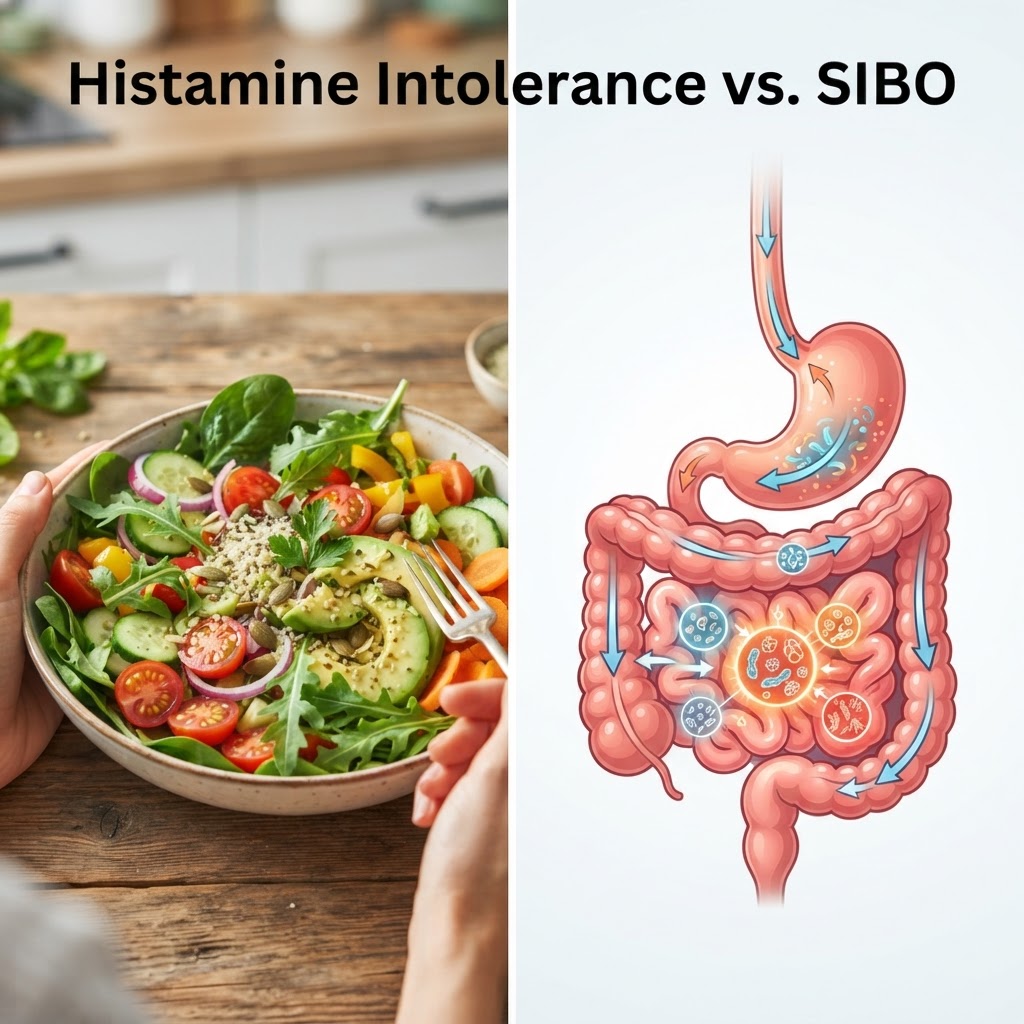
- SIBO and histamine intolerance are distinct conditions that frequently present with nearly identical digestive distress symptoms.
- Small intestinal bacterial overgrowth often acts as a root cause for secondary histamine intolerance by damaging the intestinal lining.
- Bloating can stem from either bacterial gas production in the small intestine or an overabundance of mast cells reacting to dietary histamine.
- Distinguishing between the two requires identifying whether symptoms correlate strictly with food intake or fluctuate based on bacterial fermentation patterns.
- A functional approach often involves addressing bacterial imbalances before attempting to manage chronic histamine overload.
For many individuals navigating the complexities of digestive health, the struggle to identify the root cause of chronic bloating feels like a never-ending investigation. You might find yourself meticulously logging every morsel you eat, only to experience unpredictable flare-ups that leave you feeling distended, fatigued, and frustrated. Two of the most common, yet frequently misunderstood, culprits behind these persistent issues are small intestinal bacterial overgrowth (SIBO) and histamine intolerance. While these conditions can exist independently, they often share a complex, overlapping relationship that makes self-diagnosis incredibly difficult. Understanding the nuance of histamine intolerance vs. SIBO is not just an academic exercise; it is the vital first step toward restoring your quality of life. This guide, prepared by the healthauthoritylife Editorial Team, will explore the physiological mechanisms, symptom clusters, and strategic diagnostic steps required to tease apart these two pervasive gut health challenges.
Understanding the Gut-Histamine Connection
To grasp why your gut often feels like a battlefield, we must first understand the fundamental role of histamine. Histamine is a biogenic amine—a signaling molecule that acts as a neurotransmitter and a mediator of inflammation. While many people associate histamine solely with seasonal allergies and runny noses, it plays a critical role in digestion. In a healthy gut, histamine stimulates the secretion of gastric acid, which is necessary for the proper breakdown of proteins. It also regulates intestinal motility, ensuring that waste moves through your system at an appropriate pace.
The problem arises when the concentration of histamine exceeds the body’s ability to break it down. Under normal circumstances, an enzyme known as diamine oxidase (DAO) is produced in the small intestine to neutralize histamine derived from food. When the system is functioning optimally, DAO acts as a gatekeeper, preventing exogenous histamine—the kind found in aged cheeses, fermented foods, wine, and cured meats—from entering the bloodstream in harmful quantities. However, when the lining of the small intestine is compromised or the microbial balance is disrupted, DAO production can plummet.
This creates a vulnerability that links digestive health directly to systemic symptoms. When the gut barrier is inflamed, the cells responsible for producing DAO may be impaired, leading to a condition known as DAO enzyme deficiency. Consequently, even a moderate intake of histamine-rich or histamine-liberating foods can trigger a cascade of symptoms that extend far beyond the digestive tract. You might experience brain fog, headaches, skin rashes, or tachycardia, all because your gut could not neutralize the incoming histamine load. This is the crux of the gut-histamine connection: the gut is not just a tube for food; it is an endocrine and immunological control center. If the environment within the small intestine is hostile—whether due to bacterial shifts or inflammatory damage—the processing of histamines breaks down, leaving you symptomatic after meals that you previously tolerated without issue. Identifying this connection is essential because it suggests that treating the symptom requires looking at the integrity of the intestinal lining itself, rather than simply avoiding high-histamine foods indefinitely.
What Is SIBO and Why Does It Cause Bloating?
Small intestinal bacterial overgrowth, or SIBO, occurs when there is an abnormal increase in the overall bacterial population in the small intestine, or specifically, the presence of bacteria that typically belong in the large intestine. Under normal physiological conditions, the small intestine should have a relatively low concentration of bacteria compared to the colon. It is primarily a site for nutrient absorption, not heavy-duty fermentation. However, when the transit time of food through the small intestine slows down—often due to issues with the migrating motor complex (MMC) or structural abnormalities—bacteria from the colon can migrate upward or simply proliferate where they do not belong.
The primary mechanism behind the hallmark SIBO symptom of chronic bloating is the premature fermentation of carbohydrates. When bacteria inhabit the small intestine in high numbers, they immediately get to work on the carbohydrates you consume before your body has a chance to absorb them. This bacterial fermentation process releases gases, primarily hydrogen and methane, as byproducts. Unlike the large intestine, which is accustomed to managing gas, the small intestine is a tighter, narrower space. The rapid accumulation of these gases causes the abdomen to distend, often appearing suddenly after a meal, which is a classic marker of SIBO symptoms.
Furthermore, SIBO is not just about gas; it is about inflammation. These bacteria can damage the microvilli, which are the tiny, hair-like projections in the small intestine responsible for nutrient absorption. This damage leads to malabsorption, which can trigger a variety of systemic issues, including nutrient deficiencies. The persistent distension is often accompanied by discomfort, altered bowel habits like constipation or diarrhea, and a general feeling of heaviness. Experts generally agree that SIBO is often secondary to other issues, such as low stomach acid, previous food poisoning, or chronic stress, which suppresses the MMC. Addressing SIBO requires more than just eliminating high-fermentation foods; it requires a systematic approach to normalizing gut motility and recalibrating the internal microbial population, which is why it is often confused with other digestive sensitivities.
| Approach | Primary Focus | Best For |
|---|---|---|
| Low-Histamine Diet | Reducing exogenous histamine intake | Immediate relief of systemic reactions |
| Low-FODMAP Protocol | Reducing fermentable carbohydrate load | Managing acute SIBO-related distension |
| Prokinetic Support | Enhancing gut motility (MMC) | Preventing relapse of bacterial overgrowth |
| DAO Supplementation | Aiding histamine breakdown | Supporting digestion of histamine-rich foods |
How Histamine Intolerance Develops in the Gut
The development of histamine intolerance is rarely a singular event; it is usually the result of a “bucket effect.” Imagine your body has a certain capacity to process histamine, and your internal “bucket” is only so large. When you fill that bucket with histamine-rich foods, environmental allergens, and stress-induced mast cell activation, it eventually overflows, leading to a wide array of symptoms. In the context of the gut, this intolerance often develops through chronic inflammation, which wears down the body’s enzymatic defenses.
As mentioned previously, DAO is the primary enzyme responsible for degrading extracellular histamine in the digestive tract. When gut health is compromised, the enterocytes—the cells lining the small intestine—are unable to secrete sufficient amounts of DAO. This is often a consequence of chronic gut inflammation caused by pathogens, parasites, or, quite frequently, the very presence of SIBO. When SIBO persists, the inflammation caused by bacterial overgrowth essentially poisons the environment where DAO is produced. Thus, you are caught in a feedback loop: the bacterial overgrowth causes inflammation, which depletes DAO, which leads to histamine intolerance, which further inflames the gut lining.
Another significant factor is the role of the gut microbiome in histamine production. While we consume histamine in food, certain species of bacteria within the gut can actually synthesize histamine from the amino acid histidine. If you have an overgrowth of these “histamine-producing” bacteria, your gut is essentially acting as an internal factory for histamine. This is a critical distinction to make when considering histamine intolerance vs. SIBO. In a typical case of histamine intolerance, the problem is an inability to clear external histamine. In the context of a dysfunctional microbiome, the problem is endogenous production. Many patients find that even when they strictly follow a low-histamine diet, they still experience symptoms because their own microbial community is providing a steady stream of histamine directly into their system. This is why testing for microbiome imbalances, rather than just treating food triggers, is such a high priority for those struggling with chronic, unresolved digestive and systemic issues. Recognizing the development of this intolerance as an environmental issue within the gut, rather than just an allergy, allows for more targeted and effective interventions.
Key Symptom Overlap Between SIBO and Histamine Intolerance
When comparing histamine intolerance symptoms and SIBO symptoms, it becomes immediately apparent why patients often feel they are chasing their tails. Because both conditions influence the inflammatory state of the gut and the systemic nervous system, the clinical presentation often appears identical. The most common shared complaint is, unsurprisingly, chronic bloating. Whether the gas is produced by bacteria fermenting carbohydrates (SIBO) or by mast cells releasing inflammatory mediators in response to dietary histamine, the end result is a visible distension of the abdomen that occurs shortly after eating.
Beyond bloating, both conditions frequently involve bowel movement irregularities. Patients often oscillate between bouts of diarrhea, caused by the inflammatory response in the gut, and constipation, which may be a root cause of the bacterial overgrowth in the first place. The neurological impact is another area of major overlap. Many people report significant “brain fog,” anxiety, and fatigue after meals. In SIBO, this is often attributed to the systemic absorption of bacterial toxins and the depletion of essential nutrients, such as B12, which are often stolen by the overgrowing bacteria. In histamine intolerance, these neurological symptoms are a direct result of histamine acting as a potent neurotransmitter in the brain, where it can stimulate excess nerve activity and disrupt sleep patterns.
Skin issues also provide a confusing point of intersection. Histamine is well known for causing hives, itching, and rashes—the classic signs of allergic-type reactions. However, people with SIBO also frequently report skin conditions like rosacea or eczema. It is hypothesized that the chronic gut inflammation and the subsequent rise in systemic inflammatory markers lead to skin barrier dysfunction. When you have both conditions present, as is common, distinguishing the “why” behind an itchy patch or a persistent headache becomes nearly impossible without professional testing. The overlap isn’t just coincidental; it is systemic. Because the gut is the largest immune organ in the body, any disruption there—be it bacterial or histamine-driven—will send ripple effects through the immune system, often resulting in this identical symptom profile. The key takeaway for those suffering is that if you have tried treating one condition and experienced limited success, it is highly probable that the other is either complicating the picture or acting as a hidden driver of your discomfort.
Distinguishing Triggers: Food vs. Bacterial Fermentation
Navigating the diagnostic process between histamine intolerance vs. SIBO requires becoming a detective of your own biological responses. The most effective way to begin distinguishing these two triggers is by tracking your symptoms against specific food categories. While both conditions involve digestive distress, the triggers for that distress often reside in different food groups, and the timing of your symptoms can offer clues as to the source.
Histamine intolerance is generally triggered by high-histamine foods. These include fermented items like sauerkraut, kimchi, and aged cheeses, as well as cured meats, bone broth, avocado, eggplant, and certain leftovers that have sat for long periods. If you notice a consistent pattern where you feel fine eating fresh, simple foods, but react poorly after consuming a fermented product or a glass of red wine, histamine is a likely candidate. In these cases, the symptoms—which might include flushing, heart palpitations, or headaches—often appear very rapidly, sometimes within 30 to 60 minutes, as the body struggles to neutralize the sudden influx of histamine.
Conversely, SIBO symptoms are typically triggered by fermentable carbohydrates, categorized broadly under the FODMAP umbrella. This includes many healthy foods like onions, garlic, beans, certain fruits, and dairy products containing lactose. If your bloating is more closely linked to the consumption of these carbohydrates, and less to the fermentation status of the food, SIBO is more likely. In SIBO, the reaction time can be slightly delayed compared to a histamine surge, as the food must reach the small intestine where the bacteria are waiting to ferment it. This often results in a “food baby” effect that worsens as the day goes on, rather than the more systemic, inflammatory reactions typical of histamine issues.
It is important to note that many people have “fermentation potential” in their diet that feeds both conditions. For example, many high-histamine foods are also high in fermentable compounds, which muddies the water further. A useful strategy is to utilize a period of diagnostic elimination. Some experts suggest a brief, strictly controlled protocol that targets one variable at a time. By isolating your intake to foods that are both low-histamine and low-FODMAP—such as plain white rice, boiled chicken, and steamed zucchini—you can establish a “baseline.” From there, reintroducing foods systematically will help you see if you are reacting to the histamine load or the fermentation load. However, always remember that symptoms can be delayed, so keeping a journal is non-negotiable. By paying close attention to whether the reaction is predominantly digestive (bloating/gas) versus systemic (flushing/headache), you begin to gain the clarity needed to formulate an effective, long-term healing plan.
Diagnostic Testing: What You Need to Know
Navigating the diagnostic landscape for chronic bloating can be overwhelming, especially when differentiating between SIBO and histamine intolerance. Because these conditions often overlap, obtaining objective data is the most reliable way to create a focused intervention strategy. Relying on symptom tracking alone can be misleading, as the physiological triggers for both conditions frequently mask one another.
For small intestinal bacterial overgrowth (SIBO), the gold standard remains breath testing. This non-invasive procedure measures the levels of hydrogen and methane gases produced by bacteria in the small intestine after the ingestion of a specific substrate, typically lactulose or glucose. A sharp rise in these gases within a short timeframe suggests that bacteria, which should primarily reside in the large intestine, have migrated into the small intestine. It is vital to prepare for these tests exactly as directed by your laboratory, as dietary fiber intake or antibiotic use in the weeks prior can influence the accuracy of the results.
Diagnosing histamine intolerance is inherently more complex. Currently, there is no single, universally accepted diagnostic blood test that perfectly captures histamine levels in the tissue. Instead, practitioners often focus on assessing Diamine Oxidase (DAO) activity levels in the blood. Low serum DAO activity levels may provide a strong indicator that your body is struggling to break down ingested histamine. However, normal DAO levels do not definitively rule out histamine intolerance, as local tissue-based deficiency can still occur without systemic depletion.
Many clinical practitioners use an elimination-reintroduction framework as a functional diagnostic tool. By strictly adhering to a low-histamine diet for a set period—typically two to four weeks—you can observe whether systemic symptoms, such as hives, headaches, or flushing, subside. If they do, the subsequent reintroduction of high-histamine foods acts as a “provocation test.” If symptoms return upon reintroduction, it serves as a strong functional marker for histamine sensitivity, regardless of blood test results.
| Test Type | What It Measures | Best For |
|---|---|---|
| Hydrogen/Methane Breath Test | Gas production via microbial fermentation | Identifying SIBO and bacterial imbalances |
| Serum DAO Activity Test | Concentration of the histamine-degrading enzyme | Screening for genetic or acquired DAO deficiency |
| Comprehensive Stool Analysis | Microbiome diversity and inflammatory markers | Identifying general gut inflammation and dysbiosis |
| Elimination-Reintroduction Diet | Symptom response to dietary triggers | Confirming personal food intolerances |
The Role of DAO Enzymes in Gut Health
Diamine Oxidase (DAO) is the primary enzyme responsible for breaking down extracellular histamine ingested through food. Within the healthy human gut, DAO is synthesized and stored in the mucosa of the small intestine. When you consume a meal rich in fermented foods, aged cheeses, or smoked meats, your intestinal lining releases DAO into the gut lumen to neutralize the incoming histamine load before it can enter the bloodstream.
When the gut barrier is compromised, as is often the case with chronic SIBO or systemic inflammation, the production and secretion of DAO are significantly impaired. This creates a vicious cycle: the bacterial overgrowth or inflammation damages the lining of the small intestine (where DAO is produced), which leads to lower DAO levels, which in turn causes the body to accumulate excess histamine. This excess histamine then further irritates the gut lining, potentially increasing intestinal permeability, often referred to as “leaky gut.”
Supporting DAO enzyme production is a cornerstone of managing histamine-related symptoms. While synthetic DAO supplements exist, internal regulation is preferred. Maintaining gut health, reducing systemic inflammation, and consuming a nutrient-dense diet that provides the necessary cofactors for DAO—such as Vitamin B6, Copper, and Vitamin C—can assist your body in its natural degradation process. It is important to note that DAO is strictly an intestinal enzyme; it does not clear histamine produced inside your cells. Therefore, if your histamine burden is high due to mast cell instability rather than food intake, DAO supplementation may offer limited benefits.
Treatment Approaches: Eradication vs. Dietary Management
Treating these conditions requires two distinct philosophies: eradication and management. SIBO is an “overgrowth” condition, meaning the primary goal is to shift the bacterial population back to its rightful home in the large intestine. This is typically achieved through antimicrobial therapy, which may include targeted pharmaceutical antibiotics or botanical herbal antimicrobials. The eradication phase is time-sensitive and requires careful monitoring to ensure that the bacteria are reduced without causing collateral damage to the commensal, beneficial flora.
In contrast, histamine intolerance is usually managed through strict dietary control and the support of metabolic pathways. Histamine does not “live” in the gut in the same way bacteria do; rather, it is a chemical messenger that accumulates when the intake exceeds the body’s capacity to break it down. Managing this involves an identification of high-histamine “trigger” foods and the careful curation of a diet that remains anti-inflammatory while providing adequate nutrition.
The conflict often arises when an individual attempts to treat SIBO while ignoring histamine. Many of the dietary recommendations for SIBO involve fermented foods (like sauerkraut or kimchi) or bone broths, both of which are extremely high in histamine. For someone with both conditions, these “gut-healing” foods can trigger severe, immediate symptoms. Therefore, the approach must be dual-pronged: addressing the bacterial imbalance while simultaneously monitoring the inflammatory histamine load of the foods used to facilitate that repair.
Can You Have Both SIBO and Histamine Intolerance?
It is not only possible but quite common for an individual to experience both SIBO and histamine intolerance simultaneously. In many clinical presentations, they function as two sides of the same coin. An overgrowth of bacteria in the small intestine can produce massive amounts of histamine as a byproduct of their metabolic processes. Consequently, the SIBO itself generates the histamine that the gut’s compromised DAO enzyme levels cannot process. In this scenario, the histamine intolerance is secondary to the SIBO.
When both conditions are present, the clinical presentation often involves a “moving target” of symptoms. You might feel improvements in your bloating after an antimicrobial course, only to experience a resurgence of skin rashes or headaches because your gut lining remains too damaged to regulate histamine effectively. Recognizing this connection is essential for long-term recovery. If you treat only the bacteria but fail to address the histamine-degrading pathways, or if you lower your histamine intake but leave the bacterial overgrowth to continue fermenting food in the wrong place, neither condition will fully resolve.
Steps to Rebuild Your Gut Microbiome Safely
Rebuilding the microbiome after the inflammation of SIBO and the chaos of histamine intolerance requires a slow, methodical approach. The focus should be on “repopulation” through diversity, but only once the gut environment is stable enough to accept new microbial arrivals.
- Restore the Mucosal Lining: Focus on gentle, non-histamine-liberating nutrients that help repair the intestinal barrier. This may include L-glutamine, zinc carnosine, or soothing teas like chamomile, which have natural anti-inflammatory properties without contributing to a high histamine burden.
- Introduce Low-Histamine Prebiotics: Once the SIBO is under control, the gut needs fuel. Avoid high-fiber “mega-doses” that can cause fermentation distress. Start with small amounts of low-histamine prebiotic sources, such as cooked, cooled root vegetables or specifically identified non-fermenting fibers.
- Targeted Probiotic Support: Most commercial probiotics are high in histamine-producing strains, such as Lactobacillus casei or Lactobacillus bulgaricus. Seek out strains known to be histamine-neutral or histamine-degrading, such as Bifidobacterium infantis or Bifidobacterium longum. Always introduce these in minute, “micro-doses” to gauge your tolerance.
- Prioritize Vagal Tone: Your gut motility is governed by the vagus nerve. If your nervous system is in a constant state of “fight or flight,” your gut transit time slows down, allowing bacteria to linger and ferment, leading back to SIBO. Implement daily practices like deep diaphragmatic breathing, meditation, or gentle yoga to encourage healthy, consistent motility.
Frequently Asked Questions
Can SIBO cause histamine intolerance?
Yes, SIBO is a frequent contributor to histamine intolerance. Bacterial overgrowth in the small intestine can lead to increased histamine production via fermentation and may also cause inflammation that damages the intestinal lining, thereby reducing the body’s natural production of the DAO enzyme needed to break down histamine.
Is it possible to cure histamine intolerance completely?
While histamine intolerance is often considered a chronic management condition, many individuals find that their symptoms resolve or significantly diminish once the underlying root cause—such as SIBO, SIFO (small intestinal fungal overgrowth), or gut inflammation—is effectively treated and the intestinal barrier is restored.
What are the safest foods if I have both conditions?
The safest foods are those that are low in fermentable carbohydrates (to avoid feeding SIBO) and low in histamines. This typically includes fresh proteins like wild-caught white fish or chicken, non-starchy vegetables like zucchini and cucumbers, and specific fats like olive oil. Always ensure foods are freshly cooked and avoid leftovers, as histamine levels rise significantly in refrigerated cooked proteins.
Do I need to stop all fermented foods forever?
Not necessarily. Fermented foods are high in histamine and can exacerbate symptoms during an active flare-up of histamine intolerance or SIBO. However, once your gut health is optimized and your histamine sensitivity is under control, many people find they can slowly reintroduce small amounts of fermented foods into their diet.
Why do my symptoms get worse after eating “healthy” foods?
This is a common frustration. Many “healthy” foods, such as spinach, avocado, bone broth, and fermented products, are naturally high in histamine or histamine-liberators. If your DAO enzyme levels are low, your body cannot process these foods, leading to immediate symptoms like bloating, flushing, or tachycardia, even though the food is inherently nutritious.
Should I take antihistamines to manage gut bloating?
Over-the-counter antihistamines are generally used for systemic allergic reactions (hives, sneezing, seasonal allergies). While they may reduce histamine-related gut inflammation in some cases, they are not a treatment for the root causes of SIBO or chronic bloating. You should discuss the use of any medication with your healthcare provider to ensure it does not interfere with your gut motility or overall treatment plan.
Conclusion
The journey to uncovering the truth behind your chronic bloating is rarely a straight line. By understanding the distinct roles of SIBO and histamine intolerance, you gain the clarity needed to stop chasing symptoms and start addressing root causes. Whether your bloating is driven by bacterial overgrowth in the small intestine or an overwhelmed DAO system, the path to healing lies in the synthesis of testing, dietary refinement, and gentle gut restoration. Do not be discouraged by the complexity of these conditions; every step you take toward reducing your internal inflammatory burden is a step toward improved digestion, better energy, and a higher quality of life. Start by tracking your meals against your symptoms, consult with a qualified professional to order the necessary diagnostic tests, and prioritize the healing of your gut lining before introducing aggressive treatments. Your digestive comfort is worth the effort.
By healthauthoritylife Editorial Team
This article is for informational purposes only and is not a substitute for professional medical advice. Always consult your doctor before making changes to your diet, exercise routine, or treatment plan.
Leave a Reply