
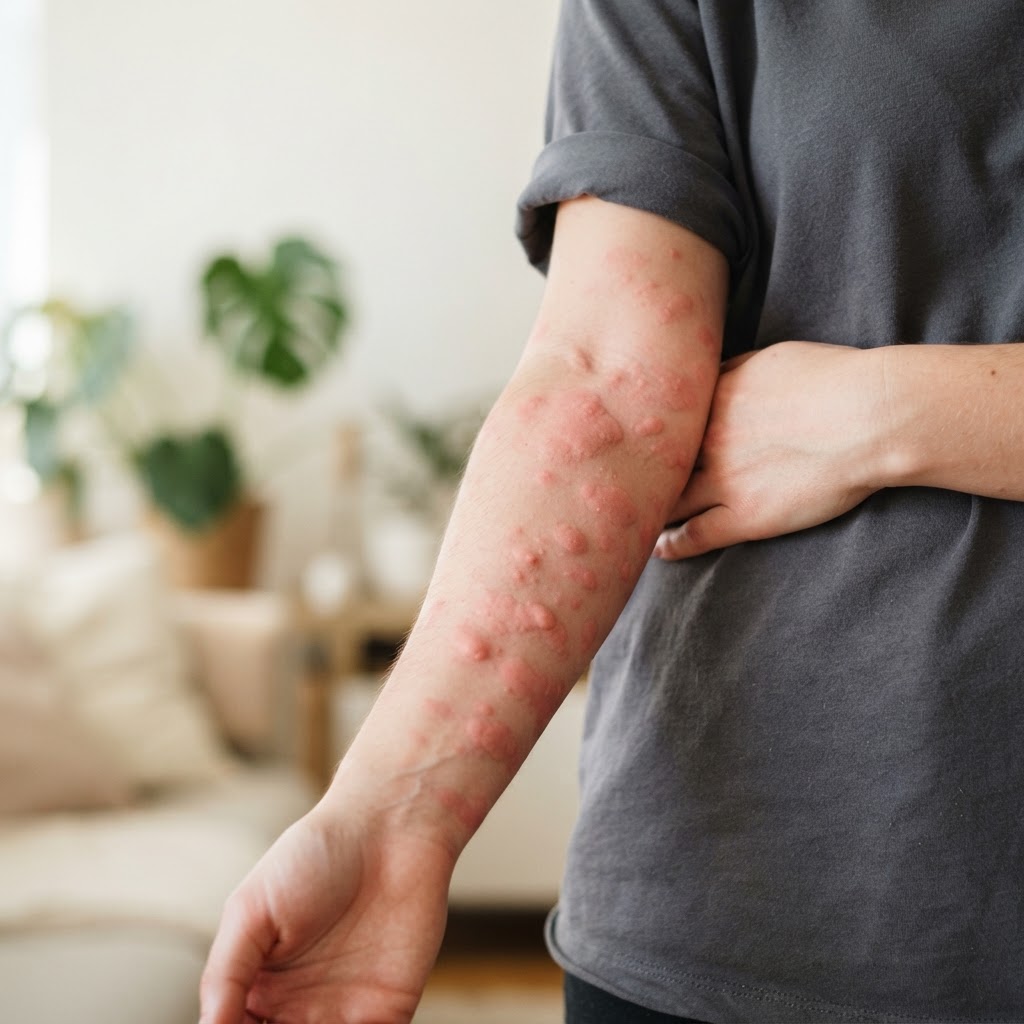
- Chronic hives, or chronic urticaria, is defined by itchy welts lasting six weeks or longer, significantly impacting daily quality of life.
- Identifying specific triggers often requires a systematic approach, such as keeping a detailed symptom diary to track environmental and dietary variables.
- Effective management typically combines medical intervention, such as antihistamines for hives, with targeted lifestyle and dietary adjustments.
- Managing histamine intake through a low-histamine diet may help reduce the frequency and severity of spontaneous flare-ups.
- Finding lasting chronic urticaria relief is a journey that requires collaboration with healthcare providers to address both symptoms and underlying causes.
Waking up to an unexpected outbreak of raised, itchy welts can be a disorienting and uncomfortable experience. While many people associate hives with a fleeting allergic reaction to a specific food or insect sting, for those living with chronic hives, these outbreaks are far from temporary. Characterized by persistent skin inflammation that lingers for six weeks or longer, this condition can feel like an unending cycle of frustration. However, understanding the mechanisms behind this condition is the first step toward reclaiming your skin health. By moving beyond simple symptom suppression and investigating the root drivers of your reactions, you can begin to navigate the path toward sustained comfort and control.
What Exactly Is Chronic Urticaria?
Chronic urticaria is a medical condition defined by the appearance of hives—raised, red, and often intensely pruritic (itchy) patches of skin—that persist for at least six weeks, often appearing daily or nearly daily. Unlike acute hives, which are typically triggered by a clear, one-time allergic event such as eating a shellfish or reacting to a specific medication, chronic hives are often more complex. The condition is fundamentally an inflammatory response originating from the skin’s mast cells. When these cells are activated, they release histamine and other chemical messengers into the surrounding tissue, leading to the characteristic swelling and itching that defines the condition.
For many individuals, the process is classified as “spontaneous,” meaning the hives erupt without an obvious external cause. In other instances, the condition may be physical in nature, triggered by specific environmental factors like pressure, temperature changes, or exercise. The physical manifestation can vary significantly from person to person; some experience small, pinpoint welts, while others deal with large, confluent plaques that can cover significant portions of the body. In some cases, the condition may also be accompanied by angioedema—a deeper swelling under the skin that often affects the eyes, lips, and extremities.
The impact of chronic urticaria extends far beyond the surface of the skin. Because the condition is often unpredictable, it can lead to significant psychological strain, including anxiety and sleep disturbances due to nocturnal itching. It is important to recognize that while the condition may seem mysterious, it is a recognized clinical presentation that requires a structured approach to management. Rather than viewing the skin as the enemy, it is more accurate to view it as a signaling system, communicating that the internal inflammatory environment is out of balance. By focusing on chronic urticaria relief, patients can work to stabilize these mast cells, effectively turning down the “volume” of the immune system’s overactive response. Understanding that this is a long-term condition allows for the implementation of consistent, sustainable strategies rather than searching for a “quick fix” that may not address the underlying inflammatory nature of the outbreaks.
Common Triggers and Underlying Causes
While the term “chronic hives” often implies that the cause is unknown, experts generally agree that there are often identifiable triggers or contributing factors. One of the most significant aspects of managing this condition is learning to recognize that triggers are rarely singular; they are often cumulative. This means that a person might be able to tolerate a certain level of histamine or stress, but once that threshold is breached, the skin responds with inflammation. Common chronic hives triggers include infections—even low-grade, silent infections—that keep the immune system in a state of hyper-vigilance. Viruses, bacterial overgrowth, or even dental issues can sometimes maintain this heightened state of immune activity.
Another major category of triggers involves systemic stressors. High-stress periods can significantly exacerbate the frequency of outbreaks because the nervous system and the immune system are deeply intertwined. When the body is under chronic stress, the resulting hormonal shifts can lower the threshold at which mast cells degranulate. Additionally, certain medications, particularly non-steroidal anti-inflammatory drugs (NSAIDs), are well-known for aggravating hives in susceptible individuals. Even if you have taken these medications safely in the past, a shift in your body’s internal chemistry can lead to a new sensitivity.
Environmental factors also play a substantial role. Many people find that physical triggers such as extreme heat, cold, or friction—a condition known as physical urticaria—act as direct catalysts. The constant irritation of tight clothing or the exposure to fluctuating temperatures can cause the skin to flare repeatedly. Furthermore, some individuals find that their hives are linked to internal systemic imbalances, such as thyroid dysfunction or other autoimmune processes. Because the body’s systems are so interconnected, investigating these potential underlying causes with a comprehensive diagnostic approach is often necessary. By identifying these triggers, you transition from being a passive recipient of your skin’s reactions to an active participant in your healing process. Recognizing the interplay between your environment, your lifestyle, and your immune system is essential for developing a management plan that actually provides results.
| Management Approach | Primary Mechanism | Best For |
|---|---|---|
| Non-Sedating Antihistamines | Blocks H1 receptors to inhibit histamine binding | Initial daily control of generalized itching |
| Elimination Diets | Reduces overall systemic histamine load | Identifying food-based inflammatory triggers |
| Stress Management Techniques | Regulates HPA axis and cortisol production | Reducing frequency of stress-induced flare-ups |
| Temperature Regulation | Minimizes physical urticaria and skin barrier stress | Physical triggers like heat or cold exposure |
How to Identify Your Unique Hive Triggers
Identifying the specific factors that lead to your flare-ups is perhaps the most empowering step in seeking chronic urticaria relief. Because every person’s immune system is unique, there is no “one size fits all” trigger list. Instead, the most effective strategy is to implement a detective-style approach to your daily routine. Many health professionals recommend keeping a structured symptom diary for at least two to four weeks. This diary should record not just the severity and timing of your hives, but also potential contributing variables such as the foods you consumed, the medications you took, the level of physical activity you performed, the weather conditions, and even your emotional state or stress levels at the time of the outbreak.
When tracking your symptoms, look for patterns rather than isolated incidents. For example, you may notice that hives consistently appear a few hours after consuming high-histamine foods, or perhaps they flare every time you have a high-pressure meeting at work. Pay close attention to the “latency period”—the time between being exposed to a potential trigger and the skin reaction. Sometimes this happens within minutes, while other times it can be delayed by several hours. By logging this data, you might discover that your hives are not the result of a single allergen, but rather a “sum of parts” issue where multiple minor triggers combine to cause a major flare.
It is also helpful to consider external environmental inputs that are easily overlooked. Consider the laundry detergent you use, the materials of your clothing, or even the water quality in your home. Some people find that switching to fragrance-free, hypoallergenic products helps to reduce the baseline irritation of the skin, making it less likely to react when other internal triggers are present. If you suspect specific foods are involved, consult with a nutritionist or dietitian to guide you through an elimination protocol. Rather than cutting out entire food groups indiscriminately, which can lead to nutrient deficiencies, a professional can help you systematically remove and reintroduce potential triggers to see if your skin inflammation improves. Patience is key here; because chronic hives are, by nature, persistent, it takes time to differentiate between a random flare and a reaction to a specific change in your environment or diet.
Lifestyle Changes to Soothe Inflamed Skin
Beyond identifying triggers, cultivating a lifestyle that supports skin health and lowers systemic inflammation is vital for managing chronic hives. When your skin is actively inflamed, its natural barrier function is often compromised, making it more susceptible to external irritants. The goal of your lifestyle adjustments should be to create a calm, stable environment both internally and externally. For starters, focus on gentle skin care habits. During a flare-up, avoid hot showers or baths, as heat can dilate blood vessels and worsen the intensity of the itching. Opt for lukewarm water and, if necessary, use cool compresses on affected areas to help soothe the skin and reduce the sensation of burning.
Choosing the right textiles is another simple but effective change. Loose-fitting, breathable fabrics like organic cotton or bamboo are generally much better than synthetic materials or wool, which can trap heat and provide a tactile irritation that triggers further scratching. While it may be difficult to resist the urge to scratch, doing so releases more histamine from damaged mast cells, creating a vicious cycle of itching and inflammation. Many find that keeping fingernails trimmed short or wearing soft gloves at night can prevent unconscious scratching, allowing the skin to heal more effectively.
Beyond physical care, emotional and nervous system regulation is an often-underestimated tool in your toolkit. Because of the clear link between stress and mast cell activity, practices such as restorative yoga, guided meditation, or simple deep-breathing exercises can be incredibly beneficial. These activities help to shift the body from a sympathetic (“fight or flight”) state into a parasympathetic (“rest and digest”) state, which can help dampen the body’s inflammatory output. Additionally, prioritizing quality sleep is non-negotiable. Sleep is when the body performs its primary repair work; chronic sleep deprivation can heighten the immune system’s sensitivity, making you more prone to reactive skin episodes. Consider creating a bedtime ritual that emphasizes relaxation and temperature control, as sleep environments that are too warm can sometimes aggravate overnight hives.
Dietary Adjustments for Managing Histamine Levels
Diet is a powerful lever for many individuals seeking chronic urticaria relief. While hives are not always caused by food, a diet high in histamine-rich or histamine-releasing foods can raise your overall “histamine bucket” to a point where your body can no longer effectively break it down, leading to skin inflammation. A low-histamine diet focuses on consuming fresh, whole foods and avoiding those that have undergone significant aging, fermentation, or processing. Histamine levels generally increase as foods sit, which is why leftovers—a staple for many—can be particularly problematic for someone with high histamine sensitivity.
To begin managing your histamine intake, prioritize eating “fresh” rather than “aged.” This means consuming proteins like chicken, turkey, or white fish shortly after they are purchased, rather than letting them sit in the refrigerator for several days. If you meal prep, cooling your food quickly and freezing portions rather than refrigerating them can significantly slow the development of histamines. Certain foods are known to be naturally high in histamine or are considered “histamine liberators,” meaning they cause your body to release its own stored histamine. These typically include fermented products like sauerkraut and aged cheeses, processed meats like salami or pepperoni, alcohol (especially red wine), and certain high-acid fruits like tomatoes, citrus, and strawberries.
It is important to approach these dietary adjustments as a temporary experiment rather than a permanent lifestyle overhaul. Work closely with a professional to monitor your nutrient intake while you identify which foods contribute most to your symptoms. Many people notice that after a period of strict adherence to a low-histamine diet, their skin becomes less reactive, and they are eventually able to reintroduce many foods without issues. The objective is to stabilize the immune system and lower the total body burden of histamine so that your skin can move out of its hyper-reactive state. Keeping a food log alongside your symptom log remains the most accurate way to verify which specific dietary components may be impacting your skin inflammation, allowing you to tailor your diet to your body’s specific needs rather than adhering to rigid, generalized lists.
Natural Anti-Inflammatory Supplements to Consider
When seeking chronic urticaria relief, many patients look beyond conventional pharmaceuticals to support the body’s internal inflammatory pathways. While these natural interventions should be discussed with a healthcare provider to ensure there are no interactions with existing medications, several supplements have gained attention for their potential to stabilize mast cells—the immune cells responsible for releasing histamine during a flare-up.
Quercetin is perhaps the most widely cited supplement in the context of hives. It is a plant-based flavonoid found in apples, onions, and capers that functions as a natural mast cell stabilizer. By inhibiting the release of inflammatory mediators, quercetin may help dampen the body’s overactive response to triggers. Similarly, Vitamin D is frequently investigated by practitioners. Low levels of this essential nutrient are often correlated with increased skin inflammation and compromised immune regulation. Supplementing to reach optimal levels can sometimes provide a more robust baseline for immune health, potentially reducing the frequency of outbreaks.
Omega-3 fatty acids, typically sourced from high-quality fish oil or algae, are foundational for systemic inflammation reduction. By modulating the production of eicosanoids—signaling molecules that promote inflammation—omega-3s can help soothe the skin from the inside out. Furthermore, N-acetylcysteine (NAC) acts as a precursor to glutathione, the body’s primary antioxidant. By boosting glutathione levels, the body may become more resilient against oxidative stress, which is often a secondary driver of skin inflammation in patients with chronic hives.
Below is a comparison of common supplemental approaches for managing urticaria symptoms:
| Supplement | Primary Mechanism | Best For |
|---|---|---|
| Quercetin | Mast cell stabilization | Individuals with high histamine reactivity |
| Vitamin D3 | Immune modulation | Those with documented deficiencies |
| Omega-3 Fatty Acids | Systemic anti-inflammatory | Reducing overall body-wide inflammation |
| Bromelain | Proteolytic enzyme support | Reducing swelling and enhancing absorption |
| Probiotics | Gut-immune axis balance | Long-term immune system regulation |
When to Seek Medical Intervention for Hives
While minor bouts of hives can often be managed with lifestyle adjustments and over-the-counter interventions, chronic urticaria is a complex condition that requires professional oversight. It is vital to recognize when the situation has escalated beyond a self-managed condition. One of the most critical red flags is the presence of angioedema, which is deep tissue swelling. Unlike superficial hives, angioedema often affects the eyelids, lips, or tongue. If you notice swelling that makes it difficult to breathe, swallow, or speak, this constitutes a medical emergency. You should seek immediate emergency care if your throat feels tight or if you experience lightheadedness, as these can be signs of anaphylaxis.
Even in the absence of an immediate emergency, you should schedule a consultation with an allergist or immunologist if your hives persist for more than six weeks. A professional evaluation is necessary to rule out underlying systemic conditions, such as thyroid dysfunction, chronic infections, or autoimmune disorders, which can sometimes manifest as skin inflammation. Doctors can also assist in “step-up” therapy, where antihistamines for hives are prescribed in higher, medically supervised doses, or where biologic medications are introduced if traditional options fail to provide relief. Do not wait until your quality of life is severely diminished—consulting a specialist early can help you navigate the diagnostic process more efficiently.
Stress Management Techniques to Reduce Flare-Ups
There is a powerful bidirectional relationship between the nervous system and the immune system. When the body experiences chronic stress, it produces elevated levels of cortisol and adrenaline, which can directly trigger the release of histamine from mast cells. For many, managing stress is not just a mental health benefit, but a primary strategy for preventing hives. To minimize the impact of stress on your skin, you must adopt proactive, daily techniques to signal safety to your nervous system.
Mindfulness-based stress reduction (MBSR) programs have shown promise in helping patients manage the physical sensations of chronic pain and inflammation. Techniques like progressive muscle relaxation, where you systematically tense and release different muscle groups, can help break the cycle of tension that often accompanies the pain of hives. Controlled diaphragmatic breathing is another essential tool; by intentionally lengthening your exhales, you stimulate the vagus nerve, which helps switch the body from a “fight or flight” sympathetic state to a “rest and digest” parasympathetic state.
Furthermore, regular, gentle physical activity—such as restorative yoga, tai chi, or walking in nature—can lower systemic inflammation. The key is to avoid high-intensity exercise that causes significant overheating, as elevated body temperature can act as a physical trigger for some. By cultivating a routine that prioritizes emotional regulation, you are essentially reducing the “chemical noise” in your system, thereby raising your threshold for hive outbreaks.
Managing Daily Itch and Discomfort
The relentless itch of chronic hives is often more debilitating than the physical appearance of the welts themselves. When the skin barrier is compromised, it becomes hypersensitive to environmental factors like clothing friction, temperature shifts, and even the air itself. Effective daily management requires a multi-pronged approach that focuses on cooling the skin and maintaining the integrity of the skin barrier.
Start by auditing your environment. Use loose-fitting, breathable natural fibers like cotton or bamboo. Avoid synthetic fabrics that trap heat and sweat against the skin. When bathing, use lukewarm water rather than hot, as hot water strips away natural oils and increases blood flow to the skin, which can worsen the itch. After showering, apply a fragrance-free, hypoallergenic emollient while the skin is still slightly damp. This locks in moisture and provides a protective layer that buffers against friction.
Many individuals find relief through topical cooling agents. Menthol-based creams or calamine lotion can provide a sensory distraction from the itch by triggering cooling receptors on the skin, effectively “overwriting” the itch signals being sent to the brain. Keep these products in the refrigerator; the added temperature drop provides an immediate, albeit temporary, reprieve. Furthermore, avoid scratching at all costs, as it releases more histamine into the localized area, perpetuating the “itch-scratch cycle.” If the itch becomes unbearable at night, consider wearing thin cotton gloves to bed to prevent subconscious scratching.
Building a Long-Term Skin Health Plan
Achieving lasting relief from chronic urticaria requires shifting from a reactionary mindset—treating the hives only when they appear—to a proactive, long-term health plan. This starts with meticulous tracking. Keep a symptom diary that logs not just food and triggers, but also your sleep quality, stress levels, weather changes, and the effectiveness of your current regimen. Over time, patterns will emerge that may have been invisible in the moment.
Your long-term plan should also integrate a hives diet that focuses on reducing histamine load. This is not necessarily about a restrictive, lifelong diet, but rather about identifying if your “bucket” of histamine is overflowing due to certain high-histamine or histamine-liberating foods like aged cheeses, processed meats, fermented items, and certain citrus fruits. Consider working with a registered dietitian to conduct a trial elimination phase to see if your symptom frequency decreases.
Lastly, consistency with your baseline medication is often more effective than “as-needed” dosing. Many physicians recommend a daily, scheduled regimen of non-drowsy, second-generation antihistamines to maintain a steady concentration in the bloodstream. By keeping the histamine receptors consistently blocked, you are essentially preventing the hives from gaining a foothold before they even start. Combine this with regular sleep hygiene, hydration, and medical monitoring, and you will build a framework that minimizes the impact of your condition on your daily life.
Frequently Asked Questions
Can chronic hives ever go away completely?
Yes, for a significant number of individuals, chronic hives are a self-limiting condition. Research indicates that many people experience a complete remission of symptoms within one to five years. While the journey can be frustrating and unpredictable, maintaining a consistent treatment plan with your doctor is the best way to support your body while it works through the underlying immune imbalance.
Is there a specific “hives diet” that cures the condition?
There is no universally accepted “cure” diet for chronic hives, but many patients find relief by following a low-histamine diet. This involves reducing intake of fermented foods, aged products, and certain leftovers that accumulate histamine over time. It is highly recommended to consult a nutritionist before starting such a diet to ensure you are not missing out on essential nutrients while identifying your specific trigger foods.
Are over-the-counter antihistamines safe for long-term use?
Generally, modern, non-drowsy antihistamines are considered safe for long-term use when supervised by a medical professional. Unlike older, first-generation antihistamines, newer versions do not typically cause significant drowsiness or cognitive impairment. However, you should always discuss your specific dosage and long-term goals with your healthcare provider, as they can monitor your liver and kidney function and adjust the regimen as needed.
Can stress really cause physical hives?
Yes, stress is a well-documented trigger for physical urticaria. The body’s stress response involves the release of chemicals like adrenaline and cortisol, which can directly stimulate mast cells to degranulate and release histamine. This is why stress management techniques, such as meditation, yoga, and adequate sleep, are often considered vital components of a comprehensive urticaria treatment plan.
What is the difference between an allergic reaction and chronic hives?
An acute allergic reaction is usually triggered by a specific allergen, such as a food, drug, or insect sting, and typically occurs shortly after exposure. Chronic hives, conversely, are rarely caused by a simple allergic reaction. Instead, they are usually driven by complex internal immune mechanisms, often occurring without any identifiable external trigger. If you suspect an allergic reaction, it is essential to seek professional testing to rule out life-threatening allergies.
Should I avoid exercise if I have chronic hives?
You do not necessarily need to avoid exercise, but you should be mindful of how your body reacts. For some people, “cholinergic urticaria”—hives triggered by a rise in body temperature—is a concern. If exercise triggers your hives, you may find that lower-intensity activities, such as swimming in cool water, walking in climate-controlled environments, or restorative yoga, are better tolerated than high-intensity, overheating workouts.
Conclusion
Navigating the unpredictable nature of chronic hives requires patience, persistence, and a strategic approach. While the condition can feel overwhelming, understanding that you have the power to manage your environment, your stress, and your nutritional intake is the first step toward reclaiming your skin health. By combining evidence-based medical interventions—such as proper antihistamines for hives—with natural anti-inflammatory support and lifestyle changes, you can significantly reduce the frequency and severity of your flare-ups.
Remember that you are not alone in this process. Chronic urticaria is a well-studied condition, and there are many avenues of support available. Start by tracking your triggers, speaking with an allergist to develop a long-term plan, and prioritizing your overall wellness. With the right strategy, many people find that they can effectively manage their symptoms and return to a life of comfort and confidence. Your skin’s health is a reflection of your body’s internal balance; treat it with care, and stay consistent with your plan.
Ready to take the next step? Start by keeping a daily symptom log this week to help identify your unique patterns and prepare for a productive conversation with your healthcare provider.
By healthauthoritylife Editorial Team
This article is for informational purposes only and is not a substitute for professional medical advice. Always consult your doctor before making changes to your diet, exercise routine, or treatment plan.
Leave a Reply