
🔑 Key Takeaways — Probiotic Foods
- ✅ Probiotics are live bacteria that provide measurable health benefits when consumed in adequate amounts
- ✅ Yogurt with live cultures is the most accessible and well-studied probiotic food
- ✅ Fermented foods like kefir contain up to 61 different bacterial strains
- ✅ Probiotics reduce antibiotic-associated diarrhoea risk by 51%
- ✅ Prebiotic foods (garlic, onions, oats) feed beneficial bacteria and amplify probiotic effects
🏷️ Category: Gut Health
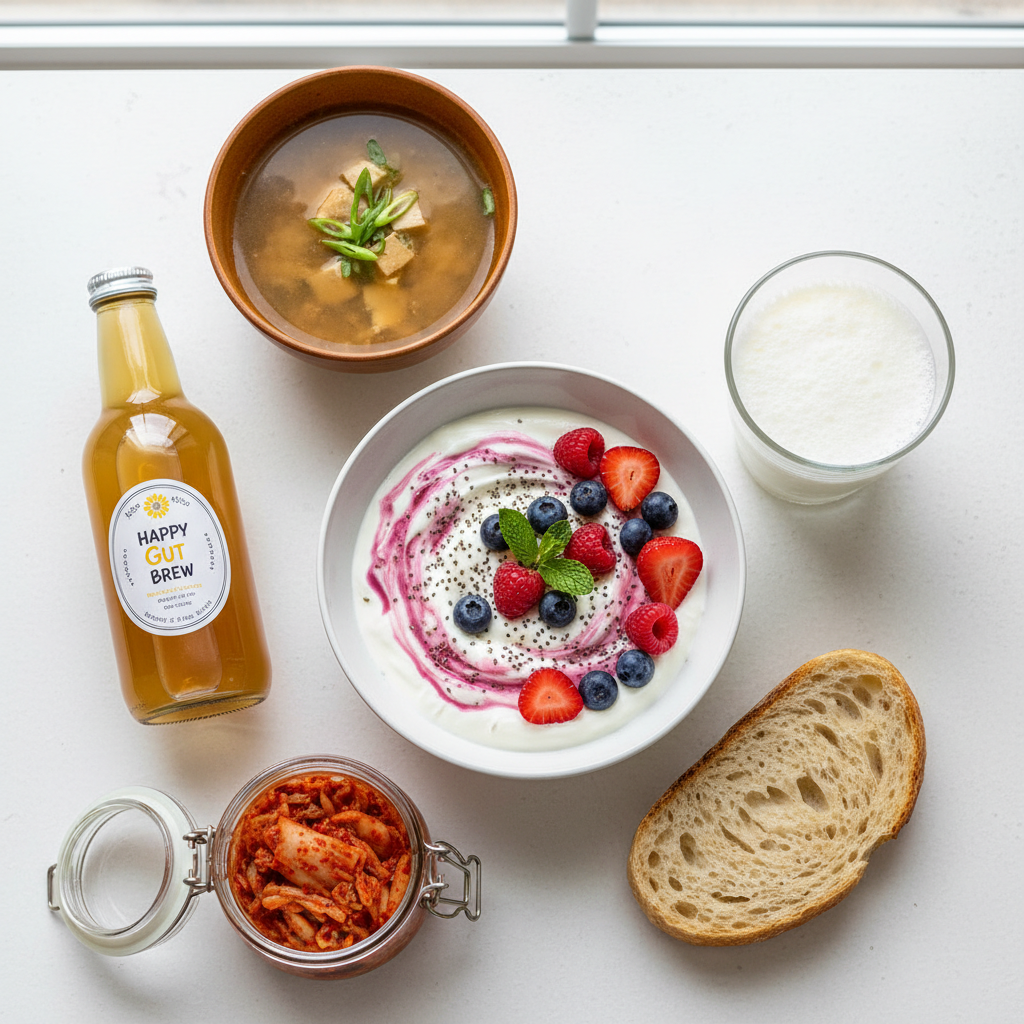
Reviewed by our Editorial Team — Based on evidence from Cell journal fermented food research and Cochrane Reviews on probiotic efficacy.
Probiotics are live microorganisms that — when consumed in adequate amounts — provide measurable health benefits to the host. While probiotic supplements dominate the market, the most effective and affordable way to get probiotics is through fermented whole foods. A 2021 landmark Stanford trial published in Cell found that a high-fermented food diet outperformed a high-fibre diet for increasing gut microbiome diversity and reducing systemic inflammation. This guide covers the 10 best probiotic foods, their specific bacteria strains, evidence-based benefits, and how to incorporate them into daily life.
Top 10 Probiotic Foods Ranked by Evidence
1. Yoghurt (Plain, Live-Culture)
The most accessible and well-studied probiotic food. Look for labels stating “live and active cultures.” The key strains are Lactobacillus bulgaricus and Streptococcus thermophilus, with premium brands adding L. acidophilus and Bifidobacterium. Evidence: reduces IBS symptoms, improves lactose digestion, enhances immune response, and reduces duration of antibiotic-associated diarrhoea. Choose plain, full-fat or 2% Greek yoghurt — flavoured varieties typically contain too much sugar.
2. Kefir
Kefir is arguably the most potent probiotic food available — it contains up to 30 different strains of bacteria and yeasts, compared to yoghurt’s 2–7. It is also better tolerated by people with lactose intolerance (the fermentation process breaks down most lactose). Clinical trials show kefir reduces cholesterol, improves blood sugar control, enhances immune function, and reduces H. pylori colonisation. Water kefir (dairy-free) provides similar benefits.
3. Sauerkraut
Fermented shredded cabbage rich in Lactobacillus bacteria, vitamin C, and fibre. Must be unpasteurised (found in the refrigerator section) — pasteurisation kills the beneficial bacteria. Research shows regular sauerkraut consumption reduces inflammatory markers, supports immune function, and provides fibre that feeds existing gut bacteria. 2 tablespoons per day is an effective dose.
4. Kimchi
Traditional Korean fermented vegetables (usually cabbage and radish) with spices. Kimchi contains Lactobacillus kimchii and numerous other strains, plus anti-inflammatory compounds from ginger, garlic, and chilli. A 2021 Korean study found daily kimchi consumption reduced body fat, improved metabolic markers, and reduced inflammatory cytokines in overweight adults.
5. Kombucha
Fermented sweet tea made with a SCOBY (symbiotic culture of bacteria and yeast). Contains organic acids, B vitamins, antioxidants, and multiple probiotic strains. Evidence supports its benefits for liver protection, antibacterial properties, and blood sugar management. Choose low-sugar varieties (under 8g per 330ml) — many commercial kombucha products are very high in sugar.
6. Miso
Japanese fermented soybean paste rich in Aspergillus oryzae and various Lactobacillus strains. Despite being very high in sodium, Japanese studies paradoxically show that miso soup does not raise blood pressure in the same way as regular salt — possibly due to its probiotic content. Miso is also a complete protein and rich in zinc, manganese, and vitamin K2. Use in soups, dressings, and marinades — do not boil, as this destroys the live cultures.
7. Tempeh
Fermented soybeans formed into a firm, nutty-flavoured cake. Unlike unfermented soy, tempeh’s fermentation process increases protein digestibility and eliminates the phytic acid that blocks mineral absorption. It contains Rhizopus oligosporus and is a complete plant-based protein source. Its firm texture makes it an excellent meat substitute for vegetarians and vegans.
8. Kvass
A traditional Eastern European fermented drink made from bread or beets, rich in Lactobacillus bacteria and B vitamins. Beet kvass in particular is an excellent source of probiotics, digestive enzymes, and liver-supporting betaine. Increasingly available in health food stores.
9. Natto
Japanese fermented soybeans with a distinctive sticky texture and strong flavour. Natto is unique in containing Bacillus subtilis natto — a very resilient strain that survives stomach acid exceptionally well. It is the richest dietary source of vitamin K2 (as MK-7), which is essential for cardiovascular health and bone density. Japanese research links regular natto consumption to significantly lower rates of heart disease and osteoporosis.
10. Sourdough Bread
Authentic sourdough is fermented using wild Lactobacillus bacteria, which pre-digest some of the gluten and phytic acid, making it more digestible and nutritious than commercial bread. While baking kills the live cultures, the fermentation process produces beneficial organic acids and resistant starch that feed gut bacteria. Choose sourdough from artisan bakeries using traditional long-fermentation processes.
How to Add More Probiotic Foods to Your Diet
| Meal | Easy Probiotic Addition |
|---|---|
| Breakfast | Greek yoghurt with berries and seeds, or kefir smoothie |
| Lunch | Side of sauerkraut or kimchi with any meal |
| Dinner | Miso soup as a starter, or tempeh as protein |
| Drinks | Kombucha instead of soda or juice |
| Snacks | Yoghurt dip with vegetables |
Frequently Asked Questions
Can eating too many probiotic foods cause problems?
For most healthy people, no. Some individuals experience temporary bloating and gas when first increasing fermented food intake — this usually resolves within 1–2 weeks as the gut adapts. People with SIBO (small intestinal bacterial overgrowth) may need to limit fermented foods temporarily.
Are probiotic supplements or probiotic foods better?
The 2021 Stanford Cell study found whole fermented foods outperformed supplemental probiotics for microbiome diversity and inflammation reduction. Foods contain a broader range of strains plus fibre and nutrients that support their survival. Supplements may be appropriate for specific clinical conditions.
How long until probiotic foods improve gut symptoms?
Most people notice digestive improvements within 2–4 weeks of daily probiotic food consumption. IBS symptoms typically respond within 4–8 weeks. Microbiome diversity changes measurably within 4 weeks.
Conclusion
Probiotic foods are one of the most powerful and affordable health investments you can make. Start with just one serving of plain yoghurt or kefir daily, then gradually introduce sauerkraut, kimchi, and miso over several weeks. Your gut microbiome — and your overall health — will respond rapidly and measurably to these simple additions.
Medical Disclaimer: For guidance on probiotics for specific health conditions, consult a registered dietitian or gastroenterologist.
📚 Medical Sources & References
This article is based on evidence from the following authoritative medical sources:
Leave a Reply