📚 Medical Sources & References
This article is based on evidence from the following authoritative medical sources:
🏷️ Category: Diabetes
Reviewed by our Editorial Team — Evidence sourced from the American Diabetes Association, Diabetes UK, and peer-reviewed journals.
Type 2 diabetes is one of the fastest-growing health crises in the world. The International Diabetes Federation estimates that 537 million adults currently live with diabetes globally — and that number is projected to reach 783 million by 2045. Yet type 2 diabetes is largely preventable, and in many cases, it can even go into remission with the right lifestyle approach. This guide will help you understand, prevent, and manage type 2 diabetes effectively.
🔑 Key Takeaways — Type 2 Diabetes
- ✅ Type 2 diabetes affects 537 million adults worldwide and is largely preventable
- ✅ Losing just 5–10% of body weight can significantly improve blood sugar control
- ✅ A low-carb or Mediterranean diet is most effective for blood sugar management
- ✅ Regular exercise improves insulin sensitivity within days of starting
- ✅ Early detection through HbA1c testing can prevent serious complications
What Is Type 2 Diabetes?
Type 2 diabetes occurs when your body becomes resistant to insulin — the hormone that helps cells absorb glucose from the blood — or your pancreas doesn’t produce enough insulin to compensate. This results in chronically elevated blood sugar levels (hyperglycaemia), which over time damages blood vessels and nerves throughout the body.
Symptoms of Type 2 Diabetes
Many people have type 2 diabetes for years without knowing it, as symptoms develop slowly. Common signs include:
- Frequent urination, especially at night
- Excessive thirst and hunger
- Unexplained weight loss
- Blurred vision
- Slow-healing cuts or bruises
- Tingling or numbness in hands/feet
- Recurrent infections
- Extreme fatigue
Managing Type 2 Diabetes: A Comprehensive Guide
1. The Diabetes Diet: What to Eat
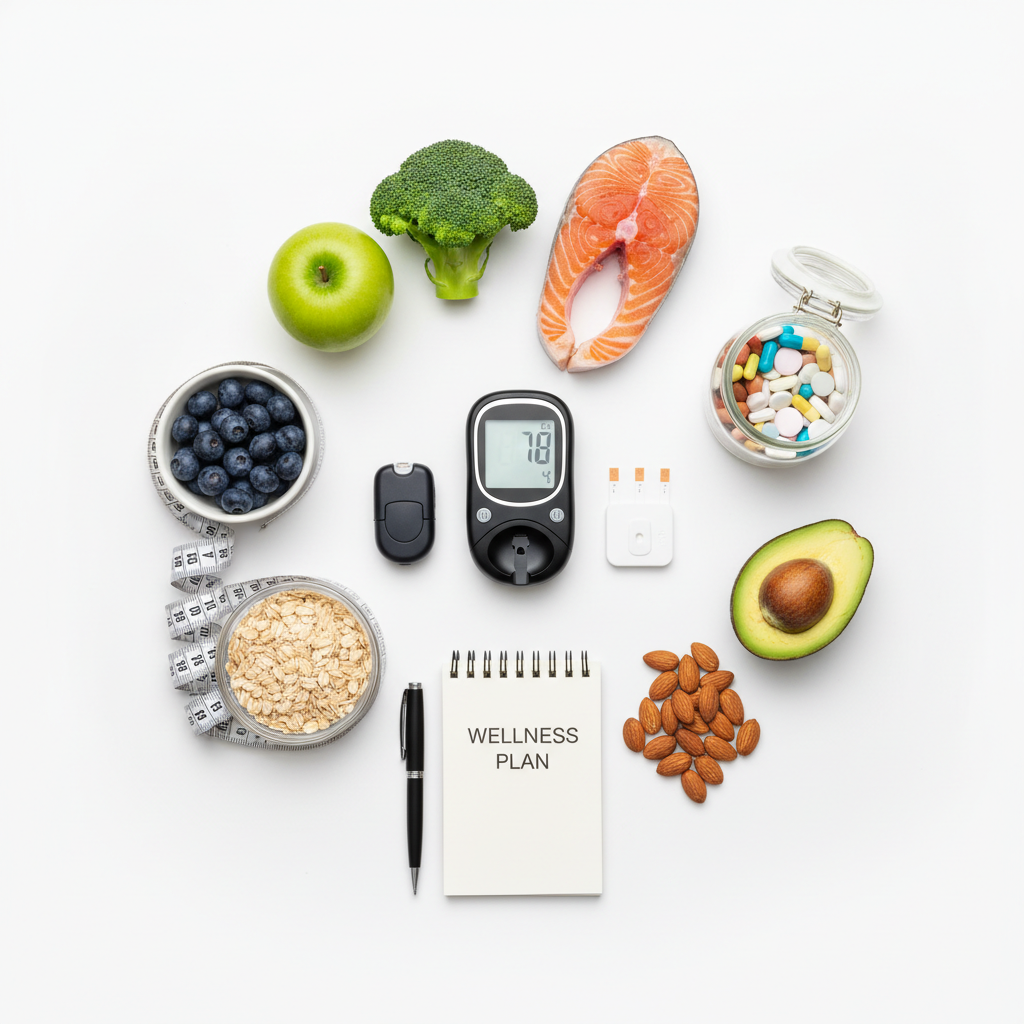
Diet is the single most powerful tool for managing blood sugar. The goal is to choose foods that cause minimal blood glucose spikes. Focus on:
- Non-starchy vegetables: leafy greens, broccoli, peppers, cauliflower — eat freely
- High-fibre foods: oats, barley, lentils, chickpeas, beans — slow glucose absorption
- Lean proteins: fish, chicken, eggs, Greek yoghurt, tofu
- Healthy fats: avocado, olive oil, nuts, seeds
- Low-glycaemic fruits: berries, apples, pears (in moderation)
Avoid or strictly limit: sugary drinks, white bread, white rice, pastries, processed snacks, and foods with added sugar.
2. Exercise: Your Natural Blood Sugar Lowerer
Exercise improves insulin sensitivity — meaning your cells respond better to insulin. Even a 10-minute walk after a meal has been shown to significantly lower post-meal blood sugar spikes. The ADA recommends 150 minutes of moderate activity per week plus 2–3 sessions of resistance training.
3. Monitor Your Blood Sugar
Regular blood sugar monitoring helps you understand how different foods, activities, and medications affect your glucose levels. Work with your doctor to establish a monitoring schedule and target ranges. Modern Continuous Glucose Monitors (CGMs) make this easier than ever.
4. Weight Management
Losing even 5–10% of body weight can dramatically improve blood sugar control and may reduce or eliminate the need for medication. The landmark DiRECT trial showed that nearly 50% of type 2 diabetics achieved remission through intensive dietary weight loss.
5. Medication Adherence
If prescribed medication (such as Metformin or insulin), take it consistently as directed. Never stop or adjust medication without consulting your doctor. Many newer diabetes medications also provide heart and kidney protection benefits.
Can Type 2 Diabetes Be Reversed?
Yes — for many people with early to moderate type 2 diabetes, remission is achievable through significant weight loss and dietary changes. Remission means having normal blood sugar levels without medication. However, this requires sustained lifestyle changes and close medical supervision. The earlier diabetes is caught and addressed, the better the chances of remission.
Conclusion
Type 2 diabetes is serious but manageable — and for many, preventable or reversible. With the right diet, regular exercise, blood sugar monitoring, and medical support, you can take control of your health and reduce your risk of serious complications. Take action today.
Medical Disclaimer: This article is for informational purposes only. If you have or suspect you have diabetes, consult your doctor or endocrinologist for personalised medical advice and treatment.
Leave a Reply