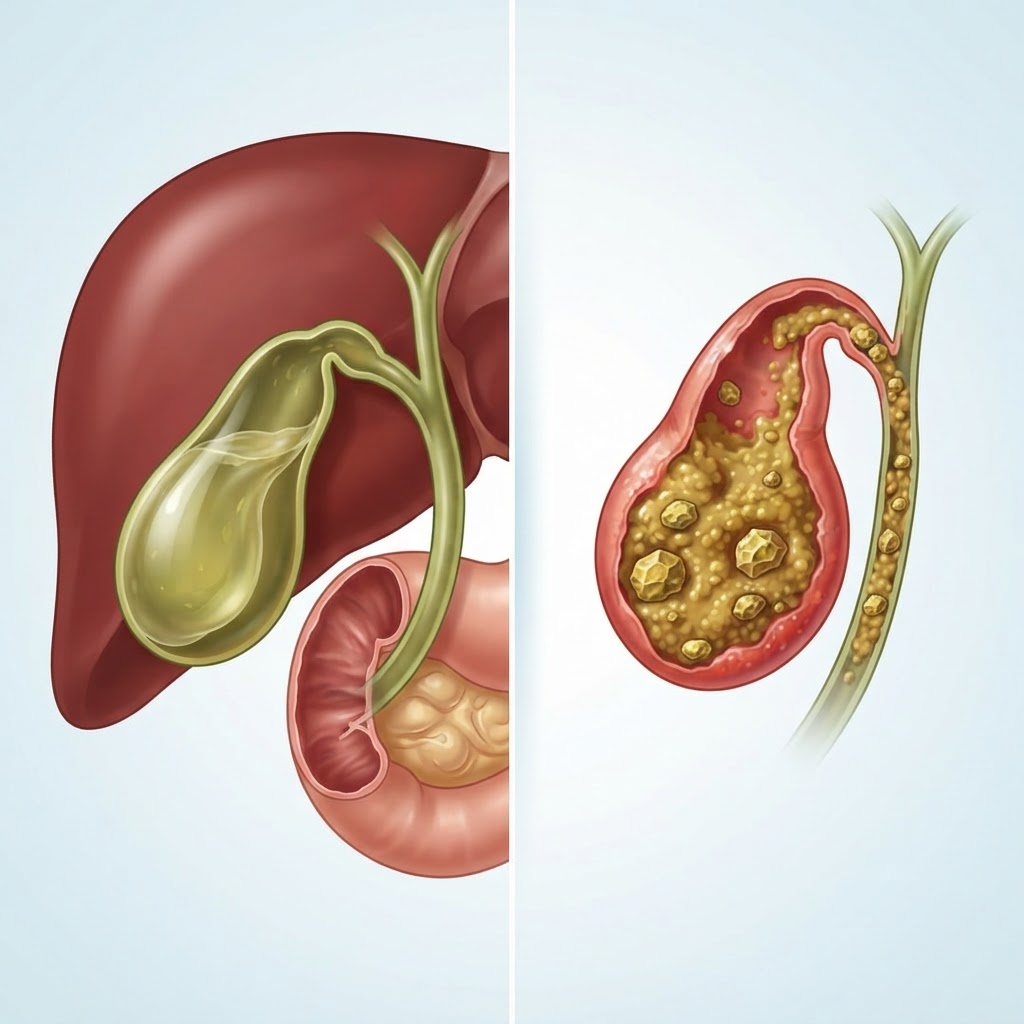
- Gallbladder sludge is a collection of microscopic particles, while gallstones are hardened, pebble-like formations within the gallbladder.
- Both conditions arise from imbalances in bile composition, often linked to diet, rapid weight loss, or metabolic factors.
- Understanding the difference between sludge and stones is critical, as sludge is frequently a precursor to the development of larger stones.
- Biliary sludge symptoms often mirror those of gallstones, including upper abdominal discomfort and digestive distress after high-fat meals.
- Prioritizing natural gallbladder health through hydration and a balanced diet can help support proper bile flow and reduce the risk of biliary issues.
When you feel an unexpected, sharp ache in your upper abdomen after a heavy meal, your gallbladder—a small, pear-shaped organ tucked beneath your liver—might be to blame. Many people assume any pain in this region implies the presence of gallstones, but the reality is more nuanced. The gallbladder plays a central role in your digestive process, acting as a reservoir for bile, a fluid essential for breaking down fats. However, when the delicate chemical balance of this fluid is disrupted, the body can develop either gallbladder sludge or gallstones. Distinguishing between these two conditions is more than a clinical exercise; it is the first step toward managing your digestive comfort and preventing more serious complications. In this guide, the healthauthoritylife Editorial Team explores the intricate relationship between gallbladder sludge vs gallstones, how they form, and the foundational steps for maintaining optimal gallbladder function.
Understanding the Biliary System and Bile Production
To grasp the mechanisms behind gallbladder health, one must first appreciate the biliary system—a sophisticated network comprising the liver, gallbladder, and bile ducts. The liver acts as the body’s primary chemical factory, continuously producing bile, a complex fluid consisting of cholesterol, bile salts, bilirubin, lecithin, and water. This golden-yellow liquid is not merely a waste product; it is a critical digestive tool. Once produced by the liver, bile is channeled through a series of ducts. During periods between meals, when the body does not immediately require assistance with fat digestion, this bile is diverted to the gallbladder.
The gallbladder’s primary duty is to store, concentrate, and release bile. Upon arrival, the gallbladder absorbs water and electrolytes from the bile, effectively making it more potent and concentrated. Think of it as a biological reservoir that saves its resources for when you consume a meal containing fats. When you eat, the hormone cholecystokinin (CCK) is released in response to dietary fats. This hormone signals the gallbladder to contract, pushing the concentrated bile through the common bile duct and into the small intestine, specifically the duodenum. Once in the small intestine, the bile performs an essential function: it emulsifies fats, breaking them into smaller droplets that digestive enzymes can then process into nutrients your body can absorb.
The efficiency of this system relies entirely on the solubility of the substances within the bile. Under normal circumstances, cholesterol remains dissolved in the bile thanks to the balancing effects of bile salts and lecithin. However, if the liver produces an excess of cholesterol, or if the gallbladder fails to concentrate or empty the bile effectively, the environment within the gallbladder changes. This disruption can lead to the precipitation of solids. If the bile remains stagnant, as it might during periods of fasting, rapid weight loss, or dehydration, the fluid loses its ability to keep cholesterol in a liquid state. Over time, these microscopic solids accumulate, beginning the transition from a healthy, free-flowing fluid to a condition characterized by sludge or stones. Maintaining this system requires a consistent flow, which is why experts often emphasize that nutrition and hydration are not just abstract concepts for general health, but specific requirements for the biliary tract to function without obstruction.
What Is Gallbladder Sludge and Why Does It Form?
Gallbladder sludge, formally known as biliary sludge, is an accumulation of particulate matter that precipitates out of the bile. Unlike the rigid, solid structures we associate with stones, sludge is more of a viscous, gel-like mixture. Imagine the consistency of thick, muddy water or fine sediment at the bottom of a container. It is a heterogeneous combination of mucus, cholesterol crystals, calcium salts, and other debris that has settled in the gallbladder. While it is not yet a stone, its presence indicates that the bile is supersaturated, and the gallbladder is struggling to flush its contents effectively.
The formation of sludge is often a reactive process. It frequently occurs when bile remains in the gallbladder for too long, a state known as biliary stasis. When the gallbladder does not contract fully or frequently enough, the bile becomes stagnant. As the liquid component continues to be absorbed, the remaining substances become overly concentrated, causing particles to fall out of solution. Several lifestyle and physiological triggers contribute to this formation. Rapid weight loss is a classic example; when the body breaks down fat stores at an accelerated rate, the liver secretes extra cholesterol into the bile, quickly overwhelming the natural balance and leading to sludge accumulation.
Pregnancy is another well-documented catalyst. Hormonal shifts can lead to a decrease in gallbladder motility, meaning the organ does not empty as vigorously as it should. Similarly, prolonged fasting or the use of certain medications that affect bile composition can trap bile in the gallbladder, encouraging the “settling” process. It is important to note that biliary sludge symptoms can be quite subtle. Many individuals may have sludge for years without experiencing a single bout of pain. However, in others, this thick sediment can act as a precursor, providing a surface upon which more solidified materials can attach and grow. Because sludge is essentially the “pre-stone” phase, managing it early is essential. Addressing the underlying dietary habits—such as ensuring adequate intake of fiber and healthy fats, which stimulate regular gallbladder contractions—can often help the body clear this sediment naturally before it has the opportunity to evolve into something more obstructive.
Gallstones: Causes and Types of Biliary Calculi
While sludge is a semi-fluid sediment, gallstones (medically termed cholelithiasis) are distinct, solid concretions that form within the gallbladder. Gallbladder stone formation is a complex geochemical process that occurs when the bile’s delicate equilibrium is tipped toward crystallization. When cholesterol concentrations are excessively high—or when there is a deficiency in the bile salts that keep that cholesterol dissolved—the molecules begin to clump together. These microscopic clumps act as a “nidus,” or foundation, upon which more materials layer themselves over time, eventually growing into a pebble-like stone.
Gallstones are generally categorized by their primary composition, which often provides clues about the underlying metabolic environment of the patient. The most common variety, accounting for the vast majority of cases in developed nations, is the cholesterol stone. These are typically yellow-green in color and are composed primarily of hardened cholesterol. Their formation is closely linked to diets high in refined sugars and saturated fats, as well as obesity and sedentary lifestyles. When the gallbladder fails to empty properly, these cholesterol crystals have the time they need to aggregate into larger, solid masses.
The second major category involves pigment stones. These are smaller, darker, and harder, composed primarily of bilirubin, a pigment produced by the breakdown of red blood cells. Pigment stones are less common than cholesterol stones and are often associated with underlying medical conditions, such as chronic liver disease or blood disorders where red blood cells are destroyed too rapidly (hemolysis). Regardless of the type, once a stone forms, it occupies space within the gallbladder. While many people live with “silent” gallstones that never cause an issue, the danger arises when a stone migrates out of the gallbladder and becomes lodged in a duct. This blockage prevents bile from exiting, causing significant pressure, inflammation, and pain. Unlike sludge, which can sometimes be cleared through improved dietary flow, stones are structural objects that rarely dissolve on their own. Their persistence often requires a deeper investigation into one’s metabolic health, as they are frequently a sign of systemic imbalances rather than just a local gallbladder issue.
Key Differences Between Sludge and Gallstones
When comparing gallbladder sludge vs gallstones, it is helpful to visualize the difference between a liquid-dense sediment and a solid, structural object. While they share the same biological “neighborhood” and are often caused by similar imbalances in bile chemistry, their physical properties determine how they interact with the biliary system. Sludge acts more like a thick fluid; because of its semi-liquid nature, it can sometimes be “washed out” of the gallbladder when the organ contracts vigorously. Stones, conversely, are firm, calcified, or cholesterol-hardened objects that maintain their shape and size, making them much more likely to become physically trapped within the narrow neck of the gallbladder or the bile ducts.
Another primary difference lies in their visibility and diagnostic identification. Sludge is notorious for being difficult to pinpoint; because it lacks the sharp density of a stone, it may not show up clearly on traditional X-rays or even some lower-resolution ultrasounds. It often appears as a shifting, low-level echo within the gallbladder. Gallstones are typically much easier to identify, as they reflect sound waves strongly during an ultrasound, appearing as bright, white objects often followed by an “acoustic shadow.” This diagnostic distinction is important because the clinical approach to managing them often differs based on the maturity and severity of the condition.
The following table illustrates the core differences between these two conditions:
| Feature | Gallbladder Sludge | Gallstones | Best For |
|---|---|---|---|
| Consistency | Viscous, gel-like, liquid sediment | Hard, pebble-like, solid mass | Identifying Physical State |
| Permanence | Potentially reversible with lifestyle | Generally permanent structural issue | Setting Treatment Expectations |
| Diagnostic Clarity | Often subtle; hard to visualize | Clear, high-contrast visibility | Choosing Diagnostic Tools |
| Obstruction Risk | Moderate; can cause intermittent blockage | High; likely to cause acute blockage | Assessing Emergency Potential |
Understanding these differences is vital for informed self-advocacy. If you are diagnosed with sludge, it is often viewed as a “yellow light”—a warning sign that your gallbladder is not emptying properly and your bile composition is off-balance. It serves as an opportunity to intervene with diet and lifestyle modifications. If you are diagnosed with stones, the reality of the situation changes, as you are dealing with a permanent obstruction that requires closer monitoring and, in many cases, medical consultation regarding surgical options or more intensive management strategies. Recognizing which condition you are facing allows you to better collaborate with your healthcare provider to decide on the most appropriate, effective course of action for your unique digestive health profile.
Common Symptoms Shared by Sludge and Gallstones
Despite the physical differences between sludge and stones, the way they present clinically is often remarkably similar. Because both conditions interfere with the normal flow of bile, they produce symptoms primarily triggered by the gallbladder’s attempt to contract against resistance. Biliary sludge symptoms and gallstone symptoms both fall under the umbrella of “biliary colic,” which is the medical term for the intense, cramping pain that occurs when the gallbladder struggles to move bile through a partially or fully obstructed duct.
The most hallmark symptom is a recurring pain in the upper right quadrant of the abdomen, often radiating toward the right shoulder or back. This pain is frequently described as a dull ache that suddenly transitions into a sharp, intense sensation. Many individuals notice that this discomfort is tightly linked to meal timing. Specifically, high-fat or greasy meals act as a major trigger, as they command the gallbladder to contract forcefully to release bile. If the duct is even partially obstructed by sludge or a stone, the resulting pressure is perceived as a sharp, painful cramp. The pain can last anywhere from thirty minutes to several hours, and it typically peaks and then gradually subsides as the gallbladder relaxes.
Beyond acute pain, both conditions are frequently associated with vague, non-specific digestive distress that is easy to misidentify as simple indigestion or heartburn. Common complaints include bloating, excessive gas, belching, and a feeling of fullness in the abdomen shortly after eating. Some individuals report a persistent sense of nausea, particularly after fatty or fried foods. Because these symptoms mirror common digestive issues like GERD or gastritis, many people delay seeking a professional assessment, often blaming “bad food” for their discomfort. However, if these symptoms occur with regularity—especially following specific dietary choices—it is important to consider the gallbladder as a potential culprit. While these symptoms are shared, the frequency and intensity can vary; sludge may cause intermittent, milder bouts of indigestion, while stones are more likely to result in severe, emergency-level pain episodes. Regardless of the severity, the presence of these symptoms serves as a clear message from your biliary system that it is not functioning optimally and that an investigation into your bile health is warranted.
Diagnostic Methods for Identifying Gallbladder Issues
Because the clinical presentation of gallbladder sludge and gallstones often overlaps, medical professionals rely on diagnostic imaging and laboratory tests to distinguish between the two and assess the severity of the condition. Identifying the physical nature of the gallbladder content is critical, as treatment pathways for “thickened bile” versus “hardened crystals” can differ significantly.
The primary diagnostic tool for assessing the biliary system is the transabdominal ultrasound. This non-invasive procedure uses sound waves to create real-time images of the gallbladder. Ultrasound is exceptionally effective at identifying gallstones, which appear as bright, echogenic foci that typically cast an acoustic shadow. Gallbladder sludge, conversely, typically appears as low-level echoes that settle in the dependent portion of the gallbladder and do not cast a shadow. Because sludge is mobile, clinicians may ask the patient to change positions during the ultrasound to observe if the material shifts, which confirms its semi-liquid, viscous nature.
When ultrasound results are inconclusive, or if there is a suspicion of complications like bile duct obstruction, physicians may order a Hepatobiliary Iminodiacetic Acid (HIDA) scan. This nuclear medicine test involves injecting a radioactive tracer that is excreted by the liver into the bile. A camera tracks the flow of this tracer into the gallbladder and the small intestine. A HIDA scan provides a quantitative measurement known as the gallbladder ejection fraction. A low ejection fraction may indicate that the gallbladder is not contracting effectively, which is a common precursor to both sludge accumulation and stone formation.
Blood tests are also vital for ruling out related complications, such as inflammation or infection. While blood work cannot visualize the gallbladder itself, elevated levels of liver enzymes, bilirubin, or white blood cells can suggest that sludge or stones have moved out of the gallbladder and are causing a blockage in the common bile duct or triggering acute cholecystitis. In complex cases, Magnetic Resonance Cholangiopancreatography (MRCP) may be utilized. This specialized MRI provides high-resolution imaging of the bile ducts to look for small stones or obstructions that might be missed by standard ultrasound imaging.
Risk Factors That Promote Gallbladder Congestion
Understanding why some individuals develop gallbladder sludge while others remain asymptomatic requires looking at the lifestyle and physiological factors that inhibit bile flow, a condition often referred to as biliary stasis. Bile is produced in the liver and stored in the gallbladder, where it is concentrated and released in response to dietary fat. When this cycle is disrupted, the gallbladder becomes a site for congestion.
Rapid weight loss is one of the most significant risk factors for both sludge and stone formation. When a person adopts an ultra-low-calorie diet, the gallbladder is rarely stimulated to contract. As a result, bile remains in the gallbladder for extended periods, becomes overly concentrated, and eventually precipitates into sludge or small crystals. Similarly, pregnancy acts as a major risk factor due to hormonal fluctuations. Elevated levels of estrogen increase the cholesterol content of bile, while progesterone relaxes the gallbladder smooth muscle, slowing down its emptying process.
Metabolic conditions also play a foundational role in gallbladder health. Insulin resistance, obesity, and type 2 diabetes are strongly linked to abnormal bile composition. In these states, the liver often secretes bile that is hyper-saturated with cholesterol, which serves as the “raw material” for stone formation. Additionally, medications can influence gallbladder motility. Certain drugs, such as ceftriaxone, octreotide, or hormone replacement therapies, are known to interfere with normal gallbladder function, occasionally leading to “pseudolithiasis,” a condition where sludge forms as a side effect of the medication.
Age and genetics also contribute to the risk profile. As metabolism slows with age, the gallbladder’s ability to contract effectively may decrease. Furthermore, individuals with a family history of gallbladder disease may have an inherited predisposition to produce bile with an unfavorable chemical balance, making them more susceptible to stagnation even if their lifestyle habits are relatively balanced.
| Factor | Mechanism of Impact | Best For |
|---|---|---|
| Rapid Weight Loss | Lack of gallbladder stimulation | Understanding caloric pacing |
| High-Estrogen States | Increased biliary cholesterol | Hormonal health awareness |
| Insulin Resistance | Altered liver metabolism | Metabolic disease prevention |
| Low-Fat Diets | Failure to trigger bile release | Balanced macro-planning |
Dietary Strategies to Improve Bile Flow
The gallbladder is essentially a “use it or lose it” organ. When it comes to natural gallbladder health, the frequency and composition of your meals are paramount. The goal is to stimulate regular, complete emptying of the gallbladder to prevent bile from sitting long enough to form sludge or stones.
Instead of avoiding fat entirely, which is a common mistake that can actually worsen stagnation, focus on consuming high-quality, moderate amounts of healthy fats at regular intervals. Healthy fats like avocado, olive oil, raw nuts, and seeds act as a “trigger” for the gallbladder to release stored bile into the small intestine. By incorporating a small amount of healthy fat into each meal, you ensure the gallbladder contracts several times throughout the day, preventing the bile from becoming sluggish.
Fiber is another cornerstone of a gallbladder-friendly diet. Soluble fiber, found in oats, beans, lentils, and apples, helps bind to bile acids in the digestive tract and encourages their excretion. This process forces the liver to use more cholesterol to produce fresh bile, which can improve the overall quality and flow of the bile being stored in the gallbladder. Conversely, a diet high in processed sugars and refined carbohydrates is associated with increased biliary sludge risk, as these foods promote insulin spikes and hepatic cholesterol synthesis.
Hydration cannot be overlooked. Bile is largely composed of water; when you are chronically dehydrated, the bile becomes thicker and more viscous, making it much harder for the gallbladder to empty it effectively. Aiming for consistent water intake throughout the day supports proper bile viscosity. Furthermore, including bitter greens—such as arugula, dandelion greens, endive, and radicchio—before a meal can stimulate digestive juices, including bile, effectively priming the gallbladder for the food to follow.
Natural Herbs and Supplements for Gallbladder Support
Beyond dietary shifts, certain herbs and nutritional supplements have been traditionally used to support gallbladder health by promoting “choleresis”—the production of bile—and “cholekinesis”—the movement of bile. These natural aids are best used to support a healthy lifestyle rather than as a substitute for professional medical intervention.
Milk Thistle (Silybum marianum) is perhaps the most well-known liver and gallbladder support herb. It contains silymarin, a compound that supports healthy liver function and the production of bile. By improving the liver’s ability to process and secrete high-quality bile, milk thistle helps ensure that the gallbladder is receiving the raw material it needs to function correctly.
Dandelion root and artichoke leaf are also widely utilized as “bitter herbs.” These act as cholagogues, substances that promote the discharge of bile from the system. Artichoke leaf extract, in particular, is frequently researched for its potential to stimulate bile flow, which can be beneficial for individuals dealing with mild indigestion or a feeling of heaviness after fatty meals. Another common supplement is taurine. Taurine is a key amino acid that is essential for the formation of bile salts. Without adequate taurine, bile can become less effective at breaking down fats, potentially contributing to the stagnation that leads to sludge formation.
Beet root, either as a supplement or in fresh juice form, is another favorite in natural wellness circles. Beets contain betaine, which has been shown in some studies to help thin bile, allowing it to flow more freely through the biliary tree. While these supplements can be helpful, it is important to note that if you have an active stone obstructing the duct, aggressive stimulation of the gallbladder can be painful. Always consult with a healthcare professional to ensure these herbs are appropriate for your specific condition.
When to Seek Medical Attention for Gallbladder Pain
While dietary and lifestyle adjustments can manage sub-clinical gallbladder congestion, there are clear warning signs that indicate a medical emergency. Ignoring these symptoms can lead to dangerous complications such as gallstone pancreatitis, cholangitis (infection of the bile ducts), or a gallbladder rupture.
The most common sign of a serious issue is biliary colic—intense, steady pain in the upper right quadrant of the abdomen or the center of the stomach, often radiating to the right shoulder blade or back. While this pain can occur after a fatty meal, it should not persist for more than a few hours. If the pain is severe, constant, or lasts longer than five hours, you should seek immediate care.
You must also seek prompt medical attention if you experience signs of infection or obstruction, which include:
- Fever and Chills: This often indicates that the gallbladder is inflamed or that there is an infection in the biliary tree.
- Jaundice: Yellowing of the skin or the whites of the eyes suggests that a stone or significant sludge is blocking the common bile duct, preventing bile from reaching the intestine and causing it to back up into the bloodstream.
- Persistent Nausea and Vomiting: If you are unable to keep down fluids, it could be a sign of a high-grade obstruction.
- Clay-colored stools or dark, tea-colored urine: These are classic indicators that bile flow is obstructed, preventing the pigments from reaching the digestive tract.
Do not wait for symptoms to resolve on their own if they are accompanied by these red flags. Emergency rooms are equipped to provide rapid ultrasound imaging and stabilize patients who are suffering from acute biliary distress.
Frequently Asked Questions
Can gallbladder sludge be reversed naturally?
Many health experts suggest that biliary sludge is reversible, especially when caught early. Because sludge is essentially “thickened” bile, it can often be thinned out by improving liver health, ensuring adequate hydration, eating a diet that supports regular gallbladder contractions, and potentially utilizing supportive herbs. However, it requires a commitment to long-term dietary changes and regular medical monitoring to ensure that the sludge does not progress into hardened gallstones.
What is the main difference between gallbladder sludge and gallstones?
The primary difference lies in the physical state of the material. Gallbladder sludge consists of a mixture of cholesterol crystals, calcium salts, and other debris suspended in a viscous, mucous-like bile that has not yet solidified into a rock-like structure. Gallstones, however, are hardened, pebble-like deposits that have formed when these crystals aggregate and solidify. While sludge can be a precursor to stones, they have different ultrasound signatures and different clinical implications.
Are there foods I should avoid if I have gallbladder sludge?
Individuals with gallbladder issues are typically advised to avoid highly processed foods, deep-fried items, and trans fats, as these can put extra strain on the liver and gallbladder. High-sugar foods and refined carbohydrates can also promote the secretion of cholesterol-rich bile, which may worsen sludge. Additionally, some people find that heavy dairy products or specific allergenic foods can trigger discomfort, though dietary triggers can be highly individualized.
Does gallbladder sludge always turn into gallstones?
Not necessarily. While sludge is considered a risk factor for stone formation, it is also a dynamic condition. In some cases, the sludge may clear up on its own if the patient adjusts their diet, improves hydration, and corrects the underlying gallbladder motility issues. In other instances, the sludge may persist for a long time without ever forming stones. However, because it can be an intermittent precursor to stones, it should not be ignored.
Is surgery always required for gallbladder sludge?
Surgery is rarely the first-line treatment for uncomplicated gallbladder sludge. It is usually reserved for cases where the sludge is causing significant symptoms, such as recurrent pain, or if it leads to complications like inflammation (cholecystitis) or blockage of the bile ducts. If a patient is asymptomatic, doctors often recommend a “watch and wait” approach, focusing on dietary lifestyle modifications to prevent the condition from worsening.
Can stress affect my gallbladder health?
Yes, chronic stress can negatively impact the digestive system, including the gallbladder. When the body is in a “fight or flight” state, digestion is slowed down as the body prioritizes other systems. This can inhibit proper bile release and gallbladder emptying. Furthermore, stress can lead to poor dietary choices, which further exacerbates the cycle of biliary stasis. Mindful eating and stress-reduction techniques can be beneficial parts of a holistic approach to gallbladder wellness.
Conclusion
Understanding the distinction between gallbladder sludge and gallstones is the first step toward reclaiming your digestive health. While sludge is often a reversible warning sign of biliary stasis, gallstones represent a more concrete, solidified concern that may require more invasive intervention. By recognizing the risk factors, embracing a diet that encourages healthy bile flow, and utilizing natural support strategies, you can significantly reduce the likelihood of gallbladder complications.
However, knowledge is only half the battle. Your gallbladder is a vital component of your digestive system, and its health is inextricably linked to your liver, your metabolism, and your daily habits. If you suspect you are experiencing symptoms of gallbladder congestion, do not hesitate to schedule an appointment with your healthcare provider for a proper diagnosis. Taking proactive steps today is the most effective way to protect your long-term wellness.
Take Action: Start by keeping a simple food diary to track how your body reacts to different types of fats and fiber. If you notice post-meal discomfort, speak with a registered dietitian or your primary care physician to discuss how you can optimize your gallbladder function through targeted nutrition.
By healthauthoritylife Editorial Team
This article is for informational purposes only and is not a substitute for professional medical advice. Always consult your doctor before making changes to your diet, exercise routine, or treatment plan.
Leave a Reply