
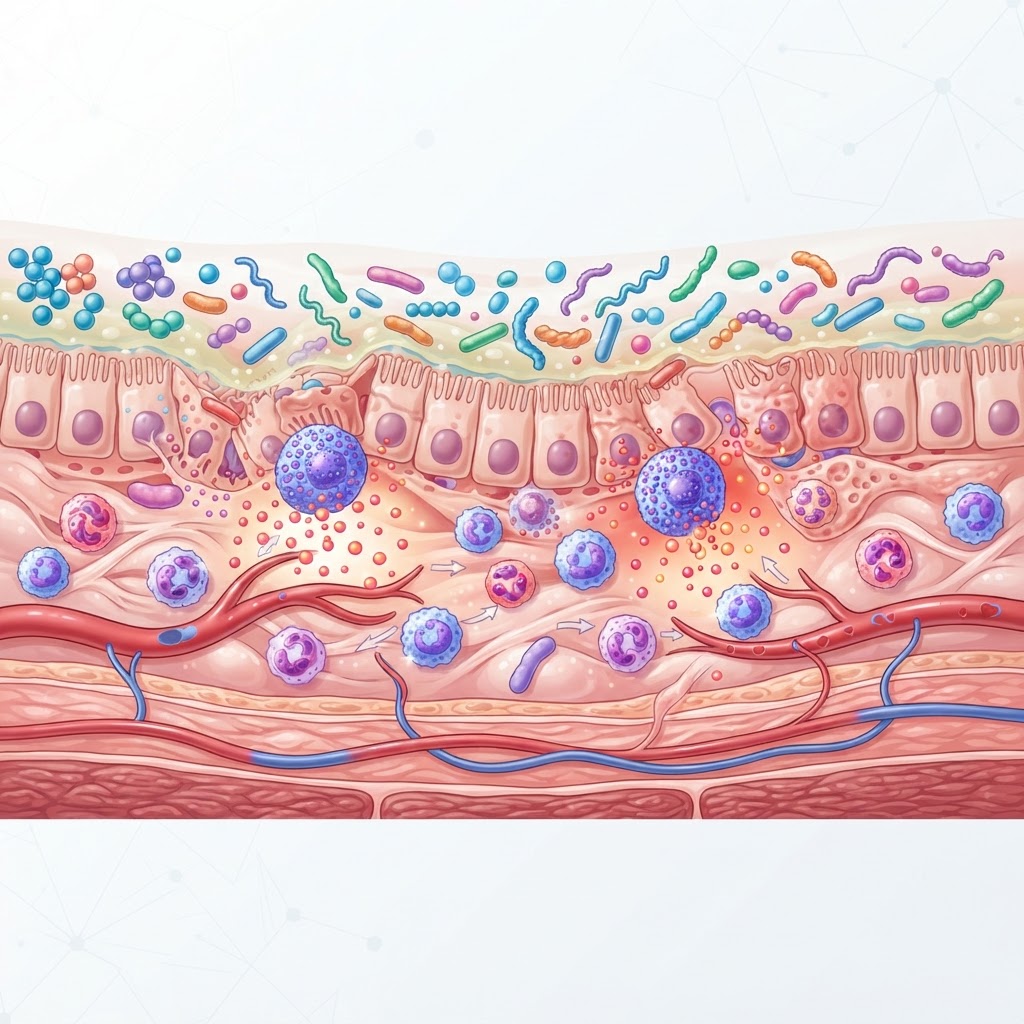
- The gut houses a significant portion of the body’s mast cells, creating a direct communication pathway between your microbiome and your immune system.
- Gut dysbiosis often leads to an accumulation of histamine-producing bacteria, which can directly trigger systemic mast cell activation syndrome symptoms.
- Intestinal permeability, or “leaky gut,” allows bacterial endotoxins to enter the bloodstream, constantly keeping mast cells in a heightened state of reactivity.
- Small Intestinal Bacterial Overgrowth (SIBO) frequently co-occurs with MCAS, creating a vicious cycle of inflammation and histamine intolerance.
- Addressing gut health is a cornerstone of healing MCAS naturally, as calming the digestive tract often leads to a reduction in overall systemic flares.
For those navigating the complex landscape of Mast Cell Activation Syndrome (MCAS), the journey toward relief is rarely straightforward. You may have spent years chasing disparate symptoms—brain fog, digestive distress, hives, and tachycardia—only to realize they are all tied to a singular, hyper-responsive immune mechanism. While many patients focus heavily on antihistamines or dietary restrictions, the most overlooked piece of the puzzle is often the digestive system. The state of your gut microbiome is not just a secondary concern; it is frequently the primary driver of systemic reactivity. When the delicate balance of the gut is disrupted, it communicates directly with mast cells throughout the body, turning your internal ecosystem into a source of chronic inflammation. Understanding this bidirectional relationship is essential for those looking for meaningful, long-term ways to manage symptoms and regain their quality of life.
The Connection Between Mast Cell Activation and the Gut
The human gastrointestinal tract is essentially the largest immune organ in the body. Within the mucosal lining of the gut resides a massive concentration of mast cells—the specialized white blood cells responsible for releasing histamine, cytokines, and other inflammatory mediators in response to perceived threats. In a healthy individual, these cells act as vigilant sentinels, protecting against pathogens. However, for those struggling with mast cell activation syndrome, these sentinels become “trigger-happy.” When we consider the relationship between MCAS and gut health, we must view the gut not as a simple tube, but as a complex signaling center that dictates the behavior of the immune system globally.
Mast cells in the gut are positioned near nerve endings, blood vessels, and the epithelial barrier. Because they are in constant contact with the contents of your food and the bacteria living in your microbiome, they are uniquely sensitive to the environment inside your digestive tract. When the gut environment is imbalanced, mast cells can become sensitized. This sensitization is why many people with MCAS experience “gut-brain” or “gut-systemic” flares shortly after eating or even when experiencing digestive stress. The mast cells release their contents into the surrounding tissue, which then enters the bloodstream, potentially triggering symptoms in the skin, heart, or brain.
This localized activation often explains why patients report symptoms that seem unrelated to digestion. A shift in the gut’s chemical environment can prompt a mast cell degranulation event that manifests as a sudden drop in blood pressure or an onset of neurological symptoms. Furthermore, the gut-associated lymphoid tissue (GALT) works in tandem with these mast cells. When the microbiome is in a state of dysbiosis, the chemical signals sent to the GALT are essentially “danger signals.” The immune system interprets these signals as a reason to stay in a state of high alert. Consequently, the threshold for mast cell degranulation lowers significantly. Essentially, your gut health determines the “background noise” of your immune system. If your gut is constantly sending inflammatory signals due to poor digestion or dysbiosis, your mast cells are effectively waiting for the smallest provocation—like a high-histamine food—to erupt into a full-blown systemic flare.
Healing this connection requires a fundamental shift in perspective. Rather than treating mast cells as the “enemy” that must be suppressed, we look at the gut as the environment that governs their behavior. By optimizing digestion, reducing irritation, and balancing the microbial population, we are essentially telling the mast cells that it is safe to return to a baseline state of calm. This approach moves the goalpost from mere symptom management to addressing the root cause, which is a vital distinction for anyone attempting to heal MCAS naturally. The gut is the command center, and stabilizing the environment within it is the most effective way to restore calm to the mast cells stationed throughout your entire body.
How Gut Dysbiosis Triggers Systemic Mast Cell Release
Dysbiosis, the term used to describe an imbalance in the types and quantities of bacteria residing in the digestive tract, is a major contributor to the pathology of MCAS. In a balanced microbiome, beneficial bacteria help regulate immune function and break down dietary histamine. However, when unfavorable bacteria or fungi (like Candida) proliferate, the internal chemistry shifts toward a pro-inflammatory state. This process is deeply linked to the concept of dysbiosis and histamine; when the microbial composition of the gut is skewed, the production of histamine increases, while the ability to neutralize it decreases.
Many common strains of bacteria associated with dysbiosis are capable of decarboxylating the amino acid histidine into histamine. If these bacteria colonize the gut in high numbers, they create an endogenous source of histamine that is constantly being absorbed through the intestinal wall. For an individual with MCAS, this is akin to being on a high-histamine diet even if you are eating “low-histamine” foods. This excess histamine bypasses the usual breakdown process in the gut and enters systemic circulation, essentially flooding the body and overwhelming the DAO (diamine oxidase) enzymes that are meant to keep histamine levels in check.
Beyond histamine production, dysbiotic bacteria produce various endotoxins and metabolites that act as direct chemical irritants to the intestinal wall. Lipopolysaccharides (LPS), which are found in the cell walls of certain gram-negative bacteria, are potent stimulators of mast cells. When LPS levels rise in the gut, they trigger immune receptors on the mast cells to degranulate. This creates a feedback loop: the dysbiosis triggers the mast cells, and the mast cell mediators (like TNF-alpha) cause further inflammation, which in turn alters the gut environment to be even more favorable to the dysbiotic bacteria. Breaking this cycle is difficult because the mast cells become hypersensitive, reacting to even minor changes in the microbiome.
Furthermore, dysbiosis affects the pH levels and the integrity of the mucosal layer that protects the gut lining. A healthy microbiome produces short-chain fatty acids (SCFAs), such as butyrate, which nourish the cells of the gut lining and regulate immune response. Dysbiosis often leads to a deficiency in these protective SCFAs. Without this protective barrier, mast cells are left exposed to undigested food particles and bacterial antigens. This constant exposure keeps the mast cells in a perpetual state of “fight or flight,” leading to the chronic nature of mast cell activation syndrome symptoms. The clinical approach, therefore, must focus on rebalancing the flora through targeted nutrition, probiotics, or antimicrobial therapy if necessary, guided by the principle of “start low and go slow” to avoid triggering a massive mast cell release during the die-off phase.
| Approach | Primary Mechanism | Best For |
|---|---|---|
| Low-Histamine Diet | Reduces external histamine load | Acute symptom management and identifying triggers |
| Probiotic Support | Restores commensal bacterial balance | Long-term gut-immune modulation and homeostasis |
| Digestive Enzyme Therapy | Enhances nutrient breakdown | Reducing fermentation and bacterial overgrowth |
| Mucosal Repair Protocols | Strengthens the intestinal barrier | Reducing systemic absorption of triggers |
The Role of Intestinal Permeability in MCAS Flares
Intestinal permeability, frequently referred to as “leaky gut,” is perhaps the most significant bridge between a malfunctioning digestive system and systemic mast cell activation. Under normal physiological conditions, the lining of the small intestine acts as a selective filter. It allows for the absorption of nutrients while keeping larger, potentially harmful molecules—such as undigested proteins, bacterial toxins, and inflammatory debris—firmly inside the intestinal lumen. In those with MCAS, this barrier is often compromised, meaning that the barrier’s “tight junctions” have become loose or damaged.
When the gut lining is permeable, the substances mentioned above cross into the bloodstream. This is a critical event for mast cell patients. Because mast cells are distributed throughout the sub-epithelial space, they are the first line of defense when these foreign particles breach the barrier. The moment these intruders cross the lining, mast cells identify them as antigens and begin a degranulation process to neutralize the threat. This process is inherently inflammatory. While it is a natural defense response, it becomes pathological when the barrier is consistently leaky, keeping the mast cells in a chronic state of activation.
The relationship between intestinal permeability and MCAS is cyclical and self-perpetuating. The inflammatory mediators released by mast cells—such as histamine, tryptase, and prostaglandins—have been shown to increase the permeability of the gut lining even further. This creates a damaging loop: a flare causes the gut to become leakier, which allows more triggers to enter the blood, which then causes more mast cells to degranulate, resulting in even more systemic inflammation. This is why individuals with MCAS often describe their condition as a “snowball effect.” Once a flare begins, it can feel like their entire system is turning against them, regardless of what they do or eat.
Addressing the root cause of the permeability is essential for anyone seeking to heal MCAS naturally. This involves more than just “avoiding foods.” It requires a deliberate, methodical approach to cooling the fire in the gut. Experts generally agree that using gut-supportive nutrients, such as L-glutamine, zinc carnosine, and soothing mucosal protectants like deglycyrrhizinated licorice (DGL) or slippery elm, can help to reinforce the barrier integrity. However, it is imperative to ensure that these supplements themselves are well-tolerated, as the highly sensitive nature of mast cells means that even some “health” supplements can trigger a reaction if they are derived from histamine-containing sources or fillers that the body reacts to. By reducing the overall burden of inflammatory triggers and slowly strengthening the intestinal fence, patients can eventually lower the reactivity of their mast cells and experience fewer systemic flares.
Identifying Common Digestive Triggers for MCAS Patients
For those managing MCAS, the dinner table is often viewed as a minefield. Digestive triggers are rarely universal, but there are certain patterns that frequently emerge in the clinical experience of the MCAS community. The primary challenge is that symptoms are often delayed; you might eat a trigger in the morning and experience a neurological, respiratory, or dermatological flare hours later, making it difficult to pinpoint the culprit. Understanding these categories of triggers is a vital step in mapping your unique sensitivity profile.
The most commonly discussed category is, of course, high-histamine foods. These include fermented items like sauerkraut and kimchi, aged cheeses, smoked or cured meats, and bone broth that has been cooked for long periods. While these are packed with nutrients, the slow-cooked or fermented processes result in a high buildup of histamine that the gut of an MCAS patient is ill-equipped to handle. However, it is equally important to identify “histamine liberators”—foods that are not inherently high in histamine but trigger the body’s own mast cells to dump their contents. Common offenders in this group include citrus fruits, tomatoes, egg whites, and certain food additives like artificial dyes and preservatives.
Another frequently ignored category is the “hidden” chemical triggers. Many people with MCAS react not just to the food itself, but to the pesticides, herbicides, and waxes on non-organic produce. These chemicals can irritate the delicate lining of the gut and cause a low-grade inflammatory response that serves as a substrate for mast cell activation. Switching to a strictly organic diet is often the first, most impactful recommendation for those trying to gain a baseline of control. Furthermore, food sensitivities that are not strictly histamine-related, such as reactions to lectins or oxalates, can cause localized gut inflammation. When the gut is inflamed, the mast cells near the intestinal lining stay on high alert, even if the food being eaten is technically low-histamine.
Lastly, we must consider the temperature and texture of food. Cold foods or extremely hot foods can, in some sensitive individuals, stimulate the vagus nerve and prompt a mast cell response. Similarly, eating while under stress is a massive, albeit overlooked, trigger. The enteric nervous system is tied to the central nervous system; when you eat in a state of “fight or flight,” the digestive process is compromised, leading to incomplete breakdown of food and increased potential for fermentation in the gut. Fermentation products, such as aldehydes and alcohols, are common triggers for mast cell degranulation. Creating a “safe” environment for eating—one that is calm, mindful, and focused—can be just as effective as dietary restriction for many patients. Keeping a detailed food and symptom diary is the most effective tool for identifying your specific triggers, as it allows you to see the patterns that your body is trying to communicate.
Why SIBO and MCAS Often Occur Together
The intersection of Small Intestinal Bacterial Overgrowth (SIBO) and MCAS is a frequent and challenging finding in clinical practice. SIBO is defined by an excessive growth of bacteria in the small intestine, where bacterial counts should typically be relatively low. Because the small intestine is where the majority of nutrient absorption takes place, the presence of a massive bacterial colony creates a state of chaos. The bacteria consume the nutrients before the host can, but more importantly for the MCAS patient, they produce vast quantities of gases and metabolic byproducts that disrupt the gut’s normal function.
The link between these two conditions is often a matter of motility. In a healthy gut, the “migrating motor complex” (MMC)—a series of rhythmic contractions—acts like a “housekeeper,” sweeping undigested food and bacteria through the digestive tract. In many MCAS patients, the motility is slowed. This may be due to mast cell mediators directly affecting the smooth muscle of the gut or to underlying autonomic nervous system dysfunction (often related to conditions like POTS, which co-occurs frequently with MCAS). When motility is sluggish, bacteria have the opportunity to migrate from the large intestine into the small intestine, where they set up shop and multiply.
Once SIBO is established, it acts as a permanent, systemic trigger for mast cell activation. The bacteria in the small intestine do not just ferment food; they create a toxic environment that keeps the immune system in a state of hyper-arousal. The chronic inflammation resulting from SIBO damages the gut lining, leading to the intestinal permeability discussed earlier. This sets up a perfect storm for MCAS, as the inflammatory mediators released by the overgrowth act as a continuous source of stimulation for the mast cells. This explains why many MCAS patients find that their condition is “treatment-resistant”—as long as the SIBO remains, the “danger signal” is constantly being broadcasted to the immune system.
Addressing this co-occurrence requires a balanced approach. Treating SIBO can be particularly daunting for an MCAS patient, as antimicrobial protocols (whether herbal or pharmaceutical) can cause a large-scale die-off of bacteria. This die-off releases high amounts of bacterial toxins (LPS) and histamine into the system, which can trigger a severe MCAS flare if the patient is not stabilized first. Therefore, the common clinical strategy is to focus on mast cell stabilization and gut soothing *before* attacking the bacterial overgrowth. By “priming the terrain,” you can minimize the risk of a severe reaction during the treatment phase. This often involves the use of specialized diets (like low-FODMAP, specifically adapted for MCAS) and prokinetics to improve motility, ensuring that the “housekeeper” is working correctly before you begin the process of clearing the overgrowth. Understanding this relationship is a major breakthrough for many patients, as it shifts the focus from managing constant, unexplained flares to targeting the underlying bacterial population that is fueling the fire.
Testing Methods to Evaluate Your Gut Microbiome Health
When investigating the link between MCAS gut health and systemic inflammation, conventional testing often falls short. While standard stool tests can identify clear-cut parasites or major infections, they frequently miss the subtle imbalances characterizing dysbiosis and histamine intolerance. For the patient with mast cell activation syndrome symptoms, a more granular look at the gut environment is essential to create an effective healing protocol.
The most comprehensive approach often involves functional stool analysis, which goes beyond simple cultures. These tests often utilize PCR (polymerase chain reaction) technology to quantify the relative abundance of commensal bacteria. By analyzing the diversity index of your microbiome, practitioners can determine if there is an overgrowth of Proteobacteria—a phylum often associated with gut inflammation—or a deficiency in beneficial butyrate-producing species that help maintain the integrity of the gut lining.
Organic Acids Testing (OAT) is another vital diagnostic tool. By measuring metabolic byproducts in the urine, OAT can identify fungal overgrowth (like Candida) or bacterial metabolites that act as neurotoxins. Since many MCAS patients struggle with cognitive fog and systemic sensitivity, identifying these markers is crucial. If your OAT results show elevated markers for clostridia or yeast, it provides a clear roadmap for targeted antimicrobial support, which must be approached with caution in those with mast cell sensitivity.
Finally, assessing intestinal permeability is central to managing mast cell stability. While there is no single “gold standard” test that is universally accepted, tests measuring Zonulin levels or the lactulose/mannitol ratio are often utilized. Elevated Zonulin suggests that the “tight junctions” of your gut barrier are loose, potentially allowing undigested food particles and bacterial endotoxins to enter the bloodstream, thereby triggering an immediate mast cell degranulation response.
Dietary Strategies to Reduce Gut Inflammation and Histamine
Diet is perhaps the most immediate lever you can pull to influence mast cell activity. However, because MCAS is highly individual, a “one-size-fits-all” approach rarely succeeds. The primary objective is to lower the total histamine load while simultaneously reducing the mechanical and chemical stressors on the intestinal mucosa.
A low-histamine diet involves more than just removing aged cheese and fermented foods. It requires a meticulous focus on food freshness. Histamine levels in proteins—such as chicken, fish, and beef—skyrocket as the meat ages after slaughter. Buying fresh, flash-frozen meat and cooking it immediately is a cornerstone of this strategy. Leftovers are often a hidden trap for the MCAS patient, as even a 24-hour stay in the refrigerator can lead to the proliferation of histamine-producing bacteria in the food.
Beyond histamine-specific foods, addressing intestinal permeability often requires a temporary reduction in inflammatory triggers. Gluten, cow’s dairy, and refined sugars are frequent offenders that increase gut permeability. By removing these, you allow the gut lining a chance to repair itself, which is vital for preventing the “leaky gut” cycle that drives mast cell activation.
| Dietary Strategy | Mechanism of Action | Best for |
|---|---|---|
| Low-Histamine Diet | Reduces dietary triggers of degranulation | General histamine intolerance |
| Anti-Inflammatory Elimination | Repairs the intestinal mucosal barrier | Suspected gut dysbiosis |
| Low-FODMAP (Modified) | Limits fermentable carbohydrates | Small Intestinal Bacterial Overgrowth (SIBO) |
| GAPS/Introduction Diet | Starves pathogens, nourishes villi | Severe digestive distress |
Probiotic Considerations for Sensitive Mast Cell Patients
In the general population, probiotics are touted as the cure-all for gut health. However, for those with MCAS, introducing the wrong strains can exacerbate symptoms significantly. Many common probiotic strains, such as Lactobacillus casei, Lactobacillus bulgaricus, and Streptococcus thermophilus, are histamine-producers. Consuming these can rapidly undo the progress made through diet and environmental control.
Instead, look for histamine-neutral or histamine-degrading strains. Strains such as Bifidobacterium infantis, Bifidobacterium longum, and Lactobacillus plantarum have been observed in some cases to support gut barrier function without the production of biogenic amines. Some practitioners also suggest incorporating Lactobacillus rhamnosus, which may help modulate the immune response, provided the patient does not have a specific intolerance to that strain.
When starting any probiotic protocol, the rule of “start low and go slow” is absolute. A common mistake is jumping to a full dose. Many sensitive patients begin by taking a fraction of a capsule or even just a pinch of the probiotic powder mixed into water, slowly titrating upward over several weeks. If you experience an increase in flushing, itching, or digestive bloating, it is a clear sign to pause, reset, and reassess the formulation.
Natural Approaches to Balancing the Gut-Immune Axis
Balancing the gut-immune axis requires a dual-pronged strategy: soothing the existing mast cell reactivity while gently modulating the microbial ecosystem. Nature provides several compounds that can assist in this stabilization process, often referred to as natural mast cell stabilizers.
Quercetin, a potent bioflavonoid found in red onions and apples, is widely recognized for its ability to inhibit the release of histamine from mast cells. When paired with gut-healing agents like L-glutamine and deglycyrrhizinated licorice (DGL), it can help close the gaps in the intestinal wall. L-glutamine, in particular, acts as the primary fuel source for the cells lining the small intestine, providing the building blocks necessary to reinforce the physical barrier against bacterial toxins.
Botanical interventions should be approached with professional guidance. Many essential oils and herbal extracts used to combat dysbiosis (like oregano oil or berberine) are potent. While they can effectively reduce bacterial overgrowths, they can also cause a “die-off” reaction, which releases a surge of endotoxins and histamine into the system. Often, practitioners recommend starting with gentler, systemic immune modulators—such as vitamin C or zinc—to raise the threshold for mast cell degranulation before attempting aggressive microbial eradication.
Lifestyle Changes to Support Long-Term Mast Cell Stability
Lifestyle factors are the “hidden” drivers of MCAS. Even with a perfect diet, high levels of chronic stress can force the body into a state of perpetual mast cell activation. The gut and the brain are physically connected via the vagus nerve, and this nerve is highly sensitive to the chemicals released during the “fight or flight” response.
Vagus nerve stimulation is a powerful, non-pharmacological way to modulate gut inflammation. Simple practices like deep diaphragmatic breathing, cold-water exposure (such as splashing the face with ice-cold water), and humming or singing can tone the vagus nerve, signaling the body to switch from a sympathetic (stress) state to a parasympathetic (rest and digest) state. When the body is in “rest and digest” mode, the gut wall is better protected, and the likelihood of inappropriate mast cell triggering decreases significantly.
Sleep hygiene is equally vital. During deep, restorative sleep, the body conducts its most intensive repair work on the intestinal mucosa. Chronic sleep deprivation, conversely, is associated with increased intestinal permeability and elevated inflammatory markers. Aiming for a consistent circadian rhythm—waking and sleeping at the same time every day—helps stabilize the hormonal environment, which in turn provides a more stable baseline for immune system function.
Frequently Asked Questions
Can MCAS cause digestive issues if I don’t have allergies?
Yes, absolutely. Even without classic IgE-mediated food allergies, MCAS can cause significant gastrointestinal distress. When mast cells in the gut lining activate, they release mediators like histamine, prostaglandins, and leukotrienes. These substances alter gut motility, increase secretion, and cause inflammation, leading to symptoms like diarrhea, cramping, bloating, and abdominal pain that often mimic Irritable Bowel Syndrome.
Is it possible to heal a leaky gut while having MCAS?
Healing the gut in the presence of MCAS is possible but requires a delicate approach. Because the gut is the primary site of mast cell activity, success depends on reducing the systemic inflammatory load. By implementing a low-histamine diet, supporting the microbiome with safe, non-histamine-producing probiotics, and utilizing nutrients that support the intestinal wall, many individuals see a reduction in permeability and a concurrent improvement in their overall symptom profile.
Should I avoid all probiotics if I have mast cell activation syndrome?
Not necessarily, but you must be extremely selective. Many traditional probiotic strains increase histamine levels. However, certain strains, such as specific bifidobacteria, may actually support immune balance. The key is to avoid fermented foods and multi-strain probiotics until you have tested your individual tolerance to single-strain supplements under the guidance of a practitioner.
How does stress impact MCAS symptoms in the gut?
The gut-brain axis is highly active in MCAS. Stress triggers the release of Corticotropin-Releasing Hormone (CRH), which directly stimulates mast cells to degranulate. This creates a vicious cycle: stress causes mast cells to release histamine, which increases gut inflammation and permeability, leading to further systemic sensitivity and renewed stress on the body. Managing the nervous system is a required component of long-term healing.
Why do my symptoms get worse after eating leftovers?
Leftover food is a major trigger for many MCAS patients because histamine levels accumulate as food undergoes microbial decomposition. Even when refrigerated, most leftovers experience a significant increase in histamine content within 24 hours. For those with a reduced capacity to break down histamine (due to DAO enzyme deficiency or dysbiosis), this surge causes immediate “flare” symptoms after eating.
Are there specific supplements that help with histamine degradation?
Many patients benefit from DAO (diamine oxidase) enzyme supplements taken just before meals. DAO is the primary enzyme responsible for breaking down ingested histamine. While it does not address the root cause of MCAS or gut dysbiosis, it can provide significant symptomatic relief by reducing the load of histamine that enters the bloodstream after consumption of food, allowing the body more time to regulate its internal processes.
Conclusion
Navigating the intersection of MCAS and gut health is undoubtedly a complex challenge, but it is also one of the most rewarding journeys a patient can take toward regaining their quality of life. By recognizing that your microbiome is not just a collection of bacteria, but a dynamic immune organ, you can begin to shift your focus from symptom suppression to foundational healing. From refining your dietary choices to managing the nervous system through vagus nerve stimulation, every small step contributes to a more stable immune environment.
The path to recovery is rarely linear, and it requires patience, consistency, and a willingness to listen to your body’s unique signals. We encourage you to start with one or two changes mentioned in this guide—such as focusing on fresh food preparation or introducing a histamine-neutral probiotic—and observe how your system responds. Remember, you have the power to create a more resilient gut-immune axis. Stay informed, stay steady, and prioritize your long-term stability above short-term quick fixes. Take control of your wellness journey today by partnering with a knowledgeable healthcare provider to tailor these strategies to your specific medical history.
By healthauthoritylife Editorial Team
This article is for informational purposes only and is not a substitute for professional medical advice. Always consult your doctor before making changes to your diet, exercise routine, or treatment plan.
Leave a Reply