
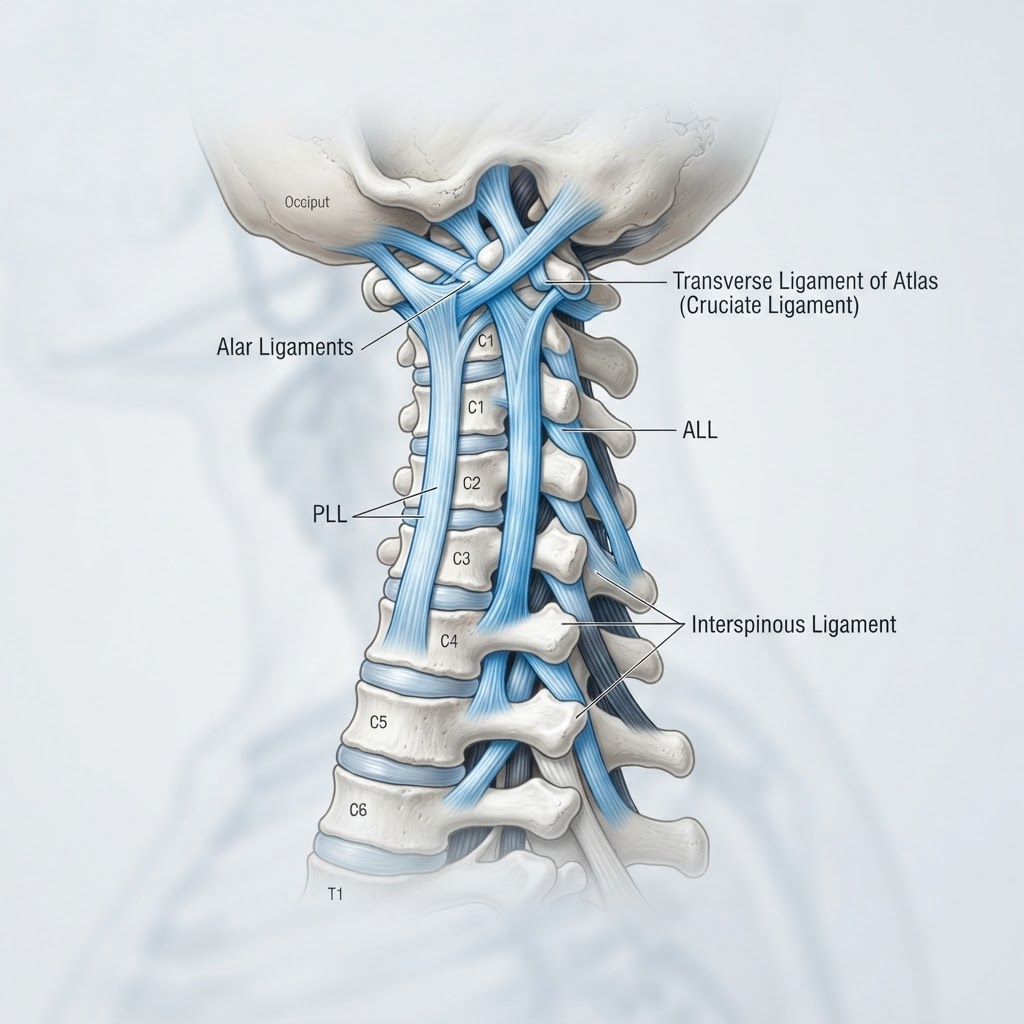
- Cervical instability occurs when ligaments in the upper neck lose their integrity, failing to keep the vertebrae aligned during movement.
- Common cervical instability symptoms often include chronic neck pain, dizziness, vertigo, and unusual neurological sensations.
- Ligament laxity is frequently caused by trauma, repetitive strain, or underlying systemic connective tissue disorders.
- The cervical spine serves as a primary hub for the nervous system, meaning instability can trigger wide-ranging physiological reactions beyond simple pain.
- Improving cervical spine health requires a multidisciplinary approach focusing on stabilization, postural correction, and systemic support for connective tissue.
The human neck is a marvel of biological engineering, balancing the weight of the skull atop a delicate stack of seven vertebrae while facilitating complex, multi-directional movement. However, when the soft tissues responsible for maintaining this architecture begin to falter, the results can be debilitating. Cervical instability is a condition that often remains under-diagnosed because it does not always show up clearly on standard imaging like X-rays or basic MRIs, which typically capture the spine in a static, resting position. For those suffering from the chronic, elusive symptoms associated with an unstable neck, finding answers is the first step toward reclaiming quality of life. In this comprehensive guide, the healthauthoritylife Editorial Team explores the intricacies of neck health, the impact of ligament laxity on your nervous system, and the pathways toward regaining stability and comfort.
What Is Cervical Instability?
At its core, cervical instability represents a structural compromise within the neck where the vertebrae are no longer supported by robust, healthy ligaments. Ligaments are the tough, fibrous bands of connective tissue that connect bone to bone; their primary role is to serve as the “check-reins” of your skeleton, preventing bones from sliding out of place or moving beyond their intended range of motion. When these ligaments become overstretched, torn, or chronically weakened—a state often referred to as ligament laxity—the cervical spine loses its structural integrity. This leads to excessive, aberrant motion between the vertebrae during normal head and neck movements.
Unlike a catastrophic spinal injury, which is usually immediate and obvious, cervical instability is frequently a progressive, degenerative process. It is often described as the “invisible” injury because, while the patient feels the spine “shifting” or “clicking” with even subtle movements, the underlying structural instability may be missed during a standard, non-weight-bearing diagnostic scan. Many individuals live with the sensation that their head is “too heavy” for their neck, or that they have to constantly manipulate their neck to find a position of comfort.
A subset of this condition is known as craniocervical instability (CCI). This occurs specifically at the junction where the skull meets the top of the spine, primarily involving the atlas (C1) and axis (C2) vertebrae. Because this area is the gateway for the brainstem and critical nerves, even microscopic amounts of excessive movement can have significant downstream effects on the entire body. The severity of cervical instability exists on a spectrum; in mild cases, it might manifest as intermittent soreness, while severe cases can lead to profound neurological dysregulation and chronic pain syndromes.
To understand the mechanics of cervical instability, one must view the spine not just as a column of bones, but as a tension-loaded system. When the ligaments slacken, the surrounding muscles are forced to compensate by entering a state of chronic hypertonicity (tightness or spasm). This is the body’s attempt to create “muscular splinting” to protect the unstable segments. Unfortunately, this constant muscle guarding eventually leads to fatigue, trigger points, and a cycle of pain that further exacerbates the instability. Addressing this condition is not just about popping a joint back into place; it is about restoring the biological capacity of the tissues to hold the vertebrae securely, ensuring the neck can function safely through its full range of motion without compromising the nervous system.
Common Symptoms of Cervical Instability
The hallmark of cervical instability symptoms is their wide-reaching nature. Because the cervical spine is densely packed with nerve endings, vascular pathways, and structural supports, when it shifts, the entire body can be affected. Patients rarely present with neck pain alone; instead, they often report a constellation of seemingly unrelated issues that fluctuate in intensity throughout the day. The most frequent complaint is a chronic, deep ache in the neck or at the base of the skull, often described as a “grinding” or “catching” sensation when turning the head.
Dizziness and vertigo are perhaps the most distressing symptoms. Because the upper cervical spine houses proprioceptive sensors—tiny receptors that tell your brain exactly where your head is in space—instability disrupts these signals. When the brain receives conflicting data about balance from the neck, it can trigger intense feelings of lightheadedness, disequilibrium, or a spinning sensation. Many individuals find that simple actions, such as looking up at a screen or turning to back up a car, immediately trigger a flare-up of these symptoms.
Neurological symptoms are also common due to the proximity of the cervical vertebrae to the spinal cord and nerve roots. This can manifest as radiculopathy—pain, numbness, or tingling that radiates down the shoulders, arms, or even into the fingers. Some individuals experience “electric” sensations when flexing their neck forward, a phenomenon sometimes associated with nerve irritation. Furthermore, the vagus nerve, which runs through the cervical region, can be affected by structural shifts. This can lead to autonomic nervous system dysfunction, manifesting as heart palpitations, shortness of breath, digestive issues, or difficulty regulating body temperature.
Headaches, specifically cervicogenic headaches, are another major marker. These are typically felt at the base of the skull or behind the eyes and occur when referred pain from the strained ligaments and tight neck muscles radiates into the head. Many patients note that their pain changes based on their posture. For instance, lying down might provide temporary relief as the gravity-induced stress is removed from the ligaments, while standing or sitting for prolonged periods exacerbates the discomfort. It is this posture-dependency that is a strong clinical indicator of instability.
Finally, there is the psychological impact of chronic, unexplained physical symptoms. Living with persistent neck instability often leads to brain fog, fatigue, and difficulty concentrating. Because the body is constantly fighting to stabilize the neck, it remains in a state of high physiological arousal or “fight or flight,” which can lead to anxiety or burnout. Recognizing that these symptoms are linked by the common thread of neck dysfunction is the first step toward seeking targeted, effective relief.
Root Causes: Why Ligaments Become Lax
Understanding why ligaments lose their integrity is essential for effective long-term management. While “laxity” sounds like a simple wearing out of parts, the etiology is typically multifactorial, involving a mix of biomechanics, trauma, and systemic biology. At the top of the list is mechanical trauma. Whiplash injuries from motor vehicle accidents, contact sports, or even a hard fall are classic triggers for ligament damage. During a sudden impact, the head is whipped back and forth, forcing the ligaments beyond their elastic limit. If these ligaments fail to heal with their original tensile strength, the foundation of the neck remains permanently compromised.
Beyond acute trauma, chronic repetitive strain is a silent culprit in modern life. The proliferation of digital technology has introduced “tech neck,” a condition where the head is held in a forward-leaning posture for hours every day. The weight of the human head is substantial; shifting it just a few inches forward significantly increases the gravitational load on the cervical vertebrae. Over months and years, this sustained tension causes the ligaments at the back of the neck to creep and stretch, eventually becoming elongated and unable to provide the necessary support to keep the cervical curve in its natural, protective alignment.
Systemic factors also play a significant role. Ligaments are composed primarily of collagen—a complex protein that acts as the “glue” of the body. Genetics dictate the quality of the collagen a person produces. Some individuals have a naturally lower threshold for ligament laxity, which can sometimes be exacerbated by deficiencies in nutrients required for collagen synthesis, such as vitamin C, manganese, or amino acids like proline and glycine. When the body lacks the raw materials to repair connective tissue, even minor stressors can lead to permanent structural weakness.
Inflammation is another significant contributor. Chronic, low-grade systemic inflammation can break down healthy tissue over time. Whether it stems from an autoimmune condition, gut dysbiosis, or high levels of oxidative stress, this internal environment makes it difficult for the body to maintain healthy connective tissues. When the surrounding tissues become inflamed, the ligaments may undergo a process known as collagen degradation, becoming weaker and more susceptible to injury.
Finally, we must consider the role of pre-existing spinal conditions. Prior surgeries, such as fusions, can put undue stress on the segments directly above and below the surgical site, causing adjacent segment instability. Additionally, degeneration associated with aging can weaken the disc spaces, further shifting the burden of stabilization onto the ligaments. By identifying these root causes—whether they are mechanical, nutritional, or systemic—we can move away from merely masking pain and toward a more comprehensive, proactive approach to neck health.
The Connection Between Connective Tissue and Neck Health
To truly manage cervical spine health, one must view the neck not as a static stick, but as a dynamic, living system governed by the health of connective tissues. Connective tissue (fascia, ligaments, and tendons) is the body’s internal support network. In the cervical spine, this network is particularly dense. The fascia creates a web-like sheath around every muscle fiber, bone, and nerve, while ligaments provide the stability required to keep the spine safe during movement. When we speak about strengthening the neck, we are not just talking about superficial muscles; we are talking about the entire connective tissue complex.
Connective tissue is “mechanosensitive,” meaning it changes its structure based on how we use it. If we move in healthy, varied ways, our tissues typically become more resilient and hydrated. If we move in limited, repetitive ways—or remain sedentary—the tissues can become “dehydrated” and brittle. This dehydration reduces the gliding capacity of the fascia, leading to stiffness and a reduced ability of the ligaments to “snap back” after being stretched. Maintaining the health of this tissue requires a combination of adequate hydration, nutrient-dense nutrition to support collagen cross-linking, and specific movement patterns that promote tissue remodeling.
This biological perspective also sheds light on why some people recover from neck strain quickly while others develop chronic instability. It is a matter of tissue resilience. Someone with high-quality collagen and healthy circulation to their connective tissues will likely heal from minor strains before they turn into chronic laxity. Conversely, those with poor tissue turnover or systemic health challenges may find that their ligaments never fully tighten back up after an injury. Therefore, supporting connective tissue health is a holistic endeavor that involves managing systemic inflammation and providing the body with the metabolic resources it needs to maintain its structural integrity.
| Approach | Primary Mechanism | Best For |
|---|---|---|
| Isometric Stabilization | Engaging muscles without moving the joint | Acute flare-ups and initial rehabilitation |
| Postural Correction | Restoring natural spinal curvature | Long-term alignment and repetitive strain |
| Connective Tissue Support | Nutritional and lifestyle tissue building | Systemic health and long-term resilience |
| Manual Therapy | Guided soft-tissue release | Breaking up fascia restrictions |
How Cervical Instability Affects the Nervous System
The nervous system is the body’s master controller, and the cervical spine serves as its primary highway. When cervical instability is present, the impact on this system is profound. The brainstem, which resides at the craniocervical junction, is responsible for vital functions such as breathing, heart rate, blood pressure, and digestion. Any structural misalignment or excessive movement in the atlas and axis vertebrae can introduce mechanical strain or “shear forces” on these delicate structures, potentially interfering with the transmission of neural impulses.
One of the most concerning aspects of this is the effect on the autonomic nervous system. This system has two modes: sympathetic (“fight or flight”) and parasympathetic (“rest and digest”). When the neck is unstable, the body’s proprioceptive sensors send distorted signals to the brain. In many cases, the brain perceives this instability as a threat, potentially keeping the sympathetic nervous system in an elevated, reactive state. This explains why many patients with cervical instability report symptoms like heart rate variability, anxiety, and sleep disturbances—the body is essentially stuck in a state of high alert because it feels physically insecure.
Additionally, cervical instability can impact the flow of cerebrospinal fluid (CSF). The circulation of this fluid is critical for clearing metabolic waste from the brain and cushioning the central nervous system. Experts generally believe that optimal fluid flow requires a patent, properly aligned spinal canal. If the cervical vertebrae are shifting or if the surrounding tissues are constantly inflamed, it can create a bottleneck effect, potentially hindering the efficient movement of CSF. This is a common hypothesis for why patients with this condition experience persistent brain fog and mental fatigue.
There is also the matter of cranial nerve irritation. Several cranial nerves exit or travel near the upper cervical spine, including the trigeminal, facial, and vagus nerves. When the vertebrae are not holding their positions correctly, they can put pressure on these nerves, leading to symptoms as diverse as facial pain, tinnitus, visual disturbances, and swallowing difficulties. It is not always a matter of “compression” in the traditional sense; it is often a matter of irritation caused by the constant, micro-oscillatory motion of the unstable segments.
For these reasons, addressing cervical instability is not merely about treating “neck pain.” It is about stabilizing the housing for the most critical components of the human body. By restoring structural integrity through a combination of strengthening, postural habits, and systemic support, we are effectively protecting the nervous system. This creates a feedback loop: as the neck becomes more stable, the nervous system receives fewer “danger” signals, the sympathetic overdrive begins to subside, and the body can finally shift into a restorative, parasympathetic state, which is necessary for genuine healing and long-term health.
Diagnostic Challenges: What You Should Know
One of the most persistent hurdles in addressing cervical instability is the complexity of achieving a definitive diagnosis. Many individuals suffering from chronic neck pain, headaches, and neurological symptoms find themselves in a diagnostic loop, often undergoing standard imaging like X-rays or basic MRIs that come back appearing “normal.” The primary reason for this is that traditional imaging is typically performed in a static, supine (lying down) position. In this state, the gravity-dependent nature of ligament laxity is often minimized, allowing the vertebrae to appear aligned even when they demonstrate significant instability under the weight of the head.
To capture the true extent of craniocervical instability or segmental neck instability, practitioners sometimes rely on functional or dynamic imaging. This might include flexion-extension X-rays, which observe the spine as it moves, or upright, weight-bearing MRIs. These modalities aim to reveal the “hidden” shifts in the cervical vertebrae that only occur when the neck is tasked with supporting the head against gravity. Even then, these tests can be nuanced, requiring a specialist trained to look specifically for subtle millimeter shifts that indicate ligamentous laxity.
Furthermore, because the symptoms of cervical instability—such as dizziness, tinnitus, visual disturbances, and brain fog—often mimic other neurological or vestibular conditions, patients are frequently misdiagnosed with migraines, tension-type headaches, or even anxiety disorders. The diagnostic process is rarely a simple “check-box” exercise. It often requires a clinical assessment that correlates specific physical movements and provocative testing with the patient’s lived experience of instability. Understanding that a “clear” scan does not necessarily equate to a stable cervical spine is a crucial first step for anyone navigating this journey.
Natural Strategies to Support Cervical Stability
Supporting cervical spine health requires a multi-faceted approach that addresses both the structural integrity of the connective tissues and the surrounding muscular support system. Because ligament laxity is often systemic or related to chronic inflammatory processes, natural strategies focus on creating an environment conducive to tissue repair and reducing the mechanical load on the cervical discs and ligaments.
Anti-inflammatory nutrition serves as the foundation. Collagen-rich foods and nutrients that support connective tissue synthesis—such as Vitamin C, zinc, copper, and manganese—are often emphasized to encourage the body’s natural maintenance processes. Managing systemic inflammation is equally critical; high levels of chronic inflammation can degrade collagen over time, further loosening the ligaments that hold the cervical spine in place. Many individuals find that a diet focused on whole, nutrient-dense foods, while avoiding inflammatory triggers like processed sugars and excessive refined oils, helps to reduce the overall “pain load” on the neck.
Supplements are also frequently discussed in the context of natural neck support. While not a cure, nutrients like magnesium for muscle relaxation, and specific herbs known for their potential to support joint and ligament health, are often integrated into wellness plans. Below is a comparison of various natural supportive interventions:
| Intervention | Primary Benefit | Best for |
|---|---|---|
| Cervical Pillow (Contour) | Maintains neutral spine alignment during sleep | Reducing morning stiffness and nerve impingement |
| Magnesium Glycinate | Supports muscle relaxation and nervous system health | Patients with chronic muscle guarding/spasms |
| Collagen Peptides | Provides building blocks for connective tissues | Long-term structural maintenance |
| Postural Correction Braces | Provides tactile feedback to discourage slouching | Temporary support during high-strain tasks |
| Hydration & Electrolytes | Supports disc hydration and nerve function | Improving overall tissue resilience |
Targeted Exercises for Neck Strength and Posture
Strengthening neck muscles is perhaps the most effective way to compensate for ligament laxity. When ligaments are loose, the muscles—specifically the deep cervical flexors—must work harder to act as “dynamic stabilizers” for the spine. However, the goal is not to “bulk up” the neck with aggressive resistance training, but rather to cultivate endurance and precise, neurological control of the small muscles that hold the vertebrae in place.
The “Chin Tuck” is widely considered the gold standard for beginning cervical stabilization. By gently pulling the chin back (creating a “double chin” without tilting the head down), you engage the deep cervical flexors, which are often weak in individuals with poor posture. This exercise should be performed with a focus on form rather than force, holding for a few seconds and releasing. The key is to avoid engaging the superficial neck muscles (the sternocleidomastoids), which can lead to further tension if overused.
Scapular retraction is another essential component. Because the cervical spine is physically connected to the thoracic spine, strengthening the muscles between the shoulder blades helps stabilize the foundation upon which the neck sits. When the shoulder blades are retracted and depressed, the neck is better positioned to maintain its natural cervical lordosis (the inward curve), reducing the strain on the upper cervical segments. Integrating gentle isometric holds and prioritizing stability over range of motion is the safest route to building the muscular corset needed for long-term relief.
Lifestyle Adjustments to Prevent Further Strain
Lifestyle modifications act as the “guardrails” for your recovery. Even the best exercise program can be undermined by daily habits that place the cervical spine in a compromised position for hours at a time. The most notorious culprit is “tech neck”—the habit of looking down at phones or tablets. This position significantly increases the effective weight of the head, placing massive leverage-based stress on the lower cervical vertebrae.
Ergonomics in the workplace is equally critical. Screens should be at eye level, ensuring that the neck remains in a neutral, vertical alignment. If you work at a desk, consider using an external keyboard and mouse so your screen can be elevated to the correct height. Furthermore, frequent “movement breaks” are essential. Even a few minutes of standing up and gently resetting your posture can prevent the muscles from locking into a static, strained position.
Sleep hygiene also plays a major role. Choosing a pillow that provides adequate support for the neck curve—and avoiding sleeping on the stomach, which forces the neck into a rotated position—can make a profound difference in recovery. For those with chronic instability, avoiding high-impact activities or heavy overhead lifting until the muscles are sufficiently conditioned is a necessary, albeit temporary, lifestyle adjustment to allow for healing.
When to See a Specialist for Cervical Issues
While natural support and strength training are powerful tools, there are “red flag” symptoms that demand immediate professional evaluation. Cervical instability, particularly when it progresses to craniocervical instability, can put pressure on the brainstem or spinal cord. Symptoms such as sudden, severe neurological deficits, loss of bladder or bowel control, significant stumbling or difficulty walking (gait disturbance), or electric-shock sensations running down the limbs are signs of an urgent medical situation.
Furthermore, if you find that your neck pain is accompanied by unexplained weight loss, night sweats, or a history of trauma, these require investigation to rule out more serious underlying conditions. Even without “red flags,” if your symptoms are significantly impairing your ability to work, sleep, or participate in daily life despite consistent effort with natural protocols, it is time to consult with an orthopedic specialist, a physiatrist, or a neurologist specializing in the spine. These professionals can provide a formal diagnostic pathway, including imaging or non-surgical intervention options, to ensure that you are on the right path toward recovery.
Frequently Asked Questions
Can cervical instability be fully reversed naturally?
While many individuals experience significant improvement in symptoms through strengthening and lifestyle changes, “reversing” ligament laxity depends on the severity of the damage. Ligaments do not have a robust blood supply like muscles, making them slow to heal. However, building strong muscular support can often functionally stabilize the spine, allowing for a return to full, pain-free activity.
Is it safe to get a neck adjustment if I have suspected instability?
Most experts advise caution. If you suspect ligament laxity or instability, high-velocity adjustments (the “cracking” sound often associated with chiropractic care) may be contraindicated, as they could potentially exacerbate the looseness of the joints. Low-force, non-manipulative care or specific therapeutic exercises are generally preferred until stability is established.
Does a neck brace help with cervical instability?
A neck brace can provide temporary relief by offloading the weight of the head and providing stability during flare-ups. However, prolonged use is often discouraged, as it can cause the stabilizing muscles of the neck to weaken further. Braces are typically viewed as a short-term aid rather than a long-term solution.
How long does it take to see results from neck strengthening exercises?
Recovery is a process of consistency. Most people begin to notice a decrease in the intensity of their pain after 4 to 8 weeks of daily, targeted stabilization exercises. It is essential to start slowly and prioritize form over intensity to avoid triggering a muscle spasm, which can set your progress back.
What is the difference between neck pain and cervical instability?
Neck pain is a general symptom that can arise from muscle strain, poor posture, or minor injury. Cervical instability, however, refers to a structural issue where the ligaments are unable to hold the vertebrae in their proper alignment during movement. This leads to chronic, recurring symptoms and a sensation that the neck is “weak” or “giving way.”
Can stress make cervical instability symptoms worse?
Yes, stress is a significant factor. When the body is under stress, it naturally triggers a “fight or flight” response, which often causes the muscles of the neck and shoulders to tighten and brace. For someone with underlying instability, this protective bracing can increase pressure on already sensitive joints, leading to increased pain and neurological symptoms.
Conclusion
Cervical instability is a complex and often misunderstood condition, but it is not something you have to navigate without a plan. By focusing on the structural foundation of your neck through targeted exercises, making proactive ergonomic adjustments, and supporting your body with the right nutritional tools, you can actively reduce the strain on your spine and reclaim your quality of life. The path to stability is built on consistency and patience—prioritizing the health of your cervical spine today will pay dividends in your mobility and comfort for years to come. If you feel your symptoms are plateauing or worsening, never hesitate to seek the guidance of a qualified healthcare professional who can provide the necessary imaging and expert support to guide your recovery.
By healthauthoritylife Editorial Team
This article is for informational purposes only and is not a substitute for professional medical advice. Always consult your doctor before making changes to your diet, exercise routine, or treatment plan.
Leave a Reply