
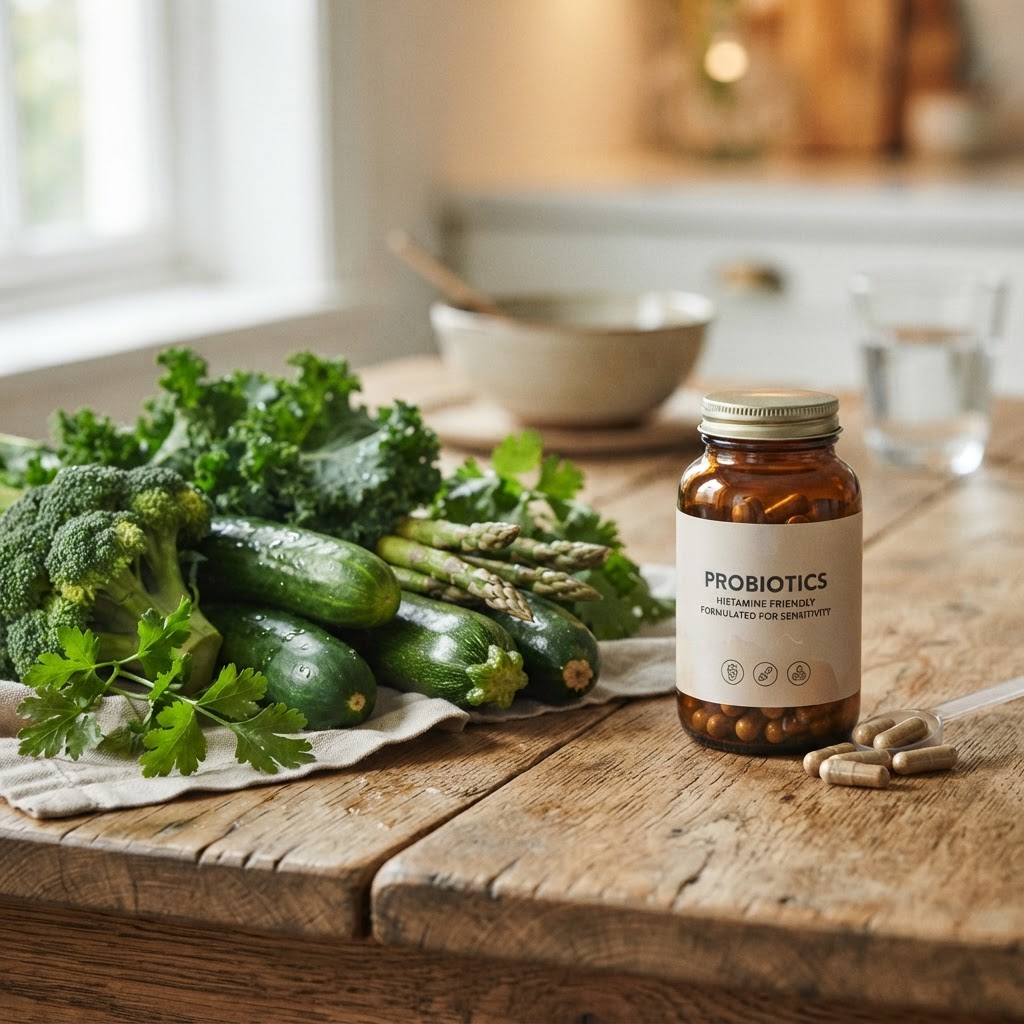
- Not all probiotics are equal; some strains actively produce histamine, potentially triggering reactions in sensitive individuals.
- Histamine-degrading strains, such as Bifidobacterium infantis, can help break down dietary histamine in the gut.
- The balance of your gut microbiome is critical; overgrowth of histamine-producing bacteria often exacerbates intolerance symptoms.
- When choosing low-histamine diet supplements, avoid strains like Lactobacillus casei and Lactobacillus bulgaricus if you have known sensitivities.
- Effective management of gut health for histamine requires a personalized approach, often starting with low-dose supplementation.
For individuals navigating the complex landscape of histamine intolerance, the gut is often the epicenter of the issue. While probiotics are widely touted as a gold standard for supporting digestive wellness, they are not a universal solution for those struggling with histamine sensitivity. In fact, for a segment of the population, certain bacterial strains can inadvertently become a source of trouble rather than a remedy. Understanding the delicate interplay between your microbiome and histamine metabolism is the first step toward reclaiming your health. As the healthauthoritylife Editorial Team, we aim to demystify why choosing the right histamine-friendly probiotics is essential, and how you can navigate the supplement aisle without compromising your comfort.
How Probiotics Influence Histamine Levels
To understand why some probiotics for histamine intolerance cause reactions while others provide relief, we must first look at the mechanism of histamine production within the gut. Histamine is a biogenic amine—a compound naturally produced by both human cells and certain types of bacteria. In a healthy digestive tract, enzymes such as diamine oxidase (DAO) work diligently to break down histamine from our food. However, when the gut microbiome is imbalanced, or when an individual’s DAO production is insufficient, histamine levels can rise, leading to symptoms like hives, headaches, digestive distress, and congestion.
Probiotics influence this process in two primary ways: through production and through degradation. Some bacteria possess the enzymatic machinery to convert dietary histidine (an amino acid) into histamine. If your gut contains a high population of these histamine-producing bacteria, your baseline histamine levels may be chronically elevated, even before you eat a high-histamine meal. Conversely, other probiotic strains possess the capacity to degrade histamine, effectively acting as an ally to your body’s natural DAO enzymes.
When you introduce a probiotic supplement, you are essentially “seeding” your gut with specific microorganisms. If that supplement contains strains that are heavy histamine producers, you may experience a rapid onset of symptoms shortly after beginning the regimen. For someone with histamine intolerance, the goal is to shift the microbial terrain toward species that are either neutral or actively helpful in lowering histamine levels. It is also important to consider the concept of gut permeability. Many experts generally agree that a compromised intestinal barrier—often referred to as leaky gut—allows histamine and other metabolites to enter the bloodstream more readily, amplifying the systemic effects of histamine-producing bacteria. Therefore, probiotics that support the structural integrity of the gut lining can be beneficial, provided they do not produce histamine themselves.
Furthermore, the fermentation process itself is a factor. Many traditional probiotic foods, like long-fermented sauerkraut or kimchi, are high in histamine because the fermentation process allows bacteria to convert amino acids into histamine over time. Even if you choose a supplement, the manufacturing process matters. Some suppliers use fermentation media that are rich in histamine-precursor amino acids, which can result in a product that triggers a response. Navigating this requires a nuanced approach, looking for brands that prioritize purity and specifically avoid the inclusion of histamine-producing strains. By viewing your probiotic regimen as a tool to modulate your internal chemical environment, you can begin to make choices that align with your body’s specific needs rather than relying on generalized marketing claims.
Histamine-Producing Bacteria vs. Histamine-Degrading Bacteria
The distinction between histamine-producing and histamine-degrading bacteria is the cornerstone of managing gut health for histamine. In the world of microbiology, bacteria are often classified by their metabolic byproducts. Histamine-producing bacteria are those that express histidine decarboxylase, an enzyme that facilitates the conversion of histidine into histamine. While these bacteria are a normal part of a diverse microbiome, an overgrowth caused by environmental factors, dietary habits, or antibiotic use can create an environment where the gut is constantly “leaking” histamine into the system.
Common culprits that produce histamine include various species of Lactobacillus and Enterococcus. When these thrive, the total histamine load in the gut increases, placing a heavy burden on your DAO enzymes. If your DAO levels are already low, this internal production can be the proverbial straw that breaks the camel’s back. This is why many people who suffer from histamine intolerance report that “healthy” fermented foods or high-dose, broad-spectrum probiotics make their symptoms significantly worse instead of better.
In contrast, histamine-degrading bacteria work to break down histamine into imidazole acetaldehyde, a compound that is eventually cleared from the body. These bacteria serve as an important buffer, especially when dietary histamine intake is high. Research suggests that certain strains of Bifidobacterium and Lactobacillus have the genetic capability to lower luminal histamine. By incorporating these into your daily routine, you are essentially outsourcing some of the heavy lifting your DAO enzymes would otherwise have to do alone.
This dynamic creates a competitive environment within the gut. You are essentially fostering a microbial community that acts as a gatekeeper. By crowding out the histamine-producers with histamine-degraders, you can create a more hospitable internal environment. However, this is not an overnight process. Microbiome modulation takes time, and those with severe sensitivities should be cautious. Introducing new strains too quickly or at too high a dose can sometimes lead to a “die-off” reaction, where the sudden shift in bacterial populations causes a temporary spike in inflammation or histamine release as the older, unwanted bacteria are displaced.
The key takeaway is that the gut is a dynamic ecosystem. You aren’t just adding “good” bacteria; you are choosing which metabolic processes you want to encourage in your body. For a histamine-sensitive individual, the strategy must be deliberate. It is not just about the total number of colony-forming units (CFUs) in a supplement; it is about the metabolic profile of those specific strains. Understanding this balance is the difference between a supplement that acts as a therapeutic tool and one that acts as a trigger.
| Approach | How It Works | Best For |
|---|---|---|
| Histamine-Degrading Strains | Uses specific bacterial enzymes to break down histamine in the gut. | Those with low DAO levels or systemic intolerance. |
| Neutral/Soil-Based Organisms | Focuses on overall gut diversity without the histamine-producing bias. | Individuals prone to SIBO or those who react to common Lactobacillus strains. |
| Low-Dose Targeted Strains | Introduces beneficial bacteria slowly to avoid potential die-off reactions. | People with extreme sensitivities or history of supplement intolerance. |
Probiotic Strains That May Increase Histamine
For those living with histamine intolerance, knowing which strains to avoid is just as important as knowing which to supplement. Many standard, off-the-shelf probiotics contain a heavy reliance on Lactobacillus and Lactobacillus bulgaricus, which are popular in the industry for their ability to aid in digestion and boost general immunity. While these are safe and even beneficial for the average person, they are frequently identified by researchers as potent histamine producers. Other common strains, including Lactobacillus casei and Lactobacillus delbrueckii, have been observed to contribute to elevated histamine levels in the gut lumen.
The problem arises because these strains are extremely efficient at converting histidine, a common amino acid found in everything from meat to plant proteins, into histamine. When these bacteria inhabit the colon in large numbers, the cumulative effect can overwhelm the body’s natural histamine-degrading mechanisms. Even if you aren’t eating high-histamine foods, the internal production generated by these bacterial colonies can be enough to trigger a wide array of symptoms. For many individuals, this creates a confusing situation where they feel worse while taking a supplement that is marketed as a health aid.
It is important to note that the impact of these strains can be highly individual. Factors such as the specific genetic makeup of your gut microbiome, your current DAO status, and your overall inflammatory load all play a role in how your body responds to a particular strain. However, in the context of histamine intolerance, it is generally recommended to exercise extreme caution with products that heavily feature the Lactobacillus genus, especially if you have not been tested or have not completed an elimination trial. Many health professionals advise looking for labels that specifically state “histamine-free” or “low-histamine” and checking the ingredient list for the presence of these known offenders.
Another area of concern is the use of prebiotics in conjunction with these strains. Many supplements combine probiotics with prebiotics like inulin or FOS (fructooligosaccharides). While these are excellent for feeding beneficial bacteria, they can also feed histamine-producing bacteria if those strains are already present in your gut. For someone with significant dysbiosis, “feeding the gut” blindly can sometimes mean feeding the wrong populations. If you suspect that your supplement might be increasing your histamine load, consider pausing it entirely for two weeks to establish a new baseline. This “washout period” allows your system to clear out the excess histamine and gives you a clean slate to observe how your body reacts when you reintroduce specific, safe strains. Remember, the goal of a low-histamine diet and lifestyle is to minimize the total inflammatory burden, and avoiding these known histamine-producing strains is a vital part of that strategy.
Safe Probiotic Strains for Histamine-Sensitive Individuals
When searching for safe options, the focus shifts toward strains that either demonstrate a neutral effect on histamine or, ideally, assist in its degradation. Among the most researched and recommended strains for histamine-sensitive individuals are those within the Bifidobacterium genus. Specifically, Bifidobacterium infantis, Bifidobacterium longum, and Bifidobacterium breve are frequently cited by experts as excellent choices. These strains have shown in various studies to contribute to a balanced microbiome without the metabolic pathway that produces histamine. In many cases, they help stabilize the gut environment and improve the integrity of the mucosal barrier, which is essential for managing systemic inflammation.
Another highly regarded strain is Lactobacillus rhamnosus. While some Lactobacillus species are known for histamine production, L. rhamnosus is a notable exception. It is often lauded for its ability to support immune regulation and improve the gut’s barrier function, helping to reduce the systemic absorption of histamine. By reinforcing the lining of the intestine, L. rhamnosus acts as a secondary line of defense, ensuring that whatever histamine is present stays within the digestive tract to be processed or excreted, rather than entering the bloodstream.
For those who find that traditional probiotics are still too much for their system, soil-based organisms (SBOs) are sometimes considered. SBOs like Bacillus coagulans are hardy and transient, meaning they do not necessarily take up long-term residence in the gut, but they can provide significant temporary benefits. They are often less likely to trigger the intense shifts in the microbiome that can lead to histamine flares. Because they are not typically histamine producers, they offer a way to get the digestive benefits of a probiotic without the inherent risks associated with fermented-food-based strains. However, as with anything, start with a low dose.
It is also worth noting that some probiotic-related supplements include enzymes like DAO itself, derived from porcine kidney extract. While these are not bacteria, they serve the same fundamental goal of managing histamine levels. For some, a combination of a low-histamine-safe probiotic and a supplemental DAO enzyme can provide the most comprehensive relief. The probiotic works to modulate the microbiome over the long term, while the enzyme provides immediate support during meals. When selecting these products, look for high-quality, reputable brands that perform third-party testing to ensure they are free from the histamine-producing strains mentioned earlier. Ultimately, the best probiotic for you is one that causes no adverse reaction and helps move your digestive health toward a more stable, comfortable state.
What to Look for in a Histamine-Friendly Supplement
Navigating the supplement market with histamine intolerance can feel like a minefield. To make the process easier, it is helpful to follow a set of strict criteria when evaluating potential histamine-friendly probiotics. The first thing you should look for is a “strain-specific” label. Many companies use proprietary blends that simply list the genus (e.g., Lactobacillus) without specifying the exact species or strain. Because histamine production is a strain-specific trait, this lack of transparency is a red flag. You want to see exact scientific names, such as Bifidobacterium longum, on the bottle so you can verify that the bacteria are, in fact, safe for your needs.
Secondly, consider the inclusion of “clean” fillers. Many probiotic capsules contain prebiotics, binders, or stabilizers that can be highly problematic for sensitive individuals. Ingredients like prebiotics (inulin, chicory root), artificial dyes, or even certain dairy-based carriers can trigger reactions that have nothing to do with the probiotics themselves. A truly histamine-friendly supplement should be as “clean” as possible—ideally, a simple capsule with a minimal ingredient list. If a product contains dairy, soy, or gluten, it is often best to avoid it, as these are common allergens that can independently trigger mast cell activation and histamine release.
The delivery method of the probiotic also matters. Probiotics are delicate; they must survive the highly acidic environment of the stomach to reach the intestines. Look for “delayed-release” or “enteric-coated” capsules. This technology ensures that the bacteria are released in the small or large intestine rather than being destroyed by stomach acid, which increases the efficacy of the dose. When more bacteria survive the transit, you can often take a smaller total amount of CFUs while still achieving the desired therapeutic effect. This is particularly important for histamine-sensitive individuals, as high doses of probiotics can sometimes be overwhelming to a dysregulated gut.
Lastly, trust your body’s feedback over the label’s marketing. Even a perfectly formulated, “histamine-safe” probiotic may not agree with your unique physiology. Start by introducing a new supplement at a fraction of the recommended dose. Perhaps take half a capsule or even a quarter every few days, and slowly increase it over a period of weeks. Keep a journal of your symptoms—paying attention to skin rashes, energy levels, brain fog, and digestive comfort. If you notice an increase in symptoms, stop immediately. It is also wise to consult with a functional medicine practitioner or a nutritionist who specializes in gut health, as they can help you interpret your reactions and guide you toward a protocol that is tailored specifically to your history and health goals.
Hidden Triggers: Ingredients to Avoid in Probiotic Capsules
When selecting histamine-friendly probiotics, the focus is often exclusively on the bacterial strains themselves. However, for individuals navigating histamine intolerance, the auxiliary ingredients contained within a capsule can be just as problematic as the bacteria. Manufacturers often use proprietary blends, fillers, and binders that can act as “hidden triggers,” potentially setting off a histamine reaction despite the supplement being labeled as “probiotic.”
The most common offender in the supplement world is prebiotic fiber. While prebiotics like Fructooligosaccharides (FOS) and Inulin are beneficial for the average person, they can be highly fermentable. For those with SIBO (Small Intestinal Bacterial Overgrowth) or a sensitive gut, rapid fermentation can lead to bloating, inflammation, and the subsequent release of histamine. If you are prone to histamine reactions, it is generally advised to avoid supplements containing these fibers until your gut has reached a more stable baseline.
Furthermore, avoid capsules that utilize fillers derived from fermented sources. Certain magnesium stearates or vegetable capsules can sometimes be processed in environments that utilize corn or soy fermentation, which may introduce trace histamine levels. Additionally, many supplement companies add “natural flavors” or dairy-derived ingredients like whey or lactose to improve stability or taste. For the histamine-sensitive, even trace amounts of dairy proteins can trigger an immune response, leading to a degranulation of mast cells and an increase in systemic histamine levels.
Always inspect the label for artificial colors and dyes. Titanium dioxide and various Red/Yellow dyes have been linked to potential mast cell activation in highly sensitive populations. Opting for “clean label” products—those that use only cellulose for the capsule and minimal excipients—is a safer strategy. When in doubt, call the manufacturer to ask about the specific source of their fillers to ensure they are not using fermented ingredients that could complicate your low-histamine diet supplements regimen.
How to Introduce Probiotics Safely With Histamine Intolerance
The cardinal rule for anyone introducing probiotics for histamine intolerance is “start low and go slow.” Because your system is already hyper-reactive, introducing a new bacterial colony—even one that is considered histamine-degrading—can cause a “die-off” effect or a temporary shift in the gut environment that produces histamine during the transition period.
Begin by taking a fraction of the recommended dose. If your capsule contains 10 billion CFUs, consider opening the capsule and pouring out approximately one-quarter of the contents into a glass of water or a non-acidic, histamine-safe beverage. Observe your body’s reaction for three to four days. Monitor for symptoms such as flushing, headaches, digestive distress, or racing heart rate. If no symptoms arise, you can gradually increase the dose over several weeks until you reach the full serving size.
Timing matters as well. Some people find that taking their probiotic in the evening is preferable, as it allows the bacteria to settle while the body is in a restful, parasympathetic state. Others prefer morning consumption to better monitor daytime reactions. Regardless of the time, ensure you are taking the supplement with a small, histamine-safe meal. Taking probiotics on an empty stomach can sometimes lead to rapid transit through the digestive tract, preventing the bacteria from effectively colonizing the colon where they are most needed.
Maintain a strict food and symptom journal during this introductory phase. When you are managing gut health for histamine, it is difficult to distinguish between a reaction caused by a new food and one caused by a new supplement. By isolating the probiotic introduction, you gain the clarity needed to determine if a specific strain is compatible with your unique microbiome architecture.
The Connection Between Gut Dysbiosis and Histamine Sensitivity
The relationship between gut health and histamine is bidirectional. When the gut is in a state of dysbiosis—an imbalance of microbial populations—the integrity of the intestinal lining often suffers. This condition, frequently referred to as “leaky gut” or increased intestinal permeability, allows for the translocation of bacterial endotoxins into the bloodstream. These toxins signal mast cells to release histamine as an inflammatory response.
Furthermore, certain opportunistic bacteria are inherently histamine-producing. In a healthy gut, beneficial bacteria keep these histamine-producing species in check. However, in a dysbiotic state, these histamine-producers can flourish, creating a perpetual cycle of excess histamine production. This is why addressing dysbiosis is critical; simply taking antihistamines or avoiding high-histamine foods is only managing the symptoms, not the root cause.
Many individuals with histamine intolerance also suffer from SIBO. In this environment, bacteria reside in the small intestine where they do not belong. When these bacteria ferment carbohydrates, they produce gas and histamine, leading to the characteristic post-prandial bloating and brain fog associated with histamine sensitivity. By utilizing specific, science-backed histamine-friendly probiotics, you can work to crowd out these pathogenic strains, shift the pH of the gut, and restore the protective barrier of the intestinal lining. This helps to lower the total histamine load the body has to manage on a daily basis.
| Probiotic Strategy | Mechanism of Action | Best For |
|---|---|---|
| L. rhamnosus | Suppresses histamine-producing bacteria | Reducing overall gut inflammation |
| Bifidobacterium infantis | Strengthens gut barrier integrity | Leaky gut and food sensitivities |
| L. plantarum | Competes with histamine producers | Preventing dysbiosis-related surges |
| Bifidobacterium longum | Reduces intestinal mast cell activation | Anxiety and histamine-related headaches |
Signs Your Current Probiotic Is Triggering Your Histamine
It is a common misconception that all probiotics are inherently “healthy” for everyone. For someone with histamine intolerance, the wrong probiotic can feel like an immediate allergen. If you have recently started a new supplement and notice a worsening of your baseline symptoms, you must learn to recognize the red flags that indicate the strain or the formula is not working for you.
The most immediate sign is a “histamine dump” shortly after ingestion. This may manifest as sudden facial flushing, hives, or an intense, throbbing headache. Because histamine is a neurotransmitter, you might also experience neurological symptoms, such as irritability, sudden bouts of sadness, or a feeling of “brain fog” that makes it difficult to focus on tasks. These reactions are often caused by strains that produce histamine as a metabolic byproduct (such as certain Lactobacillus casei or Lactobacillus bulgaricus strains).
Digestive symptoms are also common indicators. If you notice an increase in gas, cramping, or sudden changes in bowel habits, your body may be struggling with the fermentation process of the prebiotic fibers included in the probiotic. Furthermore, if you feel an increase in heart palpitations or an unexplained rise in body temperature shortly after taking your supplement, your mast cells may be reacting to the bacteria or the filler ingredients. If these symptoms persist beyond the first few days of initiation, it is advisable to discontinue the product immediately and reassess your strain selection.
Dietary Sources of Probiotics That Are Low in Histamine
While capsules are convenient, dietary sources of probiotics are the gold standard for gut health. However, the catch is that most traditional fermented foods—like sauerkraut, kimchi, aged cheeses, and kombucha—are extremely high in histamine because the fermentation process naturally creates large amounts of the chemical.
So, how can someone on a low-histamine diet get fermented benefits? The answer lies in short-term fermentation and specific low-histamine options. Homemade, short-fermented vegetables are often tolerated much better than store-bought varieties that have been sitting on shelves for months. A 24-hour fermented carrot or cucumber stick, for instance, provides a dose of probiotics without the excessive histamine buildup associated with long-term aging.
Another excellent option is freshly cultured coconut yogurt. By using a starter culture that is known to be histamine-neutral (avoiding strains like L. casei), you can create a probiotic-rich snack at home. Always consume these items fresh and avoid reheating or storing them for long periods. The longer food sits in the refrigerator, the more histamine will accumulate, even in cultured foods. Focus on “fresh” fermentation where you consume the product within 48 hours of completion to maximize the probiotic count while keeping histamine levels within a manageable range.
Frequently Asked Questions
Can I ever eat fermented foods if I have histamine intolerance?
Many individuals find that they can tolerate specific, short-fermented foods if they are prepared at home and consumed immediately. However, aged or store-bought fermented products typically contain high levels of histamine and should be avoided until your histamine tolerance improves through gut healing protocols.
Do all probiotics produce histamine?
No, not all probiotics produce histamine. In fact, some strains are specifically studied for their ability to degrade histamine. The key is to avoid “histamine-producing” strains such as Lactobacillus casei and Lactobacillus bulgaricus, and instead look for strains like Bifidobacterium infantis and Lactobacillus rhamnosus.
How long does it take for probiotics to help with histamine issues?
Gut healing is a marathon, not a sprint. While some individuals notice an improvement in digestion within a few weeks, true changes to the microbiome and a reduction in mast cell sensitivity often take three to six months of consistent use, alongside a supportive, low-histamine diet.
Can I get a reaction from the capsule material?
Yes, the capsule material itself can be a hidden trigger. Some capsules are made from sources that may be fermented or processed in facilities that handle common allergens. If you are highly sensitive, look for products that specifically state they are free from common fillers, binders, and synthetic dyes.
Are soil-based organisms (SBOs) safe for histamine intolerance?
SBOs are a subject of debate in the histamine community. While they are great for some, others find them too aggressive. They are not traditionally associated with high histamine production, but because they are potent at shifting the microbiome, they can cause temporary die-off symptoms that mimic a histamine reaction. Use caution and start with a very low dose.
Should I stop taking my antihistamines when starting probiotics?
Never stop taking prescribed medications without consulting your doctor. Probiotics are intended to support gut health and potentially lower the root cause of your histamine sensitivity, but they are not a substitute for medical intervention. Work with a healthcare provider to determine a safe, gradual reduction plan if your symptoms improve.
Conclusion
Navigating the complex landscape of histamine-friendly probiotics is a journey toward reclaiming your digestive health. By understanding the distinct difference between histamine-producing and histamine-degrading strains, carefully scrutinizing your supplement labels for hidden triggers, and approaching your gut health with patience and precision, you can significantly reduce the burden on your system. Remember that the goal is not to find a “magic pill,” but to cultivate a balanced, resilient microbiome that no longer views every meal as a threat. We encourage you to start small, keep a detailed record of your progress, and prioritize fresh, whole-food nutrition to supplement your probiotic routine. Your path to relief is unique, and with the right evidence-based approach, you can successfully quiet the internal noise of histamine sensitivity.
By healthauthoritylife Editorial Team
This article is for informational purposes only and is not a substitute for professional medical advice. Always consult your doctor before making changes to your diet, exercise routine, or treatment plan.
Leave a Reply