
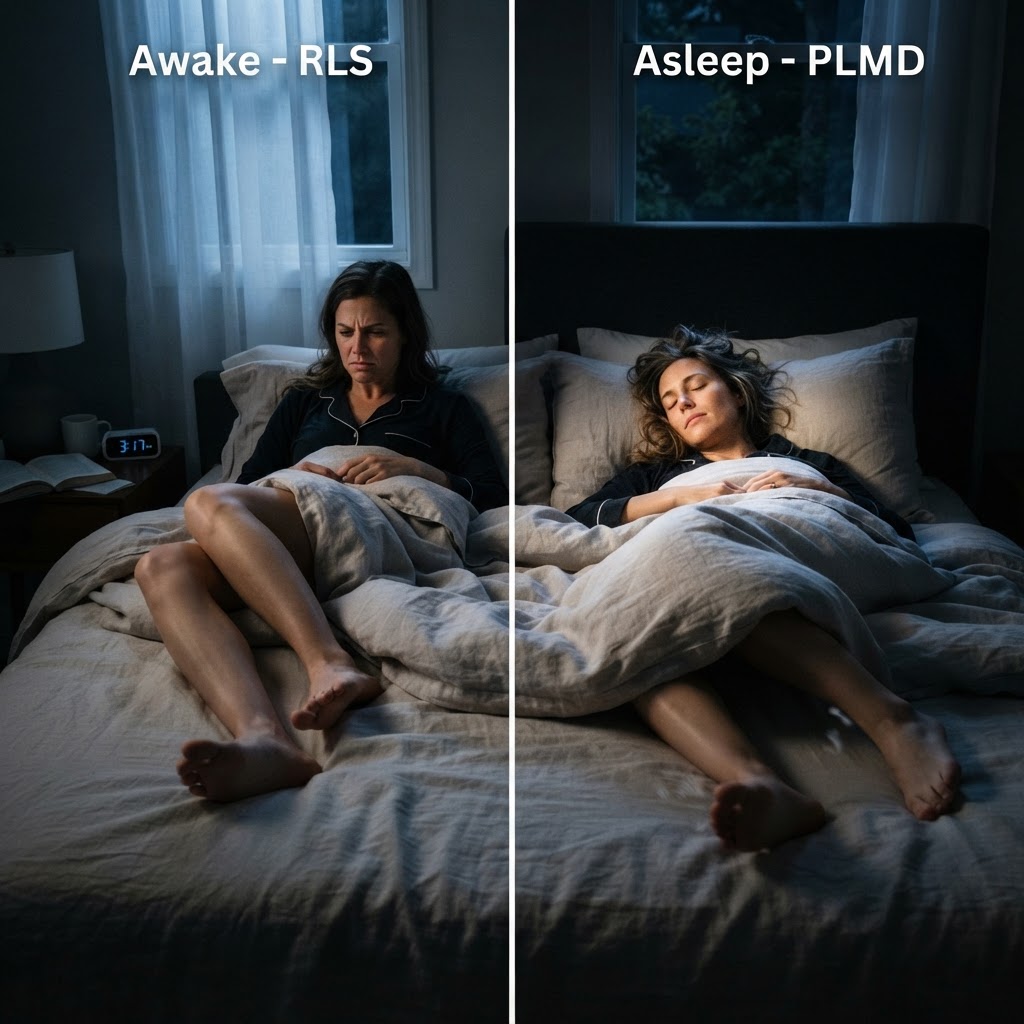
- RLS is characterized by a conscious, irresistible urge to move the legs, usually occurring while awake.
- PLMD is an involuntary condition where limbs jerk during sleep, often without the individual being aware of the movement.
- While both conditions disrupt sleep quality, the primary difference between RLS and PLMD lies in the level of consciousness during the movement.
- Night twitching and nocturnal leg movements are common indicators that may warrant a consultation with a sleep specialist.
- Addressing underlying triggers like iron deficiency or sleep hygiene can significantly reduce symptoms for both conditions.
Do you often find yourself tossing and turning, unable to settle your legs after sliding between the sheets, or perhaps a partner has mentioned that you seem to be running a marathon in your sleep? If you frequently struggle with restlessness or involuntary limb movements that keep you from achieving restful, restorative sleep, you are not alone. Many people confuse the two most common nocturnal movement issues: Restless Leg Syndrome (RLS) and Periodic Limb Movement Disorder (PLMD). While both fall under the umbrella of sleep-related movement disorders and can wreak havoc on your energy levels, they are distinct clinical conditions that require different approaches to management. Understanding the nuance of RLS vs PLMD is the first step toward reclaiming your nights and addressing the root causes of that persistent night twitching. In this guide, the healthauthoritylife Editorial Team explores the symptoms, mechanisms, and distinctions between these conditions to help you determine if your sleep disruption is a conscious struggle or a silent, nocturnal phenomenon.
Defining Restless Leg Syndrome: The Urge to Move
Restless Leg Syndrome (RLS), medically known as Willis-Ekbom Disease, is a neurological condition that manifests as an overwhelming, often irresistible urge to move the legs. This sensation typically begins or worsens during periods of inactivity, such as sitting on the couch or lying down in bed to prepare for sleep. Unlike simple muscle cramps or restlessness, the urge is accompanied by highly uncomfortable sensations deep within the limbs. Individuals often describe these feelings as a crawling, creeping, tingling, burning, or “electric” sensation that resides beneath the skin rather than on the surface.
The hallmark of RLS is that the discomfort is almost always relieved—at least temporarily—by movement. When an individual stands up, walks around, stretches, or shakes their legs, the sensation frequently subsides. However, as soon as the person stops moving and returns to a sedentary or recumbent position, the sensations tend to return with renewed vigor. This cycle creates a significant barrier to sleep onset, as the most intense symptoms typically occur in the evening and throughout the night. Because the urge to move is conscious and distressing, patients are acutely aware of their discomfort. This distinguishes the experience from many other sleep disorders where the sufferer is effectively asleep while the symptoms occur.
Experts generally observe that the severity of RLS can fluctuate. For many, symptoms may start as mild annoyances, but over time, they can escalate, making it nearly impossible to sit through a movie, a long car ride, or a flight without needing to pace the aisles. The psychological impact of this condition is profound; the inability to control the urge to move leads to significant frustration, anxiety, and a state of hyper-arousal that prevents the brain from transitioning into the stages of sleep required for health. Furthermore, because RLS keeps the body in a state of alertness during the critical hours before sleep, it is often misidentified as simple insomnia. However, the distinct presence of the “urge to move” is a clinical indicator that points directly toward RLS.
While the exact neurological pathway of RLS remains a subject of ongoing research, scientists often point to a complex interplay involving the brain’s use of dopamine. Dopamine is a neurotransmitter that helps regulate smooth, controlled muscle movement. When dopamine levels fluctuate or are impaired, it can lead to the signaling issues associated with RLS. Many individuals also show signs of low iron stores, even when they are not technically anemic, which suggests that iron plays a crucial role in maintaining proper dopamine function. By understanding that RLS is a sensory-motor disorder characterized by this conscious, persistent demand for movement, those suffering can better describe their symptoms to a healthcare professional, ensuring they receive the appropriate diagnostic support rather than being dismissed as having “restless nights.”
Understanding Periodic Limb Movement Disorder: The Silent Twitching
Periodic Limb Movement Disorder (PLMD) represents a stark contrast to RLS. While RLS is a sensory experience that demands action, PLMD is purely a motor event that occurs while the individual is asleep and is usually completely involuntary. Individuals with PLMD experience repetitive, rhythmic movements of the limbs—most commonly the legs, though sometimes the arms—that occur during the night. These movements are often described as twitching, jerking, or bending of the knees, ankles, and toes. Unlike RLS, which is often reported by the sufferer, PLMD is frequently discovered by a sleeping partner who is disturbed by the physical kicking or erratic motions of the person beside them.
The movements associated with PLMD typically occur in periodic episodes. A single “event” involves a brief muscle contraction lasting anywhere from a fraction of a second to several seconds. These contractions happen at regular intervals, often recurring every 20 to 40 seconds throughout the night. Because these episodes occur during the sleep cycle, the affected individual is often unaware that they are moving. The primary symptom that brings the patient to a clinic is not the movement itself, but rather the daytime fatigue, excessive sleepiness, or the sensation that their sleep was non-restorative. The body is essentially performing “micro-arousals”—brief disruptions in sleep stages caused by the limb jerking—which prevent the person from reaching the deep, restorative stages of REM and non-REM sleep.
The silent nature of PLMD is what makes it particularly insidious. A person might wake up feeling as though they slept through the night, yet they experience chronic exhaustion throughout the day, often relying on caffeine to function. This “unrefreshing sleep” is a hallmark sign that the sleep architecture is being fragmented by nocturnal leg movements. It is important to note that limb movements during sleep are not uncommon in healthy adults, but they are only classified as a disorder when the frequency and intensity are sufficient to cause clinical sleep disruption or significant distress. If the movements don’t cause the person or their partner to lose sleep, it is often not considered a disorder requiring medical intervention.
From a clinical perspective, PLMD is often diagnosed through polysomnography (a sleep study). During this process, sensors monitor electrical activity in the muscles of the legs to record the timing, duration, and frequency of the jerks. Clinicians look for patterns that meet specific thresholds to confirm the diagnosis. Because PLMD is often comorbid with RLS—a significant number of people with RLS also exhibit periodic limb movements during sleep—it is common for clinicians to screen for both conditions simultaneously. However, even if they appear together, the clinical management strategies for the unconscious, involuntary twitching of PLMD must be carefully balanced with the sensory-based strategies for RLS. By recognizing PLMD as a distinct, often silent sleep architecture disturber, patients can work toward finding relief from the underlying nocturnal leg jerking that degrades their daily quality of life.
Primary Differences Between RLS and PLMD
When analyzing the difference between RLS and PLMD, the most critical factor to consider is the level of consciousness. RLS is a sensory-driven, conscious experience, while PLMD is a motor-driven, unconscious occurrence. Think of RLS as an active struggle against one’s own body to find comfort, while PLMD is a passive disruption that happens to the body while the mind is offline. While there is a significant amount of overlap—many people experience both—the clinical classification depends entirely on the patient’s awareness and the timing of the symptoms.
To help clarify the distinction, consider the following comparison table which outlines the major differences in symptoms, patient awareness, and the impact on the sleep environment:
| Feature | Restless Leg Syndrome (RLS) | Periodic Limb Movement Disorder (PLMD) | Best For |
|---|---|---|---|
| Consciousness | Fully awake, aware of discomfort | Asleep, usually unaware of movement | Identifying if symptoms occur while awake vs asleep |
| Trigger | Rest or inactivity | Occurs during sleep cycles | Determining if movement is voluntary or reactive |
| Sensation | Itching, burning, crawling feelings | Involuntary muscle jerks/twitches | Differentiating sensory vs motor issues |
| Relief Method | Stretching, walking, massage | Typically non-responsive during sleep | Evaluating if movement stops upon waking |
| Sleep Impact | Difficulty falling asleep (onset) | Fragmented sleep/frequent waking | Targeting the specific sleep struggle |
Another way to frame the difference is the “intention” behind the movement. In RLS, the movement is a reaction to a stimulus. Your brain receives a signal that your leg is uncomfortable, and the only way to silence that signal is to move the limb. You are effectively performing a self-soothing action. Conversely, in PLMD, there is no sensory “warning” signal that the patient perceives. The central nervous system triggers a contraction, the limb jerks, and the sleep cycle is interrupted. The person does not wake up because they feel an itch or a crawl; they wake up because their leg has kicked. This fundamental gap in the patient’s experience is why RLS is often discussed in the context of anxiety and frustration, whereas PLMD is often discussed in the context of persistent, unexplainable fatigue and morning grogginess.
Finally, we must consider the perspective of the bed partner. The partner of an RLS sufferer typically sees a person who is restless, tossing, and frequently getting out of bed to walk around the room. The partner of a PLMD sufferer, however, sees someone who remains in bed but kicks, jerks, or thrashes periodically throughout the night. By comparing these observations, individuals can better categorize their experiences. Recognizing these differences is vital because they often require different diagnostic approaches; an RLS diagnosis relies heavily on a clinical interview and a patient’s self-reporting of sensations, whereas a PLMD diagnosis almost always requires objective, diagnostic testing during a sleep study to capture the nocturnal leg movements as they happen.
Common Symptoms and Physical Sensations to Watch For
Identifying whether you are dealing with RLS or PLMD requires a keen eye on your own physiology. For those navigating the potential for RLS, the physical sensations are often described as being deep inside the leg muscles, between the knee and the ankle. Some people report symptoms in their thighs or even their arms in severe cases. The vocabulary used to describe these sensations is remarkably consistent across many patients: “crawling,” “creepy,” “tingling,” “pulling,” or “bubbly.” The key detail is that these feelings are not strictly painful in the traditional sense, but they are profoundly distracting and irritating to the point that ignoring them feels impossible.
For those checking for signs of PLMD, the physical sensations are nearly non-existent because the episodes occur during sleep. Instead, the symptoms are found in the aftermath of the night. If you frequently wake up in the morning feeling as if you haven’t slept at all, despite spending eight hours in bed, this is a major red flag for sleep fragmentation. You might also notice that the sheets are tangled or kicked off at the foot of the bed, indicating significant nocturnal movement. Many individuals with PLMD report “spontaneous” leg kicks that they notice just as they are drifting into or out of sleep, but the primary symptoms are the objective physiological responses of the body that happen throughout the night.
It is important to watch for certain temporal patterns. RLS symptoms typically follow a circadian rhythm, peaking in the evening and overnight. If your legs start feeling “agitated” at 8:00 PM while you are watching TV, but feel fine at 8:00 AM while you are out for a morning walk, this is a classic presentation of RLS. PLMD does not necessarily follow this evening-only pattern, although it is most prevalent during the early stages of the sleep cycle. If you are noticing persistent night twitching that leads to daytime sleepiness, irritability, and difficulty concentrating, you are likely experiencing the “cost” of these movements on your sleep quality.
Additionally, pay attention to triggers that seem to exacerbate these sensations. For many, stimulants like caffeine, nicotine, or even certain medications—such as some antidepressants or antihistamines—can worsen the symptoms of both conditions. If you notice your leg jerking while sleeping becomes more frequent after a high-caffeine day, or if your RLS sensations are more intense after a stressful evening, keep a log of these observations. Documenting the duration, time of day, and intensity of these movements provides a roadmap for your healthcare provider to help narrow down the cause and potential path toward relief.
The Underlying Causes and Risk Factors for Both Conditions
The quest to understand the root cause of RLS and PLMD often leads to the iron-dopamine hypothesis. Experts generally agree that iron deficiency plays a central role in the development and worsening of these conditions. Iron is a necessary cofactor for the production of dopamine in the brain. When iron stores are low, dopamine signaling can become erratic, potentially leading to the sensory irritation seen in RLS and the involuntary motor movements seen in PLMD. This is why a simple blood panel measuring serum ferritin is often one of the first diagnostic steps taken by clinicians. It is important to remember that “normal” iron levels for a general health lab result might still be insufficient to optimize dopamine production in the brain, meaning that even those without anemia can still be symptomatic.
Genetics also appear to play a significant role. Many people diagnosed with these conditions report a family history of similar sleep disturbances. Research suggests that there may be a genetic predisposition, particularly in early-onset cases of RLS. While genetics provide the blueprint, environmental and lifestyle factors often act as the triggers. Chronic sleep deprivation, for example, can lower the threshold for these movements, creating a feedback loop where poor sleep leads to more symptoms, which in turn leads to even poorer sleep. The cycle is often self-perpetuating, making early intervention essential to prevent the condition from becoming a chronic, nightly struggle.
Other systemic conditions are also frequently linked to these movement disorders. For instance, individuals with chronic kidney disease or those undergoing dialysis frequently report significant symptoms of RLS and PLMD. This is thought to be related to the depletion of vitamins and minerals, as well as the build-up of waste products that the kidneys would otherwise filter out. Additionally, pregnancy is a well-known risk factor, with many women reporting the sudden onset of RLS symptoms during the second or third trimester. This is likely due to the combination of physiological stress, hormonal shifts, and the increased demand for iron in the developing fetus, which can temporarily deplete maternal stores.
Lifestyle factors such as alcohol consumption, poor sleep hygiene, and physical inactivity during the day can also exacerbate the frequency of nocturnal leg movements. While it is tempting to blame stress or external factors, it is crucial to investigate these physiological markers systematically. By addressing modifiable risk factors—such as maintaining optimal iron levels, establishing a consistent sleep-wake schedule, and moderating caffeine and alcohol intake—many individuals find that the severity of their RLS and PLMD can be significantly mitigated. Understanding that these are not simply “bad habits” or “nervous ticks” but physiological events with specific, often treatable, biological causes is the most empowering step a patient can take on their path to health and wellness.
How Doctors Diagnose RLS and PLMD via Sleep Studies
Determining the clinical difference between RLS and PLMD requires a specialized diagnostic approach, as patients often cannot accurately describe their own movements while in a state of unconsciousness. Because nocturnal leg movements happen primarily during sleep, a physical examination during daylight hours is rarely enough to capture the full picture of the disorder. Instead, physicians frequently rely on a Polysomnogram (PSG), or a comprehensive sleep study, to document physiological activity throughout the night.
During a sleep study, sensors are placed on the skin, a procedure known as polysomnography. These sensors record essential data points, including brain activity (EEG), eye movements (EOG), heart rate (ECG), and, crucially, muscle activity in the lower limbs (EMG). For PLMD, the diagnostic threshold is typically reached when the patient exhibits repetitive, rhythmic leg movements that last between 0.5 and 5 seconds and recur at intervals of 5 to 90 seconds. A trained sleep technologist monitors these events to ensure they are not caused by other factors, such as obstructive sleep apnea or brief arousals unrelated to movement disorders.
It is important to note that a sleep study is the gold standard for diagnosing PLMD, but it is not strictly required for diagnosing RLS. RLS is considered a clinical diagnosis, meaning it is largely based on a patient’s reported symptoms, such as the irresistible urge to move the legs while at rest. A doctor may use the International Restless Legs Syndrome Study Group (IRLSSG) diagnostic criteria to confirm RLS. However, a sleep study is often ordered if the physician suspects the presence of both conditions or if there is a concern that another sleep-related breathing or movement disorder is disrupting the patient’s rest.
Diagnostic protocols also involve a thorough review of the patient’s medical history. Since many medications—such as certain antidepressants, antihistamines, and anti-nausea drugs—can trigger or exacerbate nighttime twitching, the diagnostic process often includes a “medication washout” or adjustment phase. By eliminating external triggers, doctors can better isolate whether the symptoms are primary (idiopathic) or secondary to an underlying health condition.
The Connection Between Iron Levels and Limb Movements
One of the most robust links identified in sleep medicine is the association between low brain iron stores and the pathophysiology of nocturnal leg movements. Iron acts as a crucial cofactor in the synthesis of dopamine, a neurotransmitter that helps regulate muscle movement. When iron levels are insufficient, the dopaminergic system, which controls the signals sent to the motor neurons in the legs, may become dysregulated, leading to the sensations associated with RLS and the involuntary muscle activations seen in PLMD.
Clinical practice often involves checking serum ferritin levels—a protein that indicates the body’s stored iron. It is a common misconception that individuals with low iron will always present with anemia. In fact, many patients suffering from RLS or PLMD exhibit normal hemoglobin levels but possess low serum ferritin. Experts generally agree that maintaining ferritin levels within a specific range is often necessary to reduce the severity of symptoms. While iron supplementation may be recommended, it should only be initiated under the guidance of a healthcare professional, as excessive iron intake can lead to toxicity and other serious health complications.
Beyond oral supplementation, doctors may investigate why iron deficiency exists in the first place. Conditions like celiac disease, chronic gastrointestinal bleeding, or restricted diets can deplete iron levels over time. By addressing the root cause of the iron deficiency, patients often report a significant decrease in the frequency of leg jerking while sleeping. Dietary adjustments, such as increasing the intake of bioavailable heme iron found in animal proteins or pairing plant-based iron with vitamin C to enhance absorption, are often recommended as supportive measures alongside medical treatment.
| Management Strategy | Primary Focus | Best For |
|---|---|---|
| Iron Supplementation | Restoring ferritin levels to support dopamine function | Patients with verified iron deficiency |
| Dopaminergic Agonists | Direct regulation of neurotransmitter signaling | Severe, daily RLS symptoms |
| Gabapentinoids | Calming overactive nerve signals in the legs | Painful RLS or co-occurring nerve-related discomfort |
| Lifestyle & Sleep Hygiene | Reducing overall physical and mental arousal | Mild to moderate cases and long-term symptom management |
Lifestyle Changes to Reduce Nocturnal Leg Discomfort
While medical intervention is often necessary, lifestyle modifications play a foundational role in managing the symptoms of RLS and PLMD. The goal is to minimize sensory input to the nervous system during the evening hours and prepare the body for deep, restorative sleep. One of the most effective strategies is the implementation of a consistent sleep hygiene schedule. By going to bed and waking up at the same time every day, the body’s internal clock is reinforced, which can sometimes reduce the propensity for leg jerking during transitions between sleep stages.
Physical activity, when timed correctly, can act as a natural therapy for nighttime twitching. Moderate exercise, such as walking, cycling, or yoga, during the morning or afternoon can help expend excess energy and reduce muscle tension. However, high-intensity exercise too close to bedtime can have the opposite effect, stimulating the nervous system and potentially increasing the urge to move the legs. Many people find that simple leg stretches or calf massages shortly before bed provide a period of relief that allows them to drift off more easily.
Temperature control is another often-overlooked factor. Some individuals report that keeping the bedroom environment cool, while perhaps applying a heating pad or taking a warm bath to relax the lower leg muscles, helps mitigate the “creepy-crawly” sensation associated with RLS. Conversely, avoiding stimulants such as caffeine, alcohol, and nicotine is vital. Caffeine, in particular, acts as a potent nervous system stimulant that can linger in the system for several hours, potentially triggering twitching long after the morning cup of coffee. Alcohol may initially help one fall asleep, but it often causes frequent awakenings and an increase in periodic limb movements during the second half of the night as the body metabolizes the alcohol.
When to See a Specialist for Persistent Night Twitching
While occasional leg twitching is not uncommon and often harmless, there comes a point where professional intervention is required. If the quality of your life is being negatively impacted, it is time to seek a specialist. The primary indicator that you should consult a doctor is if your nighttime symptoms result in excessive daytime sleepiness, irritability, or an inability to function effectively during work or social obligations. Chronic sleep deprivation caused by limb movements can lead to long-term cognitive issues, memory impairment, and cardiovascular strain.
You should also seek a specialist, such as a neurologist or a sleep medicine physician, if your symptoms are progressive. If you notice that the sensations in your legs are appearing earlier in the day or becoming more painful rather than just uncomfortable, this may indicate a more complex underlying neurological issue. Furthermore, if you have attempted basic lifestyle changes for several weeks—such as cutting out caffeine and improving sleep hygiene—without any noticeable improvement, medical diagnostics are needed to rule out secondary causes.
When preparing for an appointment, it is highly recommended to keep a sleep diary. Recording what time you go to bed, how many times you wake up, and a description of the sensations in your legs can provide the specialist with invaluable data. Be prepared to bring a list of all current medications, including over-the-counter supplements, as many substances interfere with dopamine pathways. A specialist will be able to differentiate between RLS, PLMD, and other conditions like nocturnal leg cramps or peripheral neuropathy, ensuring that you receive a targeted treatment plan rather than a trial-and-error approach.
Frequently Asked Questions
Is it possible to have both RLS and PLMD at the same time?
Yes, it is very common for these conditions to co-occur. A significant majority of people diagnosed with Restless Leg Syndrome also exhibit Periodic Limb Movement Disorder during sleep. While RLS is characterized by the conscious urge to move due to uncomfortable sensations, PLMD is an unconscious, involuntary muscle activation that often occurs without the patient even realizing they are moving.
Do nighttime leg jerks always indicate a medical disorder?
Not necessarily. Occasional leg jerks, particularly those that happen as you are just falling asleep (known as hypnic jerks), are a normal part of the body’s transition into sleep and are generally considered harmless. However, if the movements are rhythmic, frequent throughout the night, and associated with poor sleep quality or daytime fatigue, they warrant a professional evaluation.
Can stress or anxiety make nighttime leg twitching worse?
There is a strong correlation between psychological stress and the exacerbation of RLS and PLMD symptoms. Stress increases the levels of cortisol and other stress-related hormones in the body, which can heighten nervous system sensitivity. Many patients report that during periods of high life stress, their urge to move their legs and their frequency of nocturnal movements intensify significantly.
Are there specific foods that help reduce night twitching?
While no single “superfood” cures RLS or PLMD, focusing on a diet rich in magnesium, iron, and folate may help support nervous system health. Foods such as dark leafy greens, legumes, seeds, and lean meats can ensure you are getting adequate nutrients. It is equally important to avoid processed sugars and excessive caffeine, as these can destabilize blood sugar and stimulate the nerves, potentially worsening symptoms.
Is nighttime leg twitching considered a permanent condition?
For many, RLS and PLMD are chronic conditions that require long-term management. However, the severity can fluctuate over time based on factors like stress, medication, and iron status. With the right combination of lifestyle changes, iron therapy, and—when necessary—medication, many individuals successfully manage their symptoms and achieve high-quality sleep consistently.
What should I avoid doing if I have symptoms of RLS or PLMD?
You should generally avoid consuming alcohol in the evening, as it is a common trigger for muscle jerking and disrupts sleep architecture. Additionally, avoid taking sedating antihistamines found in many “PM” over-the-counter cold and allergy medications, as these are well-known for worsening the symptoms of both Restless Leg Syndrome and Periodic Limb Movement Disorder.
Conclusion
Understanding the difference between RLS and PLMD is the first step toward reclaiming your nights and improving your overall well-being. While RLS is defined by that restless, creeping sensation that demands movement, PLMD is the quiet, rhythmic disturber that keeps you from the restorative sleep you deserve. Both conditions are deeply linked to our nervous system and iron levels, yet both are highly manageable through a combination of lifestyle vigilance and medical support.
Do not let nighttime twitching become your “new normal.” If you find yourself consistently frustrated by restless nights or waking up feeling unrefreshed, take action today. Start by tracking your symptoms in a sleep diary and evaluating your evening habits. When you are ready, schedule an appointment with a healthcare professional to discuss your concerns and explore potential diagnostic options. Better sleep is not just a luxury—it is the foundation of a healthy, vibrant life. Begin your journey toward better rest tonight.
By healthauthoritylife Editorial Team
This article is for informational purposes only and is not a substitute for professional medical advice. Always consult your doctor before making changes to your diet, exercise routine, or treatment plan.
Leave a Reply