
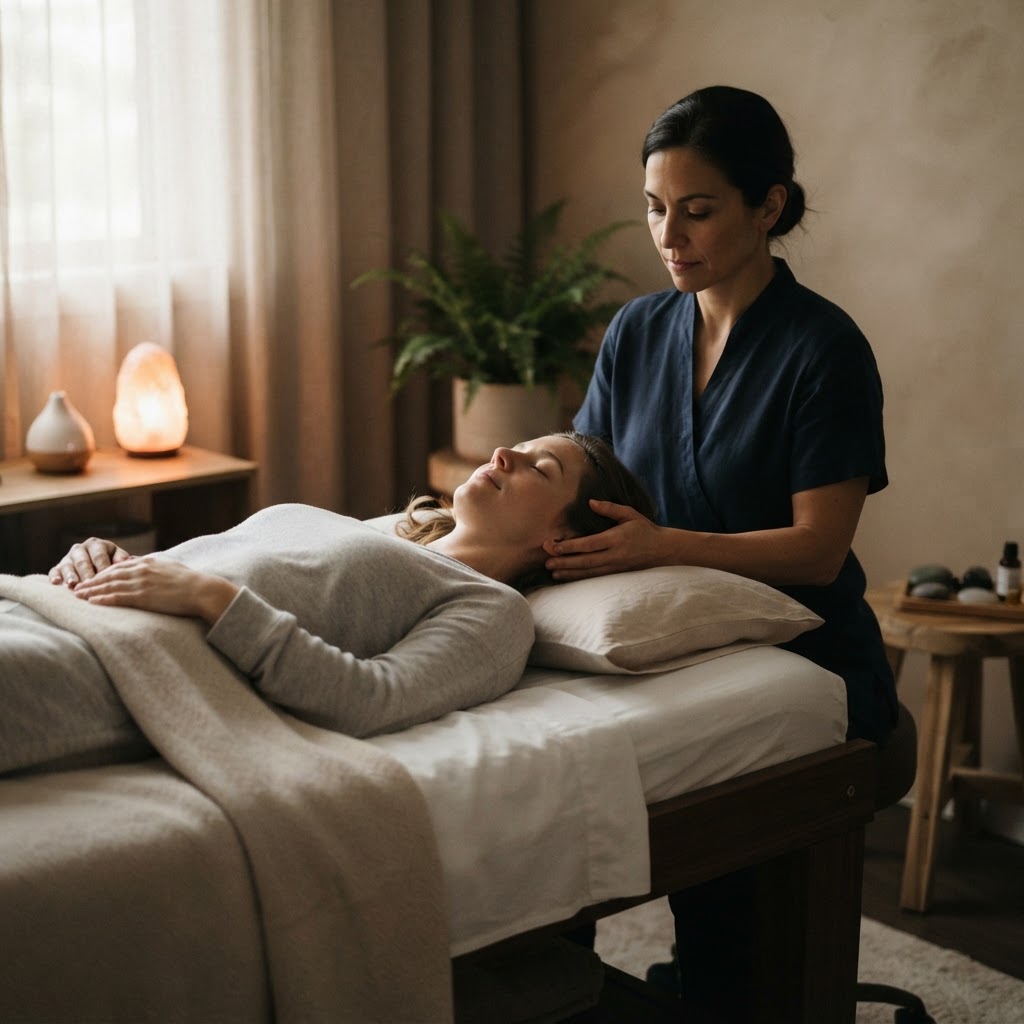
- Craniosacral therapy (CST) is a gentle, hands-on approach that aims to release tensions deep in the body to relieve pain and improve whole-body health.
- By balancing the craniosacral system, the therapy helps shift the body from a sympathetic “fight-or-flight” state into a parasympathetic “rest-and-digest” state.
- CST is particularly effective for autonomic nervous system stabilization, making it a powerful tool for those struggling with chronic stress and anxiety.
- Unlike traditional deep-tissue massage, CST focuses on subtle energy and rhythm rather than muscle manipulation, making it ideal for those with nervous system sensitivity.
- Somatic healing through CST provides a non-invasive way to address physical symptoms that are rooted in nervous system dysregulation.
In an era defined by relentless digital connectivity and high-pressure lifestyles, the human body often remains trapped in a state of perpetual alertness. For millions, the quiet exhaustion of chronic stress is not merely a mental burden but a physiological reality manifesting as physical tension, digestive distress, and sensory overload. While traditional interventions often target the symptoms of this dysregulation, a growing number of individuals are turning toward modalities that address the body’s internal environment directly. Craniosacral therapy stands at the forefront of this movement, offering a bridge between the physical structure of the body and the intricate, often overlooked, rhythms of the nervous system. As we explore the science and somatic wisdom behind this gentle practice, it becomes clear that true healing requires more than just masking pain—it requires an intentional return to the body’s natural state of equilibrium.
What Is Craniosacral Therapy and How Does It Work?
Craniosacral therapy (CST) is a light-touch manual therapy that focuses on the craniosacral system, which encompasses the membranes and cerebrospinal fluid (CSF) that surround and protect the brain and spinal cord. While the concept may sound abstract to those accustomed to more forceful physical therapies, the fundamental principles are rooted in the physical anatomy of the central nervous system. A practitioner uses a touch that is typically no heavier than the weight of a nickel, applying this pressure to specific points along the cranium, the spine, and the pelvis. The objective is not to manipulate muscles or bones in the traditional sense, but to palpate and influence the subtle, rhythmic pulse of the cerebrospinal fluid.
The practice relies on the observation that the craniosacral system exhibits a rhythmic motion, often referred to as the “cranial rhythm.” Proponents suggest that when this rhythm is balanced and unobstructed, the body’s internal environment is optimal for self-repair. When a person experiences physical trauma, emotional distress, or long-term chronic stress, these experiences can lead to restrictions in the connective tissues—or fascia—that encase the nervous system. By gently encouraging the release of these restrictions, a practitioner helps the body shed accumulated tension.
During a typical session, the recipient remains fully clothed and lies on a massage table. The therapist begins by tuning into the client’s body, locating areas of tension or asymmetry. Because the nervous system is highly interconnected, the therapist may find that tension in the sacrum at the base of the spine corresponds to restricted movement in the bones of the skull. By providing a stable, quiet space for the body to reorganize, CST allows the nervous system to “down-regulate.” This process is often described as somatic healing; it is an invitation for the body to drop its defensive armor. In this state of profound relaxation, the body’s natural intelligence takes over, addressing the root causes of chronic tension that might be contributing to headaches, insomnia, or persistent physical fatigue. It is a therapy of subtraction rather than addition, removing the obstacles that prevent the body from operating in its most resilient state.
The Connection Between Cranial Rhythm and Nervous System Health
To understand why craniosacral therapy benefits the body, one must appreciate the importance of the cranial rhythm. While mainstream medical physiology primarily focuses on the cardiovascular and respiratory rhythms, many alternative and integrative health experts observe a third, more subtle rhythm associated with the fluctuation of cerebrospinal fluid. This fluid acts as a cushion for the central nervous system, and its rhythmic movement is essential for the delivery of nutrients and the removal of metabolic waste from the brain. When this fluid motion becomes stagnant or blocked, it can have downstream effects on the efficiency of the entire nervous system.
The connection between this rhythm and overall health is profound. The central nervous system acts as the master control center for every other system in the body. When the craniosacral system is in balance, the brain and spinal cord can communicate more effectively with the peripheral nervous system. However, when the fascia surrounding these structures becomes tightened—often as a byproduct of chronic stress—this communication can become garbled. Imagine a kink in a garden hose; the flow is restricted, and the result is inefficient delivery. Similarly, chronic physical and emotional stressors create “kinks” in the soft tissue, which may contribute to a feeling of being “on edge” or physically rigid.
For those navigating the challenges of chronic nervous system regulation, the cranial rhythm serves as a barometer for internal safety. When the rhythm is erratic or weak, the body often perceives a lack of safety, triggering further stress responses. Conversely, when a practitioner helps stabilize this rhythm, they are providing a form of sensory feedback that tells the brain it is safe to relax. This is not merely a psychological experience; it is a neurological one. As the rhythm settles into a more consistent pattern, the body often experiences a spontaneous release of stored physical energy. This creates a feedback loop: as the rhythm improves, the nervous system becomes better equipped to self-regulate, leading to long-term improvements in resilience. By focusing on the rhythm rather than the surface musculature, CST addresses the nervous system at its structural foundation, providing a level of care that reaches deep into the core of human physiology.
How Craniosacral Therapy Impacts the Autonomic Nervous System
The autonomic nervous system (ANS) governs the processes we don’t have to think about: heart rate, digestion, respiration, and the inflammatory response. It operates through two primary branches: the sympathetic nervous system (SNS), which drives the “fight-or-flight” response, and the parasympathetic nervous system (PNS), responsible for “rest-and-digest” functions. In a healthy organism, these two systems remain in a dynamic balance. However, in the modern world, many individuals exist in a state of sympathetic dominance, where the “fight-or-flight” response is perpetually activated. This leads to the symptoms of chronic stress, such as racing thoughts, digestive issues, and shallow breathing.
Craniosacral therapy functions as a powerful tool for vagus nerve stimulation and parasympathetic activation. The vagus nerve is the primary component of the parasympathetic system, winding from the brainstem through the neck and down to the abdomen. Because this nerve is in close proximity to the structures manipulated during CST, the therapy encourages the vagus nerve to increase its “vagal tone.” High vagal tone is associated with better emotional regulation, improved heart rate variability, and a faster recovery from stress. When a therapist works on the cranium, they are often gently encouraging the muscles around the brainstem to relax, which reduces physical impingement on the vagus nerve and encourages the body to switch gears into a recovery state.
Many clients report that during or shortly after a session, they experience a sudden, involuntary shift. This might manifest as a deep yawn, a sigh, or a feeling of heaviness in the limbs. These are classic physiological markers of the parasympathetic nervous system coming online. By shifting the body out of sympathetic dominance, CST helps dampen the inflammatory response that often accompanies chronic stress. For individuals with conditions like fibromyalgia, migraines, or irritable bowel syndrome—all of which are linked to nervous system dysregulation—this shift is vital. It provides the nervous system with a “reset,” allowing it to recalibrate its sensitivity. Instead of reacting to minor stressors as threats, the body learns to remain grounded, effectively lowering the baseline level of physiological agitation. This form of somatic healing is essential for long-term health, as it teaches the body that it is possible to exist in a state of stillness without being in danger.
| Modality | Primary Focus | Best For |
|---|---|---|
| Craniosacral Therapy | Cerebrospinal fluid rhythm & central nervous system | Nervous system regulation & sensory sensitivity |
| Swedish Massage | Surface muscles & blood circulation | General relaxation & muscle stiffness |
| Deep Tissue Massage | Deep muscle layers & trigger points | Chronic pain & sports-related injury |
| Myofascial Release | Fascial tissue constriction | Restricted range of motion |
Top Benefits for Those With Chronic Stress and Anxiety
For individuals struggling with chronic stress and anxiety, the path to healing can feel like an uphill battle. Often, talking through issues is not enough because the trauma or the stress is physically encoded in the body. Craniosacral therapy offers a distinct advantage here because it bypasses the cognitive brain and communicates directly with the nervous system. One of the primary benefits is the reduction of “hyper-arousal.” When the nervous system is chronically stressed, it becomes sensitive to internal and external stimuli, often leading to a feeling of being perpetually overwhelmed. CST helps to soothe this over-active state by providing consistent, rhythmic, and gentle input that the brain interprets as a signal of safety.
Another significant benefit is the improvement of sleep quality. Anxiety often manifests as the inability to “switch off” at night. Because CST promotes parasympathetic dominance, many clients find that the therapy helps them transition into deeper stages of sleep more easily. By calming the nervous system during the day, the body is less prone to the late-night spikes in cortisol that cause insomnia. Furthermore, the therapy can assist in releasing the physical “armor” that accompanies chronic anxiety. When we are stressed, we often unconsciously hold tension in our jaw, neck, shoulders, and pelvic floor. These areas are heavily impacted by the nervous system’s stress response. Through the gentle manipulation of the cranial bones and the sacrum, the body releases this physical gripping, which in turn signals to the brain that the threat has passed.
Finally, CST aids in building interoceptive awareness—the ability to perceive the internal state of the body. Many people with chronic anxiety are disconnected from their bodies, viewing them as sources of discomfort or unreliability. Through the non-judgmental, slow-paced nature of craniosacral therapy, individuals learn to re-establish a positive relationship with their physical selves. They begin to notice the subtle signals of their own nervous system—the slight tightening of the chest or the shift in breath—before those signals escalate into full-blown panic or fatigue. This heightened awareness empowers individuals to implement their own self-regulation tools, creating a sustainable foundation for long-term emotional and physical health. It turns the body from a source of stress into a tool for self-mastery.
Craniosacral Therapy vs. Traditional Massage: Key Differences
It is common for newcomers to health and wellness to confuse craniosacral therapy with traditional massage, yet the two operate on fundamentally different philosophies. Traditional massage, whether it be Swedish or deep tissue, is primarily focused on the musculoskeletal system. The practitioner works to knead, stretch, and manipulate muscle fibers to increase blood flow, break down adhesions, and reduce tension. It is a therapy of structural engagement, where the therapist is “doing” something to the muscles to achieve a specific result. This is highly effective for localized muscle pain, knots, and post-workout recovery, but it rarely targets the nervous system directly or with the same level of precision as CST.
Craniosacral therapy, by contrast, is a form of nervous system regulation. While a massage therapist might exert significant force to manipulate tissue, a craniosacral therapist uses a touch so light that the client may feel as though the therapist is barely doing anything at all. The aim is not to move muscles, but to listen to the body’s internal rhythms. This makes CST significantly more appropriate for individuals with nervous system sensitivity, such as those with fibromyalgia, chronic fatigue syndrome, or those who find deep-tissue work to be overly stimulating or painful. If a person is in a state of chronic sympathetic overdrive, deep tissue massage can sometimes trigger a protective response in the muscles, causing the body to tense up further. CST, by remaining well below this threshold of “protective bracing,” bypasses this resistance entirely.
Furthermore, the therapeutic objective differs. Massage is often focused on the *end result*—getting a muscle to relax, or increasing range of motion in a joint. Craniosacral therapy is focused on the *process*—allowing the body to find its own path to regulation. It is a collaborative, quiet dialogue between the therapist’s hands and the client’s internal system. While a massage therapist may work through a set routine of techniques, a craniosacral therapist follows the body’s lead, shifting their focus based on where the tissues show restriction or where the cranial rhythm feels weak. This allows the body to prioritize its own healing needs. For those dealing with the long-term impacts of stress, this distinction is vital. While massage can provide temporary physical relief, craniosacral therapy offers a means of re-training the nervous system, helping it to shift out of a chronic state of threat and into a baseline of calm, stability, and sustained health.
Can Craniosacral Therapy Support Chronic Pain Conditions?
Chronic pain is rarely just a physical sensation; it is a complex neurological event. When the body remains in a state of sustained “fight or flight,” the nervous system often becomes hypersensitive, amplifying pain signals that might otherwise be manageable. Craniosacral therapy (CST) addresses this cycle by focusing on the membrane system surrounding the brain and spinal cord, which houses the central nervous system. By gently releasing restrictions in these membranes, CST may help shift the body from a sympathetic-dominant state (stress-response) to a parasympathetic-dominant state (rest and repair).
For individuals dealing with conditions like fibromyalgia, migraines, or persistent lower back pain, the benefit lies in downregulating the autonomic nervous system. When the central nervous system feels “safe,” the brain often reduces its output of pain signals. Practitioners observe that patients with chronic pain frequently hold significant tension in the dural membranes, which can create a “pull” on the spine and cranium. By facilitating the release of these tissues, the therapy creates space for improved cerebrospinal fluid flow, which is thought to be essential for the nervous system’s ability to self-regulate and recover.
Furthermore, CST is increasingly viewed as a form of somatic healing. Chronic pain often leaves a “memory” in the tissues, keeping muscles chronically contracted as a protective mechanism. Because CST is non-invasive and utilizes an extremely light touch—typically no more than the weight of a nickel—it avoids triggering the body’s defensive bracing response. This allows the nervous system to let down its guard, potentially interrupting the cycle of pain sensitization that defines many chronic conditions.
What to Expect During Your First Craniosacral Session
Entering your first session of craniosacral therapy can be a unique experience, especially if you are accustomed to more vigorous bodywork like deep tissue massage or chiropractic adjustments. The session typically begins with a brief intake interview where the practitioner gathers information regarding your history of trauma, current stress levels, and specific goals for nervous system regulation.
You will remain fully clothed during the session. You will typically be asked to lie comfortably on your back on a massage table. The practitioner will begin by making contact with your body—often at the feet, the base of the skull, or the sacrum—to “tune in” to the craniosacral rhythm. This rhythm is a subtle pulse related to the circulation of cerebrospinal fluid. Once the practitioner has established a baseline, they will move into various hand placements designed to listen to your body’s tissue tension.
During the process, you may experience a profound sense of stillness. Many clients report feelings of “drifting” between wakefulness and sleep. You might notice subtle sensations such as tingling, warmth, a release of tension in your jaw or neck, or even involuntary muscle twitches as your nervous system releases stored stress. It is important to note that the therapist is not “fixing” you in the traditional sense; rather, they are providing a supportive environment for your body’s internal wisdom to initiate its own repair process. The atmosphere is generally quiet, meditative, and focused entirely on your autonomic nervous system’s transition toward calm.
Combining Craniosacral Therapy With Vagus Nerve Exercises
While craniosacral therapy is a powerful modality on its own, it can be significantly amplified when combined with at-home vagus nerve stimulation exercises. The vagus nerve is the primary component of the parasympathetic nervous system, responsible for slowing the heart rate and promoting digestion and relaxation. By engaging in daily “vagal toning,” you can support the neurological shifts initiated during your CST sessions.
Simple practices like deep, slow diaphragmatic breathing—where your exhale is twice as long as your inhale—serve as a perfect bridge to the benefits of craniosacral therapy. Adding vocal toning, such as low-frequency humming or chanting, can physically stimulate the vagus nerve through vibrations in the throat and chest. When these home exercises are practiced alongside regular professional CST, the nervous system becomes increasingly resilient, making it easier to return to a state of balance even during high-stress situations.
| Modality | Primary Mechanism | Best For |
|---|---|---|
| Craniosacral Therapy | Membrane release and cerebrospinal fluid optimization | Deep structural nervous system resetting |
| Vagus Nerve Exercises | Direct mechanical and chemical stimulation of the vagus nerve | Acute stress management and daily regulation |
| Somatic Experiencing | Processing emotional and sensory trauma in the body | Releasing stored traumatic energy |
| Diaphragmatic Breathing | Forced mechanical shift from sympathetic to parasympathetic | Immediate calming of the heart rate |
Who Should Avoid Craniosacral Therapy? Safety Considerations
While craniosacral therapy is generally regarded as a very safe and gentle approach to bodywork, there are specific circumstances where it may be contraindicated. Because the technique involves interacting with the pressure within the skull and the flow of cerebrospinal fluid, it must be approached with caution by individuals with conditions that could be affected by even minor changes in intracranial pressure.
Individuals with a recent traumatic brain injury, an aneurysm, or cerebral hemorrhage should avoid this therapy until they have received explicit clearance from their neurosurgeon or primary care physician. Similarly, anyone who has been diagnosed with a chiari malformation, a recent skull fracture, or an acute stroke should postpone treatment. While the touch is light, the intention is to facilitate movement within the dural system, and in these specific cases, that movement could be counterproductive to the healing of fragile vascular or neurological structures.
Furthermore, if you are currently experiencing a psychiatric crisis, it is recommended to work with a licensed mental health professional before exploring somatic bodywork. Sometimes, the physical release triggered by CST can bring up latent emotional memories. A qualified practitioner should be trained to hold space for these experiences, but it is always best to ensure your primary support system is established before beginning this work.
How Many Sessions Do You Need to See Real Results?
There is no “one-size-fits-all” answer to how many sessions are required, as every nervous system has a unique history of stressors and trauma. However, experts in the field typically suggest a “package” of three to five sessions to determine if the therapy is effective for your specific needs. The first few sessions are often dedicated to helping your nervous system “learn” how to settle; it is not uncommon for the first session to feel like an introduction, with deeper work occurring in the third or fourth sessions.
If you are addressing a long-term issue, such as chronic anxiety or persistent pain that has been present for years, you may benefit from a more consistent initial schedule—perhaps once a week for six weeks. This consistency helps to “train” the autonomic nervous system to favor a calm, regulated state rather than reverting to its old, high-stress baseline. Once you achieve a level of stability, many people choose to transition to a maintenance schedule, such as once a month or once every six weeks, to support ongoing health and nervous system resilience.
Frequently Asked Questions
Is Craniosacral Therapy scientifically proven?
While craniosacral therapy is an evidence-informed practice, it is often categorized as a complementary and alternative medicine. Many clinical studies exist regarding its effects on stress and pain, though the scientific community continues to call for more large-scale, randomized controlled trials to standardize findings across different clinical settings.
Does craniosacral therapy hurt?
No, the therapy is remarkably gentle. Most patients describe it as being as light as the weight of a nickel. It is designed to work with the body’s natural rhythms rather than forcing structural changes, making it a comfortable experience even for those who are sensitive to touch.
Can I practice CST on myself?
There are self-help techniques, such as light head-cradling holds, that you can learn from a qualified practitioner to help calm yourself in stressful moments. However, professional therapy provides a depth of observation and “neutral” presence that is very difficult to replicate on oneself.
How long does a typical session last?
A standard session generally lasts between 45 to 60 minutes. This allows sufficient time for the practitioner to conduct an initial check, perform the bodywork, and allow you a few minutes to reorient yourself before leaving the office.
Will I feel tired after the session?
It is very common to feel tired or “spaced out” after a session. This is actually a positive sign that your nervous system has successfully shifted into a parasympathetic (rest and repair) state. It is highly recommended to hydrate well and avoid intense physical activity immediately following a session.
How is CST different from a chiropractic adjustment?
While chiropractic care typically involves manual, high-velocity adjustments to realign joints and the spine, craniosacral therapy is much slower and focuses on the flow of cerebrospinal fluid and the release of deep dural membrane restrictions. Both can be beneficial, but they address different aspects of the physical body.
Conclusion
Craniosacral therapy offers a profound opportunity to reset the autonomic nervous system, moving the body away from the exhaustion of chronic stress and toward a state of sustainable equilibrium. By addressing the subtle tensions within our dural membranes and vagal pathways, we can unlock a deeper level of somatic healing that traditional approaches often overlook. Whether you are navigating chronic pain, persistent anxiety, or simply seeking to build a more resilient nervous system, this gentle modality provides a safe and effective pathway to internal balance.
The journey toward health is rarely a straight line, but by prioritizing the regulation of your nervous system, you are making a foundational investment in your overall well-being. If you are ready to explore how this work can support your personal health goals, reach out to a certified craniosacral therapist in your area to schedule a consultation and experience the shift for yourself.
By healthauthoritylife Editorial Team
This article is for informational purposes only and is not a substitute for professional medical advice. Always consult your doctor before making changes to your diet, exercise routine, or treatment plan.
Leave a Reply