
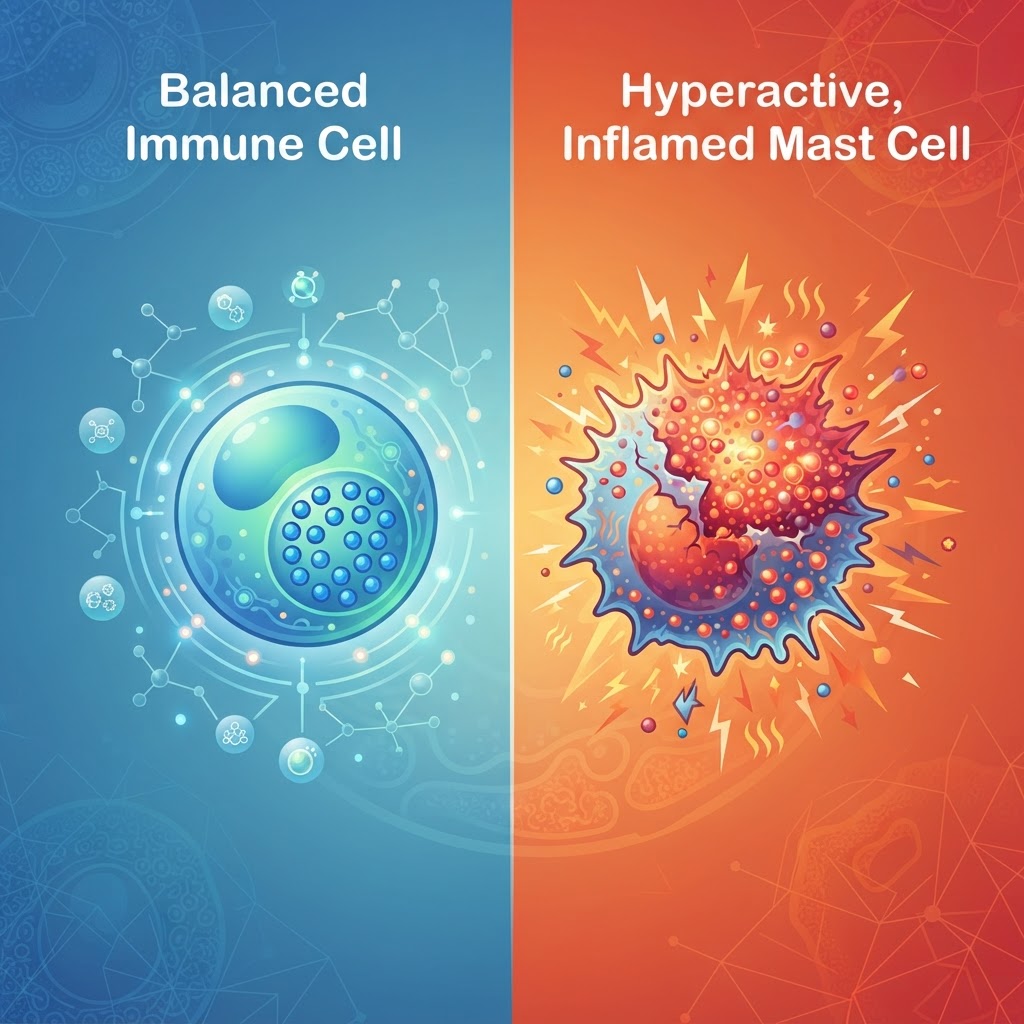
- Histamine Intolerance is primarily a digestive or enzymatic issue, whereas MCAS is a systemic immune system disorder.
- Both conditions share overlapping clinical presentations, often leading to delayed diagnoses and frustration for patients.
- Mast cells release hundreds of mediators beyond just histamine, which is why MCAS often feels more complex than histamine intolerance.
- Genetic predispositions, such as DAO or HNMT enzyme deficiencies, can significantly impact how your body handles dietary histamine.
- Effective management requires identifying individual triggers and supporting the body’s innate ability to modulate chronic inflammation.
If you have spent months or years navigating a complex labyrinth of digestive issues, skin rashes, brain fog, and unexplained fatigue, you are certainly not alone. Many individuals find themselves searching for answers when their body seems to overreact to the world around them. Two of the most frequently discussed, yet often misunderstood, conditions in modern integrative health are Histamine Intolerance and Mast Cell Activation Syndrome (MCAS). While they are often grouped together due to their shared reliance on histamine as a primary chemical culprit, the underlying mechanisms, clinical implications, and paths toward resolution are distinct. Understanding the difference between histamine intolerance and MCAS is the essential first step toward reclaiming your health and finding relief from the cycles of chronic inflammation that often accompany these conditions. In this comprehensive guide, the healthauthoritylife Editorial Team explores the intricate relationship between these two conditions, how they impact your cellular health, and how to begin navigating the journey toward stability.
Defining Histamine Intolerance and MCAS
To understand the difference between histamine intolerance and MCAS, we must first define how each manifests within the human body. Histamine Intolerance is fundamentally a condition of “overflow.” Imagine a rain barrel; your body has a certain capacity to break down histamine, which it receives from foods, bacteria, and the environment. When the intake of histamine exceeds the body’s ability to neutralize it—typically due to a deficiency in enzymes like Diamine Oxidase (DAO) or Histamine N-Methyltransferase (HNMT)—the levels rise in the blood. This creates a state of toxic accumulation that triggers symptoms in various systems. It is, at its core, a metabolic bottleneck where the body struggles to keep up with the chemical “trash” of histamine.
Mast Cell Activation Syndrome (MCAS), however, is a much more aggressive and systemic dysregulation of the immune system. Mast cells are your body’s first responders. They are white blood cells that live in connective tissues throughout the body, including the skin, gut, lungs, and brain. In a healthy individual, these cells release specific chemicals—like histamine, heparin, and cytokines—only when there is a genuine threat, such as an allergen or a parasite. In a person with MCAS, these mast cells become hypersensitive and hyperactive. They release their entire chemical arsenal (degranulate) at the slightest provocation, often in response to triggers that are not true allergens, such as temperature changes, emotional stress, or vibrations.
While histamine intolerance is a problem of capacity and digestion, MCAS is a problem of cellular behavior. In histamine intolerance, the mast cells themselves may be functioning correctly, but the body is overwhelmed by the chemical load. In MCAS, the mast cells themselves are the source of the problem, malfunctioning and firing prematurely or excessively. Because the symptoms are so similar—ranging from racing heart rates and anxiety to bloating and flushing—many people struggle to distinguish the two. However, recognizing that MCAS is an immune-mediated cellular disorder while histamine intolerance is an enzymatic-metabolic issue is vital for tailoring your approach to wellness.
| Factor | Histamine Intolerance | MCAS | Best For |
|---|---|---|---|
| Primary Root | Enzyme deficiency (DAO/HNMT) | Immune system dysregulation | Initial triage & testing |
| Trigger Type | Primarily dietary histamine | Environmental, internal, stress, food | Identifying patient profile |
| Mediator Release | Passive accumulation | Active, inappropriate degranulation | Understanding pathology |
| Management Goal | Enzyme support & diet restriction | Mast cell stabilization | Long-term protocol design |
How Mast Cells Function in the Body
To truly grasp the nuance of mast cell activation syndrome symptoms and how they relate to the body’s overall health, one must look at the biology of the mast cell itself. These cells are distributed throughout your tissues in a pattern that serves as a protective grid. Because they are situated in areas where the body meets the external environment—your skin, your gut lining, and your respiratory tract—they act as the gatekeepers of your immune system. Within each mast cell are specialized storage compartments called granules. These granules house a complex, potent mixture of mediators, including histamine, prostaglandins, leukotrienes, tryptase, and various interleukins.
When a mast cell is “activated,” it undergoes a process known as degranulation. The outer membrane of the granule fuses with the outer membrane of the cell, and the chemical contents are dumped into the surrounding tissue. In a healthy state, this is a tightly regulated event. For instance, if you are stung by a bee, mast cells in that localized area degranulate to draw immune cells to the site, causing the redness and swelling we recognize as an inflammatory response. This is a survival mechanism.
However, the difference between histamine intolerance and MCAS becomes clearer when you realize that mast cells are capable of more than just a simple release. Some researchers point out that mast cells can also perform a “piecemeal” release, where they selectively leak specific mediators without completely emptying the granule. This is highly relevant to those dealing with chronic inflammation support, as it explains why one person might suffer primarily from digestive issues while another deals with neurological fog or cardiac irregularities. The mast cells are signaling differently based on the environment they are in.
Furthermore, mast cells are not just reactive; they are interactive. They communicate with the nervous system, the endocrine system, and the microbiome. They have receptors for neurotransmitters like serotonin and norepinephrine, meaning that stress and emotional states can directly influence their behavior. When we talk about managing these conditions, we aren’t just talking about avoiding high-histamine foods like aged cheeses or fermented vegetables. We are talking about calming an entire cellular network that has become hyper-vigilant. In MCAS, the threshold for activation is lowered, meaning the cells treat everyday stimuli—like the smell of a cleaning product or a slight increase in ambient temperature—as a dangerous intrusion, leading to a constant, low-grade inflammatory fire that refuses to go out.
Key Symptoms Overlap: Why It Is Hard to Diagnose
If you have spent time in online forums or reading health articles, you have likely noticed that the symptoms of histamine intolerance and MCAS look remarkably similar on paper. This is the primary reason why these conditions are notoriously difficult to diagnose and why patients often spend years in clinical limbo. Because histamine receptors (H1, H2, H3, and H4) are distributed throughout almost every organ system, an excess of histamine—whether caused by poor degradation or cellular over-secretion—manifests in a “multisystem” fashion.
Many individuals report a constellation of symptoms including chronic hives or skin flushing, gastrointestinal distress such as diarrhea or cramping, cardiovascular issues like tachycardia (racing heart) or hypotension, and respiratory symptoms like wheezing or congestion. The neurological impact is perhaps the most distressing, often manifesting as “brain fog,” severe headaches, or sudden shifts in mood. When a patient presents with this variety of issues, a general practitioner might refer them to a dermatologist for the skin, a gastroenterologist for the gut, and a neurologist for the brain. Rarely do these specialists connect the dots between the disparate systems.
The confusion is compounded by the “trigger overlap.” In both histamine intolerance and MCAS, common foods—such as spinach, tomatoes, avocado, and processed meats—can cause an immediate reaction. However, in MCAS, a patient might also react to factors that contain zero histamine, such as intense exercise, changes in barometric pressure, or even localized vibration. The lack of a simple, universal biomarker for both conditions further complicates the clinical picture. While certain lab tests for tryptase or DAO levels can provide clues, they are often insufficient on their own. A patient might test “normal” for DAO but still be experiencing massive systemic inflammation due to MCAS.
This diagnostic hurdle is why many health-conscious individuals choose to track their triggers using a rigorous food and environmental diary. Understanding whether your reaction is tied strictly to the histamine content of a meal or if it occurs randomly throughout the day is a critical data point. For instance, if you feel a reaction after eating a meal that is low in histamine but high in potential mast cell triggers—like synthetic food dyes or preservatives—it may lean the clinical suspicion more toward MCAS. Conversely, if your symptoms are consistently worse after meals like fermented foods or bone broth, it points more directly toward an enzymatic deficiency. Recognizing this overlap is not meant to be discouraging; rather, it is intended to help you understand that the journey to clarity is one of patience, observation, and careful elimination.
Core Differences Between Histamine Intolerance and MCAS
While the symptom profiles often mirror one another, the underlying pathology reveals the critical difference between histamine intolerance and MCAS. To best navigate your path to recovery, you must be able to distinguish between an accumulation problem and an activation problem. Histamine intolerance is largely a “bottom-up” issue. It is often fueled by factors that impact the gut, such as SIBO (Small Intestinal Bacterial Overgrowth), intestinal permeability (leaky gut), or the ingestion of histamine-rich foods. In this scenario, the body’s “histamine bucket” is full because the enzymes (DAO) meant to clear it out are simply not working fast enough. If you were to stop the intake of histamine, the symptoms would, in many cases, begin to subside because the source of the overwhelm has been removed.
In contrast, MCAS is a “top-down” issue of systemic dysregulation. It is not necessarily about the amount of histamine you consume, but about how your immune system decides to behave. A person with MCAS may have a perfectly healthy gut and consume a low-histamine diet, yet still experience massive mast cell degranulation due to an external stimulus like sunlight or even psychological stress. This occurs because the mast cells themselves are inherently unstable. They have lowered their “set point” for activation, effectively putting the entire body into a state of high alert. This is why mast cell stabilization—rather than just histamine restriction—is the primary focus for those with MCAS.
Another fundamental difference lies in the breadth of the chemical release. In histamine intolerance, you are primarily dealing with the effects of excess histamine. In MCAS, you are dealing with a cocktail of inflammatory mediators. When mast cells degranulate in an MCAS patient, they aren’t just releasing histamine; they are dumping tryptase, leukotrienes, cytokines, and heparin into the bloodstream. This creates a much more complex inflammatory environment. This is often why MCAS patients describe their condition as feeling “systemically toxic” compared to the localized symptoms often reported in histamine intolerance.
Furthermore, the chronicity of these conditions varies. Histamine intolerance can be viewed as an acute or sub-acute problem that is highly reactive to dietary intervention. If you fix the gut microbiome or increase the intake of DAO-supporting nutrients, the condition can often be managed or even resolved. MCAS, however, is frequently a chronic, persistent condition that requires a more holistic approach to immune modulation. It involves looking at the entire environment of the cell—addressing potential infections, toxicity, and nervous system health. By identifying the core nature of your challenge, you can transition from simply chasing symptoms to addressing the root cause, whether that involves cleaning up your dietary intake or employing strategies to stabilize your immune system’s cellular response.
The Role of Genetic Mutations in Histamine Processing
The deeper we dive into the differences between these conditions, the more we realize that biology is not a level playing field. For many people, the reason they struggle with histamine management—and the reason they may be more susceptible to the development of MCAS—is written into their genetic code. Genetic predispositions play a significant role in how efficiently your body breaks down histamine and maintains cellular stability, and understanding these mutations can provide a roadmap for your personalized health journey.
The two primary enzymes responsible for clearing histamine are Diamine Oxidase (DAO) and Histamine N-Methyltransferase (HNMT). DAO is primarily responsible for breaking down histamine that enters the body through the digestive tract. If you have variations in the genes that code for DAO, your baseline capacity to handle histamine-rich foods is lower than that of the average person. HNMT, on the other hand, operates inside the cells to break down histamine. If you possess genetic variants that affect the efficiency of HNMT, you may be prone to a higher intracellular buildup of histamine, which can lead to cognitive symptoms like brain fog and anxiety, as well as an increased sensitivity to environmental triggers.
When these enzymes are not operating at peak efficiency, the body is forced to rely on secondary pathways to manage histamine. This places an additional burden on the immune system, which can, over time, lead to mast cell instability. In other words, a genetic bottleneck in histamine processing can act as a catalyst for developing MCAS. If your mast cells are constantly surrounded by high levels of unresolved histamine, they may eventually become “exhausted” or hyper-reactive, leading to the erratic behavior characteristic of MCAS.
Beyond the DAO and HNMT pathways, other genetic factors—such as those involved in methylation—can influence how your body handles inflammation and cellular stress. Methylation is a complex biochemical process that governs everything from DNA repair to the regulation of neurotransmitters. If your methylation cycle is impaired, your ability to manage inflammation is compromised, which often worsens the inflammatory response associated with mast cell disorders. While genetics are not necessarily destiny, knowing your predispositions can be incredibly empowering. It moves the conversation away from “Why is my body failing me?” to “How can I support my unique biological requirements?” Supporting these pathways often involves nutritional supplementation, specific dietary adjustments, and a focus on lowering the overall inflammatory load on the body. By understanding the genetic architecture of your histamine processing, you can tailor your wellness protocol with much higher precision than those who ignore the biological foundations of their health.
Diagnostic Testing and When to See a Specialist
Navigating the diagnostic landscape for histamine-related conditions can be complex because both Histamine Intolerance (HIT) and Mast Cell Activation Syndrome (MCAS) mimic various other chronic health issues. Because there is no single “gold standard” test that captures the nuances of these conditions, specialists often rely on a process of elimination alongside specific biomarkers.
When seeking a diagnosis, you should ideally consult an immunologist, allergist, or a functional medicine practitioner who has specific experience with mast cell disorders. Primary care physicians may not be familiar with the latest research on MCAS, as it is a relatively recently recognized systemic condition.
Diagnostic Pathways for Histamine Intolerance:
Diagnosis for HIT is primarily clinical. Because it is essentially a digestive or metabolic issue—often caused by a deficiency in the DAO (diamine oxidase) enzyme—testing usually involves:
- Serum DAO Levels: Measuring the activity of DAO in the blood can indicate a diminished capacity to break down dietary histamine. However, normal levels do not always rule out localized gut-based intolerance.
- Dietary Elimination and Reintroduction: This remains the most reliable diagnostic tool. By following a strictly low-histamine diet for several weeks and then systematically reintroducing high-histamine foods, patients can observe whether their symptoms flare, providing strong evidence of intolerance.
- Eliminating Alternatives: Doctors will typically rule out celiac disease, inflammatory bowel disease (IBD), and small intestinal bacterial overgrowth (SIBO) before confirming HIT.
Diagnostic Pathways for MCAS:
MCAS diagnosis is more rigorous because it involves systemic mast cell involvement rather than just a metabolic inability to process histamine. The “Consensus Criteria” often used by specialists include:
- Symptom Manifestation: A patient must exhibit recurrent symptoms in at least two different organ systems (e.g., skin and GI tract, or respiratory and cardiovascular).
- Biomarker Elevation: During a symptomatic flare, tests may check for elevated levels of tryptase, N-methylhistamine, or prostaglandin D2 in blood or urine. The difficulty lies in capturing these markers, as they have a very short half-life in the body.
- Response to Treatment: A positive response to mast cell stabilizers and H1/H2 blockers is often considered part of the clinical diagnostic picture.
When to See a Specialist:
You should prioritize finding a specialist if you experience “anaphylactoid” reactions—where you feel your throat tightening, your heart racing, or you develop sudden, unexplained hives—even without a known allergen exposure. Additionally, if your symptoms are chronic, affecting your quality of life, or preventing you from maintaining a healthy weight, seeking specialized care is essential to prevent complications such as nutrient malabsorption or persistent chronic inflammation.
| Diagnostic Approach | Primary Focus | Best For |
|---|---|---|
| Elimination Diet | Identifying specific food triggers | Those with clear GI symptoms |
| Serum DAO Activity Test | Measuring enzyme capacity | Confirming digestive histamine issues |
| 24-Hour Urine Tryptase/N-methylhistamine | Systemic mediator release | Suspected MCAS or severe systemic reactions |
| Endoscopic Biopsy | Checking mast cell count in tissues | Rule-out of mastocytosis or chronic colitis |
Dietary Strategies to Reduce Mast Cell Triggers
Managing the “histamine bucket” is the foundational step in addressing both HIT and MCAS. The theory of the histamine bucket suggests that your body can tolerate a certain amount of histamine, but once that bucket overflows, symptoms manifest. By reducing your intake of high-histamine foods and foods that trigger the release of stored histamine, you can lower the load on your system.
Foods to Minimize or Avoid:
- Fermented Foods: Sauerkraut, kimchi, kombucha, and aged cheeses are often high in bacteria that produce histamine as a byproduct of fermentation.
- Cured and Smoked Meats: Deli meats, sausages, salami, and bacon frequently contain high histamine levels due to processing and age.
- Alcoholic Beverages: Wine, beer, and champagne are significant triggers, not just for their histamine content, but because alcohol itself inhibits the DAO enzyme, preventing your body from breaking down existing histamine.
- Leftovers: Histamine accumulates in food the longer it sits. Freezing meals immediately after cooking is a vital strategy for sensitive individuals.
- Specific Produce: Spinach, eggplant, and tomatoes are known “histamine liberators” that can cause mast cells to degranulate even if they aren’t inherently high in histamine.
Anti-Inflammatory, Low-Histamine Alternatives:
Focus your diet on “freshness.” The closer a food is to its natural state, the lower its histamine content. Freshly caught white fish (if not frozen for long periods), freshly prepared meats, non-citrus fruits like apples and pears, and vegetables like zucchini, asparagus, and leafy greens (excluding spinach) are generally well-tolerated.
Hydration and Mineral Support:
Proper hydration is essential for flushing metabolic waste. However, be wary of tap water if it contains impurities that trigger inflammation. Filtered water is generally preferred. Furthermore, increasing magnesium intake through magnesium-rich foods (like pumpkin seeds or almonds, provided they are not triggers) can support the nervous system, as emotional and physical stress are major triggers for mast cell activation.
Lifestyle Habits to Stabilize Mast Cell Activity
Dietary changes are only one piece of the puzzle. Mast cells are incredibly sensitive to environmental stimuli, including stress, temperature, and chemical exposure. A comprehensive strategy for managing MCAS naturally involves calming the nervous system to prevent the “fight or flight” response, which is a known trigger for mast cell degranulation.
1. Regulation of the Autonomic Nervous System:
The vagus nerve, which runs from the brain to the gut, plays a significant role in mast cell activity. Techniques that stimulate the vagus nerve—such as deep, diaphragmatic breathing, cold exposure (gradual), and humming or chanting—can help shift the body into a “rest and digest” state. Consistent meditation or mindfulness practice can lower cortisol levels, which in turn reduces systemic inflammation and mast cell reactivity.
2. Reducing Chemical and Environmental Loads:
Many individuals with MCAS find that synthetic fragrances, cleaning products, and air fresheners act as potent triggers for respiratory and skin symptoms. Transitioning to fragrance-free, hypoallergenic home and personal care products can significantly decrease your daily total toxic load. Using high-quality HEPA air purifiers in the bedroom can also reduce exposure to dust mites and mold, which are known environmental mast cell triggers.
3. Gentle Movement and Sleep Hygiene:
While strenuous exercise can sometimes lead to a “histamine dump” due to body temperature increases and physical stress, sedentary behavior is also detrimental. Focus on low-impact movement like walking, restorative yoga, or swimming in cool water. Sleep is equally critical; your body performs most of its repair work at night. Establishing a dark, cool sleeping environment helps regulate the circadian rhythm, which is closely linked to histamine levels.
Natural Supplements to Support Histamine Breakdown
When dietary changes are not enough, certain natural compounds can assist the body in managing histamine levels and stabilizing mast cell membranes. It is important to approach supplementation with caution, as individuals with MCAS may have paradoxical reactions to new substances.
- Diamine Oxidase (DAO) Enzymes: Taking a supplemental DAO enzyme before meals can help break down dietary histamine in the gut. This is perhaps the most direct intervention for those with primary Histamine Intolerance.
- Quercetin: This plant-derived flavonoid is well-regarded for its natural mast cell stabilizing properties. It acts by inhibiting the release of histamine from mast cells and can help mitigate seasonal allergy symptoms.
- Vitamin C: Vitamin C is a natural antihistamine. It helps boost the production of DAO and supports the enzymatic breakdown of histamine. High doses, however, can sometimes irritate the gut, so it should be introduced gradually.
- Magnesium: As mentioned previously, magnesium helps stabilize mast cell membranes and supports the relaxation of the smooth muscles, which can be affected during a systemic histamine flare.
- B-Complex Vitamins (Particularly B6): Vitamin B6 is a crucial cofactor for the DAO enzyme. Ensuring adequate intake of bioavailable B-vitamins can support the body’s metabolic machinery for processing histamine effectively.
Before adding any of these to your regimen, work with a practitioner to test for potential sensitivities. Because supplements are not regulated as strictly as pharmaceuticals, choosing third-party tested, high-quality brands is vital to avoid fillers or additives that might inadvertently trigger a mast cell response.
Frequently Asked Questions
Can Histamine Intolerance be cured?
While there is no “cure” in the sense of a permanent change to your genetics or physiology, many people find that by addressing the root causes—such as gut health, SIBO, or nutrient deficiencies—they can significantly improve their tolerance and live symptom-free lives. For some, it is a manageable condition that requires long-term dietary awareness.
Is MCAS a lifelong condition?
For many, MCAS is a chronic condition that requires ongoing management. However, with the right combination of environmental adjustments, dietary modifications, and sometimes pharmaceutical support, the frequency and severity of flares can be dramatically reduced, allowing for a normal quality of life.
How do I know if my symptoms are due to food or something else?
The best way to differentiate is by keeping a detailed journal. Record what you eat, the time you eat, and your stress levels. If symptoms consistently occur within 30 minutes to a few hours after specific high-histamine foods, food is a likely trigger. If symptoms occur randomly without a clear link to diet, it may point toward systemic MCAS.
Can stress really trigger histamine release?
Yes, absolutely. When you are stressed, your body releases hormones like cortisol and adrenaline. These hormones can signal mast cells to degranulate, releasing histamine and other inflammatory mediators. This is why emotional health is as important as diet when dealing with these conditions.
Are antihistamines enough to treat MCAS?
Antihistamines are often used as a first-line treatment for MCAS to manage symptoms like itching or hives, but they do not stop the mast cells from releasing other inflammatory substances like prostaglandins or leukotrienes. Comprehensive treatment usually involves a combination of H1 and H2 blockers, mast cell stabilizers, and lifestyle management.
Should I avoid all histamine-rich foods forever?
Not necessarily. Once you have stabilized your mast cell activity and improved your gut health, many people find they can slowly reintroduce small amounts of certain high-histamine foods. The goal is to reach a place of balance, rather than living in a state of permanent deprivation.
Conclusion
Distinguishing between Histamine Intolerance and Mast Cell Activation Syndrome is the first step toward reclaiming your health. While both conditions involve the body’s inability to effectively manage histamine, their root causes and clinical requirements differ significantly. Histamine Intolerance is largely a localized issue of enzymatic deficiency, whereas MCAS is a systemic, multi-organ disorder of the immune system. By combining diligent dietary choices, low-stress lifestyle habits, and targeted supplementation, you can lower your inflammatory load and quiet the overactive mast cells that are driving your symptoms.
Do not be discouraged by the complexity of these conditions. Many individuals who once struggled with chronic fatigue, digestive distress, and unexplained rashes have found profound relief by systematically addressing their “histamine bucket.” If you are feeling overwhelmed, start small. Begin with a simple food journal, focus on eating fresh whole foods, and consult with a knowledgeable healthcare professional to build a plan that is personalized to your specific triggers. You have the power to influence your internal environment—start your journey toward symptom stability today.
By healthauthoritylife Editorial Team
This article is for informational purposes only and is not a substitute for professional medical advice. Always consult your doctor before making changes to your diet, exercise routine, or treatment plan.
Leave a Reply