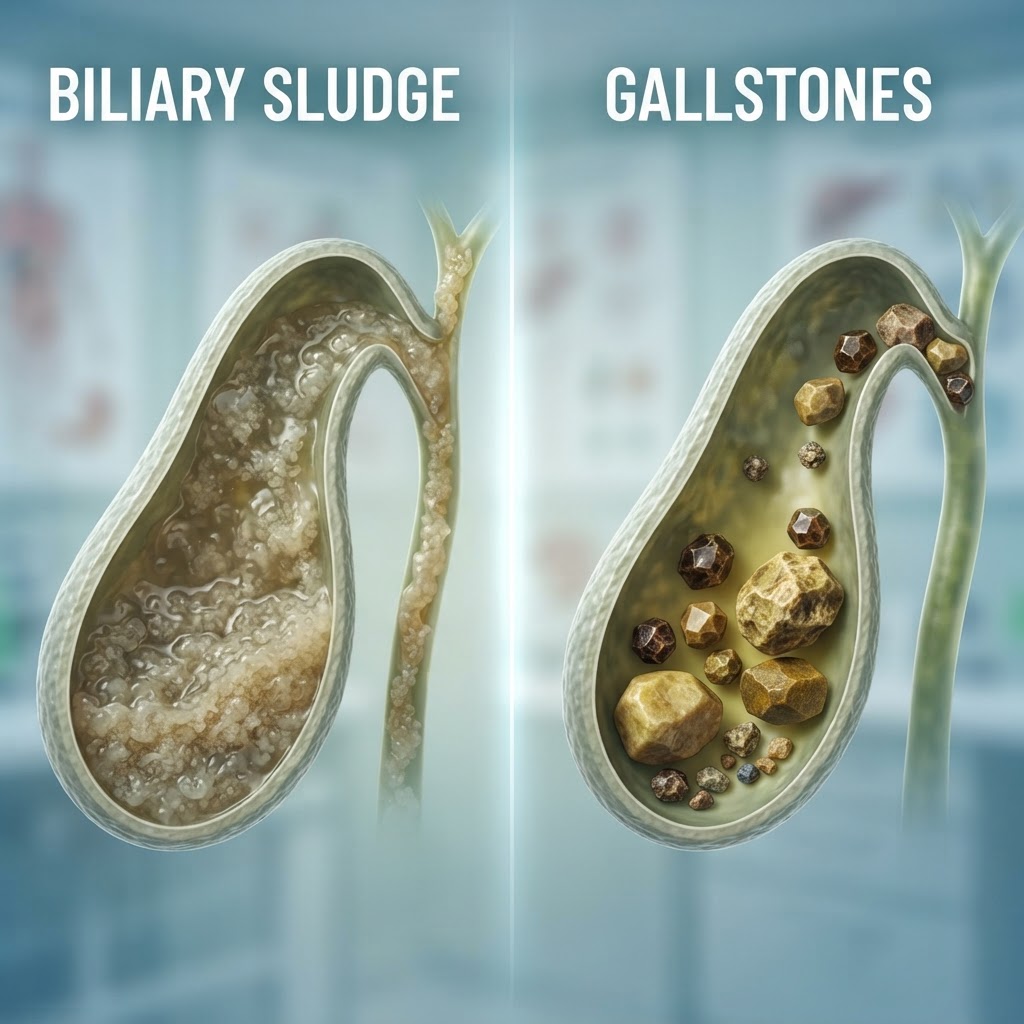
- Biliary sludge is a precursor to gallstones, composed of a mixture of bile, mucus, and micro-crystals rather than solid, hardened masses.
- While both conditions originate in the gallbladder, the primary difference between gallstones and sludge lies in their physical consistency and risk of obstructing bile ducts.
- Common biliary sludge symptoms often mirror those of gallstones, including abdominal pain, nausea, and digestive discomfort after fatty meals.
- Diagnosis typically relies on abdominal ultrasound technology, which allows clinicians to visualize the density and mobility of the contents within the gallbladder.
- Early intervention focusing on lifestyle and dietary adjustments can often resolve sludge before it evolves into more problematic, calcified gallstones.
The gallbladder is a small, pear-shaped organ that often goes unnoticed until it begins to cause discomfort. For many individuals experiencing upper abdominal pain, the mystery often centers on whether they are dealing with the amorphous accumulation known as biliary sludge or the more commonly discussed solid gallstones. Understanding the nuanced differences between these two conditions is essential for maintaining optimal gallbladder health. While they share a common environment and similar symptomatic expressions, their management, potential risks, and long-term implications for your digestive system vary significantly. In this comprehensive guide, the healthauthoritylife Editorial Team explores the intricacies of gallbladder health, helping you navigate the confusion surrounding gallbladder sludge vs gallstones so you can make informed decisions about your well-being.
1. Defining Biliary Sludge: What Is It Exactly?
Biliary sludge, frequently referred to in clinical settings as biliary microlithiasis, is a collection of microscopic particles that accumulate within the gallbladder. Unlike the solid, pebble-like formations associated with classic gallstones, sludge is essentially a thick, suspension-like substance. It is composed of a complex mixture of bile pigments, calcium salts, cholesterol crystals, and mucin—the mucus that lines the gallbladder walls. When this mixture becomes too dense, it fails to exit the gallbladder properly during the normal digestive cycle, leading to stasis.
Experts generally agree that biliary sludge acts as a precursor to more formal gallbladder conditions. In a healthy system, the gallbladder serves as a storage tank for bile, a fluid produced by the liver that aids in the digestion of fats. During a meal, the gallbladder contracts, pushing bile into the common bile duct and eventually into the small intestine. When the composition of this bile changes—often due to diet, rapid weight loss, or metabolic factors—the ingredients do not remain in a fluid state. Instead, they begin to precipitate out of the solution. This is the moment sludge forms.
The clinical significance of sludge is often underestimated. Because it lacks the hard edges of a stone, some may assume it is benign. However, this is a misconception. Because sludge is essentially a thick paste, it can travel into the bile ducts just as easily as a stone, potentially causing a blockage that leads to inflammation or even pancreatitis. The condition is often reversible, which is why identifying it early is so vital. If the underlying cause of the precipitation is corrected, the sludge may dissipate without ever hardening into a stone.
Risk factors associated with the development of sludge are diverse. Prolonged fasting, total parenteral nutrition, and pregnancy are well-documented triggers that alter bile flow. Furthermore, individuals who experience rapid fluctuations in weight—often resulting from crash dieting—are at a heightened risk. Because the gallbladder is not being signaled to empty its contents at regular intervals, the bile remains stagnant, providing the perfect environment for these microscopic particles to settle and accumulate. For those wondering how to treat gallbladder sludge, the first step is usually addressing these lifestyle factors to improve gallbladder emptying kinetics and bile flow.
2. Understanding Gallstones: Formation and Types
Gallstones, or cholelithiasis, are the more recognizable “big brothers” of biliary sludge. While sludge is a thick, heterogeneous suspension, gallstones are solid, hardened masses that form when the components of bile—primarily cholesterol or bilirubin—crystallize and solidify. Over time, these crystals grow in size, ranging from the size of a grain of sand to the size of a golf ball. Unlike the fluid-like sludge, gallstones are structural entities that can cause significant physical obstruction if they migrate into the ducts.
There are two primary types of gallstones that healthcare professionals encounter: cholesterol stones and pigment stones. Cholesterol stones are the most common in Western populations. They typically appear yellowish-green and are composed mainly of undissolved cholesterol. They form when the bile contains too much cholesterol for the available bile salts to keep it in solution. This is often linked to high-fat diets, sedentary lifestyles, or genetic predispositions that affect how the liver secretes cholesterol into the bile.
Pigment stones, conversely, are typically darker—often brown or black—and are made primarily of bilirubin. These stones are more common in people with certain underlying conditions, such as cirrhosis, biliary tract infections, or hereditary blood disorders that cause the destruction of red blood cells (hemolysis). When the liver produces too much bilirubin, it precipitates out of the bile and forms these distinct, harder stones.
The formation process is a result of a gradual breakdown in the delicate chemical balance of the gallbladder. When bile becomes “supersaturated” with either cholesterol or bilirubin, the excess material begins to nucleate. In this phase, tiny crystals act as a scaffold. More material attaches to these crystals over weeks, months, or even years, eventually resulting in the hardened objects known as gallstones. Once a stone has formed, it is generally considered permanent. While sludge can sometimes be flushed or dissolved through lifestyle changes, a mature gallstone is a structural reality that usually requires medical monitoring or intervention to manage the inherent risk of duct blockage.
3. Key Differences in Composition and Consistency
To truly grasp the difference between gallstones and sludge, one must visualize the gallbladder as a mixing bowl. In a healthy state, the contents are fluid and easily emptied. When bile chemistry shifts, the “ingredients” begin to separate. This is where the physical distinction becomes critical. Sludge is a soft, shifting material. If you were to tilt a container of sludge, it would move with the angle of the container. A gallstone, however, is a static, rigid object that holds its shape regardless of the gallbladder’s position.
From a diagnostic and clinical perspective, this difference in consistency dictates the level of intervention required. Sludge represents a warning sign—a “dynamic” phase of gallbladder dysfunction. It is a sign that the bile is becoming lithogenic (stone-forming). Because it lacks the structural integrity of a stone, it has a high potential to be managed through non-invasive means. Gallstones, by contrast, are in a “static” phase. They are the end product of the process that began with sludge or chronic bile imbalance.
Consider the comparison below to understand how these entities differ in their clinical presentation and management strategies:
| Feature | Biliary Sludge | Gallstones | Best For |
|---|---|---|---|
| Consistency | Viscous, paste-like, mobile | Hard, solid, static | Differentiating texture |
| Reversibility | Often reversible with diet | Rarely reversible | Treatment planning |
| Diagnostic Visual | Low-level echoes on ultrasound | Hyperechoic with shadowing | Radiology identification |
| Obstruction Risk | Moderate; can plug ducts | High; can cause blockage | Assessing urgency |
The composition difference also explains why patients often wonder about dissolution. Because sludge is essentially concentrated bile, increasing hydration, modifying dietary fat intake, and using specific medications to thin the bile can often help the gallbladder return to its normal function. Gallstones, because they are composed of hardened crystals or pigment, are largely resistant to being “dissolved.” The hardened matrix of a gallstone is far too stable to be broken down by diet alone once it has reached a certain size. This makes the distinction between the two not just a matter of semantics, but a crucial factor in determining whether the condition can be managed conservatively or if it warrants more aggressive medical approaches.
4. Common Symptoms of Sludge and Gallstones
When discussing biliary sludge symptoms and gallstone symptoms, it is important to acknowledge that they often present identically. Because both conditions interfere with the normal flow of bile, the resulting clinical picture is almost indistinguishable to the patient. The most hallmark symptom is biliary colic—a sudden, intense pain in the upper right quadrant of the abdomen, usually just below the rib cage. This pain often occurs after consuming a heavy or high-fat meal, as the gallbladder attempts to contract to release bile, only to be hindered by the sludge or stones within.
The sensation is often described as a cramping or aching that can radiate toward the right shoulder or back. Many people mistakenly believe they are having heart problems due to the discomfort under the chest. This pain is not always constant; it typically comes in waves, lasting anywhere from 30 minutes to several hours before subsiding as the gallbladder relaxes. However, if the sludge or a stone blocks the cystic duct for an extended period, the pain can become persistent and sharp, signaling an urgent need for medical evaluation.
Beyond pain, digestive disturbances are a frequent complaint. Patients often report bloating, gas, nausea, and in some cases, vomiting after eating. Because the body is struggling to process fats efficiently, stools may also become lighter in color, or the patient may experience an increased frequency of diarrhea. These symptoms are collectively referred to as “dyspepsia.” While these issues are non-specific and can be caused by a variety of gastrointestinal ailments, when they occur in conjunction with upper abdominal pain, they strongly suggest that the gallbladder is the root cause.
It is worth noting that a significant portion of people with biliary sludge remain completely asymptomatic. In these cases, the sludge is often an “incidental finding”—discovered during an ultrasound for an unrelated condition. Conversely, some individuals with only a small amount of sludge can experience severe symptoms, while others with large, calcified gallstones may remain pain-free for years. This variability is why the medical community emphasizes that the presence of the material itself is less important than the presence of symptoms and the risk of complications. If you notice persistent discomfort, particularly after eating fried or greasy foods, it is wise to investigate the state of your gallbladder health rather than waiting for the symptoms to escalate into a more severe episode of inflammation.
5. How Doctors Diagnose Sludge Versus Stones
Diagnosing the contents of the gallbladder has become a standard, highly accurate process thanks to modern medical imaging. The primary tool of choice is the transabdominal ultrasound. This non-invasive procedure uses sound waves to create a real-time image of the gallbladder. Because the gallbladder is a fluid-filled organ, it is the perfect candidate for ultrasound technology. The procedure is painless, requires no radiation, and provides immediate information about what is happening inside.
When a sonographer or radiologist examines the gallbladder, they look for specific visual cues. For gallstones, they look for “acoustic shadowing.” Because gallstones are solid and dense, they reflect the sound waves, creating a bright white image on the screen followed by a dark shadow behind the stone. This “shadowing” is the definitive signature of a solid object like a gallstone. It confirms that the object is not just a dense fluid, but a hardened mass.
Biliary sludge, on the other hand, presents differently. It appears as low-level echoes that settle in the dependent (lowest) part of the gallbladder. Crucially, sludge does not create a shadow because it is not dense enough to block all the sound waves. Another diagnostic trick involves moving the patient. Because sludge is a fluid, it will often move slowly when the patient changes position on the exam table—a phenomenon sometimes referred to as the “sludge ball” effect. This mobility is a clear indicator that the material is not a solid stone.
In more complex cases, or when symptoms suggest complications like an obstruction in the common bile duct, doctors might utilize further imaging. An Endoscopic Ultrasound (EUS) is a more specialized, highly sensitive test where an endoscope with an ultrasound probe on the tip is passed into the stomach. This allows for a much closer look at the gallbladder and bile ducts, capable of detecting even the smallest amount of sludge or tiny “sand-like” stones that a standard abdominal ultrasound might miss. Additionally, blood tests are often ordered to check for markers of inflammation or bile duct obstruction, such as elevated levels of liver enzymes or bilirubin. By combining imaging data with laboratory results, healthcare providers can accurately differentiate between sludge and stones, ensuring that the treatment plan is tailored to the severity of the condition.
Why Sludge Is Often a Precursor to Gallstones
To understand the relationship between biliary sludge and gallstones, one must first look at the mechanics of the gallbladder. This small, pear-shaped organ stores bile—a digestive fluid produced by the liver that contains cholesterol, bilirubin, and bile salts. Under ideal conditions, these components remain in a delicate liquid balance. However, when the concentration of these substances becomes unbalanced, the gallbladder’s ability to clear its contents is compromised, leading to the formation of biliary sludge.
Sludge is essentially a precursor because it acts as the “nidus” or the structural foundation upon which gallstones are built. When microscopic crystals—typically made of cholesterol monohydrate—begin to precipitate out of the bile, they do not always instantly solidify into large, hard stones. Instead, they form a thick, sediment-like suspension. If this suspension remains in the gallbladder for an extended period, it provides the perfect environment for the growth of gallstones.
Think of it like a saturated sugar solution left to sit in a glass; eventually, crystals begin to grow around any impurity in the water. Similarly, as the gallbladder struggles to contract and empty its contents, the tiny crystals within the sludge cluster together. Over weeks or months, these clusters undergo a process of hardening. The mucus and protein content often found in biliary sludge acts as a biological “glue” that binds the crystals together, accelerating the transition from a thick, mobile sediment to a solid, obstructive gallstone.
Clinicians often observe that patients who present with gallbladder sludge are at a significantly higher risk of developing symptomatic gallstones within a few years if the underlying bile stasis is not addressed. Because sludge is often asymptomatic, many people are unaware that this “pre-stone” phase is occurring. By the time a patient experiences the acute pain of a gallbladder attack, the sludge may have already evolved into fully formed, calcified, or cholesterol-hardened stones. Therefore, treating sludge early is a critical preventative strategy for long-term gallbladder health.
Risk Factors for Developing Both Conditions
The risk factors for biliary sludge and gallstones overlap significantly, as both conditions arise from the same fundamental issue: biliary stasis and an imbalance in the chemical makeup of bile. Experts generally agree that diet, genetics, and metabolic health play the most significant roles.
- Rapid Weight Loss: Losing weight too quickly—often through extreme caloric restriction or bariatric surgery—is a leading cause of sludge. When the body rapidly breaks down fat stores, the liver dumps excess cholesterol into the bile, while the gallbladder itself becomes less efficient at contracting.
- Pregnancy: Hormonal fluctuations, specifically elevated levels of estrogen, can increase cholesterol secretion into the bile and decrease gallbladder motility. This is why many women experience gallbladder issues during or shortly after pregnancy.
- Dietary Habits: Diets high in refined carbohydrates and saturated fats, coupled with low fiber intake, contribute to the formation of sludge. Fiber is essential for binding bile acids and ensuring they are excreted rather than recirculated, which keeps the gallbladder “flushing” correctly.
- Metabolic Syndrome: Insulin resistance and high blood sugar are strongly linked to gallbladder dysfunction. When the body struggles to process sugars and fats, the liver’s ability to maintain a healthy bile composition is disrupted.
- Prolonged Fasting or Parenteral Nutrition: When the gallbladder is not triggered to contract by the arrival of food (specifically fats), bile remains stagnant. Long-term intravenous feeding or frequent, erratic fasting can lead to rapid sludge development.
| Risk Factor | Impact on Gallbladder | Best for |
|---|---|---|
| High Refined Sugar Diet | Increases cholesterol saturation | Identification of dietary triggers |
| Rapid Weight Loss | Inhibits gallbladder emptying | Monitoring high-risk weight loss |
| Estrogen Exposure | Alters bile chemical composition | Hormonal health assessment |
| Sedentary Lifestyle | Reduces bile flow stimulation | Lifestyle optimization |
Natural Strategies to Support Bile Flow
Supporting bile health is often about encouraging consistent, efficient gallbladder contraction. When the gallbladder empties regularly, it prevents the stagnation that leads to sludge accumulation and stone formation. While severe cases require medical intervention, many people can support their gallbladder health through consistent lifestyle shifts.
Optimize Dietary Fat Intake: Many people make the mistake of eliminating fats entirely when they experience gallbladder discomfort. However, the gallbladder requires dietary fat to signal it to empty. The key is to consume healthy, unsaturated fats—such as those found in avocados, extra virgin olive oil, and raw nuts—in moderate amounts throughout the day. This provides the necessary “trigger” for the gallbladder to release stored bile into the small intestine, preventing the bile from sitting and thickening.
Increase Soluble Fiber: Soluble fiber, found in oats, beans, lentils, and flaxseeds, helps manage cholesterol levels and ensures that the biliary system is moving. Fiber acts as a broom, binding to excess bile acids in the digestive tract and carrying them out of the body, which encourages the liver to produce fresh, healthy bile.
Hydration and Regular Movement: Bile is primarily composed of water. Chronic dehydration can increase the viscosity of bile, making it easier for sludge to form. Staying hydrated is essential for maintaining fluid bile. Additionally, physical activity has been shown to support gut motility, which indirectly aids in the regulation of the biliary tree.
Bitter Herbs and Foods: In many traditions, bitter foods like dandelion greens, radicchio, arugula, and artichokes are used to support digestion. Some evidence suggests that bitter compounds can stimulate the production of bile by the liver and encourage gallbladder contraction. Including a small salad of bitter greens before a meal may help prime the digestive system for fat breakdown.
When Medical Intervention Becomes Necessary
While lifestyle changes are excellent for prevention and the management of mild, asymptomatic sludge, there are clear benchmarks where medical intervention is not just recommended, but vital. The presence of sludge or stones does not always necessitate surgery, but specific symptoms are “red flags” that the gallbladder may be damaged or obstructed.
Persistent Biliary Colic: If an individual experiences frequent, intense pain in the upper right abdomen that radiates to the shoulder or back, this indicates that a stone or thick sludge is likely obstructing the common bile duct. This pain typically lasts for several hours and does not resolve with simple dietary changes.
Signs of Infection or Inflammation: Symptoms such as fever, persistent nausea, vomiting, and a tender abdomen require immediate medical attention. These can be signs of cholecystitis (inflammation of the gallbladder) or cholangitis (infection of the bile ducts), which are serious complications that can lead to systemic illness.
Jaundice: If the skin or the whites of the eyes turn yellow, it is a sign that a blockage is preventing bile from exiting the liver. This is a medical emergency that suggests the biliary duct system is compromised.
Imaging Results: Sometimes, an ultrasound may reveal that the gallbladder wall has become thickened or that the gallbladder is no longer functioning effectively (low ejection fraction). In these instances, a physician may determine that the gallbladder is “non-functional” or “dead,” meaning it can no longer safely store or release bile. In these cases, the risk of developing future, more severe complications often outweighs the benefits of attempting to retain the organ, and a cholecystectomy (surgical removal) is typically recommended.
Frequently Asked Questions
Can gallbladder sludge be reversed?
Yes, in many cases, biliary sludge is reversible, especially when it is in the early stages. By addressing the underlying causes such as diet, rapid weight loss, or metabolic issues, and encouraging consistent gallbladder emptying through healthy fats and hydration, the gallbladder may clear the sludge over time. Regular monitoring by a healthcare professional is essential to track progress.
What does a gallbladder attack feel like?
A gallbladder attack typically presents as a sudden, intense pain in the upper right or center of the abdomen. This pain can radiate to the back or under the right shoulder blade. Many describe it as a dull ache that grows into a sharp, cramping sensation, often triggered by a large or fatty meal, lasting anywhere from 30 minutes to several hours.
Are there specific foods I should avoid if I have sludge?
Experts often recommend limiting highly processed, high-sugar, and trans-fat-heavy foods. Foods like refined white flour, pastries, fried fast foods, and sugary sodas can worsen gallbladder function. While you shouldn’t cut out all fats, focusing on high-quality, plant-based fats is generally preferred over heavy, saturated animal fats during the management phase.
How is gallbladder sludge diagnosed?
The most common and effective method for diagnosing biliary sludge is an abdominal ultrasound. Because sludge is made of fine particles, it can be visualized as an echo-dense material within the gallbladder. Occasionally, other imaging tools like an endoscopic ultrasound or an HIDA scan may be used if the initial diagnosis remains unclear or if the gallbladder’s function needs to be assessed.
Is it possible to have sludge without any symptoms?
Yes, many people have biliary sludge and never experience a single symptom. It is frequently discovered incidentally during an ultrasound being performed for other digestive complaints. If it is asymptomatic, a doctor may recommend a “watch and wait” approach, focusing on dietary adjustments to prevent it from progressing into gallstones.
What is the difference between biliary sludge and microlithiasis?
Microlithiasis is essentially a more advanced form of sludge, consisting of very tiny, sand-like gallstones that are too small to be easily detected as individual stones. Both conditions are part of the same spectrum of biliary issues and are treated with similar approaches, as they share the same potential for causing blockages and inflammation in the gallbladder and bile ducts.
Conclusion
Understanding the difference between gallbladder sludge and gallstones is the first step toward reclaiming your digestive health. While sludge is the quiet precursor to the more painful and restrictive gallstones, it also serves as a warning sign—a chance to intervene before the condition becomes a medical emergency. By prioritizing a balanced diet, steady weight management, and healthy hydration habits, you can support your gallbladder’s natural function and reduce the risk of future complications. Remember, your gallbladder plays a vital role in fat digestion and nutrient absorption, and keeping it healthy is an essential part of your overall wellness journey. If you suspect you are dealing with gallbladder issues, prioritize a consultation with a healthcare professional to get an accurate diagnosis and a personalized care plan.
By healthauthoritylife Editorial Team
This article is for informational purposes only and is not a substitute for professional medical advice. Always consult your doctor before making changes to your diet, exercise routine, or treatment plan.
Leave a Reply