
- Plantar fasciitis involves inflammation of the thick band of tissue spanning your heel to your toes.
- It becomes chronic when the healing process is interrupted, leading to long-term collagen degeneration.
- Early heel pain relief often requires a combination of rest, targeted stretching, and supportive footwear.
- Addressing root causes like foot mechanics is essential to stop the cycle of chronic foot pain.
- Consistent daily plantar fasciitis exercises are more effective than sporadic, high-intensity interventions.
Waking up in the morning and dreading that first step is a familiar, sharp reality for millions of individuals worldwide. What often begins as a mild twinge in the arch of the foot can, if left unmanaged, devolve into a persistent source of suffering known as chronic plantar fasciitis. While acute inflammation is the body’s natural response to trauma, the shift to a chronic state changes the physiological landscape of your foot. This guide serves to demystify the condition, providing you with actionable insights into understanding your pain, identifying the mechanical failures behind it, and utilizing evidence-based strategies to regain your mobility. Whether you are an endurance athlete or someone navigating the daily demands of a standing-heavy profession, the journey toward healing starts with understanding the intricate architecture of your feet.
What Is Plantar Fasciitis and Why Does It Become Chronic?
At its core, plantar fasciitis is an inflammatory condition affecting the plantar fascia—a thick, fibrous band of connective tissue that runs along the bottom of the foot, connecting the heel bone to the base of the toes. This band acts like a bowstring, supporting the arch of your foot and absorbing the shock of every step you take. When this tissue experiences undue stress or repetitive micro-tears, it becomes irritated, inflamed, and painful. Under normal circumstances, the body’s repair mechanism kicks in to regenerate the damaged tissue. However, this is where the condition frequently shifts from a manageable acute issue to chronic foot pain.
Chronic plantar fasciitis is generally defined as pain that persists for six months or longer despite conservative efforts. The transition from acute to chronic typically occurs when the cycle of micro-trauma outpaces the body’s capacity to heal the fascia. Instead of healthy, flexible tissue forming, the body may create disorganized, inferior scar tissue. This process, often referred to by experts as fasciosis, represents a degenerative state rather than a purely inflammatory one. Because the fascia is relatively avascular—meaning it has a limited blood supply—the natural healing rate is inherently slower than in muscles or skin. If an individual continues to subject the foot to the same mechanical stressors that caused the initial injury, the tissue never finds a window of time to recover, causing the collagen fibers to become brittle and prone to further tearing.
Furthermore, many people unknowingly perpetuate this chronicity by favoring one side of the body. When one foot is in pain, you naturally adjust your gait to minimize pressure on the affected area. This compensation pattern changes your biomechanics, often shifting the load to the other foot, the hips, or the lower back. Over time, these compensatory movements create secondary issues, turning a localized injury into a systemic musculoskeletal problem. Understanding this cycle is the first step toward effective plantar fasciitis treatment. By recognizing that the body is trapped in a loop of degeneration, you can pivot your focus from simply masking the pain to creating an environment where the tissues can finally undergo the restorative process they require.
Common Symptoms and Early Warning Signs of Heel Pain
Recognizing the symptoms early is the best way to prevent the transition into a long-term condition. The classic hallmark of this injury is sharp, stabbing pain near the heel, most commonly experienced with the very first steps taken out of bed in the morning. This sensation is often described as feeling like a nail or a sharp object being driven into the underside of the foot. The reason for this intensity upon waking is that during sleep, the foot typically rests in a relaxed, downward position, allowing the plantar fascia to shorten and tighten. As soon as you put weight on the foot, that tight tissue is suddenly stretched, pulling on its attachment point at the calcaneus (heel bone).
In addition to morning pain, many individuals notice that the discomfort diminishes significantly after a few minutes of walking, as the tissues warm up and become more pliable. However, this should not be mistaken for recovery. The pain often returns later in the day after long periods of standing, or after rising from a seated position following an extended period of rest. Some people describe a dull, aching sensation that persists throughout the day, which may be accompanied by mild swelling or tenderness along the arch. If you find yourself frequently massaging your feet or experiencing difficulty walking barefoot on hard surfaces like tile or hardwood floors, these are early warning signs that your plantar fascia is under significant distress.
The intensity of the pain can fluctuate depending on your daily activity levels. For those who remain active, the pain might be intermittent, surfacing only after high-impact movements like running, jumping, or brisk walking. As the inflammation progresses, you may notice that the window of “warm-up” time becomes longer, or the pain persists even during periods of rest. It is vital to pay attention to these subtle cues. Ignoring them in favor of “pushing through” can cause the fascia to lose its elasticity entirely. If you notice persistent warmth or redness in the heel area, or if the pain begins to radiate up toward the ankle or deep into the center of the arch, it is a sign that the irritation has moved beyond the surface-level tissues and warrants a more focused approach to recovery.
Identifying the Root Causes and Risk Factors
Plantar fasciitis is rarely the result of a single event; instead, it is usually a cumulative outcome of mechanical imbalances, lifestyle habits, and anatomical vulnerabilities. The most significant risk factor is often repetitive stress. Individuals whose occupations require them to stand on hard surfaces for eight hours or more—such as nurses, retail workers, and factory employees—are at a much higher risk. Similarly, athletes who drastically increase their training volume or intensity without allowing for adequate recovery are prime candidates for the condition. Your shoes also play a critical role; wearing footwear with inadequate arch support or worn-out cushioning provides no defense against the ground reaction forces that travel up through the foot with every stride.
Anatomical factors also play a major role in how force is distributed across the foot. Those with naturally high arches often have a fascia that is already under constant tension, making it more susceptible to tearing. Conversely, those with flat feet or fallen arches may experience excessive pronation, where the foot rolls inward too far during the gait cycle. This repeated inward rolling stretches the plantar fascia in ways it was not designed to handle, leading to chronic strain. Obesity is another major factor, as the excess weight places a mechanical load on the fascia that far exceeds the capacity of the tissue to resist tension. Even a small reduction in weight can often lead to significant heel pain relief by reducing the daily burden on the arches.
Beyond the foot itself, tightness in the calf muscles and the Achilles tendon is a frequent hidden culprit. Because the calf muscles and the plantar fascia are part of the same anatomical chain (the posterior fascial chain), a tight calf inevitably limits the range of motion in the ankle. When your ankle cannot flex properly, the foot must compensate, usually by overworking the plantar fascia. This is why many treatment plans emphasize the importance of lower leg flexibility. By looking at your body as a kinetic chain, you can identify if your heel pain is actually the result of tight hamstrings, weak glutes, or improper posture, rather than just a local injury of the foot.
| Approach | Primary Mechanism | Best For |
|---|---|---|
| Orthotic Inserts | Mechanical arch support and redistribution of pressure | Flat feet or excessive overpronation |
| Night Splints | Maintaining tissue length during sleep | Severe morning pain and restricted movement |
| Rolling Therapy | Soft tissue mobilization and blood flow | Immediate, localized relief of acute tension |
| Supportive Footwear | Shock absorption and structured heel stabilization | Daily wear for jobs requiring long hours of standing |
How to Properly Diagnose Plantar Fasciitis at Home
While an official diagnosis is best obtained through a physical examination by a healthcare professional, there are several self-assessment techniques you can perform to confirm if your symptoms align with typical presentations of plantar fasciitis. Start by performing the “Windlass Test.” While sitting, place your affected foot across your opposite knee. Use your hand to pull your big toe back toward your shin until you feel a stretch in the arch. With your other hand, palpate the arch and the area directly in front of the heel bone. If this maneuver recreates your characteristic sharp pain, it is a strong indicator that the plantar fascia is the primary source of your distress.
Another way to differentiate this condition from other foot issues is by location. Plantar fasciitis almost exclusively causes pain along the bottom of the heel and the medial (inner) arch. If you feel pain directly on the back of the heel bone, this might indicate Achilles tendonitis or a retrocalcaneal bursitis. If the pain feels like burning or tingling radiating into the toes, this could be indicative of tarsal tunnel syndrome or a nerve entrapment rather than a fascia issue. Identifying the precise “hot spot” is essential for effective treatment, as applying the wrong stretches to the wrong tissue will yield no results.
Additionally, pay close attention to the timing of your pain. A history of increasing your activity level or a sudden change in footwear is a massive diagnostic clue. If your pain is strictly activity-dependent—for instance, only occurring during long runs—it may be a mild case of acute inflammation. If the pain persists throughout the day and is exacerbated by rest, you are likely dealing with the chronic, degenerative form. While conducting these self-checks, be honest about your symptoms. Do not attempt to force pain or push through sharp, shooting sensations that may suggest a stress fracture. If there is persistent, unexplained swelling that does not go down with rest, or if you cannot bear any weight on the foot at all, you should seek professional evaluation to rule out structural fractures or systemic inflammatory diseases.
Evidence-Based Stretches to Relieve Fascia Tension
Once you have identified the source of your discomfort, the implementation of specific plantar fasciitis exercises becomes the cornerstone of your recovery. The goal of these movements is twofold: to improve the flexibility of the posterior chain (calf and Achilles) and to restore the elasticity of the plantar fascia itself. It is critical to perform these movements gently and consistently; high-intensity, aggressive stretching can often aggravate the inflamed tissue rather than soothe it. Start with the “Seated Plantar Stretch.” While seated, cross the symptomatic leg over the opposite knee. Take your hand and gently pull your toes back toward your shin until you feel a mild tension in the arch. Hold this position for 15 to 30 seconds, repeating it three to five times. This can be done immediately upon waking, before your feet ever touch the floor, to prepare the tissue for the first steps of the day.
The “Wall Calf Stretch” is perhaps the most important exercise for long-term resolution. Stand facing a wall, placing your hands on it for support. Place the affected leg back, keeping the heel firmly on the ground while leaning forward by bending the front knee. This targets the gastrocnemius muscle. To target the soleus muscle—which is often overlooked—perform the same move but with a slight bend in the back knee. Ensuring both muscles are loose is vital because tight calves act like a constant tether, pulling on the heel bone and exacerbating the tension in the fascia. Aim to perform these stretches twice daily, focusing on deep, slow breaths to help the muscles release their tension.
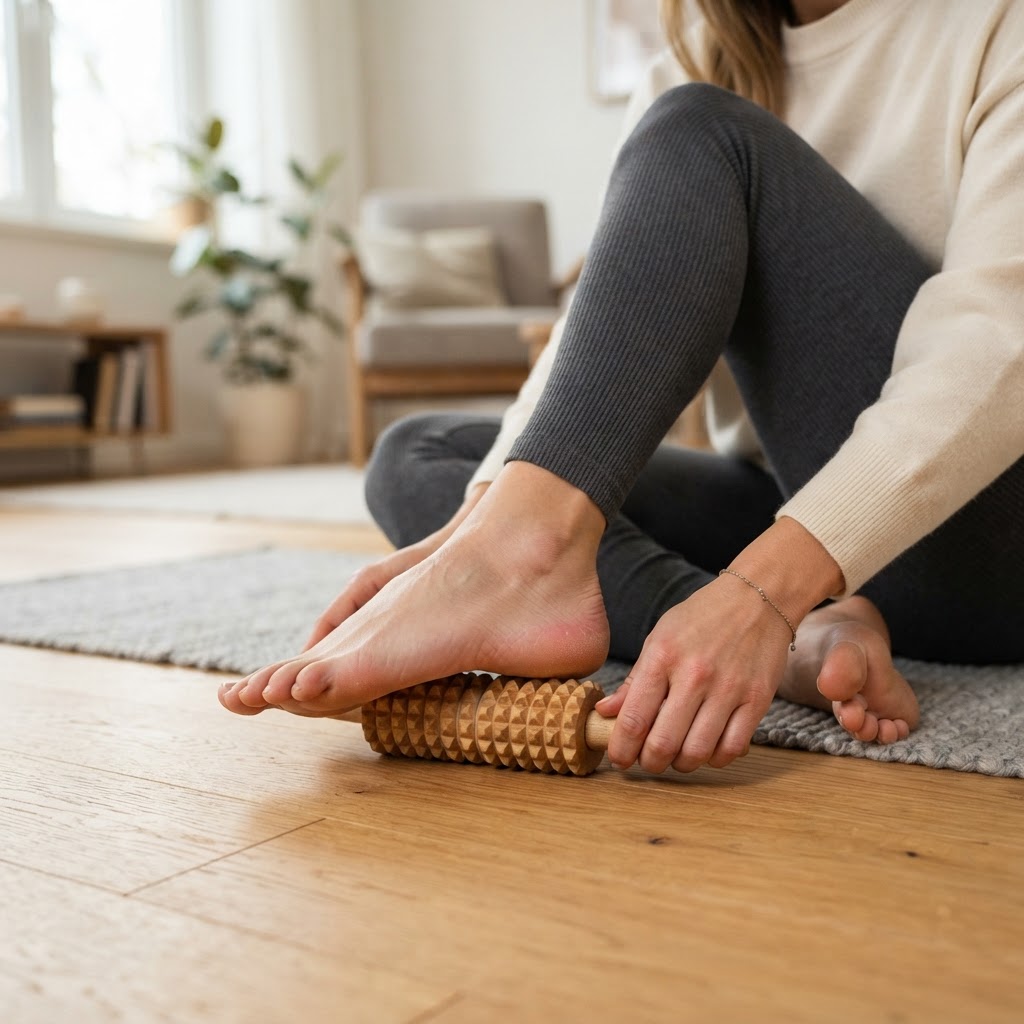
Finally, consider soft tissue mobilization using a frozen water bottle or a small, firm ball. Rolling your foot over a cold object serves two purposes: the cold helps to reduce local inflammation, and the rolling motion helps to break up adhesions or “knots” that may have formed in the fascia. Roll the arch of your foot over the object for 3 to 5 minutes, focusing on the painful areas, but avoiding direct pressure on the heel bone itself, which can be sensitive. Remember that these exercises are not a “quick fix” and require patience. The tissues of the foot take time to remodel and recover, particularly if they have been under stress for an extended period. Consistency is your greatest tool; performing these movements daily will gradually retrain the tissues to become more flexible and resilient, eventually breaking the cycle of chronic pain.
The Role of Footwear and Orthotics in Recovery
When dealing with chronic foot pain, the surface you walk on and the shoes you wear act as the primary interface between your inflamed plantar fascia and the hard ground. Proper footwear is not merely a comfort preference; it is a critical component of plantar fasciitis treatment. When the foot lacks adequate support, the plantar fascia—a thick band of tissue running along the bottom of the foot—is forced to absorb excessive mechanical stress, particularly during the heel-strike phase of the gait cycle.
For those suffering from chronic plantar fascia inflammation, the goal of footwear is twofold: to stabilize the arch and to cushion the heel. Shoes that are completely flat, such as flip-flops or unsupportive canvas sneakers, are often the primary culprits in perpetuating chronic symptoms. These shoes fail to provide the structural integrity necessary to distribute weight evenly, causing the fascia to overstretch and tear micro-fibers repeatedly.
Orthotics—whether over-the-counter insoles or custom-molded devices—serve as a strategic intervention. They function by realigning the foot and reducing the strain on the medial longitudinal arch. By supporting the arch, orthotics prevent the foot from over-pronating (rolling inward), which is a common biomechanical contributor to fascia irritation. For many, integrating high-quality inserts into their daily rotation leads to significant heel pain relief by providing a more neutral platform for the foot to land upon.
It is important to understand that not all footwear solutions are universal. A rigid orthotic might be ideal for someone with a high, inflexible arch, whereas a more cushioned, shock-absorbing insole may benefit an individual with a flat foot or significant heel fat pad atrophy. Selecting the right support requires evaluating how your specific foot type interacts with the ground.
| Support Type | Mechanism of Action | Best For |
|---|---|---|
| Full-Length Orthotics | Provides rigid support from heel to toe for structural realignment. | Individuals with severe over-pronation and high-arched feet. |
| Gel Heel Cups | Focuses exclusively on impact absorption at the point of tenderness. | People experiencing localized heel pain and fat pad thinning. |
| Arch Support Sleeves | Applies compression to the arch to lift and support the fascia. | Active individuals needing low-profile support for athletic shoes. |
| Motion Control Shoes | Features a firm midsole to limit inward foot rotation. | Chronic sufferers who walk long distances on hard surfaces. |
Anti-Inflammatory Nutrition for Tissue Repair
While physical therapy and orthotics address the mechanics of foot pain, nutrition provides the biological building blocks required for long-term healing. Chronic plantar fasciitis is, at its core, a chronic inflammatory state. If the body is consistently fueled by pro-inflammatory foods—such as processed sugars, refined carbohydrates, and unhealthy trans fats—it struggles to resolve the micro-tears in the fascia effectively.
Transitioning toward an anti-inflammatory diet can be a potent natural remedy for heel pain. Foods rich in Omega-3 fatty acids, such as wild-caught salmon, chia seeds, flaxseeds, and walnuts, play a key role in modulating the body’s inflammatory response. Omega-3s help to inhibit the production of substances that trigger inflammation in the connective tissues, potentially allowing the body’s natural repair mechanisms to accelerate.
Additionally, collagen production is vital for the health of the plantar fascia. The fascia is composed primarily of dense connective tissue, which relies on adequate vitamin C intake to synthesize collagen properly. Incorporating citrus fruits, bell peppers, berries, and leafy greens provides the essential antioxidants needed to protect these fibers from oxidative stress. Turmeric, specifically its active compound curcumin, is also frequently cited by nutrition experts for its ability to help manage systemic inflammation when combined with black pepper for improved absorption.
Hydration also plays an under-appreciated role in tissue health. Connective tissues, including the fascia, are largely composed of water. Chronic dehydration can lead to stiffening of the fascia, making it more brittle and susceptible to injury. Ensuring consistent fluid intake throughout the day keeps the fascia supple and resilient, allowing it to glide more easily through the motions of walking and standing.
Lifestyle Habits to Prevent Plantar Fasciitis Flare-Ups
Even after symptoms subside, the underlying susceptibility to plantar fasciitis often remains. Maintaining a pain-free status requires a proactive approach to daily lifestyle habits. One of the most effective strategies is the implementation of a consistent “warm-up” routine for the feet before engaging in daily activity. Many people experience their worst pain with the first few steps out of bed, simply because the fascia has tightened overnight. A simple routine of ankle circles, toe curls, and gentle calf stretches performed while still in bed can significantly reduce the mechanical trauma of that first step.
Weight management is another critical lifestyle factor. Since the feet are responsible for supporting the entire body’s mass, even modest reductions in body weight can significantly reduce the force distributed across the plantar fascia with every step. For those who stand for a living, adopting a “micro-break” strategy is essential. Every 30 to 60 minutes, take a moment to sit down, perform a quick foot massage, or stretch the calf muscles to prevent the tissues from becoming stiff and overloaded.
Ergonomics in the home and workspace also matter. Standing on hard surfaces like concrete or hardwood for long periods without footwear or on improper rugs increases the risk of a flare-up. Using anti-fatigue mats in kitchens or standing workstations can provide the necessary cushioning to mitigate repetitive impact. Furthermore, rotating your footwear is an often-overlooked habit; wearing the same pair of shoes every single day causes the material to lose its structural integrity. Alternating between two or three pairs of high-quality shoes allows the cushioning foam in each pair to “reset” and recover its shape, ensuring your feet remain supported throughout the week.
When to Seek Professional Medical Advice for Foot Pain
While natural relief methods and lifestyle adjustments are effective for many, it is crucial to recognize when home management is insufficient. Chronic foot pain can sometimes mask underlying conditions that require more targeted medical intervention. You should seek the guidance of a healthcare professional if you experience persistent pain that does not improve after several weeks of consistent, conservative treatment.
Professional consultation is also warranted if your pain is accompanied by symptoms such as persistent swelling, redness, or heat in the heel area, as these can indicate an infection or a systemic inflammatory disease. Furthermore, if you experience sudden, sharp pain that follows a specific injury—such as a fall or a twisting motion—you may have a tear or a stress fracture rather than simple plantar fasciitis. These conditions require imaging, such as X-rays or ultrasounds, to diagnose accurately.
If your heel pain causes you to change your natural gait—leading to secondary issues in your ankles, knees, hips, or lower back—it is time to see a specialist. Chronic alterations in how you walk can create a cascade of musculoskeletal problems that are far more difficult to treat than the original issue. A professional can provide access to advanced treatments like shockwave therapy, custom orthotics, or personalized physical therapy protocols that go beyond what one can safely attempt at home.
Frequently Asked Questions
Can weight loss truly help alleviate chronic plantar fasciitis symptoms?
Yes, losing weight can be highly effective. The plantar fascia is under constant load while standing or walking. By reducing the overall body weight, you decrease the physical stress and impact forces that the fascia must absorb, which often allows existing inflammation to subside more quickly and prevents future recurrences.
Are there specific times of day that are most painful for plantar fasciitis?
Most individuals report that the first few steps in the morning or after a long period of sitting are the most painful. This occurs because the fascia shortens and tightens while the foot is at rest. As you move and the tissues warm up, the pain typically begins to lessen, though it may return after prolonged activity.
How long does it typically take for plantar fasciitis to heal?
Recovery timelines vary significantly from person to person. While some may experience relief within a few weeks through dedicated stretching and footwear changes, chronic cases can take several months of consistent adherence to a treatment plan. Patience and consistency are the most important factors in achieving long-term resolution.
Is it better to use ice or heat on a painful heel?
Ice is generally recommended for acute inflammation and immediately following physical activity to manage pain and swelling. Heat is typically better for chronic stiffness, as it helps to increase blood flow and relax tight muscles and tissues before you begin your stretching routine or daily activities.
Can walking barefoot at home trigger a flare-up?
For individuals with chronic plantar fasciitis, walking barefoot on hard floors—like tile or hardwood—is a common trigger for flare-ups. The lack of arch support and cushioning forces the fascia to work harder to stabilize the foot. Wearing supportive indoor slippers or sandals can provide the necessary protection to prevent these episodes.
Will stretching make my plantar fasciitis worse?
If performed too aggressively, stretching can indeed irritate an already inflamed fascia. The key is to perform stretches gently, focusing on a slow, sustained pull rather than a bouncing motion. If a specific stretch causes sharp, stabbing pain, stop immediately and consult with a physical therapist to ensure your technique and intensity are appropriate.
Conclusion
Navigating the challenges of chronic plantar fasciitis requires a comprehensive, multifaceted approach. By addressing the mechanics of your footwear, fueling your body with anti-inflammatory nutrients, and adopting mindful daily habits, you can take control of your healing process. While the road to recovery may involve trial and error, the combination of targeted exercises, proper support, and lifestyle adjustments is the most effective way to restore your mobility and return to the activities you love.
Remember that your feet are the foundation of your movement. By investing time and care into their health today, you are preventing years of potential discomfort and limitations. If you have been struggling with persistent pain, do not lose hope; begin by implementing one small change—such as upgrading your indoor footwear or beginning a gentle morning calf-stretching routine—and monitor your progress. Your path to long-term heel pain relief begins with these consistent, intentional actions.
By healthauthoritylife Editorial Team
This article is for informational purposes only and is not a substitute for professional medical advice. Always consult your doctor before making changes to your diet, exercise routine, or treatment plan.
Leave a Reply